Beyerdynamic DT 1990 PRO MK II
Rating: 4.5 / 5
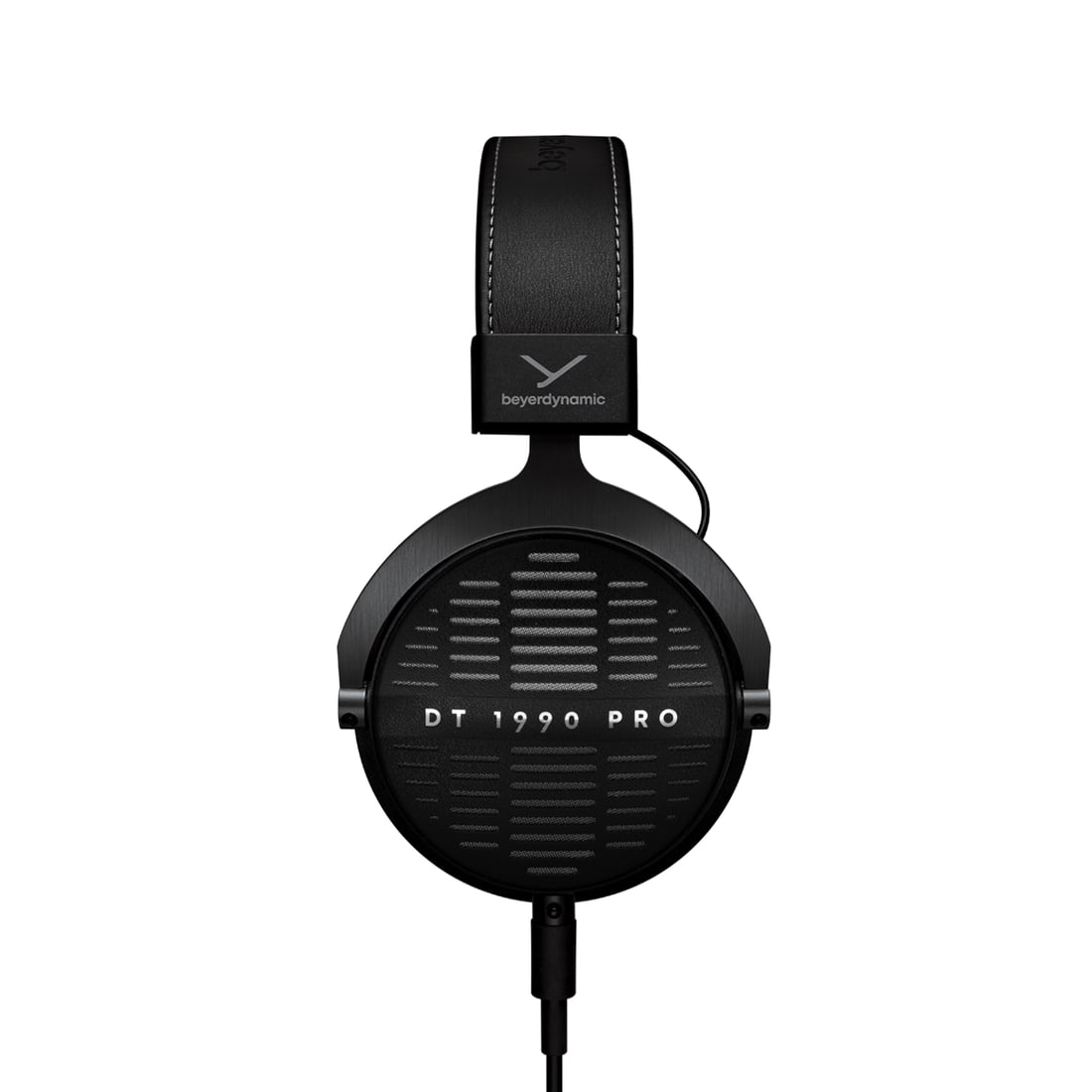
The DT 1990 PRO MK II is an open-back studio reference with dual 45mm Tesla drivers, re-tuned to a more amp-friendly 30-ohm load. It suits mixing, mastering and analytical home listening, and ships with two swappable pad sets to shift the tonal balance.
As an Amazon Associate and partner of the retailers above, Sound Technology earns from qualifying purchases — at no extra cost to you. Prices and availability checked recently but vary; the linked retailer is the source of truth.
Pros
- Highly resolving, analytical studio-reference sound
- Two pad sets to tune the tonal balance
- 30-ohm load easier to drive than the original 250-ohm version
- Rugged German build with replaceable parts
Cons
- Treble can be bright/fatiguing with the analytical pads
- Firm clamp force out of the box
- Soundstage trails open planars
A studio tool that accidentally became great value
Eight hundred and ninety-nine Australian dollars is not cheap. I'll say that plainly, because I'm the guy on this team who winces when a cable costs more than a decent used amp. But A$899 for a made-in-Germany, dual-Tesla-driver, open-back reference headphone with two swappable pad sets, a detachable cable system, and a manufacturer that still sells replacement parts a decade later? That's a different conversation. That's a conversation I want to have.
The DT 1990 PRO MK II is the updated version of beyerdynamic's long-running studio reference. The headline change from the original is the impedance drop: down from 250 ohms to 30 ohms. That single decision changes who this headphone is actually useful for, and it's worth spending a minute on why before we get into anything else.
Design and engineering
The Tesla driver and why impedance matters here
The TESLA.45 driver is a 45mm dynamic unit built around beyerdynamic's proprietary Tesla magnet system. The "Tesla" branding refers to the magnetic flux density at the voice coil — beyerdynamic claims values around 1 Tesla, which is genuinely high for a dynamic driver and contributes to the low distortion and high sensitivity the company publishes. The published sensitivity is 94 dBSPL at 1mW, measured at 500Hz. That's reasonable rather than spectacular, but the key number is the 30-ohm impedance.
The original DT 1990 PRO ran at 250 ohms. That version needed a proper headphone amplifier — a dedicated desktop unit, or at minimum a DAC/amp with a low-output impedance and genuine voltage swing. Plugging it into a laptop headphone jack produced anaemic, thin sound. The MK II's 30-ohm load changes that calculus significantly. It will sing from a decent dongle DAC, from a smartphone with a USB-C adapter, from a portable player. You still get more from a proper amp, but you're no longer locked out without one. For the home listener who doesn't want to spend another five hundred dollars on amplification before the headphone even sounds right, that matters enormously.
The open-back design means the rear of each cup is vented, allowing the driver to breathe and preventing the pressure build-up that gives closed-back headphones their sometimes bloated, claustrophobic low end. Open-back headphones almost always image more naturally and breathe more freely in the midrange. The trade-off is that people around you will hear what you're listening to, and ambient noise comes in freely. This is not a commute headphone. It's not even really a home headphone if you share your space with a partner who has opinions.
The dual pad system
Both pad sets are velour, circumaural (over-ear), and clip on and off without tools. The analytical pads have a slightly firmer feel and produce a brighter frequency response with more upper-midrange and treble energy — useful for detail work, mixing, finding sibilance in a vocal recording. The balanced pads roll back some of that energy and produce a warmer, smoother presentation. Beyerdynamic doesn't publish separate frequency response curves for each pad set, which is a mild frustration, but the consensus from studio users is that the difference is audible and meaningful rather than subtle. Swapping takes under a minute.
I'll admit I was initially sceptical about dual pad sets as a feature. It sounds like the kind of thing a marketing team invents when they can't decide on a house sound. But in this case the two pads genuinely represent two different use cases: one for critical work where you need to hear problems, one for extended listening where you need not to hate your own ears by hour three. That's actually useful.
Sound
Bass
The DT 1990 PRO MK II is not a bass-head headphone. Owners consistently report a tight, controlled low end that extends cleanly — the 5Hz lower limit in the spec sheet is mostly academic, but the practical bass extension is solid for an open-back. What you get is textured, fast bass rather than elevated, warm bass. Kick drums have impact and definition. Bass guitar lines are distinct. Electronic sub-bass is present but not emphasised. If you come from a consumer headphone background where V-shaped tuning is the norm, the first few hours may feel lean. Give it time.
Midrange
This is where the DT 1990 PRO MK II earns its studio credentials. The midrange is detailed, forward and honest. Vocals sit clearly. Acoustic instruments have body and texture. On the analytical pads particularly, you hear into recordings in a way that is both illuminating and occasionally uncomfortable — bad mixes reveal themselves quickly. On the balanced pads, the midrange is still highly resolving but slightly more forgiving of recording imperfections. Either way, this is not a headphone that flatters poor source material.
Treble
Here's where we need to be straight about a real limitation. Beyerdynamic headphones have a well-documented house sound that leans bright, and the DT 1990 MK II is no exception, especially with the analytical pads fitted. The treble is extended and present, which is exactly what you want for studio work and exactly what fatigues some listeners after two hours of casual listening. Switching to the balanced pads helps meaningfully. But if you're genuinely treble-sensitive — if you find most Sennheiser HD 6XX-family headphones comfortable and most beyerdynamic headphones tiring — the balanced pads may not fully rescue you. That's not a flaw in the design; it's a design choice that suits the product's professional intent.
Dynamics and transients
Dynamic headphones at this calibre do something that many planar magnetic designs still struggle with: they snap. Transients are fast, the leading edge of a snare hit or a plucked string has bite. The Tesla magnet system contributes to low distortion at high SPLs, so the headphone holds together when you push the volume. By design, the low-distortion, high-flux driver means the DT 1990 MK II should remain composed well above comfortable listening levels — useful in a studio context, less critical for home listening but still a mark of quality.
Soundstage and imaging
Open-back headphones always have a staging advantage over closed-backs, and the DT 1990 MK II delivers a convincing, natural-feeling presentation with good width and reasonable depth. Imaging precision is high. But I'll be transparent: if you've listened to an Audeze LCD-2 or an HIFIMAN Arya at the same price point or above, the planar magnetic soundstage is wider and more enveloping than what the DT 1990 offers. The DT 1990 is more precise in its imaging than it is expansive in its staging. For studio work, precision beats width. For orchestral listening on the couch, you might prefer the planar approach.
Setup and system matching
The 30-ohm impedance and 94dB sensitivity mean the DT 1990 MK II will play from almost anything. A simple USB-C dongle DAC like the Apple USB-C to 3.5mm adapter or the iFi GO bar will drive it adequately. A dedicated desktop DAC/amp like the Topping DX3 Pro+ or the iFi Zen DAC 3 will drive it very well, and you'll hear the difference — lower noise floor, more control in the bass, better dynamics. But you are not obligated to spend another five hundred dollars before this headphone sounds good. That is a meaningful change from the 250-ohm original.
The one area to watch is output impedance. Amplifiers with high output impedance (above roughly 2-3 ohms) can interact with the headphone's impedance curve and alter the frequency response. Most modern DAC/amps are fine, but some older or budget desktop units have output impedances of 10 ohms or higher. Worth checking the spec sheet of your amplifier before buying.
Source quality matters. The DT 1990 MK II is resolving enough to distinguish between a 128kbps stream and a lossless file. Feed it good source material.
Living with it
The build is exactly what you'd expect from a German pro-audio manufacturer. The headband is metal and leather, the cups are robust plastic with metal accents, everything feels assembled with intent rather than cost-cut into existence. Beyerdynamic publishes a full spare parts catalogue for the DT 1990, including replacement pads, headband cushion, cables and the mini-XLR connectors. The long-term ownership proposition is genuinely good.
Weight is 376g without cable, which is moderate. The clamp force out of the box is firm — tighter than I'd like for extended sessions. Most owners report that it loosens with use over a few weeks, and you can gently bow the headband over a stack of books to accelerate the process. It's a minor hassle rather than a dealbreaker.
Two cables are included: a straight cable and a coiled cable. Both terminate in 3-pin mini-XLR at the headphone end and standard 3.5mm with a 6.35mm adapter at the amp end. Having both included is genuinely useful. The detachable cable system means a damaged cable is a ten-dollar replacement rather than a warranty headache.
In Australia, beyerdynamic products are distributed through Syntec International. Stock is generally available from the usual online retailers and from Melbourne's Hill of Content — actually, I should correct that, I mean from stores like Addicted to Audio on Elizabeth Street in Melbourne and from specialist retailers in Sydney and Brisbane. Warranty service goes through the local distributor rather than back to Germany, which is the right setup for a product at this price.
One personal note: I wear glasses, and the clamp force with glasses arms under velour pads creates a mild pressure point after a couple of hours. Switching to the balanced pads — which are very slightly softer — helps. If you also wear glasses, give it an extended audition before committing.
How it compares
At A$899, the DT 1990 PRO MK II's obvious Australian competition includes the Sennheiser HD 660 S2 (roughly similar money, warmer and smoother, less overtly analytical), the HIFIMAN HE400se and Sundara (planar magnetic, wider soundstage, require more careful amplifier matching despite low impedance), and — if you're flexible on budget — the Audeze LCD-2 Classic, which is a step up in price but represents a genuinely different sonic philosophy.
Against the HD 660 S2, the beyerdynamic wins on resolution and transient speed, loses on long-session comfort for treble-sensitive listeners. The HD 660 S2 is more forgiving of poor source material and amplification. The DT 1990 MK II is more revealing and more useful as a diagnostic tool. Pick based on whether you're using these for work or for relaxed listening.
Against the HIFIMAN Sundara, the DT 1990 MK II offers easier driving (genuinely plug-and-play from a decent dongle), better build quality and spare parts support, and a more precise rather than spacious presentation. The Sundara's planar bass and staging remain competitive at the price point, but beyerdynamic's build durability is the better long-term bet.
Who it's for — and who should look elsewhere
Buy the DT 1990 PRO MK II if you mix or master at home and want a reference tool that doesn't require a dedicated rack of amplification to function. Buy it if you want a resolving, analytically honest headphone for critical listening and you're not treble-sensitive. Buy it if you value repairability and German manufacturing provenance and expect to own a headphone for a decade rather than two years.
Look elsewhere if you're primarily a casual listener who wants a warm, forgiving, put-on-and-forget experience. Look elsewhere if you find bright treble genuinely fatiguing rather than just initially unfamiliar — the balanced pads help but they don't transform the character. Look elsewhere if you need isolation, because the open-back design leaks freely in both directions. And look elsewhere if you're driving from a source with genuinely high output impedance.
The short version is this: at A$899, the DT 1990 PRO MK II is a professional tool priced at a level where serious home listeners can justify it without guilt. The 30-ohm impedance removes the biggest barrier to entry from the original design, the dual pad system gives you real flexibility, and beyerdynamic's commitment to spare parts makes this a headphone you can reasonably expect to own and service for years. It is not the last word in soundstaging, it is not for the treble-shy, and it will not flatter sloppy recordings. All of those things are features, not bugs, for the listener it's built for.
Common questions
- Can I drive the DT 1990 PRO MK II from a phone or laptop without a separate amplifier?
- Yes, far more easily than the original 250-ohm version. At 30 ohms impedance and 94dB sensitivity, the MK II will reach comfortable listening levels from a USB-C dongle DAC or a modern laptop headphone output. A dedicated DAC/amp will improve bass control and lower the noise floor, but it's no longer a prerequisite for usable sound — which is a meaningful change.
- What's the practical difference between the analytical and balanced ear pads?
- Both sets are velour and circumaural, but the analytical pads produce a brighter, more forward upper-midrange and treble response — useful for finding detail and problems in a mix. The balanced pads roll back some of that brightness and produce a warmer, smoother presentation better suited to extended listening sessions. Swapping takes under a minute and no tools are required.
- Is the DT 1990 PRO MK II too bright for home listening?
- It depends on your sensitivity. The beyerdynamic house sound leans bright, and the analytical pads amplify that tendency. Treble-sensitive listeners — those who find the Sennheiser HD 6XX family comfortable but beyerdynamic headphones tiring — may still find the balanced pads insufficient. If you can, audition the headphone before buying, or confirm the retailer's return policy.
- How does it compare to the original DT 1990 PRO?
- The main engineering change is the impedance reduction from 250 ohms to 30 ohms, which makes the MK II far easier to drive from portable and budget sources. The driver is the updated TESLA.45 unit. The tuning is reported to be similar in character to the original, retaining the analytical, bright-leaning beyerdynamic signature, so if you loved or hated the original's sound, the MK II is unlikely to change your mind fundamentally.
- Are spare parts and repairs available in Australia?
- Yes. Beyerdynamic publishes a full spare parts catalogue for the DT 1990 range, including replacement ear pads, headband cushion, cables and connectors. Australian distribution is handled by Syntec International, and warranty service is processed locally rather than requiring shipment to Germany. For a headphone at this price, the long-term repairability is a genuine ownership advantage.