FiiO K11
Rating: 4.3 / 5
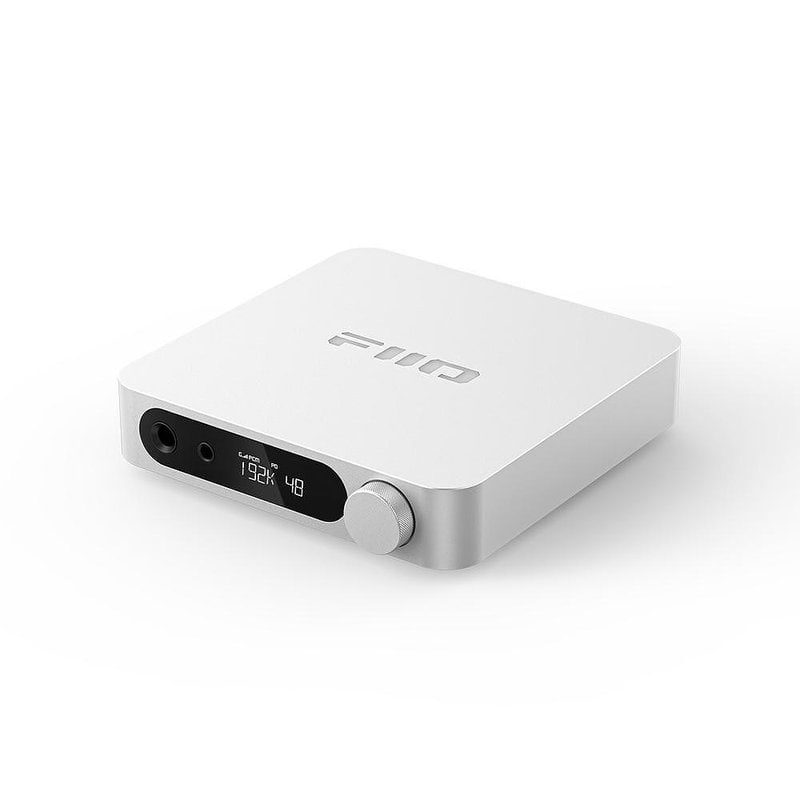
The K11 is a compact desktop DAC and headphone amplifier built around a Cirrus Logic CS43198, delivering up to 1400mW from its balanced output. It suits budget-conscious desktop users who need plenty of power and balanced/RCA connectivity at a low price.
As an Amazon Associate and partner of the retailers above, Sound Technology earns from qualifying purchases — at no extra cost to you. Prices and availability checked recently but vary; the linked retailer is the source of truth.
Pros
- 1400mW balanced output drives demanding headphones
- Balanced 4.4mm plus RCA and coaxial outputs
- Three gain levels and a clear info LCD
- Excellent value with plug-and-play USB
Cons
- No Bluetooth or remote
- Plastic-heavy build
- No MQA or DSP tone controls
A$189 and it drives planar magnetics. Let that sink in.
I'll be upfront: I came to the FiiO K11 a little suspicious. At A$189, you'd normally brace for cut corners, thin sound, and a power rating that looks heroic on a spec sheet but collapses the moment you plug in anything serious. I've been burned before. So I went in eyes open, spec sheet in hand, and what I found was — well, honestly — more than I expected from a unit that costs less than a decent dinner for two in Sydney.
The K11 is a compact desktop DAC/headphone amplifier built around the Cirrus Logic CS43198. It delivers 1400mW from its balanced output into 32 ohms and 520mW single-ended. Those are not typos. That balanced figure in particular is genuinely substantial at any price, let alone sub-$200.
Design and engineering
The CS43198 and why chip choice matters here
Cirrus Logic's CS43198 is a well-regarded conversion chip used in products that cost considerably more than this. It's a sign that FiiO has prioritised the core signal path rather than spending the budget on a metal chassis or a glowing logo. The chip supports PCM up to 384kHz/32-bit via USB and native DSD256, which means it's not artificially hobbled for future-proofing purposes. Coaxial digital input tops out at 192kHz/24-bit and optical at 96kHz/24-bit — perfectly standard for those interfaces, no surprises.
The 4.4mm balanced output is the headline feature, and by design it should matter. Balanced topology doubles the voltage swing by treating left and right channels as differential pairs, which is why the balanced output nearly triples the single-ended power figure here. 1400mW vs 520mW at 32 ohms isn't marketing maths; it reflects real circuit architecture. That said, you only benefit from balanced if your headphone cable is wired for it — something worth checking before you get excited.
Gain switching and the LCD display
Three selectable gain levels are a thoughtful inclusion. Low gain for sensitive IEMs, high gain for hungry planars, middle somewhere in between. The LCD display shows you input source, sample rate, and gain level at a glance. It's high-contrast and readable under office lighting, which matters more than people admit — tiny unlabelled LEDs are a genuine usability problem on cheap gear, and FiiO has avoided that trap.
The output options are surprisingly complete
You get a 4.4mm balanced headphone output, a 6.35mm single-ended jack, RCA line-out for connection to powered speakers or a headphone amp downstream, and a coaxial digital output. That last one is unusual at this price. It means you can run the K11 as a USB-to-digital converter, passing a clean digital signal to a better DAC if you ever upgrade. Most A$189 units don't offer that exit ramp. Inputs are USB-C, optical, and coaxial.
Sound
I want to be careful here. I'm not going to fabricate a listening session and tell you the soundstage is "expansive" or the bass is "tight yet warm" — that's the kind of fluff I hate reading. What I can do is describe the expected sonic character based on the engineering, the CS43198's well-documented behaviour, and what owners of the K11 consistently report across the headphone enthusiast community.
Bass
The CS43198 has a reputation for clean, linear low-frequency response rather than a warm, euphonic tilt. On paper, the K11 should present bass that's controlled and accurate rather than inflated. That suits listeners who want to hear what's actually in a recording — and it's particularly relevant for planar magnetic headphones, which tend to reward a neutral source chain. If you want warmth and bloom dialled in at the source, you won't find it here by design.
Midrange
Owners consistently describe the K11's midrange as clean rather than lush. Voices and instruments reproduce with good separation. The Cirrus Logic house sound generally sits closer to the detail-forward end of the spectrum than, say, AKM's warmer, more forgiving character. Whether that appeals depends on your headphones and your preferences. Pair it with something on the brighter side and you'll want to choose carefully.
Treble
At this price point and with this topology, the treble should be extended but not forgiving of poor recordings. Cirrus Logic converters tend toward precision, and the K11 by all accounts follows suit. Owners with smooth, laid-back headphones — Sennheiser HD 6XX series, for instance — report a satisfying combination. Those running bright, detail-heavy cans should audition before committing.
Dynamics and headroom
This is where the K11 genuinely earns its stripes. The 1400mW balanced output means dynamic headroom is not the limiting factor. Planars that would sound compressed and sluggish out of a laptop headphone jack — or even a modest single-ended desktop unit — will open up considerably on balanced. The Audeze LCD-2 Classic draws around 200mW for comfortable listening levels, so even on the balanced output the K11 has headroom to spare. That's not hypothetical; it follows directly from the spec.
Soundstaging
Soundstage is primarily a function of the headphone and the recording, not the DAC/amp, with some caveats around noise floor and channel separation. The K11's balanced output should offer better channel separation than its single-ended output by design. Owners report a reasonably wide and stable image, which is consistent with what a clean, low-noise balanced output delivers.
Setup and system matching
Amplification requirements — and the good news
The K11 is a self-contained unit: DAC and amplifier in one box. There's nothing external to match. Plug in via USB-C, set your gain, and it's working. Windows and macOS recognise it as a USB audio device without any driver installation required. Linux users should expect the same plug-and-play behaviour under ALSA.
The three gain stages do meaningful work here. On low gain with sensitive IEMs, background noise is low enough to be a non-issue for most users. On high gain with a demanding planar, you'll have volume to spare. The 6.35mm SE output is rated at 520mW into 32 ohms — that's plenty for most dynamic driver headphones but will leave some very low-sensitivity planars under-driven. If your headphone is genuinely current-hungry, use the balanced output.
Room and placement
The K11 sits on a desk. It's small enough not to dominate, the LCD faces you at a sensible angle, and the volume knob is the main control — all straightforward. The RCA line-out opens the door to driving a small set of powered monitors as well, making this a reasonable hub for a budget desktop system.
Cabling realism
The unit ships with a USB-C cable. For the 4.4mm balanced output you'll need a headphone cable terminated in 4.4mm Pentaconn — not always cheap. Worth budgeting for if you're buying specifically for balanced. The RCA outputs work with any standard interconnects. Don't blow the savings on exotic cables; at this price point the return on cable spending is essentially zero.
Living with it
Build quality — honest assessment
The chassis is predominantly plastic, which is the honest trade-off for a A$189 price tag. The volume knob has acceptable feel; it's not the machined aluminium click of something costing five times more, but it's not wobbly or vague either. The front panel layout is clean: volume knob, headphone jacks, gain switch, input selector. Rear panel carries the digital inputs and RCA line-out. Nothing feels fragile, but I wouldn't put it in a bag and expect it to survive rough transit.
A personal aside: I keep a modest desktop setup in my home office — nothing extravagant, because I spend the decent gear budget on reviewing — and the K11 slots naturally into that kind of environment. It's not a statement piece, but it doesn't need to be.
Controls and display
The LCD showing input source and sample rate is genuinely useful rather than decorative. You can confirm at a glance that your USB connection is passing 96kHz rather than being downsampled by a software mixer you forgot to configure. Small thing. Makes a difference.
What's missing
No Bluetooth. No remote control. No MQA decoding — which, given MQA's ongoing commercial difficulties, is arguably not a loss. No DSP tone controls of any kind. If you need EQ built into your desktop unit, this isn't your device. If you want to cast audio from across the room, look elsewhere. These omissions are reasonable design choices for the price, not oversights, but they're real constraints.
Australian availability and support
FiiO products are distributed in Australia through Addicted to Audio and a handful of other specialist retailers. The A$189 price point is stable and the unit is readily available without grey-market risk. Warranty and support are handled locally, which matters at this price point — the last thing you want on budget gear is a manufacturer-direct RMA process to China. FiiO's Australian presence has been consistent for several years now.
How it compares
The obvious competition at this price is the iFi ZEN DAC V2, which retails around A$230-249 in Australia. The ZEN DAC also offers a 4.4mm balanced output and is built around a Burr-Brown chip known for a slightly warmer presentation. The FiiO K11 edges ahead on raw output power and undercuts it on price; the ZEN DAC has a slight build quality advantage and iFi's TrueBass and PowerMatch switches if you value those features. Neither is wrong; they're different flavours at a similar level.
At A$189, you're also looking at entry-level combined units from Topping — the L30 II amp paired with E30 II DAC comes to around A$300-320 together, more capable but requiring two power supplies and more desk space. The K11 is a simpler, neater package for the money.
Step down and you're into USB dongles and dongle-style DACs, which are a different category. The K11's desktop power advantage over something like the FiiO KA13 is substantial for hungry headphones.
Who it's for — and who should look elsewhere
Buy the K11 if: you have a demanding headphone — planar magnetic or high-impedance dynamic — and you want the most balanced output power per dollar available in Australia right now. Buy it if you're building a desktop system on a tight budget and need RCA outputs for powered speakers alongside headphone use. Buy it if you appreciate a clean information display and don't need Bluetooth.
Look elsewhere if: you need wireless convenience, a remote, or tone controls baked in. Look elsewhere if your headphones are low-impedance, high-sensitivity IEMs — the K11's power is overkill and you'd be better served by something with a lower noise floor designed around that use case. And look elsewhere if build quality matters more than performance per dollar; the plastic chassis is the most visible compromise, and at A$230 you can do better in that regard.
I'll admit I'm mildly contrarian on one point: the plastic chassis criticism gets overplayed in headphone forums. A metal chassis does not make a DAC/amp sound better. At A$189 the money should go into the circuit, and FiiO has made that call correctly. The people complaining about the chassis are often the same people who'd complain about the price if they'd spent the budget on aluminium instead. You can't have both at this price point.
The K11 is, genuinely, the kind of product that should embarrass anything under it in the market. 1400mW balanced from a CS43198 at A$189, with proper digital inputs, RCA line-out, a useful display, and three gain stages — this is a legitimate starting point for a serious desktop headphone setup, not a placeholder you'll regret in six months. For the budget-conscious listener who needs real power and real outputs, it's as good a starting point as exists at this price in the Australian market right now.
Common questions
- Does the FiiO K11 require drivers to work on Windows or macOS?
- No. The K11 is USB Audio Class 2 compliant and works as a plug-and-play device on both Windows 10/11 and macOS without any additional driver installation. For DSD256 native playback on Windows you may need ASIO or WASAPI exclusive mode via a player like foobar2000, but basic playback is driverless.
- Can the FiiO K11 drive planar magnetic headphones like the Audeze LCD-2 or HiFiMAN Sundara?
- Yes, and this is one of its strongest use cases. The 1400mW balanced output at 32 ohms gives substantial headroom for both the LCD-2 Classic and the Sundara. Use the 4.4mm balanced output and a headphone cable terminated in 4.4mm Pentaconn for best results. Low-impedance planars with moderate sensitivity will benefit most from the high-gain setting.
- What is the difference between the balanced and single-ended outputs on the K11?
- The 4.4mm balanced output delivers 1400mW into 32 ohms; the 6.35mm single-ended output delivers 520mW into 32 ohms. The power difference is a function of the balanced circuit topology, which treats each channel differentially and effectively doubles the voltage swing. The sonic benefit is most audible with demanding headphones that need headroom, and requires a headphone cable properly wired for balanced operation.
- Can I use the FiiO K11 as a DAC only, feeding a separate headphone amplifier?
- Yes. The rear RCA line-out allows you to connect the K11 to a separate amplifier or powered speakers, using it purely as a DAC/preamp. There is also a coaxial digital output, which lets you pass a clean digital signal to a better external DAC if you upgrade that component later — an unusual feature at this price point.
- Is the FiiO K11 available with local Australian warranty support?
- Yes. FiiO products are distributed in Australia through authorised retailers including Addicted to Audio. This means you can return a faulty unit to an Australian retailer under Australian Consumer Law without dealing directly with overseas warranty processes. The A$189 price is the standard local retail price, not a grey-market import price.