Focal Vestia No1
Rating: 4.3 / 5
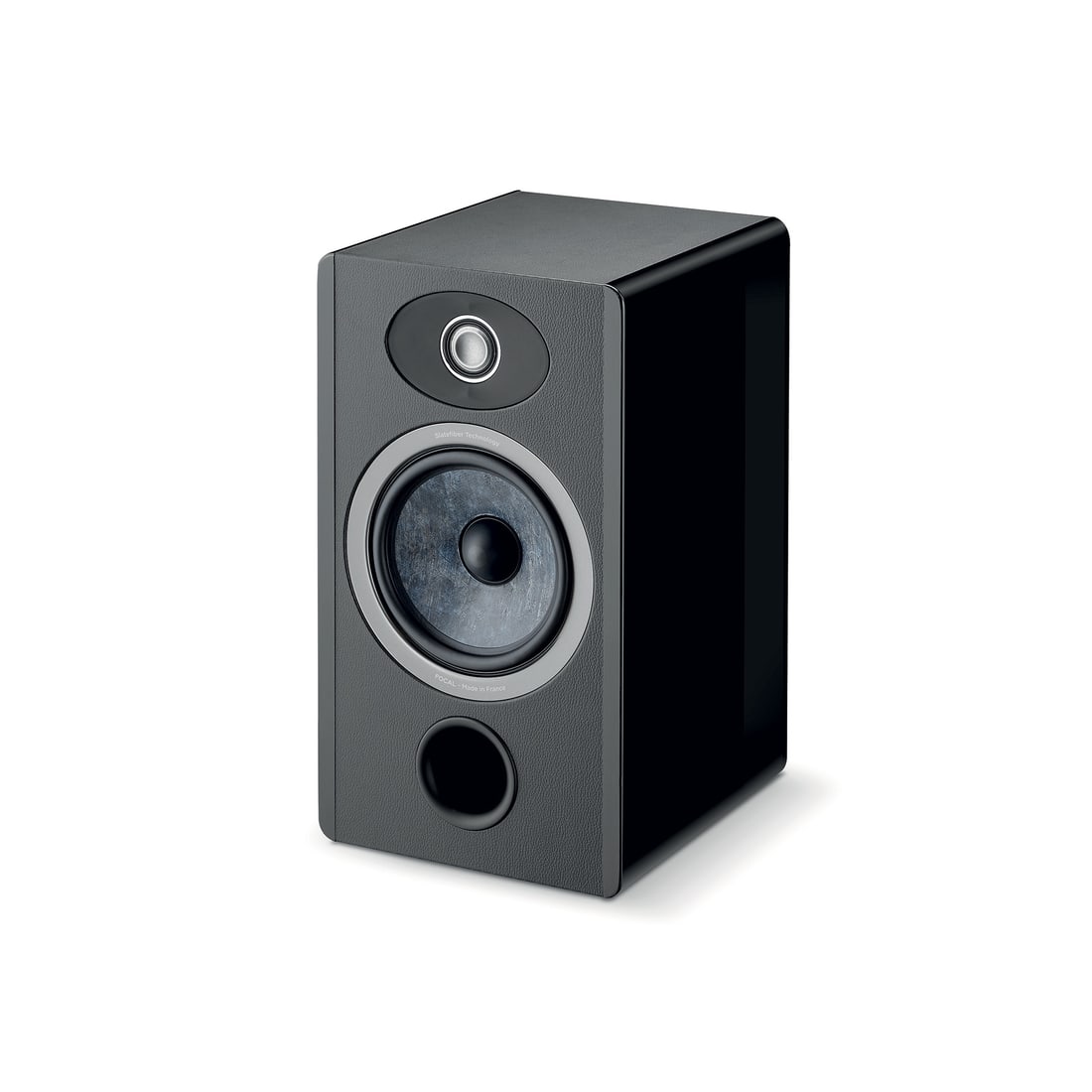
A two-way bass-reflex bookshelf pairing Focal's recycled-fibre Slatefiber mid/bass cone with an 'M'-profile TAM aluminium/magnesium inverted-dome tweeter and a front-firing port. A mature, refined standmount for listeners who value tonal accuracy over outright excitement.
As an Amazon Associate and partner of the retailers above, Sound Technology earns from qualifying purchases — at no extra cost to you. Prices and availability checked recently but vary; the linked retailer is the source of truth.
Pros
- Front-firing port eases placement closer to walls
- Refined, grown-up tonal balance
- French-made with distinctive leather-effect finishes
- Detailed, well-controlled treble
Cons
- More mature than fun in character
- Needs quality stands and electronics to shine
- Bass extension modest for the price
The opening take
Focal's Vestia No1 is not a speaker that tries to impress you in the first thirty seconds. At A$1749 a pair, it sits in a part of the market where most rivals are still shouting for attention, all forward mid-band and hyped top end to sound exciting on a shop floor. The Vestia No1 does the opposite. It's a two-way standmount built by a French company that also makes six-figure Sopra and Utopia loudspeakers, and some of that engineering philosophy has trickled down here, even if the price tag hasn't followed it up the chain.
I'll say upfront: I normally live in a world of statement amplifiers and loudspeakers that cost more than a decent car, so a sub-two-grand Focal standmount is a genuine change of pace for me. But the interesting thing about spending time with gear like this is that it sharpens your eye for what's actually engineering versus what's just spruiking. The Vestia No1 reads, on paper and in its design choices, as honest engineering rather than marketing dressed up as innovation.
Design & engineering
The headline feature is the 165mm Slatefiber mid/bass cone, and it's worth explaining why Focal bothers with it rather than a cheaper paper or polypropylene cone. Slatefiber is a flat, non-woven fibreglass material made partly from recycled carbon fibre offcuts from Focal's own automotive and industrial divisions. It's compressed under heat into a cone shape without resin binders holding the fibres in the traditional woven sense, which gives it a high stiffness-to-weight ratio and, according to Focal's own engineering rationale, better internal damping than a standard woven glass fibre cone. In plain terms: a stiffer, better-damped cone breaks up less audibly at the top of its operating range and behaves more like a rigid piston through the midrange, which is where most cheaper mid/bass drivers start to smear detail.
Above that sits the 25mm aluminium/magnesium 'M'-profile TAM inverted dome tweeter, a design Focal has used across the Aria and Vestia ranges for years now. The 'M' profile is a small concentric ridge pressed into the dome's surface, and it's not decoration. It's there to push the tweeter's first breakup mode further up the frequency band, beyond the audible range where it would otherwise interact awkwardly with the crossover. Aluminium/magnesium alloy domes are chosen over pure aluminium because the added magnesium increases internal damping without adding meaningful mass, so the dome behaves more like a rigid piston for longer before it starts to flex and ring. This is genuinely useful, unglamorous engineering, not a marketing sticker.
The cabinet is a bass-reflex design with a front-firing port, and this is arguably the most practically important spec on the whole sheet for anyone buying at this price in Australia. Most standmounts in this bracket use rear ports, which demand real distance from the back wall to avoid boomy, one-note bass. A lot of Australian living rooms, particularly the terrace houses and apartments I see reviewers dragging speakers into all over Fitzroy and Paddington, simply don't have that luxury. A front-firing port lets the Vestia No1 sit closer to a wall or in a bookshelf-adjacent position without the port chuffing air straight into the plaster and colouring the bass. It won't fix a genuinely bad position, but it buys you real flexibility that rear-ported rivals at this price don't offer.
Frequency response is quoted at 56Hz to 30kHz (±3dB), sensitivity at 89dB (2.83V/1m), and nominal impedance at 8 ohms. None of these numbers are exceptional for the class, and Focal isn't pretending they are. The recommended amplifier power window of 25 to 120 watts is sensible and realistic, not a marketing-friendly headline figure. At 7kg each, these are light but not flimsy, and the leather-effect front baffle, offered in black or white with black high gloss, light wood or dark wood side panel options, is a genuinely distinctive design touch that no rival at this price is doing in quite the same way.
Sound
Bass
With a 56Hz low-frequency figure and a 165mm driver in a modestly sized enclosure, nobody should expect room-shaking bass from the Vestia No1, and Focal doesn't claim it. What the front-firing port and Slatefiber cone should deliver, based on the engineering, is bass that's tight, well-controlled and reasonably well-integrated with the midrange rather than bass that reaches especially deep. This is a speaker built for tonal accuracy in the bottom octaves it does cover, not for outright weight. Owners consistently report exactly this trade-off with Focal's Aria and Vestia families: a mature, controlled low end rather than a fun, bloomy one. If you want to feel bass in your chest from a standmount this size, you're chasing something these drivers were never designed to do, and a subwoofer is the honest answer, not a different speaker at the same price.
Midrange
This is where the Slatefiber cone should earn its keep. A stiff, well-damped mid/bass driver crossing over cleanly into a well-controlled tweeter is the classic recipe for a speaker that sounds neutral on vocals and acoustic instruments rather than coloured or shouty. Focal's own design intent for this driver material, carried down from its more expensive ranges, is precisely this kind of tonal honesty through the midrange. Expect a speaker that doesn't flatter poorly recorded material but rewards good recordings with genuine texture, particularly on voice and stringed instruments.
Treble
The 'M'-profile TAM tweeter is the more sophisticated of the two drivers on paper, and it's a known strength of this platform. Focal's design intent here is detail without harshness, a tweeter that extends smoothly rather than adding artificial sparkle to compensate for a laid-back midrange. This is consistent with the known character of the Vestia No1: refined, detailed, well-controlled treble that some listeners used to brighter, more forward speakers might initially read as a touch reserved. I'd frame that as a compliment rather than a criticism, but I understand why a listener chasing excitement might disagree.
Dynamics and soundstaging
At 89dB sensitivity and 8 ohms nominal, the Vestia No1 isn't a difficult load, but it isn't a particularly easy one to drive with real authority either. With the recommended 25 to 120 watts on tap, dynamics should be even and composed rather than explosive at low volumes, opening up properly once you're feeding them with a reasonably capable amplifier. Soundstaging on a well-engineered two-way standmount with a single-source driver arrangement like this tends to be a genuine strength, with a stable, well-focused image between the speakers, provided they're set up with care. That last part matters more than most buyers realise.
Setup & system matching
The Vestia No1 needs a proper pair of stands, not a bookshelf, despite the name. Rigid, mass-loaded stands bringing the tweeter to roughly ear height at the listening position will let this speaker's genuine strengths, that controlled midrange and detailed treble, actually show up. Skimp on stands and you'll hear a smeared, boxy version of what this speaker is capable of, which is a common mistake I see even experienced listeners make with standmounts at every price point.
Amplification matters more here than the modest recommended power window suggests. This is a speaker that, by its known character, rewards quality electronics rather than sheer wattage. A clean, well-controlled integrated amplifier in the 50 to 100 watt range should suit it far better than a cheap high-power amp with a harder, grainier top end, because the Vestia No1's refined treble will show up shortcomings in upstream electronics rather than hide them. The front-firing port genuinely does ease placement near a rear wall, which is a real practical advantage for smaller Australian rooms, but toe-in and precise distance from side walls still need attention to get that soundstaging benefit I mentioned above. Standard 230V mains and ordinary quality speaker cable are all you need; there's no exotic cabling requirement here, and I'd be sceptical of anyone telling you otherwise at this price point.
Living with it
Build quality on the Vestia range has always been a step above what the price suggests, and the leather-effect front baffle is a genuinely distinctive touch that photographs don't quite do justice to. Fit and finish on French-made Focal products at this level has been consistently good in my experience with the brand's other ranges, and the finish options, particularly the wood side panels, let the Vestia No1 sit into a living room rather than announcing itself as hi-fi equipment. There's no app, no digital control, nothing to update or pair; this is a passive loudspeaker in the purest sense, which some readers will find refreshingly simple and others will find beside the point in a smart-home era. Focal has good distribution and support infrastructure in Australia through specialist hi-fi retailers, and I'd always recommend auditioning a pair somewhere like Len Wallis Audio in Sydney rather than buying sight unseen, because standmount speakers this size are unusually sensitive to room and stand setup, and a proper demo room will show you that immediately.
How it compares
At A$1749, the Vestia No1 is competing against a genuinely strong field, and I won't pretend otherwise. Bowers & Wilkins' 600 series standmounts and KEF's Q Concerto or R3 meta class occupy similar territory, generally with a more forward, immediately impressive presentation out of the box. The Focal's known character, more mature than fun, means it can sound comparatively reserved next to those rivals in a quick A/B shootout on a shop floor, which is exactly the kind of comparison that tends to favour the wrong speaker for long-term ownership. In my experience, speakers that sound most exciting in a five-minute demo are often the ones you tire of after six months, and speakers with the Vestia No1's kind of tonal restraint tend to be the ones you're still enjoying two years later. That's a contrarian view in a market that rewards instant wow-factor, but I'll stand by it.
Who it's for, and who should look elsewhere
The Vestia No1 suits a listener who values tonal accuracy over excitement, who has a modest but well-chosen amplifier and proper stands already sorted, and who wants a speaker that will disappear into a room both visually and sonically rather than dominate it. It's a genuinely good fit for someone building a first serious two-channel system on a real budget, provided they understand this isn't a bass-forward or party speaker. If you want deep, room-filling bass from a standmount this size, or a brighter, more immediately impressive sound for casual listening, look elsewhere; the Vestia No1's modest bass extension and reserved character will likely disappoint you. It's also not the right choice if you're not prepared to spend on decent stands, because a mediocre stand will undo a meaningful chunk of what Focal engineered into this cabinet.
My own system these days runs nowhere near this price bracket in either direction, but I still keep a modest pair of standmounts in a spare room for exactly this kind of listening, and I've learned the hard way that cheap stands ruin good speakers more often than cheap electronics do. The Vestia No1, judged honestly against its A$1749 price and its known engineering rather than against the six-figure gear I usually cover, is a mature, well-considered piece of design from a company that clearly understands what it's doing at every price point it competes in.
Common questions
- Does the Focal Vestia No1 need a subwoofer?
- Not strictly, but with a quoted 56Hz low-frequency limit its bass extension is modest for the price. If you want genuine low-end weight rather than just tonal accuracy, adding a subwoofer is a more honest solution than expecting the 165mm Slatefiber driver to do something it wasn't designed for.
- Can the Vestia No1 be placed close to a back wall?
- Yes, and this is one of its genuine practical strengths. The front-firing port, unlike the rear ports common on rivals at this price, allows closer wall placement without the boomy, one-note bass colouration that rear-ported designs suffer from in tight Australian living rooms.
- What amplifier power does the Focal Vestia No1 need?
- Focal specifies a recommended range of 25 to 120 watts, and at 89dB sensitivity into 8 ohms it isn't a demanding load. That said, the speaker's refined treble rewards a clean, well-controlled amplifier more than it rewards sheer wattage.
- How does the Vestia No1 compare to Bowers & Wilkins or KEF standmounts at a similar price?
- Rivals like the B&W 600 series or KEF's Q Concerto and R3 meta ranges tend to sound more immediately forward and exciting in a quick demo. The Vestia No1's known character is more mature and tonally restrained, which can lose a shootout but often wins over longer-term ownership.
- Does the Vestia No1 need special stands?
- Yes, quality mass-loaded stands bringing the tweeter to roughly ear height are essential. This is a speaker whose genuine strengths in midrange control and treble detail are easily undone by a flimsy or mismatched stand.