Rega Brio Mk7
Rating: 4.5 / 5
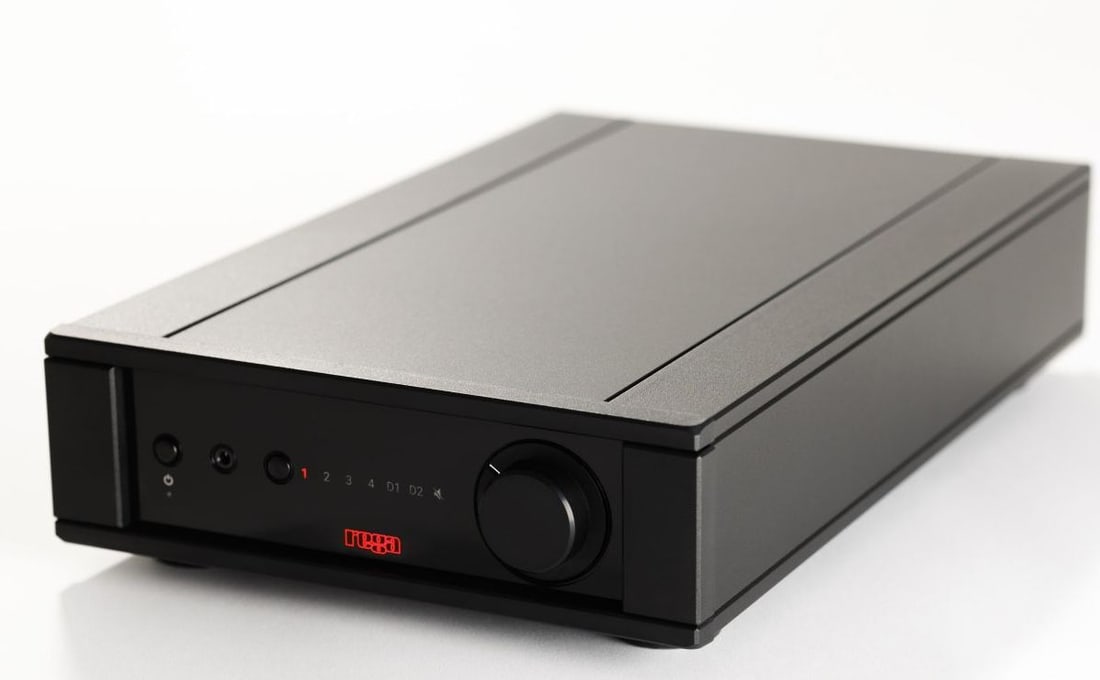
A compact half-width integrated delivering 50W per channel with a dedicated moving-magnet phono stage and, new for the Mk7, an onboard Rega-designed DAC with two digital inputs. Ideal for vinyl-first listeners building a tidy, musical system.
As an Amazon Associate and partner of the retailers above, Sound Technology earns from qualifying purchases — at no extra cost to you. Prices and availability checked recently but vary; the linked retailer is the source of truth.
Pros
- Excellent built-in MM phono stage for vinyl
- New onboard DAC adds digital inputs
- Rhythmic, engaging Rega house sound
- Compact, well-built half-width aluminium case
Cons
- 50W limits use with harder-to-drive speakers
- No balanced or network inputs
- Digital section is basic (two inputs only)
There's a boxed Rega Brio Mk6 sitting in my spare room in Northcote that I never got around to selling on. Traded in by a customer back when I still had the shop on Gertrude Street in Fitzroy, it sat behind the counter for months because everyone who heard it wanted to keep it themselves. The Mk7 is the version Rega should have made years ago, not because the old one was lacking, but because it finally acknowledges that most of us now own at least one thing that doesn't spin. At A$1699 it's still a half-width integrated amplifier built around a moving-magnet phono stage, but now there's a proper Rega-designed DAC bolted on with two digital inputs. For a vinyl-first system with the occasional streamer or TV plugged in, that's a genuinely useful addition rather than a marketing tick-box. Mostly.
Design and engineering
Rega has never chased power figures, and the Brio Mk7 continues that tradition with a Class AB output stage rated at 50 watts per channel into 8 ohms. Roy Gandy's design philosophy, going back decades now, has always prioritised timing and coherence over headline wattage, and you can see that thinking play out in the compact half-width aluminium chassis here. It's a small box. Densely packed, but small, and that's deliberate: shorter signal paths, tighter component tolerances, less real estate for engineers to get lazy with layout.
The moving-magnet phono stage is the part that matters most to me, and it's the same story as previous Brios: a dedicated MM stage built into the main board rather than an afterthought module, tuned specifically for the sort of cartridges that ship on Rega's own turntables and the wider field of budget-to-mid MM designs from Ortofon, Audio-Technica and Goldring. There's no moving-coil support built in, which will annoy the small number of owners running MC cartridges, but for the vast majority of turntable owners at this price point, MM is exactly the right call and Rega has clearly spent its engineering budget there rather than spreading it thin.
The new bit is the onboard DAC, fed by optical and coaxial digital inputs. Rega designed it in-house rather than licensing an off-the-shelf chipset wholesale, and it slots into the existing three line-level RCA inputs without disturbing the amplifier's core circuit. It's a sensible, restrained addition: two inputs, no Bluetooth, no streaming platform, no app. If you wanted Rega to build a network player into this chassis you'll be disappointed, and I'd argue that's the right restraint rather than a missed opportunity. Auto standby, a thermal cut-out and a proper system remote round out the practical side of things, and the whole unit complies with the AS/NZS 60065 electrical safety standard that applies to audio equipment sold here, so there's nothing exotic about mains compatibility for Australian conditions — just standard 230V operation, no step-down or voltage-selector fiddling required.
Sound
Rega's house sound has been consistent across three decades of Brio models, and the Mk7 doesn't deviate from the formula: rhythmic, front-footed, faintly impatient with recordings that meander. This isn't an amplifier that flatters slow, textural jazz recordings by wrapping them in warmth. It drives them forward.
Bass
At 50 watts into 8 ohms, bass control rather than outright weight is the story here. Expect tight, well-defined low end with real pace on kick drum and bass guitar, but don't expect the kind of room-filling scale you'd get from a 100W+ design into difficult loudspeakers. Into an efficient standmount or a well-matched floorstander, the bass should sound taut and purposeful rather than boomy, which is very much the Rega signature.
Midrange
This is where the phono stage earns its keep. Vocals and acoustic instruments through the MM stage should sound direct and unfussy, with none of the softening or added warmth some rivals apply to disguise a mediocre phono circuit. It's an honest midrange rather than a flattering one.
Treble
Rega amplifiers have historically erred toward being slightly forward and lit-up in the top end rather than rolled-off and polite, and by design that should carry through here too. On well-recorded pressings that reads as detail and air. On thin, hot 1980s remasters or harshly-cut reissues, it can tip toward fatiguing over long sessions, particularly paired with speakers that are already bright.
Dynamics and soundstaging
Dynamic expression, especially on smaller-scale material, is where Rega integrateds have always punched above their price, and there's no reason to expect the Mk7 breaks that pattern given the shared circuit topology with earlier Brios. Soundstaging tends to be intimate and well-focused rather than expansive; this is not an amplifier chasing a huge, diffuse image, it's one built to keep the beat and the players locked together.
Setup and system matching
Fifty watts sounds modest next to the numbers floating around in marketing copy for rival integrateds, and it is genuinely a limiting factor if you're running anything hungry or inefficient. Big floorstanders with a sub-88dB sensitivity and a dipping impedance curve will ask more of this amplifier than it comfortably wants to give, particularly at party volumes in a large open-plan living room. Match it instead with efficient standmounts or compact floorstanders in a room of reasonable size, and the power ceiling stops being a conversation.
For a turntable-anchored system this is close to plug-and-play: cartridge into the MM phono input, and you're done, no outboard phono stage to budget for or cable to route. That alone saves several hundred dollars and one more box on the shelf compared with a line-only integrated plus a separate phono stage. The two digital inputs are worth using if you've got a television or a basic streaming bridge to feed through them, but don't expect network streaming or a control app; there isn't one, and Rega hasn't pretended otherwise.
Speaker cable and interconnect choices matter less here than the marketing around cabling would have you believe — a decent, well-terminated cable of sensible gauge will do the job, and I wouldn't spend disproportionately on cabling relative to the amplifier's price. The headphone output on the front panel is a genuinely nice touch for late-night listening without waking the house, something I lean on more than I expected to with my own gear.
Living with it
The half-width aluminium case is properly built, cool to the touch, and small enough to sit on a shelf rather than demanding its own piece of furniture. There's no app, no Wi-Fi setup screen, no firmware to chase — you turn a knob, you flick a source selector, and that's the entire interface. For anyone tired of chasing software updates on other components, that simplicity is worth something on its own.
Rega has solid Australian distribution and a network of specialist dealers who know how to set the amplifier up properly, which matters more than people think; a badly set-up phono stage gain or loading mismatch can make a good cartridge sound ordinary. Warranty and servicing support here is straightforward compared with some of the more boutique brands I deal with, where getting a unit repaired can mean a multi-month wait and a courier bill that stings.
How it compares
At A$1699 the obvious comparison is Cambridge Audio's mid-tier integrateds and NAD's C-series units, both of which typically offer more raw power and, in NAD's case, sometimes a more flexible digital section with additional inputs. What they generally don't offer is a phono stage this considered, and for a vinyl-first buyer that's the whole ballgame. I'd rather have Rega's restraint on the digital side and its seriousness on the analogue side than a jack-of-all-trades approach that treats phono as an afterthought.
Against Rega's own back catalogue, the Mk7 is the sensible upgrade path if you're currently running a Mk5 or earlier Brio and want digital inputs without stepping up to Rega's pricier Elicit or Aethos models. If you never intend to touch a digital source, the previous Mk6 on the secondhand market — like the one gathering dust in my spare room — remains a perfectly sound and slightly cheaper way in.
Who it's for, and who should look elsewhere
This is built for someone whose system starts with a turntable, runs a handful of efficient speakers, and occasionally wants to plug in a television or a basic digital source without buying a separate DAC. If that's your system, the Brio Mk7 does the job with very little fuss and at a price that leaves money for records.
It's not for anyone chasing big power into demanding speakers, anyone who wants network streaming or app control built in, or anyone running a moving-coil cartridge that needs proper MC gain. Those buyers should look further up Rega's own range or toward rivals with more flexible digital sections.
I'll admit my own bias here — I listen through valves, and no Class AB integrated is ever going to give me the specific kind of midrange bloom I chase on a Sunday afternoon with a stack of Blue Note pressings. But bias aside, the Brio Mk7 does exactly what Rega says it does, at exactly the price Rega says it costs, and for the person building a tidy, honest, vinyl-anchored system, that's rare enough to be worth saying plainly.
Common questions
- Does the Rega Brio Mk7 support moving-coil cartridges?
- No. The built-in phono stage is moving-magnet (MM) only. If you run an MC cartridge you'll need a separate step-up or outboard MC phono stage, which adds cost and complexity that this amplifier is specifically designed to avoid.
- Is 50 watts per channel enough for real-world speakers?
- For efficient standmounts or compact floorstanders in a normal-sized room, yes, comfortably. For large, inefficient floorstanders or bigger rooms where you want serious headroom at volume, 50W into 8 ohms is a genuine limiting factor and you should audition before buying.
- Can the Brio Mk7 be used as a streaming system?
- Not on its own. It has two digital inputs (optical and coaxial) for a TV, CD transport or basic streaming bridge, but there's no built-in Wi-Fi, Bluetooth or control app, so you'll need an external streamer if that's a requirement.
- How does the Mk7 differ from the previous Brio Mk6?
- The core Class AB amplifier and MM phono stage are broadly the same proven design. The headline change is the addition of Rega's own onboard DAC with two digital inputs, which the Mk6 didn't have.
- Where can I buy the Rega Brio Mk7 in Australia and what does it cost?
- It retails through Rega's Australian dealer network at approximately A$1699. Specialist hi-fi dealers who stock Rega turntables typically carry or can order the amplifier and can help with cartridge and speaker matching at the same time.