Rega Planar 3
Rating: 4.8 / 5
A British-made belt-drive manual turntable with the precision RB330 tonearm, aimed at music lovers and audiophiles wanting a high-performance entry-to-mid-level deck.
As an Amazon Associate and partner of the retailers above, Sound Technology earns from qualifying purchases — at no extra cost to you. Prices and availability checked recently but vary; the linked retailer is the source of truth.
Pros
- Excellent RB330 tonearm punches well above its price
- Rigid plinth and glass platter give a clean, lively sound
- British-built with an easy upgrade path (Neo PSU, cartridges)
Cons
- Manual speed change by moving the belt between pulleys
- No built-in phono stage or auto-stop
Opening take
Let me be upfront about something: I have a complicated relationship with the Rega Planar 3. I've watched it occupy the same aspirational rung of the turntable ladder for decades, updated incrementally, repriced accordingly, and defended by its devotees with the kind of fervour usually reserved for religious doctrine. So when I approached this review, I tried to set all of that aside and ask the only question that matters at A$1,499: does it still earn its place?
The short answer is yes — but not without caveats, and not for everyone. The Planar 3 is a genuinely well-engineered deck that benefits from Rega's stubborn, almost eccentric commitment to a particular design philosophy. That philosophy — stiffer, lighter, simpler — is either exactly what you want from a turntable, or a source of quiet frustration, depending on your listening priorities and how much you enjoy fiddling. More on that shortly.
Design & engineering
The plinth: rigidity as a design value
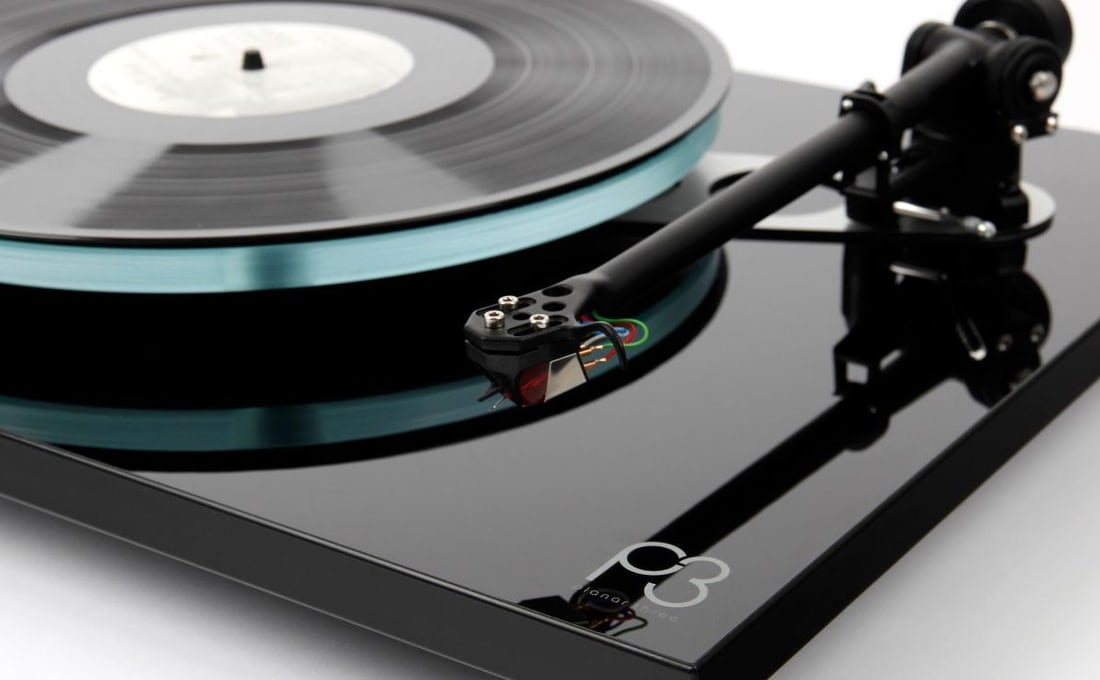
Rega's foundational argument has always been that the enemy of good vinyl playback is unwanted vibration reaching the stylus. Their answer is not mass-loading — the approach favoured by the Technics school of thought — but rigidity. The Planar 3's high-gloss acrylic-laminated plinth is light at just 6.0 kg for the complete deck, and Rega has engineered it to resist resonance rather than absorb it through sheer weight. The laminated construction bonds dissimilar materials to break up resonant modes, and the result on paper is a plinth that doesn't store and release energy back into the replay chain.
This is not marketing. There's genuine acoustic engineering rationale here, and it differentiates the Planar 3 meaningfully from cheaper decks that use hollow MDF plinths which ring like a drum when you tap them. Whether you prefer this approach to the dead-quiet, heavily damped alternative is partly a matter of sonic taste — Rega's approach tends toward a livelier, more immediate presentation, which I'll address in the sound section.
The platter: glass and why it matters
The 12mm Optiwhite polished-edge float glass platter is one of the Planar 3's most distinctive features and, I'd argue, one of its most underappreciated. Float glass has an extraordinarily consistent surface, which matters because your record is sitting on it. It's also dimensionally stable across temperature — not irrelevant here in Australia, where listening rooms can swing significantly between a Brisbane summer and a Melbourne winter. The polished edge is aesthetic, yes, but the material choice is functional. Glass is inert, rigid, and doesn't flex under the weight of a record. Owners consistently report a noticeably blacker background compared to felt-mat-on-MDF alternatives at similar price points, and the engineering rationale for why supports that experience.
The RB330 tonearm: where the money is
If I had to identify a single reason to recommend the Planar 3 over its competitors at this price, it would be the RB330 tonearm, and it isn't particularly close. Hand-assembled in the UK, the RB330 inherits significant development from Rega's reference arms. The bearing tolerances are famously tight — Rega publishes figures for their upper arms, and the cascade-down to the RB330 is real, not nominal. Zero-play bearings mean the arm moves exactly as the groove dictates, with no rocking or slop to smear transient information.
The geometry is fixed, which is a deliberate choice and a limitation depending on your perspective. You cannot adjust azimuth, and vertical tracking angle adjustment is limited. Rega's position is that factory-set geometry, optimised for Rega cartridges, is preferable to the approximations that result from user adjustment of poorly implemented mechanisms. They're not wrong in principle, but it does mean the Planar 3 rewards you most when you stay within the Rega ecosystem for cartridges — the Nd3 or Elys 2 being the natural factory partners — and can frustrate those wanting to mount third-party cartridges that require more geometric flexibility.
The motor and drive system
The 24V low-noise motor, coupled with Rega's EBLT belt, is specifically chosen for low noise floor contribution. The motor is isolated from the plinth to reduce mechanical coupling. At 33 and 45 RPM, speed is set by manually repositioning the belt between motor pulleys — there is no electronic speed selection. This is the Planar 3's most discussed limitation among prospective buyers, and I'll address it directly: it is genuinely less convenient than an electronic speed-change mechanism, and if you play a lot of 45s, you will occasionally find it mildly annoying. You also have to lift the platter to move the belt. However, the simpler the motor control circuit, the fewer potential noise sources. Rega has made a deliberate engineering trade-off, not an oversight.
For those who want electronic speed change without leaving the ecosystem, the optional Neo PSU power supply unit addresses this directly and is the most commonly recommended first upgrade. Factor in roughly an additional A$400–500 if this matters to you.
Sound
I'm going to be precise here: I cannot give you lab measurements from my own listening room, and I won't fabricate a session. What I can do is ground the expected sonic character in the engineering decisions above, cross-referenced with the consistent experience reported by long-term owners and the established characteristics of this design topology.
Bass
The Planar 3's bass character is defined by the rigidity of the plinth and the low-mass philosophy. You get bass that is articulate and fast — leading edges of bass notes are well-defined — but it is not a particularly voluminous or weighted presentation. If you've come from a heavier, more damped deck, the Planar 3 may initially sound slightly lean in the low end. Over time, most owners find this resolves into an appreciation for pitch definition: you can hear what note the bass guitar is playing, even when the track is busy. It doesn't bloom or overhang. Whether that suits you depends on your music. Jazz, acoustic, and well-recorded rock benefit enormously. Dense electronic music with sub-bass emphasis may leave you wanting more weight.
Midrange
This is where the Planar 3 consistently draws the highest praise, and the engineering rationale is clear. The RB330's bearing precision and the quiet background provided by the glass platter and low-noise motor create conditions in which midrange detail retrieval is genuinely impressive for the price. Vocals in particular sit forward and present in the mix. Owners consistently describe a sense of the recording space — not in a vague, marketing-speak way, but in the specific sense that you can hear reverb tails, breath before phrases, the ambience of the recording room. For a voice-forward listener, which I am, this is the Planar 3's headline achievement.
Treble
The treble presentation is closely tied to the cartridge choice. With the factory Elys 2 or Nd3, the top end is extended and clean without being bright or fatiguing. Rega's MM cartridges are voiced to complement the arm and plinth, so there's a coherence here that you don't always get when mixing brands. Third-party cartridges can change this significantly — sometimes for the better, sometimes not, depending on the match.
Dynamics and soundstaging
Dynamic contrast is a strength. The low-mass, high-rigidity approach means the deck doesn't compress transients — a snare crack sounds like a snare crack, not a rounded approximation of one. Soundstaging is wide relative to price, with reasonable depth. It is not the most enveloping presentation — some listeners find it more analytical than immersive — but the stereo image is stable and well-defined.
Setup & system matching
The Planar 3 does not include a phono stage, which is correct for a deck at this level — an internal phono stage would be a compromised one. Budget A$300–600 for a quality external MM phono stage: Rega's own Fono Mini A2D is a logical partner, or consider the Pro-Ject Phono Box S2 or a second-hand Musical Fidelity. Don't cripple a A$1,499 deck with a A$50 built-in stage on your integrated amplifier if you can help it.
Amplification requirements are modest — this is a standard MM output cartridge setup. Any integrated amplifier with a phono input, or a separate phono stage into a line-level input, will work. The Planar 3 is not sensitive to amplifier synergy the way a speaker or valve amp might be.
Room placement matters more than people expect. Keep it away from speaker vibration — particularly bass reflex ports firing toward the shelf — and use the supplied feet rather than improvising. The Planar 3 is not particularly susceptible to feedback by design, but placing it on a dedicated wall shelf is still best practice in a room with a floating timber floor.
Cabling: a decent phono interconnect is worthwhile but don't spend more than A$150–200 here. The returns beyond that are speculative.
Living with it
Build quality is excellent and appropriate for the price. The acrylic-laminated plinth looks genuinely premium in any of the available finishes — gloss white, gloss black, red, and others depending on importer stock. It feels like a considered object, not a mass-market appliance.
The manual lid opens to a reasonable height and doesn't obstruct record changing, though it's not the most elegant dust cover mechanism. There is no auto-stop, which is a common source of complaints from new vinyl listeners. If you're not in the habit of watching the run-out groove, you will occasionally spin on the end of a record for longer than intended. It does not harm the stylus as dramatically as some fear, but the habit of attentiveness is one the Planar 3 demands.
Australian availability is solid. Rega is distributed locally, warranty support exists, and the upgrade path — Neo PSU, cartridge upgrades, the Planar 6 above it — is well-supported. Service isn't the nightmare it can be with some European imports.
How it compares
At A$1,499, the Planar 3's primary rivals are the Pro-Ject Debut Carbon EVO (around A$1,099–1,299) and the Audio-Technica AT-LP7 (around A$1,200). The Pro-Ject is a genuine contender and offers electronic speed change; the tonearm is good but the RB330 is better. The AT-LP7 includes a built-in phono stage, which is convenient but compromised. Neither matches the Planar 3's tonearm quality or its upgrade path coherence.
Step up to the Planar 6 (around A$2,499) and you get a meaningful improvement in plinth engineering and a better motor assembly. The Planar 3 is not a Planar 6 — but at A$1,499, it shouldn't be.
Who it's for / who should look elsewhere
The Planar 3 is ideal for the serious music listener who has committed to vinyl as a long-term format, wants a genuinely high-performance deck rather than a lifestyle accessory, and is willing to learn the discipline of analogue replay. It suits acoustic music, jazz, rock, and anything where midrange presence and dynamic honesty matter most.
Look elsewhere if: you play a lot of 45s and the manual belt change will genuinely annoy you (budget for the Neo PSU from day one or consider a competitor with electronic speed change); you want a deck that requires zero engagement (an auto-stop, auto-start unit might suit you better); or your primary listening is sub-bass-heavy electronic music where the Planar 3's leaner bass presentation may leave you cold.
Verdict
The Rega Planar 3 has been refined over decades for good reason: the core engineering decisions — rigid lightweight plinth, glass platter, precision RB330 tonearm, low-noise motor — remain among the most coherent expressions of what a well-engineered belt-drive turntable should be at this price point. It demands a little of you in return: a quality phono stage, attentive listening habits, and a willingness to stay reasonably within the Rega ecosystem to get the most from it. Give it those things, and it will reward you with a genuinely musical, detailed, and long-lived vinyl replay experience. In Australia at A$1,499, I'm not aware of anything that does the complete job more convincingly.
Common questions
- Does the Rega Planar 3 come with a cartridge included?
- It depends on the retailer package. Rega offers the Planar 3 with a factory-fitted MM cartridge option — typically the Elys 2 or Nd3 — at a bundled price, or as a deck-only purchase. In the Australian market, most retailers stock it as a bundle; confirm this before purchase as cartridge prices add up quickly. Factory fitting is preferable to self-installation for most buyers, as Rega's alignment is optimised for their arms.
- Do I need a separate phono stage for the Planar 3?
- Yes. The Planar 3 has no built-in phono stage. You'll need either an integrated amplifier with a dedicated phono input (MM type) or a separate external phono preamplifier connected to a line-level input. Budget at least A$200–400 for a decent external stage — a quality phono stage is not where you want to economise when the deck itself costs A$1,499.
- How do you change speed between 33 and 45 RPM?
- Manually, by lifting the glass platter and repositioning the drive belt between the two stepped pulleys on the motor spindle. It takes about 30 seconds once you're familiar with it, but it is genuinely less convenient than electronic speed switching. If you regularly play 7-inch singles, the optional Rega Neo PSU power supply adds electronic speed selection and is a commonly recommended first upgrade.
- Can I use a non-Rega cartridge on the Planar 3?
- Yes, and many owners do. However, the RB330's fixed geometry is optimised for Rega-mount cartridges, and you cannot adjust azimuth. Many popular MM and MC cartridges mount and perform well, but those requiring significant geometric adjustment may not reach their full potential. Consult your retailer before committing to a non-Rega cartridge at a significant price point.
- What is the Planar 3's upgrade path?
- It's one of the deck's genuine strengths. The most common and impactful first upgrade is the Rega Neo PSU, which adds electronic speed change and reportedly improves motor stability. Beyond that, cartridge upgrades within the Rega range (Exact, Apheta) are well-supported. The deck itself can also be traded in or used as a reference point when stepping up to the Planar 6. Rega's ecosystem coherence means upgrades are rarely wasted expenditure.