Where to spend on a digital front end: the diminishing-returns curve, mapped
I had a reader email me last month asking whether he should put an extra $3,000 into his DAC or into new speakers. He'd been quoted a six-figure demo system at a Sydney hi-fi show and came away thinking the DAC was doing most of the work. It wasn't. It rarely is. And that email is basically why I'm writing this.
The digital front end — DAC, streamer, server, cabling between them — is the part of a system where marketing outpaces engineering more than anywhere else in audio, including cables. Every brand wants you to believe their chip, their clock, their upsampling algorithm is the reason their box costs what it costs. Some of that is real. A lot of it is a story built around a spec sheet. My job here isn't to tell you digital gear doesn't matter — it does — but to actually map where the curve of "money in" versus "sound out" goes steep, and where it goes flat. Because that curve is not a straight line, and knowing where it bends is the entire game when you're building a system on a budget that isn't infinite.
The first big jump: leaving the built-in DAC behind
If you're listening through a phone's headphone jack, a laptop's built-in audio, or the DAC baked into a cheap AVR, the first upgrade is the biggest one you'll ever make in the digital chain. Full stop. Going from that to almost any competent standalone DAC — something like an iFi Audio ZEN DAC 3 or a FiiO K11 — is a genuinely audible step. Noise floor drops, output impedance behaves properly into your headphones or preamp, and you stop fighting a chip that was designed to be cheap and small rather than accurate.
This is the part of the curve that's steep. Every dollar here is doing real work. I'd tell anyone starting from a phone or laptop that this is priority one, ahead of speakers, ahead of an amplifier upgrade, ahead of cables. You can't hear detail your source is throwing away or burying in noise before it even reaches the amp.
Where the curve starts to bend: $500 to $2,000
This is the zone where a well-engineered box — think RME ADI-2 DAC FS territory, or a streaming DAC combo like the WiiM Ultra — gets you extremely close to what most people would call transparent. Measured performance at this tier is often already below the threshold of audibility for noise and distortion. I've spent a fair bit of time with an RME on the bench and in casual listening, and honestly, chasing meaningfully lower THD+N above this price point is chasing numbers that don't correlate to anything you'll hear in a level-matched comparison.
What does still change above this price, and what doesn't, is worth separating clearly:
Build quality changes. The app experience changes — Naim's and NAD's control apps are genuinely nicer to live with day to day than some budget alternatives, and that's not nothing if you're using the thing every evening. Output stage headroom into difficult loads can improve. Power supply isolation, particularly for anything doing double duty as a headphone amp, can get quieter under load.
What doesn't reliably change: the fundamental resolution of the digital-to-analogue conversion itself. Chip folklore aside, a well-implemented budget DAC chip and a well-implemented expensive one are both converting the same bits with vanishingly small differences once you're past a basic competence threshold. I wrote about this in more detail in our piece on the best DACs and network streamers, and the short version holds here too — the chip on the spec sheet is marketing, not the deciding factor.
Streamer versus DAC: where should the next dollar go?
If you're building a two-box or all-in-one digital front end, I'd generally weight spending toward the DAC and output stage over the streaming/network layer, with one exception. If your Wi-Fi is flaky, or your current gear drops out mid-album, fix that first regardless of price — reliability problems aren't a sound-quality tradeoff, they're a functionality failure, and no amount of DAC spend fixes a dropped connection.
Once reliability is sorted, streaming transports themselves — the bit that gets the file from your NAS or a service to the DAC — have a genuinely small effect on sound quality when implemented competently, despite what the audiophile-network-switch industry would like you to believe. I know that's a mildly contrarian thing to say in this hobby, and I'll say it anyway: a $50 network switch and a $600 "audiophile" switch will not sound different, because bits are bits and error correction exists for a reason. Where the streamer genuinely earns its keep is in its output stage — the analogue circuit after the DAC chip, which is why I'd point people back to our piece on the best streaming amplifiers and all-in-one systems when they're deciding how much of the budget to put into an all-in-one box like the Naim Uniti Atom versus separates.
The last stretch: $2,000 to statement-level territory
Past $2,000 or so, you're buying diminishing but not zero returns. This is the tier where a Chord Electronics Mojo 2 or a step up into genuinely reference-grade separates can offer real, if smaller, improvements — usually in dynamics, in how a system handles complex, busy material without congestion, or in how low the noise floor sits under quiet passages. These are the kinds of differences that show up more reliably on a well-treated system with resolving speakers than on a budget bookshelf pair in an untreated room.
And that's the trap I see a lot of people fall into. They'll spend $4,000 on a DAC and run it into a mismatched, underpowered amp and speakers that can't resolve what the DAC's doing anyway. If your speakers and room are the weak link — and for most systems under $10,000 all-in, they are — a fancier DAC is solving a problem you don't have yet. I'd rather see that money go toward better standmounts (our standmount speakers guide is a good starting point) or an amplifier upgrade like the step from a Cambridge Audio CXA81 MkII to something in the Marantz Model 40n class, before chasing another few hundred dollars of DAC refinement.
A quick word on format chasing
Every year someone asks me whether they need DSD support, or MQA (which, as I've written before, is effectively dead as a going concern), or 32-bit/768kHz playback capability. Format support is cheap for manufacturers to add and expensive for consumers to be talked into caring about. I go into the actual engineering of this in our DACs and streamers guide, but the short version for a spending-priorities article: don't pay a premium for exotic format support unless you already own a library in that format. A well-implemented redbook 16-bit/44.1kHz stream through a mid-tier DAC will out-perform a poorly implemented high-res chain every time. Chase implementation, not the number on the box.
Where I'd actually put the next $1,000
If someone handed me a grand to add to an existing, reasonably competent digital front end, here's honestly how I'd sequence it, roughly in order of audible impact per dollar: first, check the room and speaker positioning cost nothing and fixes more than any box will — I know that's not what this article is nominally about, but it's the truth every time. Second, if the DAC is genuinely budget (sub-$300, no real output stage to speak of), upgrade that before anything else digital. Third, if the DAC's already competent, look at the amplifier before looking at the DAC again — output impedance and damping factor at the speaker terminal usually matter more than another decibel of DAC SNR. Fourth, and only after all that, consider a DAC upgrade for the nicer things — a better app, more headroom, lower noise under headphone loads.
Somewhere in a Perth share house a few years back I ran an ABX-style test with a mate's borrowed reference DAC against my then-$400 unit, both feeding the same amp and speakers, levels matched to within a fraction of a dB. We could not reliably tell them apart on most material. We could, immediately and without hesitation, tell the difference when I swapped the speaker cable for one with a dodgy connection. That's roughly the lesson of this whole piece: the ceiling on "does the digital chain matter" is real, but it's lower than the industry wants you to think, and it's reached faster than most people expect.
The honest bottom line on synergy
System synergy in the digital domain is mostly a myth used to sell matching-brand stacks. A DAC and streamer from the same manufacturer aren't going to "gel" better than a mixed-brand pairing in any measurable sense — digital audio doesn't have the impedance-matching quirks that make amp-and-speaker pairing a genuine engineering question. What does matter is output impedance into your amplifier's input, and whether the output level and gain structure suit your gain stage without you riding the volume knob at its noisy extremes. That's a real, checkable spec, not vibes.
My advice, for what it's worth from someone who spends more time with a multimeter than most: buy the DAC and streamer that measure well, that have an app you don't hate, and that fit your budget after the amp and speakers are sorted — not before. The curve bends hard around the $1,500 mark for most listeners. Spend past that only once everything downstream of the DAC deserves it.
— Theo Mensah, Digital, DACs & Streaming Editor
Common questions
- Is a $5,000 streamer five times better than a $1,000 one?
- No, and nobody credible claims it is. You're paying for build quality, a nicer app, sometimes better output stage components, and occasionally a genuinely quieter power supply. The bit-perfect data leaving the box is identical. Whether those extras matter to you is a personal call, not an engineering one.
- Should I spend more on the DAC or the amplifier first?
- For most home systems under about $5,000 total, I'd put more of the budget into the amplifier and speakers before chasing a pricier DAC. A competent DAC around the $500-$1,500 mark is already close to transparent. Amplifier and speaker mismatches are usually more audible than DAC differences at this level.
- Does spending more on streaming resolution (like DSD over PCM) actually matter?
- Format wars matter less than people think once you're past 16-bit/44.1kHz. See our piece on bit-perfect and PCM vs DSD for the detail, but the short version is that a well-implemented redbook stream through a competent DAC is very hard to pick from higher-resolution files in a level-matched blind test.
- What's the single best value upgrade in a digital chain?
- Room and speaker placement, not the digital gear at all. But if we're staying strictly digital, moving from a phone DAC or a cheap USB dongle to a proper standalone DAC in the $200-$600 range is the biggest single jump you'll hear. Everything after that is smaller steps for more money.

Theo here. By day I write software, by night I argue with people on forums about whether bit-perfect playback is "solved" (it mostly is, and then it isn't). I cover the digital end — DACs, streamers, servers, the whole messy ecosystem of getting a file to sound its best. My promise to you: I'll separate the genuine engineering from the audiophile folklore, and I'll never tell you a $500 streaming bridge sounds "blacker" unless I can explain why.
Software engineer; network-audio and DAC specialist
More from Theo Mensah
 Dongle DAC power limits: when a phone can't drive headphonesDongle DACs are brilliant until they aren't. Here's how to work out whether your phone-and-dongle rig actually has the current to drive your headphones.
 DNS and multiroom: why your streamer drops out at the worst timeMultiroom dropouts are rarely your Wi-Fi. Here's why DNS resolution quietly breaks streaming apps, and how to fix it for good.
- Parallel vs series IEM crossovers: why multi-driver in-ears sound so differentWhy do two IEMs with the same driver count sound nothing alike? The crossover topology is doing more work than the drivers themselves.
- Streaming a subwoofer's EQ filters: why your network player might be the bottleneckYour sub's miniDSP or app-based EQ can only act on a signal your streamer hasn't already mangled. Here's where network audio and bass management actually interact.
 Amplifier gain structure: the setting that decides your noise floorGain mismatches between DAC, preamp and power stage quietly wreck dynamic range. Here's how to actually set gain structure instead of guessing at the volume knob.
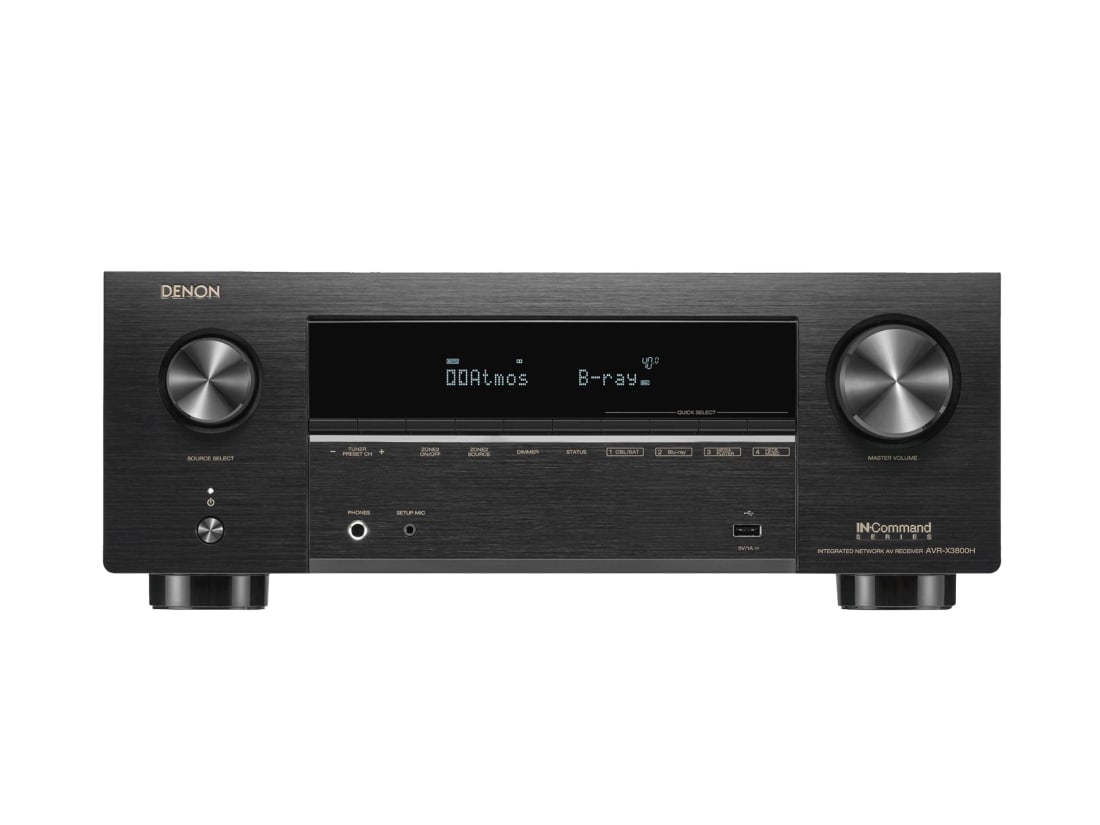 Bass management by the numbers: what your AVR's crossover and slope actually doCrossover frequency gets all the attention, but slope, distance settings and speaker size flags quietly decide whether your bass management works or fights itself.