Why statement systems still get beaten by the zone two speaker
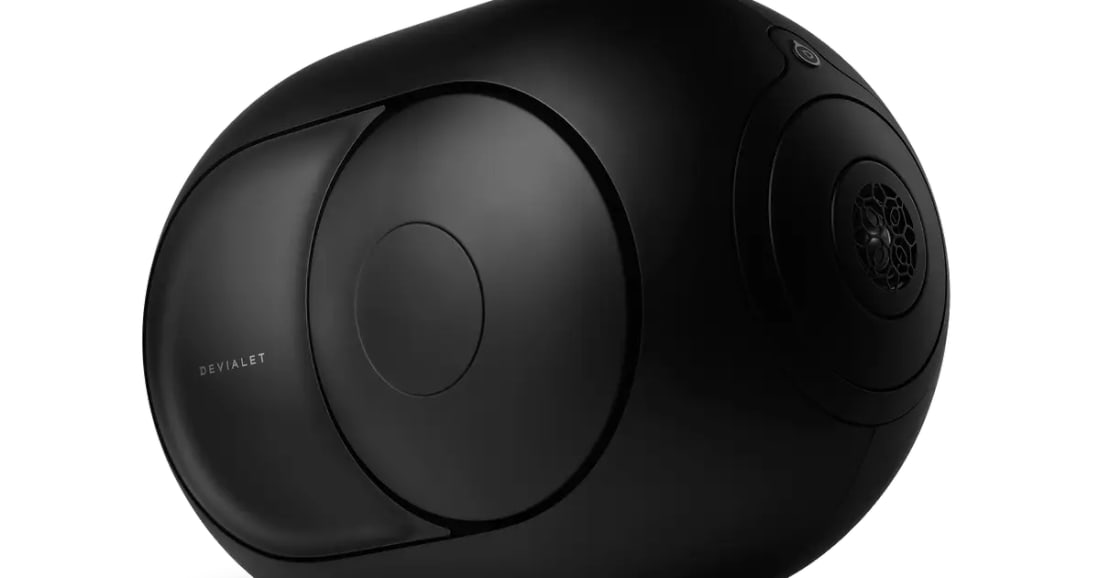
I was in a client's listening room in Vaucluse a few months back, sitting in front of a pair of speakers that cost more than most cars, when he asked me to play something in the kitchen too. Same track, same service, same network. What came out of the kitchen speaker was thin, delayed by about half a second, and about 6dB quieter than it should have been relative to what he'd set. He wasn't embarrassed by his main system. He was embarrassed by his kitchen.
That's the thing nobody tells you when you're spending real money on a statement system: the room with the six-figure speakers is usually the easy part. Get the amplifier matched, get the room treated, get the front end sorted, and a reference system more or less behaves the way the engineering says it should. Multiroom is different. It's the one part of a high-end build where the cheapest link in the chain — a $90 streaming puck in the laundry, a software bridge nobody updated, a Wi-Fi access point fighting with next door's mesh network — can make the whole house sound like it was assembled by someone who's never heard good audio. And in my experience, that's almost always exactly what's happened. The reference room gets months of attention. The rest of the house gets an afternoon.
The problem is architectural, not acoustic
Here's the uncomfortable bit: you can't fix multiroom with a bigger budget the way you can fix a reference room with a bigger budget. Throwing a $20,000 DAC at the kitchen zone doesn't solve volume mismatch, codec changeover clicks, or the half-second of drift that creeps in when one zone is running Ethernet and another is on Wi-Fi riding a congested 2.4GHz band because someone's NBN box is still on factory channel settings.
Most of the statement systems I cover use some combination of Roon, a proprietary ecosystem layer (Naim, Linn, dCS's own networking stack), or a UPnP-based bridge feeding separate zone amps. The protocol choice matters enormously here, and it's the one decision clients skip because the salesperson doesn't make money explaining it. Roon's strength is that it does its own clock-synchronised multiroom natively, with proper sample-rate matching across zones, rather than relying on each manufacturer's app to agree with every other manufacturer's app about timing. That's precisely why Roon has become the default backbone for serious multi-zone builds even when the core system is dCS or Naim — you let Roon own the transport layer and let the hardware own the DAC and amplification. Mixing ecosystems without that unifying layer is how you end up with three apps, three volume scales, and three slightly different ideas about what "zone sync" means.
Where the actual money leaks out
I'll be blunt: in a six-figure build, the zone two, three and four speakers are very often an afterthought bought on the last day of the project, and it shows. A statement front end deserves a front-end-quality network, full stop — proper managed switching, VLANs separating the streaming traffic from the general household Wi-Fi, and Ethernet runs to every zone that can physically take one. Wi-Fi is fine for a kitchen that just needs background music. It is not fine for a room you've actually paid to furnish with decent standmounts, because jitter and dropped packets on a congested band manifest as exactly the kind of soft, smeared transient response that an engineer-brain like mine finds maddening and a casual listener just describes as "flat."
We cover the budget end of this build-out properly in the best streaming amplifiers and all-in-one systems guide, and honestly the lessons scale up rather than change — a good streaming amplifier with a competent DAC stage, in a sensibly sized room, beats an expensive amp fed by a flaky network every time. The difference at the top end isn't that the rules change. It's that people with statement budgets assume money fixes network problems, and it just doesn't.
Volume matching is a maths problem, not a feel problem
The zone two mismatch I mentioned at the start comes down to gain structure, and it's rarely discussed properly. Every amplifier in a multiroom system has a different sensitivity, a different maximum output voltage, and usually a different volume curve mapped by its own app. When you set "60%" on a Naim app and "60%" on a Sonos-adjacent third-party zone, you are not setting the same acoustic level. Add speakers of differing sensitivity between rooms — an efficient horn-loaded pair in the living room against a low-sensitivity standmount in the study — and the mismatch compounds.
The fix is unglamorous: measure actual SPL at a fixed distance in each zone at a reference digital level, using a cheap SPL meter or even a calibrated phone app, and build a level offset table per zone rather than trusting the percentage slider. It takes an afternoon. Almost nobody does it. I've started insisting on it as a line item on statement builds because the alternative is a system that measures beautifully in the main room and embarrasses the owner everywhere else.
Codec switching and the click nobody explains
There's a specific failure mode worth naming: the audible click, dropout or brief mute that happens when a stream changes sample rate or bit depth mid-playlist, and the DAC has to re-lock. On a single-zone system this is a minor annoyance. On a four-zone system where each DAC handles the handshake slightly differently, you get a cascade — one room mutes for half a second while the others play on, and suddenly your "synchronised" multiroom isn't. This is a real limitation of bit-perfect playback chains, and it's one of the reasons some integrators deliberately fix output sample rate on every DAC in a multi-zone build rather than letting each stream pass through unaltered. You trade a theoretical purity argument for practical reliability, and at the multiroom level, I think that's almost always the right trade. Marcus would probably push back on me here and argue you're throwing away resolution for convenience — and he's not wrong on paper — but I've sat through enough click-and-mute moments in front of clients to know which one actually ruins an evening.
What streaming services actually do differently in multiroom
This is where the service you pick genuinely changes the engineering problem, not just the catalogue. Roon-ready integration (via Qobuz and Tidal's APIs) hands timing control to Roon's core, which is why those two services dominate serious multi-zone builds. Apple Music's AirPlay 2 stack does its own multiroom sync extremely well within Apple's own ecosystem, but the moment you need it to talk to a non-Apple zone amplifier, you're relying on that device's AirPlay 2 implementation being current and well-maintained, which is a bigger "if" than most installers admit. Spotify Connect is rock solid for single-zone casting but was never built as a true synchronised multiroom protocol, so stretching it across four zones at a reference level is asking it to do a job it wasn't designed for.
If you want the deeper service-by-service breakdown for Australian conditions, our team has already done that work properly — it's worth reading alongside this one rather than me repeating it here.
Building the zone hierarchy properly
The approach I recommend to clients, and the one I use as a baseline when I'm auditioning multi-zone builds for review, is to treat the house as a hierarchy rather than a flat set of equal rooms. The reference room gets dedicated Ethernet, its own DAC, and no compromise. The next tier — a study or a main bedroom where someone might actually sit and listen — gets a genuinely good streaming integrated, something like the Naim Uniti Atom or a Cambridge Audio CXN100 feeding a proper amp, wired if at all possible. Everything below that — kitchen, bathroom, outdoor zone — can run on a lighter, Wi-Fi-tolerant platform because nobody is critically listening there, they're having a conversation over breakfast.
The mistake is pretending every zone deserves the reference-room treatment, which blows the budget on rooms where it won't be appreciated, or pretending every zone can run on the cheapest possible hardware, which is how you get the kitchen moment I opened with. Somewhere between those two is a sensible allocation, and it's rarely symmetrical. I'd rather see a client spend on one excellent second zone and accept that the laundry speaker is just a laundry speaker, than spread the budget evenly across five rooms and end up with five mediocre ones.
Network infrastructure is not optional at this level
If there's one house rule I'd ask you to take from this: a statement system deserves a statement network, and most installers under-spec it because clients see switches and access points as boring. They're not. A managed switch with proper QoS tagging for audio traffic, access points placed and channel-planned rather than left on factory auto, and Ethernet backhaul wherever the walls allow it — that infrastructure is what lets a $400 streamer in zone four sound as stable as the reference DAC in the main room, even though it's nowhere near as capable. Stability is a network property before it's a hardware property. The best DACs and network streamers guide covers hardware selection well; the network underneath it is the part that doesn't get written about nearly enough, and it's where I see statement builds actually fail in the field.
What I tell clients before they spend another dollar on the main room
If your reference system sounds extraordinary and your multiroom sounds like an afterthought, you don't need a better amplifier in the listening room. You need an afternoon with an SPL meter, a proper look at your network topology, and an honest conversation about which zones actually deserve investment. It's not as satisfying as auditioning monoblocks, I'll grant you — there's no romance in VLAN configuration — but it's the difference between a system that performs at every point in the house and one that's brilliant in exactly one room and apologetic everywhere else.
The Wi-Fi Alliance and the Bluetooth SIG both publish useful technical documentation on multiroom audio synchronisation standards if you want to go deeper on the protocol layer; it's drier reading than a speaker review but it explains why some zone-sync failures are baked into the standard rather than the implementation.
Next time I'm in that house in Vaucluse, the kitchen zone is getting fixed before we touch the monoblocks again. That's the right order of operations, even when the budget says otherwise.
— Sofia Laurent, High-End & Statement Systems Editor, Sound Technology
Common questions
- Does Roon actually sound better than native manufacturer apps for multiroom?
- Not in terms of raw audio quality from a single zone, but Roon's clock-synchronised architecture handles multi-zone timing and sample-rate matching more reliably than most proprietary apps manage once you mix brands. For single-ecosystem builds (all Naim, all Sonos) the native app is often fine.
- Is Wi-Fi ever acceptable for a serious listening zone?
- It can work if the access point is properly placed and channel-planned rather than left on factory defaults, and if the zone isn't competing with heavy household traffic. For a room where you actually sit and listen critically, I'd still run Ethernet if the walls allow it.
- Why does my zone two volume never match my main room at the same app setting?
- Volume sliders are percentages of each amplifier's own gain curve, not calibrated SPL. Different amp sensitivities and speaker efficiencies mean the same percentage produces different real-world loudness. Measuring actual SPL per zone and building an offset table fixes it properly.

I'm Sofia, and I get to play with the silly stuff — the statement amplifiers, the reference loudspeakers, the cost-no-object systems that most of us will only ever hear at a show. Someone has to, and I take it seriously: at this level the price stops mapping to performance and starts mapping to engineering, craft and ego, and part of my job is telling you which is which. I love the extreme end of this hobby, but I'm not dazzled by a big number on a price tag.
Covers flagship and cost-no-object reference systems
More from Sofia Laurent
- The synergy tax: why mismatched gear costs more than cheap gearThe synergy tax explained: why pairing mismatched hi-fi components quietly costs more than buying modest, well-matched gear.
 Rear-port floorstanders near a glass wall: a risky pairingRear-ported floorstanders against glass walls cause boundary reinforcement and reflections. Here's how to place, measure and tune them properly.
- Infrasonic bass below 20Hz: chasing the octave you feel, not hearBelow 20Hz is infrasonic bass: felt more than heard. Here's what it takes to reproduce it properly, and whether a statement system should bother.
- Why a statement floorstander can be the wrong speaker in the roomSix-figure floorstanders fail in rooms that were never built for them. Here's how to tell if your space can actually support one before you buy.
- Diffusion in statement rooms: when scattering sound beats absorbing itIn a statement room, piling on absorption kills the air around the music. Here's when diffusion is the better tool, and where I've seen it misused.
- Statement standmounts: when the small box is the right flexAt the top of the market, bigger isn't the default. Here's when a reference standmount genuinely beats a floorstander, and when it's just a smaller cheque.