Why your turntable's earth wire isn't optional

A reader brought a turntable into the office a few weeks back convinced his cartridge was faulty. Constant low hum, worse with his hand near the tonearm, present even with the volume at a whisper. Five minutes later we'd found the problem: the thin earth wire that runs alongside the RCA leads had never been connected to the phono stage's ground terminal. It was coiled up behind the plinth, exactly where it had sat since the day he unboxed the deck. Nobody tells people this wire is not decorative, and it causes more support calls than any actual electronic fault I see.
Turntable earthing is one of those setup steps that gets skipped because it looks optional. It isn't connected to the signal path the way the RCA cables are, it doesn't carry any music, and on the surface it looks like the sort of accessory cable you could leave dangling without consequence. In practice it's doing a specific and necessary job, and when it's missing or poorly connected, the symptom is almost always the same: a persistent 50Hz hum that gets louder when you touch any metal part of the turntable and doesn't go away when you turn the volume down.
I've lost count of the number of times I've been handed a deck at a mate's place, told "it's always sounded a bit off," and found this exact fault inside the first two minutes. It's almost always the same story too: a house move, a cartridge swap, or a new rack, and the earth wire got left off in the shuffle because it doesn't plug into anything obvious.
What the earth wire actually does
A turntable's motor, platter bearing and tonearm are all metal, and metal chassis parts act like tiny antennas for stray electrical noise floating around your house. Mains wiring in the walls, switch-mode power supplies, dimmer switches, even your fridge compressor cycling on and off, all of it radiates low-level electrical noise. Your cartridge is an extremely sensitive, low-output device, generating a signal measured in millivolts, so it's exceptionally good at picking up this background noise and passing it straight to your amplifier along with the music.
Put some numbers on it. A moving-magnet cartridge typically outputs somewhere between 2mV and 6mV at a standard 5cm/s velocity; a moving-coil cartridge is usually well under 1mV, sometimes as low as 0.2mV to 0.5mV on a low-output design. Mains hum picked up by an ungrounded chassis can easily sit in the tens of microvolts to low millivolts range by the time it's been amplified through a phono stage with 40dB to 60dB of gain. Against a moving-coil cartridge's already tiny output, that's not a marginal addition to the noise floor, it can be a substantial fraction of the signal itself. That's the reason moving-coil setups are often noticeably more sensitive to a grounding fault than a moving-magnet cartridge on the same turntable; there's simply less signal to swamp the noise.
The earth wire gives that stray noise a path to ground, specifically to the chassis ground of your phono stage or amplifier, rather than letting it circulate in the turntable's chassis and bleed into the audio signal. Without it, you get a hum loop: the turntable's metal parts, the tonearm wiring and your own hand or body (which is itself a decent conductor and antenna) all contribute to a floating ground reference that the cartridge's signal rides on top of. Touch the tonearm and the hum changes, because you've just altered that floating reference. This is standard electrical engineering, not audiophile folklore, and it's the same principle behind the grounding requirements in household electrical wiring generally, covered in reasonable detail on the Wikipedia entry on electrical grounding if you want the underlying physics.
Why it's separate from your signal cables
You might reasonably ask why the earth connection isn't just handled by the RCA cable shields, since those are grounded too. The honest answer is that it sometimes is, on turntables with all-in-one cabling where the shield doubles as the ground path. But plenty of designs, particularly anything with a separate tonearm ground lug, keep the two deliberately apart. The RCA shield carries the audio return path and some high-frequency shielding; the dedicated earth wire carries a lower-frequency ground reference for the chassis and motor. Combining both jobs into one thin shield braid works, but it's not always sufficient, especially with long cable runs or phono stages with higher gain.
There's a practical trade-off buried in that design choice. A turntable maker could, in theory, rely entirely on the RCA shield and skip the separate earth lug altogether, and some budget decks do exactly that to save a part and a manufacturing step. It works fine in a lot of rooms. But it removes your ability to troubleshoot or isolate a ground loop later, because the ground path is baked into the same cable as the signal. Keeping the earth wire separate costs the manufacturer almost nothing, and it gives you, the owner, a point you can actually disconnect and test independently when something goes wrong. I'd rather have the extra wire and the flexibility than a tidier-looking cable run.
This is also why you'll sometimes get worse hum with the earth wire connected than without it, on certain combinations of turntable and amplifier. That's a ground loop, a separate and more annoying problem where your turntable and your amplifier (or your amplifier and your power board, or any two pieces of equipment in the chain) both have slightly different ground potentials, and connecting them creates a loop that mains hum travels through. It's rarer than straightforward missing-earth hum, but it does happen, particularly in older houses with inconsistent wall wiring, and it's worth knowing the two problems look identical from the listening chair but need opposite fixes.
Finding a grounding fault systematically
Start simple. Check that the earth wire is physically connected at both ends: the small threaded post on the turntable's chassis, usually near where the tonearm cables exit, and the matching ground terminal on your phono stage or amplifier, often labelled "GND" near the phono inputs. It's a common fault for this terminal to be loose, or for the spade connector on the wire to have slipped half off during a cartridge change or a house move.
Here's the sequence I actually run through on the bench. First, visual check with the system off: both ends of the earth wire seated on bare metal, not resting against a painted panel or a plastic bushing, because paint is an insulator and will quietly defeat the whole connection while looking perfectly connected. Second, power up, select the phono input, volume to a low but audible level, and listen for the baseline hum with nothing touching the deck. Third, lightly touch the tonearm's metal headshell or the platter spindle. If the hum jumps noticeably, that's your confirmation the chassis isn't properly referenced to ground. Fourth, disconnect the earth wire entirely for ten seconds and listen again; if the hum gets worse, you've got a straightforward missing-earth fault and reconnecting it properly will fix it. If the hum gets better with it disconnected, you're dealing with a ground loop instead, and reattaching the earth wire isn't the answer.
From there, the fix for a confirmed missing-earth fault is usually either tightening or replacing the earth connection, perhaps with a fresh spade lug if the original has corroded or stretched. For the ground loop case, the fix is isolating the two pieces of equipment, sometimes with a dedicated ground loop isolator, though I'd try the simpler fixes first, like plugging the turntable and amplifier into the same power board rather than separate circuits around the house, because isolators can occasionally introduce their own high-frequency rolloff and are a band-aid rather than a cure.
Worth ruling out before you assume it's a grounding problem at all: a nearby dimmer switch, a cheap wall-wart power supply for another device plugged into the same power board, or a fluorescent or LED driver in the same room. These can all introduce a buzz that sounds similar to ground hum but has nothing to do with your turntable's earth connection. I've chased phantom "grounding faults" that turned out to be a neighbouring device's switch-mode supply radiating noise into unshielded interconnects. Separating your phono cable run physically from mains cabling, even by a few centimetres, sometimes fixes what looks like a grounding problem entirely. I had one case where simply moving a phone charger from the same power board to a different outlet across the room dropped the background hum to nothing, no earth wire involved at all.
Internal phono stages complicate the picture
If your turntable has a built-in phono stage, or you're feeding a streaming amplifier or all-in-one system with a phono input, the grounding situation can differ from the classic separate-turntable-and-amp setup. Check the manual for your specific unit; some built-in phono stages use the RCA shield as the sole ground reference and don't have a separate earth terminal at all, which is fine as long as the design accounts for it. If you're building a system around a streaming amplifier like those covered in our streaming amplifiers and all-in-one systems guide, it's worth checking the phono input's grounding arrangement specifically before assuming a fault exists.
I'll admit a mild bias here: I think too many setup guides treat grounding as an afterthought, tucked into a single line near the end of the instructions, when it's actually one of the more common sources of real, measurable noise in a vinyl system. It gets less attention than tracking force or azimuth alignment despite being just as capable of ruining the listening experience, arguably more so, because a hum problem is audible on every single record rather than only on specific passages. You can get tracking force and azimuth slightly wrong and still enjoy most of your collection; get the grounding wrong and every side you play has a low drone sitting under it.
When the fault isn't the turntable at all
Occasionally the noise floor issue has nothing to do with the earth wire and everything to do with gain structure further down the chain. If you've checked grounding thoroughly and still hear hiss or hum, it's worth reading our piece on amplifier gain structure and noise floor, since a phono stage with excessive gain for a high-output cartridge can produce a hiss that sounds superficially similar to electrical noise but has an entirely different cause and fix. The two problems get confused constantly in forum threads, partly because both get described loosely as "hum" by people who haven't isolated the frequency.
A rough way to tell them apart by ear: genuine ground hum sits at 50Hz with harmonics stacking up at 100Hz, 150Hz and so on, giving it that low, buzzy, almost mechanical quality. Gain-related hiss sounds more like a soft "sssh" spread across the higher frequencies, closer to tape hiss than mains buzz. It's not a substitute for proper measurement, but if you've got a reasonable ear and a quiet room, you can usually separate the two before you even open a manual.
For cartridge manufacturers' own guidance on grounding and installation, Ortofon's setup documentation at ortofon.com covers the practical side reasonably well, and it's worth a look if you're troubleshooting a specific cartridge and turntable combination rather than working from general principles.
A five-minute check worth doing now
If you've never specifically verified your earth connection, go check it today. Pull the turntable out, look at both ends of that thin wire, and make sure it's actually seated on a clean metal contact rather than resting against paint or a plastic housing. It takes less time than cueing up a record, and if you've been living with a low hum you'd mentally filed away as "just how vinyl sounds," there's a reasonable chance it isn't, and never had to be.
— Marcus Vale, Editor, Sound Technology
Common questions
- Can I just disconnect the earth wire if my system has more hum with it connected?
- You can, and sometimes that's the right fix if you're dealing with a ground loop rather than a floating ground. But treat it as a diagnostic step, not a permanent solution. Leaving a system permanently ungrounded can mean more susceptibility to interference even if the audible hum has gone, so it's worth understanding which problem you actually have.
- Does a more expensive phono cable fix grounding problems?
- Rarely on its own. A well-shielded cable can reduce susceptibility to radiated interference, but a genuine missing or faulty earth connection needs an actual ground path, not just better shielding. Spending on cable before checking the earth wire is a common and avoidable mistake.
- Is hum from a turntable dangerous to my speakers or amplifier?
- No. It's an annoyance and a sign of a wiring fault, not a safety issue for your equipment. It won't damage anything, though persistent ground loops in a wider system occasionally point to a household wiring issue worth having an electrician check.

I'm Marcus, and I'll be honest up front: I trust a measurement before I trust my own ears, because my ears lie to me daily. I spent fifteen years designing audio electronics before I started writing about them, so when a brand tells me a number, I want to see the graph. That doesn't make me cold about this hobby — I love a system that disappears as much as anyone — it just means I'll tell you when an expensive box is selling you confidence rather than performance.
Former audio electronics engineer; objectivist; runs the test bench
More from Marcus Vale
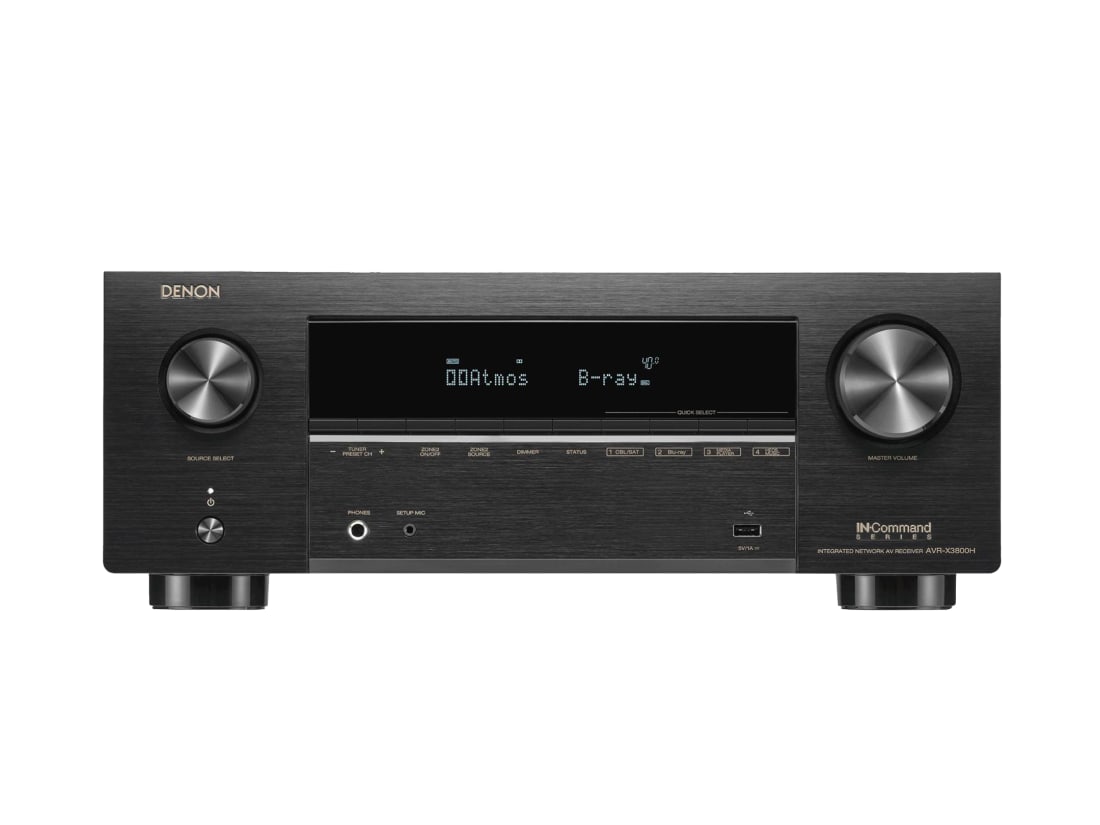 Why your AVR runs cool on music but throttles on AtmosAVR thermal throttling explained: why nine-channel Atmos mixes push receivers into protection mode that two-channel music never triggers.
- Subwoofer delay settings: why your AVR's number is a guessAVR auto-calibration estimates subwoofer delay from distance, not timing. Here's how to measure and correct it properly for tighter bass.
- AVR auto-calibration: what Audyssey, YPAO and Dirac actually measureAudyssey, YPAO and Dirac Live all run a mic sweep and spit out numbers, but they're not measuring the same things or fixing the same problems. Here's what's actually happening.
- Cartridge break-in: what actually changes in the first 40 hoursDoes a new cartridge really need 40 hours to "open up"? I measured one to find out what's mechanical fact and what's audiophile folklore.
- DAC output stages: what the chip doesn't tell youThe DAC chip gets all the marketing attention, but the analogue output stage after it does most of the work shaping what you actually hear.
- HDMI handshakes explained: why your AVR drops signal at the worst momentHDCP handshakes, not cables, cause most AVR dropouts. Here's how the handshake actually works and the wiring order that stops it failing.