Turntable mats and platters: what actually changes the sound

A bloke at a record fair in Chapel Street once tried to sell me an acrylic platter mat for $180 with the pitch "it'll transform your table." It might have, slightly. It also might have made things slightly worse, because mat and platter material isn't a universal upgrade, it's a tuning decision, and the right answer depends entirely on what platter you're already sitting on top of. This is one of the few genuinely cheap tweaks left in vinyl that actually does something audible, but it's also one of the most overhyped, and the difference between those two truths is worth untangling properly.
I've swapped mats on four different turntables over the years chasing this, from a cheap felt stock mat through cork, leather, rubber and a borrowed acrylic one that cost more than the turntable underneath it. The changes were real every time. They were not always improvements, and more than once I ended up going back to the mat that came in the box.
What a mat is actually doing
A platter mat sits between your record and the platter itself, and its job is twofold: coupling the record to the platter mass so vibration drains away rather than resonating in the vinyl, and providing enough friction and flatness that the record sits stable and doesn't ring like a drum skin when the stylus excites it. Different materials do these two jobs in different proportions, and that's the whole story of why mats sound different from each other.
Felt is light, slightly springy, and does almost nothing for coupling. It's cheap, which is why most entry-level turntables ship with it, but it leaves the record relatively free to resonate on its own. Rubber couples more firmly and damps better, at the cost of sometimes sounding a touch dead or soft in the midrange if the platter underneath is already well damped. Cork sits somewhere in between, with decent damping and a slightly warmer tonal character that a lot of listeners (myself included, most days) find pleasant without being obviously coloured. Leather behaves similarly to cork but with a touch more grip. Acrylic and glass mats go the opposite direction entirely, coupling the record very firmly to a dense, low-loss material, which tends to increase apparent clarity and attack at the cost of sometimes sounding lean or clinical, depending on the rest of the system.
Worth noting too that friction coefficient varies more between materials than most buyers expect, and it affects more than just whether the record slips during a rough cue. A low-friction mat under a high-torque direct-drive motor can introduce very slight slip-stick behaviour under heavy bass transients, which shows up as a smeared, slightly unstable low end rather than anything you'd immediately diagnose as a mat problem. I noticed this years ago on an old Technics-style deck with a worn felt mat; swapping to rubber tightened the bass noticeably, and it had nothing to do with tonal colour and everything to do with grip.
Why the platter underneath matters more than the mat on top
This is the bit most mat marketing conveniently skips. A mat doesn't exist in isolation, it interacts with whatever the platter itself is made from. A cheap stamped aluminium platter has its own resonant character, usually a slight ring or hollowness, and a damping mat like rubber or cork is doing real, useful work taming that. Put the same rubber mat on a dense acrylic or glass platter that's already well behaved and you're potentially doubling up on damping that wasn't needed, which can suck the life out of the sound.
Conversely, an acrylic mat on top of a lightweight metal platter can sound genuinely transformative, because you're adding real mass and a low-resonance interface exactly where the stock setup was weakest. The same acrylic mat on a turntable that already has an acrylic platter is largely redundant, you're not fixing anything that was broken.
Here's a concrete way to think about it. Tap the edge of your bare platter with a fingernail, no record, no mat. A thin stamped aluminium platter usually gives a clear ping or ring that takes a moment to die away. A dense acrylic or glass platter gives a dull thud with almost no ring at all. If your platter rings, a damping mat is addressing a real mechanical problem and you're likely to hear an improvement in low-level detail and bass definition, because that ringing energy was previously finding its way back into the stylus-record interface. If your platter already thuds dead, you're choosing a mat for tonal flavour rather than fixing anything structural, and the stakes of getting it "wrong" are lower, and so is the potential upside.
This is why I'm sceptical of blanket "best turntable mat" recommendations. The honest answer is always "it depends on your platter," and anyone selling you a universal upgrade without asking what's underneath is selling you a story, not a fix. The same scepticism applies to a lot of what gets marketed as a necessary upgrade in this hobby, which is roughly the whole argument behind upgrading a budget turntable in the right order rather than throwing money at whatever's fashionable this month.
The budget experiment worth running
Because mats are cheap relative to almost anything else in a vinyl front end, this is a genuine giant-killer move: a $30-60 cork or rubber mat can outperform mats costing four times as much on the wrong platter, and there's no way to know which one suits your table without trying a couple. Most Australian hi-fi shops that stock turntables also stock a handful of mat options, and some will let you borrow one to try at home, particularly if you're a regular customer. It's worth asking.
If you want to run this properly rather than just swapping once and guessing, pick two or three records you know intimately, ideally ones with a mix of sustained bass notes, a quiet passage, and a dense orchestral or full-band section where resonance has somewhere to hide. Play the same fifteen seconds on your stock mat, note what you hear in plain language rather than audiophile adjectives (is the bass note one note or does it smear into the next; does the quiet passage have a faint hum or hash underneath it), then swap and repeat immediately while the first impression is still fresh. Give each mat at least two full plays before deciding, because a slightly different VTA from mat thickness changes can throw your first impression off in a way that has nothing to do with the mat material itself. It's a twenty-minute exercise and it'll tell you more than any forum thread.
Mat thickness and the VTA trap
One thing that trips people up when mat swapping: thickness isn't just a tonal variable, it's a geometry variable. Swapping from a 3mm felt mat to a 5mm leather mat raises the record surface by 2mm, which changes your vertical tracking angle and effectively your stylus rake angle too. On a tonearm without easy VTA adjustment this can introduce a genuine, measurable change in frequency balance that has nothing to do with the mat's damping properties at all, it's purely a geometry shift masquerading as a material difference. If your arm has VTA adjustment, as most mid-tier and above decks do, it's worth re-levelling after any mat change with meaningfully different thickness, otherwise you're comparing apples to slightly mistracked oranges. I've seen plenty of forum posts praising or damning a mat that were really just undocumented VTA shifts.
If you're running something like a Rega Planar 3 (check price), which uses a phenolic resin platter rather than metal or acrylic, Rega's own design philosophy already treats the platter and sub-platter as a tuned system, and Rega's technical notes are worth reading if you want to understand why they've resisted switching to acrylic despite it being fashionable elsewhere in the market. Swapping mats on a Rega can still change things, but you're working with a platter that was engineered as part of a whole, not a blank slate. The principle of platter resonance and material damping is well documented in general turntable engineering discussion, including the overview on Wikipedia's phonograph turntable entry, which covers how platter mass and material choices evolved across decades of design.
Record clamps and weights: a related but separate tweak
Clamps and weights that screw or press down onto the spindle are solving an adjacent problem, flattening a warped or domed record and adding mass at the centre, rather than changing the mat interface itself. They can help with genuinely warped records by pulling the vinyl flatter against the mat, improving tracking and reducing the subtle pitch wobble a warp causes. But a clamp on a flat record mostly adds mass and damping at one point rather than across the surface, and the audible benefit is smaller and more system-dependent than most owners expect. I'd treat clamps as a specific fix for warp problems rather than a universal tonal upgrade, which is a more contrarian take than most vinyl forums will give you.
There's also a compatibility issue that catches people out: not every turntable is designed to take extra spindle mass. Some bearing and motor assemblies, particularly belt-drive designs with lighter sub-platters, aren't engineered for the extra downward load a heavy outer-rim clamp or weighted centre puck applies over thousands of hours. Check your manufacturer's documentation before adding a heavy clamp as a matter of course, rather than assuming more mass is automatically a safe bet. It usually is fine, but "usually" isn't "always," and bearing wear is expensive to fix compared to a $40 mat.
What doesn't actually matter as much as people think
Mat thickness alone isn't a reliable predictor of anything beyond the VTA effect above. A thick felt mat isn't automatically better damped than a thin one, because felt's damping behaviour comes from the material's internal structure, not bulk. Similarly, exotic or boutique materials marketed with vague language about "sonic signatures" are usually just variations on the rubber, cork, leather, acrylic spectrum with a higher price tag and better marketing copy. If a manufacturer can't explain in plain terms what the material is doing, coupling more or less, damping more or less, that's a reasonable signal the product is leaning on mystique rather than engineering.
It's also worth remembering that a mat swap is a tiny lever compared to getting the fundamentals right first. If your cartridge alignment is off or your tracking force is guessed rather than measured, no mat will fix that. I've written before about cartridge alignment as the free upgrade most owners skip, and it remains true that geometry problems dwarf anything a mat can do. Get that sorted first, then treat mat swapping as the fine-tuning step it actually is. The same goes for tracking force itself, covered properly in why "close enough" tracking force costs you detail, which is a bigger lever than any mat you'll buy.
Isolation is a different problem entirely
Don't confuse mat choice with vibration isolation from the rack or floor, which is a separate issue governed by what the turntable sits on, not what sits on the turntable. A mat deals with the record-to-platter interface; a wall shelf or isolation platform deals with footfall and structure-borne vibration reaching the plinth from outside. Both matter, but they're solving different problems and neither substitutes for the other. If footfall bass or feedback is your actual complaint, mat swapping won't touch it, and it's worth sorting your digital front end and the rest of the chain only after the physical turntable setup itself is right, which is the order I'd always recommend for anyone building a vinyl system from scratch.
My actual recommendation
Start with whatever came stock on your turntable and listen to it properly for a couple of weeks before changing anything, because a lot of "mat problems" are actually just unfamiliarity with how your table sounds. If you do want to experiment, buy a cork or rubber mat first, since they're cheap, broadly compatible with most metal and glass platters, and reversible if you don't like the result. Save acrylic and glass mats for turntables with lightweight metal platters where the lack of damping is the actual problem you're trying to solve, and be honest with yourself about whether what you're hearing is genuinely better or just different and more exciting on first listen, which fades.
Whilst it's tempting to chase the next $150 accessory, the better play for most budgets is sorting alignment and tracking force first, then treating a mat swap as the five-dollar-an-hour tuning exercise it actually is rather than a transformation you buy once and forget.
— Dave Okafor, Value & giant-killers, Sound Technology
Common questions
- Is a more expensive mat always better?
- No. The right mat depends on what your platter is made from and how it already behaves. An expensive acrylic mat can make a well-damped platter sound lean, while a cheap cork mat can genuinely fix a resonant stock metal platter.
- Do record clamps improve sound quality on flat records?
- The clearest benefit is on warped records, where a clamp flattens the vinyl against the mat and improves tracking. On already-flat records the audible benefit is smaller and more system dependent.
- Should I change my mat before fixing cartridge alignment?
- No. Alignment and tracking force problems are much larger contributors to poor sound than mat choice. Sort those first, then treat mat swapping as fine-tuning.

I'm Dave, and I'm the cheapskate of the team — and proud of it. My whole thing is finding the gear that punches three times above its price, the so-called "giant-killers," because most people don't have forty grand for a system and shouldn't feel bad about it. I've heard the megabucks stuff, and a lot of it is gloriously good; I've also heard $800 setups that get you 85% of the way there. I'll always tell you where the law of diminishing returns kicks in.
Lifelong bargain-hunter; budget-to-midfi specialist
More from Dave Okafor
 Matching speaker and amp cost: ignore the price-parity mythForget the old rule of matching speaker and amp cost dollar-for-dollar. Here's what actually decides a good pairing, and why it isn't price.
- Buying a demo unit: the giant-killer move retailers hateEx-demo hi-fi gear can save 20-40% with near-zero risk. Here's how to actually negotiate it, what to check, and when to walk away.
- Flutter echo: the room fault that sounds like nothing's wrongFlutter echo blurs detail in parallel-wall rooms without obvious boom. Here's how to find it cheaply and kill it without over-treating.
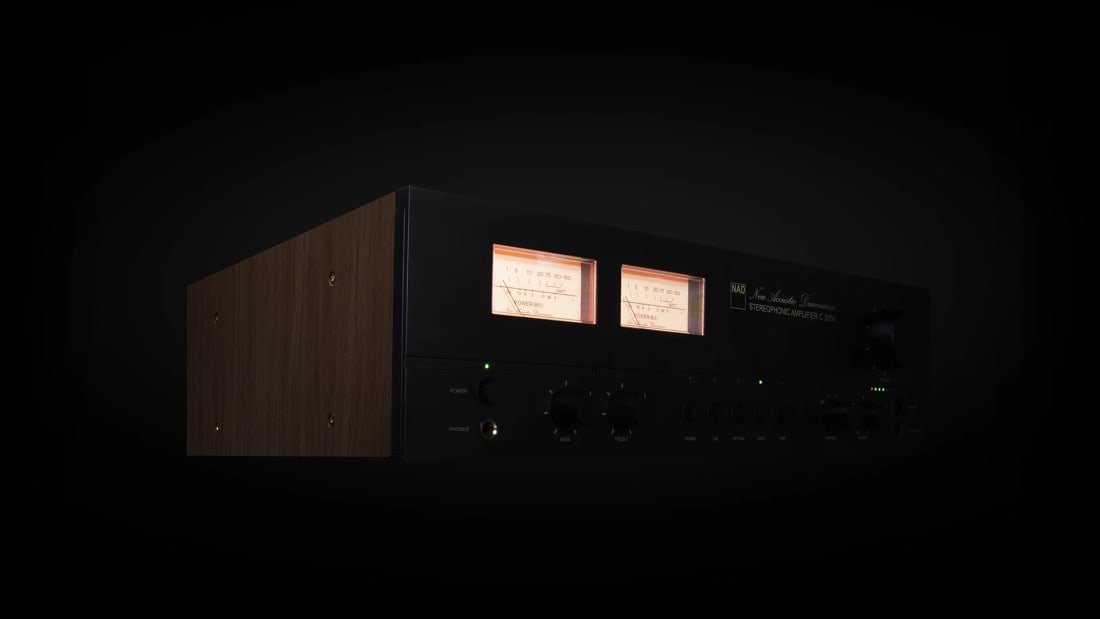 Amp power ratings into 8 vs 4 ohms: the spec sheet trapWhy an amp's 4-ohm wattage figure can mislead buyers, and how to actually match power output to real speaker loads on a budget.
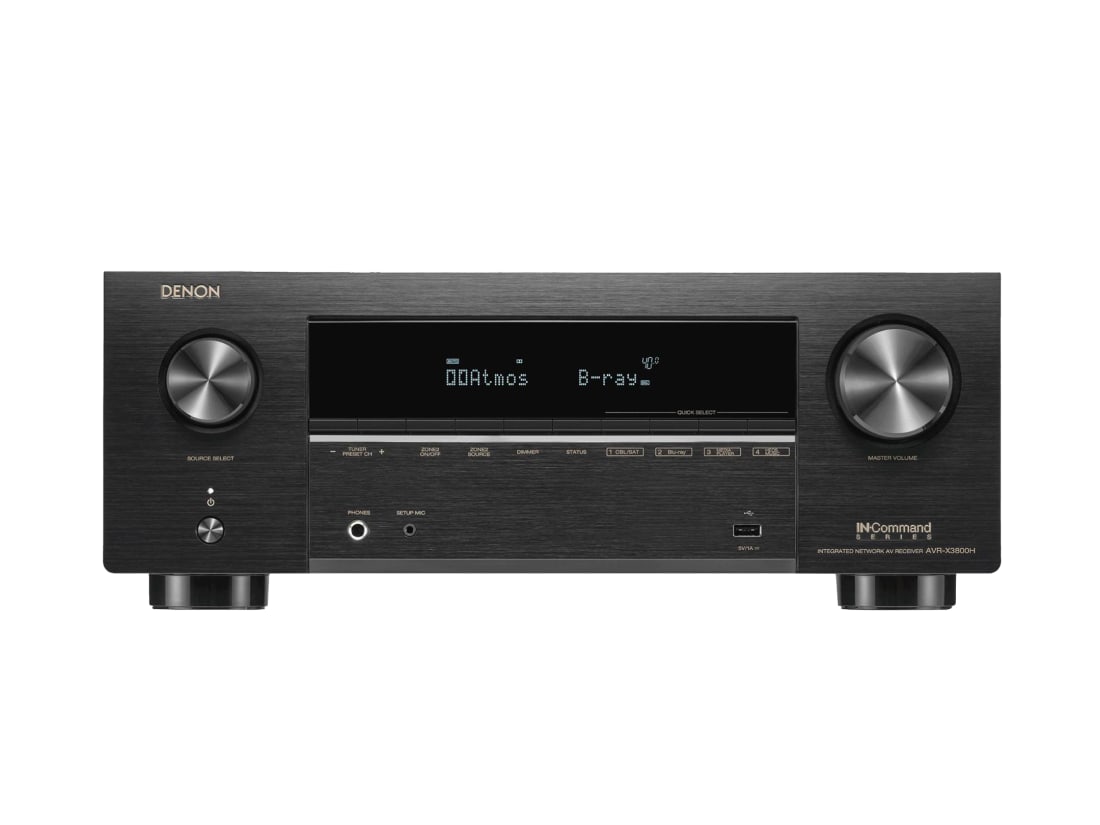 5.1.2 vs 7.1.4: the Atmos layout decision for real roomsChoosing between 5.1.2 and 7.1.4 Atmos layouts comes down to room shape and seating, not speaker count. Here's the giant-killer logic.
- Streamer apps ranked by what they actually do to your fileRoon, the WiiM app, Lumin, Chromecast built-in — they all claim bit-perfect. I pulled them apart to see which ones actually leave your file alone.