Audio-Technica AT-MCD1 cartridge: one-piece diamond stylus
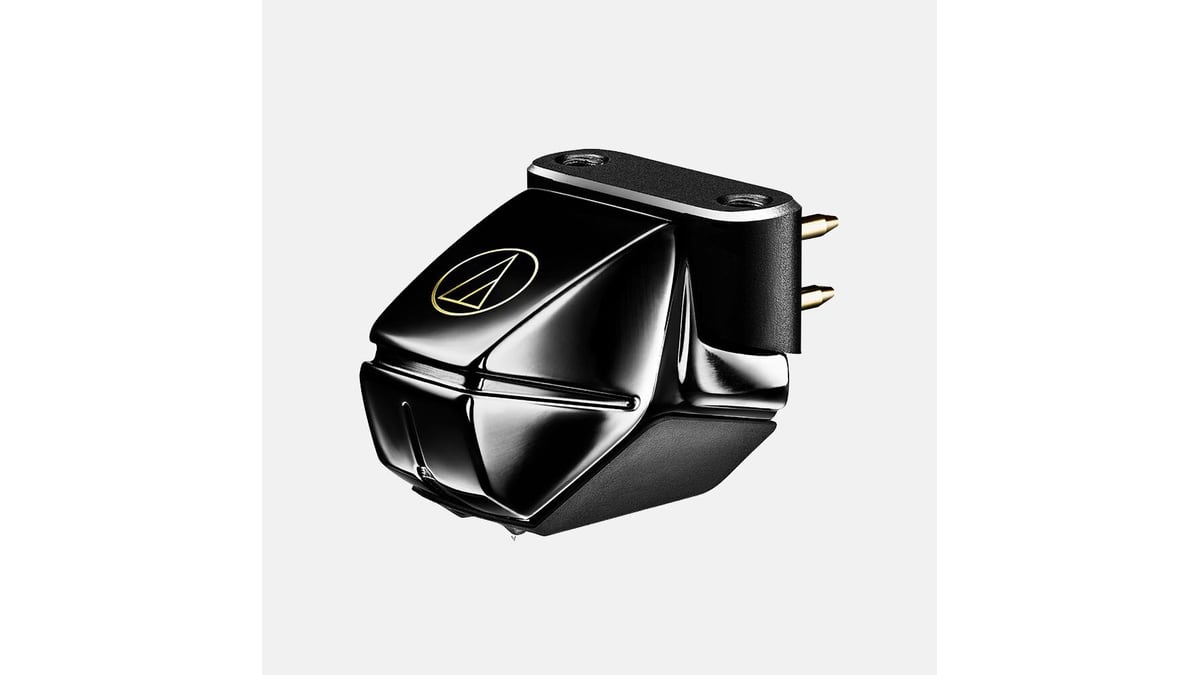
A new flagship from Machida, and it's a serious one
There are cartridge launches, and then there are cartridge launches. Audio-Technica's announcement of the AT-MCD1 cartridge falls firmly into the second category. Slated to ship on 4 June 2026, this is the Japanese brand's new top-of-the-line moving-coil cartridge, priced at US$11,000 (EUR 11,000 / £9,999), and it carries a genuinely unusual piece of engineering at its heart: a one-piece CVD diamond cantilever-and-stylus construction. That's not a minor refinement on a previous model. It's a foundational rethink of how the business end of a cartridge is built.
My first reaction to the press materials was something between excitement and mild vertigo. We're talking about an eleven-thousand-dollar stylus assembly that traces your records. The stakes, both sonically and financially, are not trivial. But the more you look at what Audio-Technica has done here, and why, the more the AT-MCD1 starts to look less like an extravagance and more like a logical, if breathtakingly expensive, endpoint for what this company has been building toward for decades.
Let's pull the thing apart.
What CVD diamond actually means, and why it matters
CVD stands for Chemical Vapour Deposition, a process by which diamond material is grown from a hydrocarbon gas mixture in a controlled chamber environment. The result is a synthetic diamond that can be formed into shapes traditional diamond cutting cannot easily achieve. In cartridge terms, this is enormously significant.
Conventional high-end moving-coil cartridges use a cantilever, typically a hollow tube made from aluminium, boron, ruby, sapphire, or sometimes beryllium, onto which a separately manufactured diamond stylus tip is bonded or press-fitted. The joint between the two components is, from a pure physics standpoint, a liability. Any difference in material stiffness, any microscopic inconsistency in the bond, any energy that gets absorbed or scattered at that junction is information that never makes it cleanly through to the generator. At the signal levels a moving-coil cartridge operates at, fractions of a millivolt, even small losses matter.
When Audio-Technica says the AT-MCD1 uses a "one-piece CVD diamond cantilever-and-stylus construction," they mean there is no joint. The cantilever and the stylus are a single, continuous piece of diamond material. Vibrations captured by the stylus tip travel through a mechanically unified structure to the coil assembly without crossing any material boundary. In theory, and I'd argue in almost certain practice, this is a more direct, more transparent mechanical pathway than anything a bonded or fitted assembly can offer.
Diamond is the hardest naturally occurring material on earth, with exceptional stiffness and a very high speed of sound, meaning it transmits vibrations quickly and with minimal internal damping. These are precisely the properties you want in a cantilever. The challenge has always been manufacturing: forming diamond into precise tubular or rod-like shapes suitable for a cantilever is extraordinarily difficult and expensive. CVD technology makes it achievable at a production scale, though "production scale" here still means individually hand-assembled cartridges, each with its own serial engraving.
Audio-Technica isn't the only maker chasing this idea. Ortofon's approach to a similar problem is covered in our piece on the Ortofon MC Vertex and its solid-diamond cantilever, and the two make a useful comparison of how different engineers tackle the same weak point.
How a cantilever and stylus carry the signal
It helps to understand the chain of events inside any phonograph cartridge. The stylus tip rides the groove wall, and the modulations cut into that groove push it around microscopically. The cantilever transmits that motion to the generator, where a coil moves within a magnetic field (in a moving-coil design) and produces a tiny electrical signal. Everything downstream, the phono stage, the preamp, the amplifier, can only work with what that first mechanical stage delivers.
That is why the cantilever matters so much. It needs to be stiff so it doesn't flex and smear detail, light so the moving mass stays low, and well damped so unwanted resonances die away quickly. These goals pull against one another, and every material choice is a compromise. A single piece of diamond is attractive because one material can, in principle, deliver stiffness and low mass together while removing the bonded junction altogether.
None of this guarantees a particular sound, of course. Stylus profile, suspension design, coil construction and the tonearm all shape the result. But removing a known weak point at the very start of the signal path is the sort of change that is hard to argue against on engineering grounds.
Dual moving-coil: what the generator tells us
The AT-MCD1 employs a dual moving-coil design. Audio-Technica hasn't published full specifications beyond what I've cited here, so I won't speculate on output voltage, channel separation figures, or loading recommendations. What I can say is that dual moving-coil architectures are not common, and their presence in a flagship cartridge is significant.
In a conventional MC cartridge, a single set of coils, one per channel, is suspended in the magnetic field. A dual moving-coil arrangement generally means two complete coil assemblies are employed per channel or across the generator system, which can offer benefits in terms of reduced distortion, improved channel separation, and potentially a more symmetrical electromagnetic environment for the coil to operate within. The specifics of Audio-Technica's implementation aren't yet detailed publicly, but the lineage is telling. The company has described the AT-MCD1 as descended from its 60th-anniversary model, which was a limited commemorative piece developed with no compromises for cost. That the AT-MCD1 carries the dual moving-coil architecture forward into a production, if ultra-premium, flagship suggests Audio-Technica considers this generator topology central to the sound they're chasing.
Each AT-MCD1 is individually serial-engraved. That's not just a luxury touch; it's a practical signal that every unit is measured and verified individually. At this price point and with this level of manufacturing precision, you'd expect nothing less, but it's reassuring to see it confirmed.
Where the AT-MCD1 cartridge fits in Audio-Technica's story
Audio-Technica was founded in 1962, initially as a cartridge manufacturer, before expanding into microphones, headphones, and other transducer technologies. You can see the company's current range on the Audio-Technica website. Cartridges have always been in the brand's DNA. They've made thousands of them, from the budget-friendly AT-VM95 series through to serious high-output and low-output MCs. But for a long time, Audio-Technica occupied a curious position in the flagship MC conversation: respected, technically capable, but rarely mentioned in the same breath as the cartridge aristocracy, your Lyras, your Koetsus, your ZYXs, your Air Tights.
The 60th-anniversary cartridge changed that conversation somewhat. Producing a commemorative flagship is one thing; extracting the core engineering insights from it and commercialising them in a production model, even a very expensive one, is a genuine statement of intent. The AT-MCD1 is Audio-Technica saying, in the clearest possible terms, that they belong in the company of the world's finest cartridge makers.
Whether the market agrees will depend on how the AT-MCD1 sounds. But the technical foundations are not to be dismissed.
The cherry-wood case: presentation and practicality
The AT-MCD1 ships in a solid cherry-wood case. Some readers will roll their eyes at packaging receiving column space, but hear me out: at eleven thousand US dollars, a cartridge arrives as an object, not just a component. The case is both a protective housing and a statement about how the product is to be received. Cherry wood also happens to have reasonable acoustic damping properties, which matters for storage, since a cartridge sitting in a resonant or insufficiently protective case is a cartridge at risk from vibration, humidity swings, and physical shock.
More practically, the solid cherry-wood case signals that Audio-Technica has thought about the ownership experience in full. When you're spending this kind of money, unboxing and storage should feel commensurate with the investment. On that count, it sounds like they've delivered.
Australian context: pricing, availability, and what you need to make it sing
Audio-Technica hasn't announced Australian dollar pricing in the material I've seen, but with US$11,000 and EUR 11,000 as the international anchors, and depending on the AUD/USD exchange rate, Australian buyers should be prepared for a number somewhere north of AU$17,000–$18,000 once local distribution margins are applied. That's not a firm figure; it's a reality check. Flagship cartridges at this price tier rarely arrive in Australia at anything resembling parity with their USD equivalents.
Availability is confirmed from 4 June 2026. Australian distribution for Audio-Technica runs through their local subsidiary, so interested buyers should be speaking to their specialist analogue retailer sooner rather than later. These kinds of cartridges don't sit in warehouse stock. You order, you wait.
Now, let's be very direct about what the AT-MCD1 demands of the system around it. A cartridge of this calibre is not a plug-and-play proposition. Matching it to the right tonearm, the right turntable, and above all the right phono stage is the difference between hearing what this cartridge is genuinely capable of and spending a significant sum on a compromised result.
On the phono stage front: a low-output MC at this level needs a phono preamplifier of commensurate quality. Noise floor, gain structure, and loading flexibility all matter enormously. You will not be doing the AT-MCD1 justice through a phono stage that costs a few hundred dollars. This is a source component that will expose every weakness in the downstream chain, and that chain starts with the phono stage. Readers who want to understand the fundamentals before committing to anything should spend time with our phono stage explainer, which covers loading, gain requirements, and what to look for in a serious MC-capable unit. Our articles on setting phono stage gain and loading and on cartridge loading and capacitance go further into why those settings change what you hear.
The tonearm question is equally important. A cartridge with a diamond cantilever of this precision needs an arm that is itself exceptionally well engineered: low bearing friction, appropriate effective mass to match the cartridge's compliance, and rigidity in the headshell and armtube. Effective mass matching is something I'd urge any prospective buyer to research carefully, because it's one of those areas where a mismatch can genuinely squander a cartridge's potential.
Setup deserves the same respect. Even a flawless cartridge sounds compromised if the geometry is off, which is why we keep arguing that cartridge alignment matters more than the cartridge in many systems. Patience also helps after fitting; our look at what actually changes during cartridge break-in is a sensible read before you form a final opinion.
And the turntable itself matters. Isolation, bearing quality, platter mass and material, motor noise: all of it is audible when a cartridge this resolving is in the groove. If you're pairing the AT-MCD1 with a mid-tier turntable because "I'll upgrade that later," I'd gently suggest reconsidering the order of operations.
The soundstage and imaging capabilities of a top-tier MC cartridge are one of the areas where the format's advocates make their most passionate arguments for vinyl's continued relevance alongside high-resolution digital. A one-piece diamond cantilever-and-stylus, if it delivers on its theoretical promise of reduced energy loss and superior mechanical coherence, should be able to resolve spatial information (width, depth, instrument placement) with exceptional clarity. That's the promise. June will begin to tell us whether the AT-MCD1 delivers on it.
The broader analogue moment
It's worth stepping back and asking why a cartridge like the AT-MCD1 can exist in 2026. Vinyl has not only survived its supposed death, it has thrived sufficiently that manufacturers are investing in genuinely novel engineering at the extreme end of the market. CVD diamond cantilever construction is not a cheap solution. The tooling, the material science, the manufacturing process: all of it represents serious investment. That Audio-Technica has committed to this at a production-cartridge level, not merely as a one-off commemorative piece, tells you something about the commercial confidence in the high-end analogue market.
There is also something philosophically satisfying about the direction of travel here. Much of the audio industry's innovation energy is directed toward streaming, digital signal processing, and room correction, all genuinely valuable things, yet there's a quiet counter-current of analogue engineering that keeps pushing the mechanical boundaries of what vinyl playback can do. The AT-MCD1 is an emphatic contribution to that counter-current.
For those who are building a serious analogue front end from scratch and want to understand how sources sit within a broader system context, our guide to DACs and network streamers offers useful framing for how digital and analogue sources can coexist in a high-end system, because the honest truth is that most serious listeners aren't choosing between the two, they're integrating both.
The bottom line on the AT-MCD1
The Audio-Technica AT-MCD1 is a genuinely significant cartridge. The one-piece CVD diamond cantilever-and-stylus construction is not marketing language dressed up as engineering. It represents a real and meaningful departure from conventional MC cartridge construction, with a clear theoretical basis for improved performance. The dual moving-coil generator, carried forward from the 60th-anniversary model, adds further technical credibility. Individual serial engraving and a solid cherry-wood case round out a flagship presentation that matches the asking price.
At US$11,000 (EUR 11,000 / £9,999), the AT-MCD1 is competing in one of the most demanding and discerning segments of the audio market. It will need to sound extraordinary to justify its place there. The engineering suggests it might. June 4, 2026 is when we start finding out.
Australian readers with serious turntable systems, and the matching tonearms, phono stages, and downstream electronics to do this cartridge justice, should be in conversation with their Audio-Technica dealer. These won't be stocked in volume, and waiting lists at this price tier are a real phenomenon.
The AT-MCD1 has, at minimum, earned the right to be taken seriously.
Common questions
- What is a CVD diamond cantilever and why does it matter in a cartridge?
- CVD stands for Chemical Vapour Deposition, a process that grows synthetic diamond material into precise shapes. In the AT-MCD1, this allows Audio-Technica to create a single, unified piece of diamond that forms both the cantilever and the stylus tip — eliminating the bonded joint found in conventional cartridges. That joint is a potential source of energy loss and distortion; removing it means vibrations travel from stylus to coil through a mechanically continuous, extremely stiff, low-damping structure. The result should be a more direct and transparent mechanical signal path.
- What phono stage do I need for the Audio-Technica AT-MCD1?
- As a low-output moving-coil cartridge at the flagship level, the AT-MCD1 demands a phono stage of commensurate quality. You need sufficient gain for a low-output MC signal, a very low noise floor, and flexible loading options to optimise the match. A budget or mid-tier phono stage will not do this cartridge justice. Readers unfamiliar with phono stage requirements should review what to look for in MC-capable phono preamplifiers before making any purchasing decisions.
- When will the AT-MCD1 be available in Australia and what will it cost?
- The AT-MCD1 is confirmed for release on 4 June 2026. International pricing is set at US$11,000 / EUR 11,000 / £9,999. Official Australian dollar pricing has not been announced at time of writing, but based on current exchange rates and typical local distribution margins, buyers should anticipate a figure well above AU$17,000. Contact your specialist analogue retailer or Audio-Technica's Australian distributor for confirmed local pricing and availability.
- What does 'dual moving-coil' mean in the context of the AT-MCD1?
- A dual moving-coil design uses two complete coil assemblies within the generator, rather than the single coils per channel found in conventional MC cartridges. This architecture can offer benefits including reduced distortion, improved channel separation, and a more symmetrical electromagnetic environment. Audio-Technica carried this design forward from their limited 60th-anniversary commemorative model into the AT-MCD1 as a production flagship, suggesting it is central to the cartridge's sonic character.

Hello — I'm Priya. I ran a second-hand record shop in Fitzroy for the better part of a decade, which is a polite way of saying I have three thousand records and nowhere to put them. I listen to vinyl through valve amplification because I like the ritual as much as the sound, and yes, I know the measurements aren't perfect — I don't care, and I'll explain why on the page. If you want someone to tell you a turntable is "just a motor and a bearing," I am not your person.
Record collector (3,000+); valve-amp enthusiast; ex record-shop owner
More from Priya Anand
 USB vs S/PDIF for DACs: does the digital input matter?USB, coaxial and optical into a DAC: which digital input actually changes the sound, and when the difference is real versus imagined.
- Qobuz vs Tidal for your record collection's digital halfQobuz vs Tidal compared for vinyl collectors who want a digital half that matches their records, not just a bigger catalogue.
 Why a subwoofer makes a valve system sound more honestAdding a subwoofer to a valve amp system can tighten bass, cut distortion and let low-power tubes sing. Here's how to do it properly.
- Tidal vs Qobuz vs Apple Music: which one actually suits a valve systemStreaming services aren't interchangeable once you're running valves. Here's how Tidal, Qobuz and Apple Music actually behave through a warm front end.
 Speaker matching to valve amps: sensitivity beats watts every timeWhy sensitivity, not power output, decides whether a valve amp and speaker pair actually works together — and how to read a spec sheet properly.
- Your phone's volume slider is quietly re-encoding your musicTurning your phone down before a Bluetooth speaker or DAC often re-processes the digital signal. Here's what's actually happening, and when it matters.