McIntosh returns to all-tube integrateds with the $15,000 MA2375
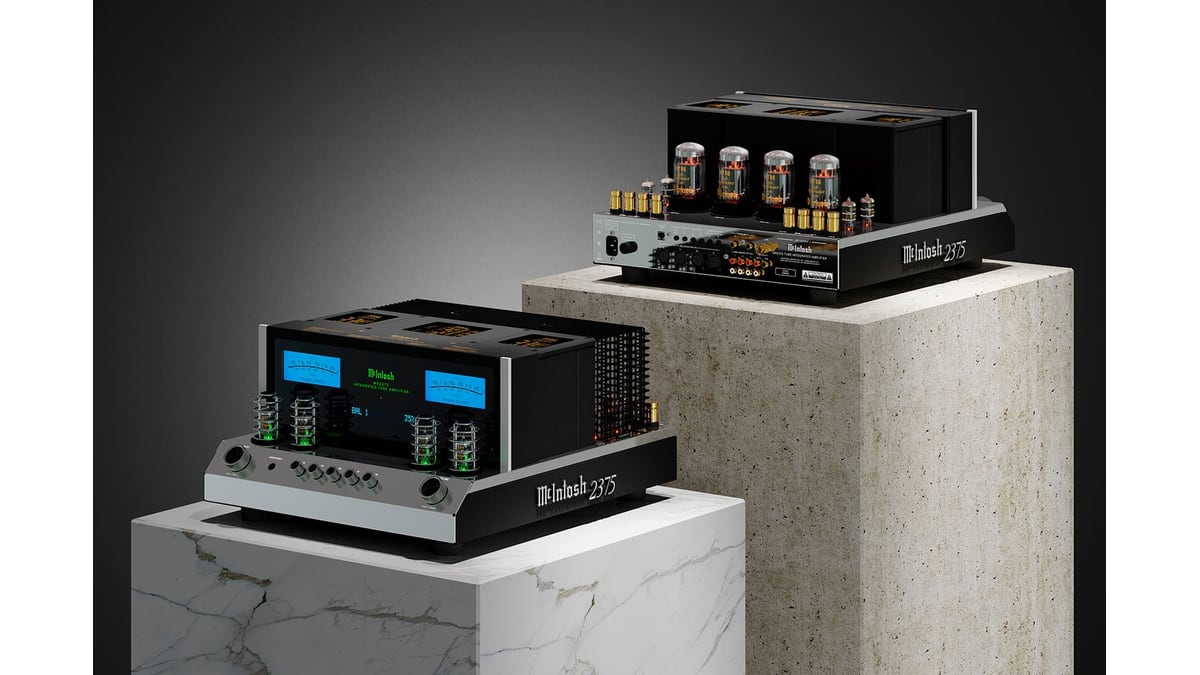
McIntosh breaks its tube silence
On the 3rd of June, 2026, McIntosh Laboratory did something it hadn't done in more than a decade: it announced a vacuum-tube integrated amplifier. Not a hybrid. Not a tube-flavoured design with a solid-state output stage quietly doing the heavy lifting. A proper, committed, all-valve machine. The MA2375 arrived announced and available on the same day, which is increasingly rare in an industry that loves a multi-month tease, and it carries a US retail price of $15,000 — roughly AU$23,000 at current exchange rates, or around £16,900 in the UK. It is not cheap. It was never going to be. But the more interesting question isn't the price — it's the philosophy behind a machine that in 2026 ships with no DAC, no digital inputs, and no streaming capability whatsoever.
I've been waiting for McIntosh to do this. Not this specific amplifier necessarily, but this move — a full-throated return to the format that made the brand's name, stripped of the concessions that crept into its more recent integrated designs. The MA2375 is, by its very existence, a statement about what McIntosh thinks a certain kind of listener actually wants. I think they're right, and I think the timing is more deliberate than it might first appear.
What the MA2375 actually is
Let's establish the fundamentals before we get into the broader conversation. The MA2375 is a fully vacuum-tube integrated amplifier rated at 75 watts per channel. The design combines a tube preamplifier stage and a tube power amplifier stage within a single chassis — a true integrated rather than a pre-power combination sharing a box for convenience's sake. Both gain stages run on valves, full stop.
Built into that chassis are two additional functional sections that matter enormously to the audience this amplifier is aimed at: a moving-magnet and moving-coil phono stage, and a headphone amplifier. The phono stage supporting both MM and MC cartridges is significant — it means this is a complete front-end solution for a vinyl-focused system, with no need for an outboard phono stage eating up shelf space or budget. The headphone amp is a thoughtful addition for the private listening sessions that seem to be increasingly common even among dedicated two-channel enthusiasts.
What the MA2375 does not have is equally defining: there is no digital-to-analogue converter, no digital inputs of any kind, no network streaming capability, no USB audio, no optical, no coaxial. If you want to understand why that matters and who it speaks to, you need to think about what McIntosh has been building over the past several years.
The context: where McIntosh has been
McIntosh's recent integrated amplifier history has leaned heavily into hybrid territory. The McIntosh MA352 (check price), which we reviewed here at Sound Technology, is a fine example of that approach — tube preamp section married to a solid-state power amp, with a very usable feature set including a DAC. It's an amplifier that works beautifully for the enthusiast who wants some tube character without committing entirely to the operational demands of an all-valve design. It's also an amplifier that, in being many things to many people, is not quite the purist's object that a segment of McIntosh's customer base has always hungered for.
The broader high-end audio market has seen a strong trend toward all-in-one convenience — integrated amplifiers with built-in streaming, DACs, and room correction. These are genuinely excellent products for a great many listeners. But they do represent a set of compromises when viewed from the perspective of someone whose primary source is a turntable and who regards the signal path from stylus to speaker as something to be kept as clean and simple as possible. The MA2375 is McIntosh explicitly serving that listener, and only that listener.
Seventy-five watts per channel from an all-tube design is a meaningful output figure. It won't satisfy everyone — there are speakers that demand more current and headroom than tubes of any reasonable specification can provide — but 75 tube watts is a genuinely versatile number. Paired with speakers of reasonable sensitivity, say 89 dB/W/m or better, it will drive a room with authority and considerable dynamic reserves. Pair it with something inefficient and you'll run into problems, but that's not an oversight in the design; it's a deliberate boundary condition that any informed purchaser will understand.
Why analogue-only in 2026?
The absence of digital inputs is going to be the single most debated aspect of the MA2375, and I want to address it seriously rather than just nodding at it. There is a genuine design argument here that goes beyond mere marketing positioning.
When you incorporate a DAC into an amplifier chassis, you introduce a digital processing section into an environment already occupied by high-voltage analogue circuitry and transformers. Managing the interference, noise floor, and ground plane interactions between those sections is non-trivial. The best integrated amplifiers with built-in DACs invest heavily in isolation and shielding to mitigate this. Some do it very well. But there is a credible engineering position that says: if your signal path is entirely analogue, you simply don't have that problem to solve. The MA2375, by being analogue-only, can optimise every aspect of its internal layout for the single task of amplifying an analogue signal as faithfully as possible.
There is also a philosophical argument about system building that I find compelling. If you want digital sources with the MA2375, you use an external DAC. You choose that DAC based on your sources, your preferences, and your budget. You upgrade it independently of your amplifier. You are not locked into whatever DAC chip McIntosh specced when the MA2375 was designed, which will feel dated in five years while the amplifier itself, properly serviced, could last fifty. Modular thinking is good system thinking, and the MA2375 forces it.
For the vinyl listener specifically, this is a non-issue. Your signal chain is turntable, cartridge, the built-in phono stage, the tube preamp, the tube power stage, and speakers. There is an elegant simplicity to that. If you're running something like a Rega Planar 3 (check price) or a more ambitious turntable, the MA2375's onboard MM/MC phono stage means you have everything you need in two boxes.
The headphone angle
I want to spend a moment on the headphone amplifier because I think it's one of the more quietly interesting aspects of the MA2375's specification. High-end headphone listening has grown enormously as a category over the past decade, and the people drawn to a $15,000 all-tube integrated are precisely the people likely to own a serious pair of headphones for late-night listening. A tube headphone stage paired with something like the Sennheiser HD 660S2 (check price) — which rewards upstream quality in a very direct way — is a genuinely compelling combination. The open-back headphone listener who also runs a vinyl-focused two-channel system is not a vanishingly small demographic. McIntosh knows its customer.
Speaker matching: what Australian buyers need to consider
For readers looking at the MA2375 in an Australian context — whether they're sourcing it through authorised local channels or importing — speaker matching is the conversation that needs to happen before any purchase decision. Seventy-five watts per channel from a tube design will perform magnificently with the right speakers and demand respect with the wrong ones.
I'd be looking at speakers with sensitivity figures of 88–90 dB or higher and impedance curves that don't dip below 4 ohms significantly or erratically. Many of the British and European standmount and floorstander designs that populate serious Australian listening rooms are well-suited to this kind of amplification. Have a read through our guide to the best standmount speakers for serious listening — many of the options there will pair beautifully with a tube integrated of this output class. A sensitivity-friendly standmount in a well-proportioned room is arguably the ideal expression of what the MA2375 does.
I'd also note that the discussion of soundstage and imaging that always accompanies tube amplifier reviews is not unfounded. The way a well-designed all-tube amplifier handles the spatial information in a recording — the width, depth, and three-dimensionality of the presentation — tends to differ from solid-state approaches in ways that are immediately apparent to listeners who prioritise those qualities. Whether that's a colouration or a revelation is a longstanding debate I won't resolve here, but it's a real phenomenon that shapes why listeners seek out designs like this.
The price and what it tells us
Fifteen thousand US dollars is a lot of money for an integrated amplifier, full stop. In the Australian market, by the time you account for exchange rates, freight, GST, and distributor margin, you are almost certainly looking at something north of AU$22,000–24,000 at retail, depending on when and how it lands locally. That puts it firmly in the upper tier of integrated amplifier pricing — not at the absolute summit of the market, but well beyond what most enthusiasts will consider a casual purchase.
What justifies that figure, beyond the obvious costs of all-tube construction, custom transformers, and McIntosh's manufacturing standards, is the completeness of the proposition. You are buying a phono stage, a tube preamp, a tube power amplifier, and a headphone amplifier in a single, beautifully finished chassis from one of the oldest and most recognised names in high-end audio. The cost of assembling equivalent standalone components — a quality tube preamp, a tube power amp, a capable MM/MC phono stage, a decent tube headphone amp — from respected makers would likely exceed the MA2375's price before you'd bought a single interconnect cable. That context doesn't make the number small, but it does make it rational.
It's also worth noting that McIntosh's decision to make the MA2375 available the same day it was announced is a meaningful signal. This is a product that was ready. There's no vaporware anxiety here, no hedging about supply chains or production timelines. Australian dealers and their customers can have a real conversation about a real product right now.
The bigger picture: what this moment means for analogue
The MA2375's announcement lands at an interesting cultural moment for high-end audio. Streaming has become genuinely excellent — the infrastructure, the resolution, the interface — and a great many serious listeners have reorganised their systems around it. The best DACs and network streamers available today are remarkable pieces of engineering. I use them, I recommend them, I appreciate what they offer.
But there is, running parallel to that, a deepening commitment among a significant subset of listeners to analogue sources and the equipment that serves them best. Vinyl sales have continued their long resurgence. Tape is experiencing a genuine enthusiast revival at the high end. The appetite for equipment designed without compromise around analogue signal paths has not diminished — it has, if anything, intensified as digital convenience has become ubiquitous elsewhere in people's lives.
McIntosh reading that market correctly, and responding with a product as unambiguous as the MA2375, is both good business and a kind of validation for the listeners who've never stopped believing that tubes and vinyl represent a particular kind of musical truth. Whether you share that belief or regard it as romantic nostalgia is a matter of taste. But the MA2375 is the most direct, confident statement of that position McIntosh has made in a very long time, and that is worth taking seriously regardless of where you stand.
What to do if you're interested
First things first: if you're in Australia and you're considering the MA2375, contact McIntosh's local authorised distributor to confirm Australian pricing, availability, and warranty terms. Don't assume US pricing translates directly, and don't import grey market on something this expensive without understanding the service and support implications.
Second, take the speaker matching conversation seriously. Visit a dealer who can demonstrate the MA2375 with speakers representative of what you plan to use. Tube amplifiers reward proper matching more than most solid-state designs, and 75 watts of tube power is not the same as 75 watts of solid-state power in terms of how it interacts with a speaker's impedance and load behaviour.
Third, and this is personal advice from someone who covers vinyl obsessively: if you're building a listening system around the MA2375 and you haven't yet sorted your room, do that first. No amplifier, regardless of price or pedigree, overcomes a room working against it. Our acoustic treatment glossary is a good starting point if you're new to thinking about this.
The MA2375 is the kind of product that comes along rarely — not because all-tube integrateds are rare in the broader market, but because a brand with McIntosh's history and resources making this kind of uncompromising analogue statement in this moment carries real weight. I'm very much looking forward to getting one in front of a turntable and a pair of speakers and reporting back in detail. Watch this space.
Common questions
- Does the McIntosh MA2375 have any digital inputs or streaming capability?
- No. The MA2375 is a purely analogue design with no DAC, no digital inputs (optical, coaxial, USB), and no network streaming functionality. If you want to use digital sources with it, you'll need an external DAC connected via an analogue input.
- What is the McIntosh MA2375's power output and what does that mean for speaker matching?
- The MA2375 is rated at 75 watts per channel from its all-tube design. This is a capable output for many listening situations, but it performs best with speakers of reasonable sensitivity — generally 88 dB/W/m or higher — and with impedance curves that don't present a very difficult or erratic load. Speaker matching is an important conversation to have before purchasing.
- Does the MA2375 include a phono stage for turntables?
- Yes. The MA2375 includes a built-in phono stage that supports both moving-magnet (MM) and moving-coil (MC) cartridges, making it a self-contained solution for vinyl-focused systems without the need for a separate outboard phono stage.
- What is the McIntosh MA2375's price in Australia?
- McIntosh has announced a US retail price of $15,000. Australian pricing has not been formally confirmed at this stage. Given typical exchange rates, freight, GST, and distributor margin, prospective Australian buyers should expect a significantly higher local retail figure and should contact McIntosh's authorised Australian distributor for confirmed pricing.

Hello — I'm Priya. I ran a second-hand record shop in Fitzroy for the better part of a decade, which is a polite way of saying I have three thousand records and nowhere to put them. I listen to vinyl through valve amplification because I like the ritual as much as the sound, and yes, I know the measurements aren't perfect — I don't care, and I'll explain why on the page. If you want someone to tell you a turntable is "just a motor and a bearing," I am not your person.
Record collector (3,000+); valve-amp enthusiast; ex record-shop owner
More from Priya Anand
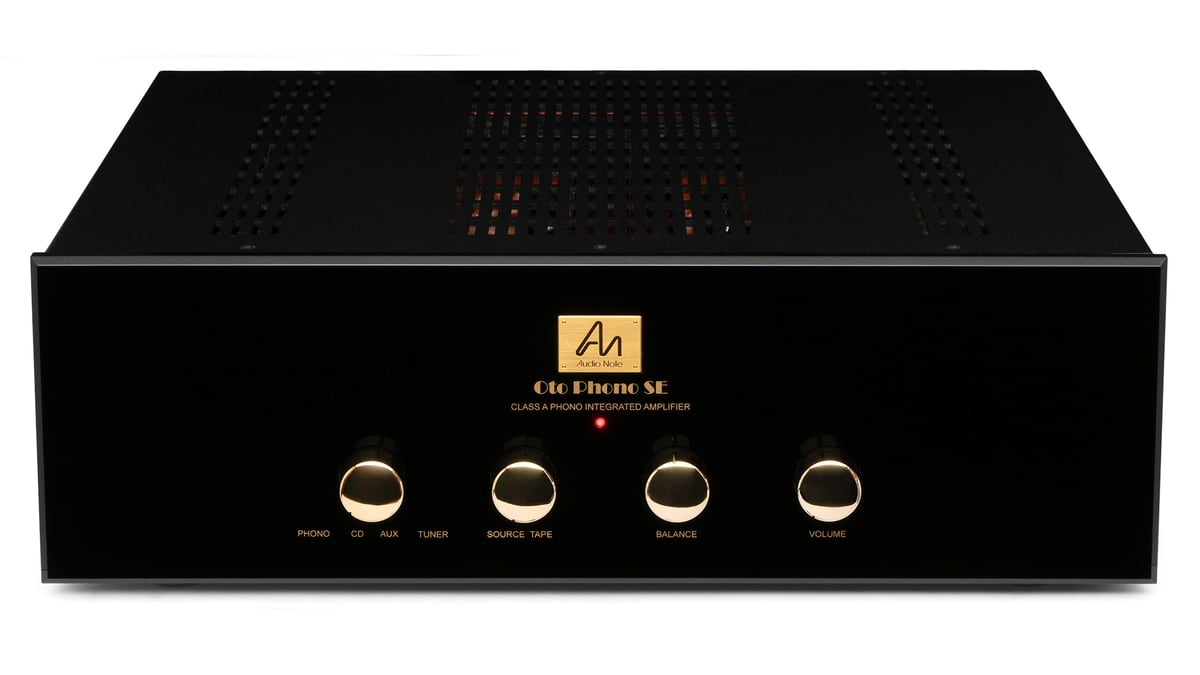 Audio Note marks 35 years of the Oto with a refreshed SE 35 anniversary editionAudio Note (UK) debuts the Oto SE 35 at £5,950/$5,950 — the first major technical refresh of its beloved EL84 integrated in decades.
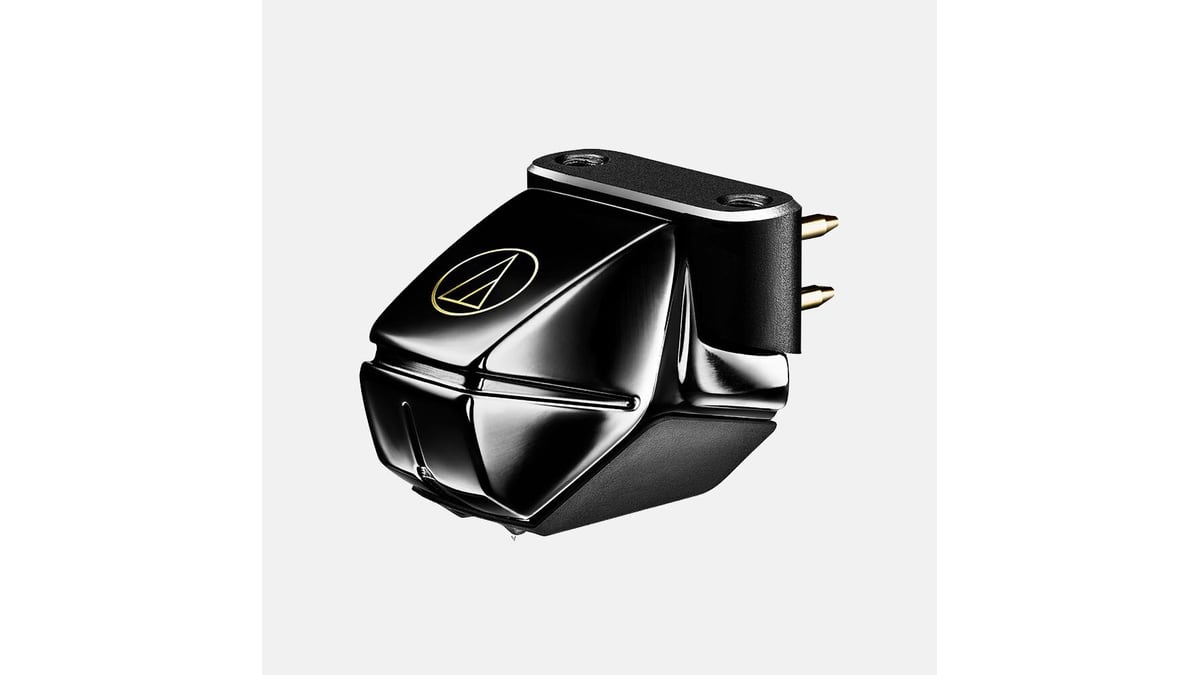 Audio-Technica's AT-MCD1 flagship cartridge debuts with a one-piece diamond stylus and cantileverAudio-Technica's AT-MCD1 arrives June 4, 2026, with a unified CVD diamond cantilever-and-stylus and dual moving-coil design at US$11,000.
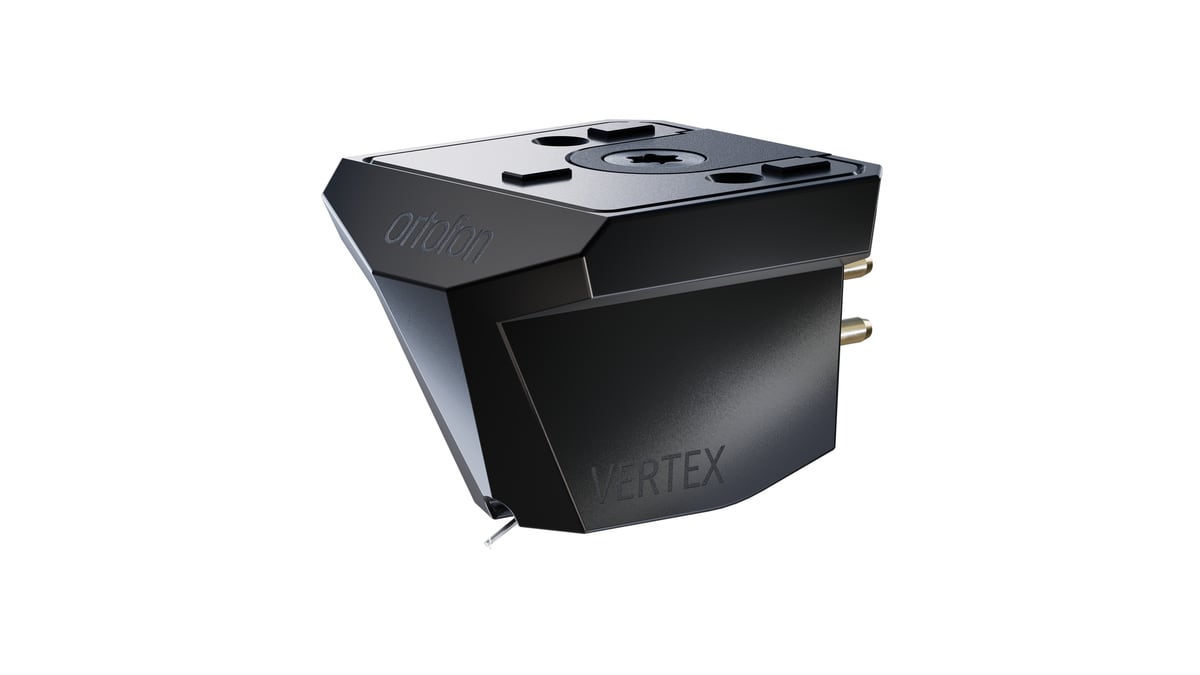 Ortofon's MC Vertex: a solid-diamond cantilever arrives at the top of the rangeOrtofon unveiled its most advanced moving-coil cartridge ever at High End Vienna on June 4, 2026. Here's why the MC Vertex matters for serious vinyl listeners.
 US vinyl revenue breaks $1 billion for the first time — and what it means for Australian record buyersThe RIAA confirmed US vinyl hit $1.04 billion in 2025 — its 19th straight year of growth. We look at what the milestone means for AU buyers.
 Australia posts a seventh straight year of growth, with vinyl up againARIA's 2025 figures confirm seven consecutive years of growth for Australian recorded music, with vinyl revenue rising 4.1% to A$46.3 million.
 UK Vinyl Hits a 30-Year High as the Recorded-Music Market Tops £1.5 BillionBPI data shows UK vinyl revenue surged 19.9% to £174.7m in 2025 — the highest in over 30 years. What does it mean for Australian enthusiasts?