Audio Note marks 35 years of the Oto with a refreshed SE 35 anniversary edition
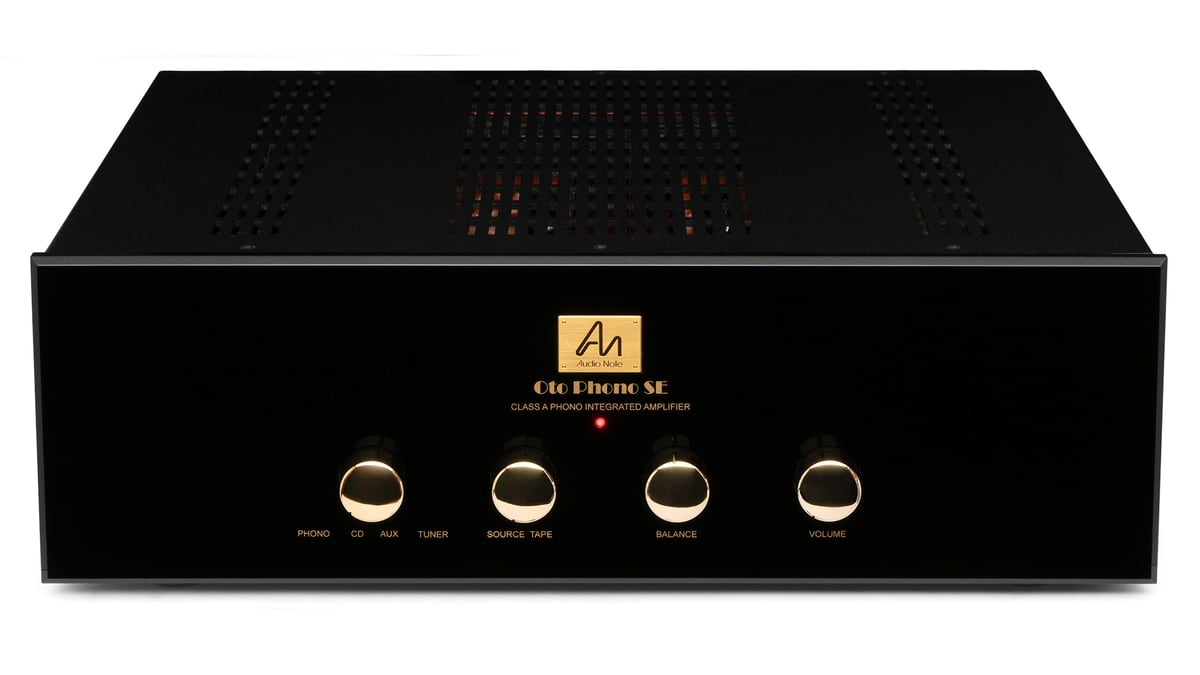
Thirty-five years is a long time in audio
Most amplifier designs get refreshed, replaced or quietly discontinued within a decade. The Audio Note Oto has done something far rarer: it has endured. Since its introduction in the early 1990s, the Oto has occupied a peculiar and rather wonderful position in the high-end world — a genuinely accessible entry point into Audio Note's single-ended, zero-feedback philosophy, built around one of the most beloved small-signal valves ever made, the EL84. For thirty-five years it has sat on that argument, largely unchanged in its essential character, and that consistency has been both its greatest strength and, for some critics, a source of gentle exasperation.
So when Audio Note (UK) announced in February 2026 that the Oto was receiving its first meaningful technical overhaul in decades — reborn as the Oto SE 35, priced at £5,950 / $5,950 — the valve community took notice. This is not a cosmetic anniversary edition with a commemorative badge and a certificate of authenticity. According to Audio Note, the SE 35 involves a redesigned power supply, a new in-house mains transformer, revised internal wiring and shielding, and a substantially reworked phono stage. Those are substantive engineering changes, and they deserve a serious look.
As someone who has followed the Oto's trajectory with a mixture of admiration and occasional impatience, I find myself genuinely excited — and also curious about what took so long, and what the changes actually mean in practice.
What is the Oto, and why does it matter?
Before we dig into the specifics of the SE 35, it's worth establishing why the original Oto earned its reputation in the first place, because anniversary editions only mean something when the underlying product has genuine pedigree.
The Oto is a Class A, parallel single-ended pentode integrated amplifier built around EL84 output valves. If those words don't immediately light up your nervous system, let me translate: the EL84 is the output valve that powered an enormous number of European audio and guitar amplifiers from the 1950s onward. It is smaller and lower-powered than the more celebrated 300B or KT88, but what it lacks in grunt it more than compensates for in textural delicacy, midrange immediacy and — in a well-designed single-ended circuit — a quality of presence that solid-state amplifiers find genuinely difficult to match.
Single-ended topology means each output valve handles a complete audio cycle rather than sharing the work in a push-pull arrangement. The circuit is inherently simpler, introduces a characteristic second-harmonic distortion profile that many listeners find musically benign, and operates in Class A — meaning the output device is always conducting, always warm, always ready. You can read more about the differences between amplifier classes in our Amplifier Classes explainer, but the short version is that Class A single-ended designs like the Oto represent a particular philosophy: fewer components in the signal path, less switching, more intimacy.
Audio Note's specific contribution to this tradition has always been their commitment to zero global negative feedback. Where many designers use feedback loops to tighten up frequency response and reduce measured distortion, Audio Note argues — persuasively, in my listening experience — that feedback introduces timing errors and a kind of processed quality to the sound that offends musical realism. The Oto has always been a pure expression of that thinking.
The consequence of this philosophy is that the Oto produces a modest output — EL84 valves in parallel single-ended configuration don't yield enormous wattage — which means speaker matching is critical. The Oto has always been happiest with high-sensitivity loudspeakers, ideally those designed with valve amplifiers in mind. Pair it correctly, in a reasonably sized room, and the results can be revelatory. Pair it with a hungry, low-sensitivity modern design and you will find its limits quickly.
What has actually changed in the SE 35?
Audio Note has been characteristically precise in describing the engineering work that went into the Oto SE 35, and I think it's worth going through each element carefully rather than treating this as a bullet-point upgrade list.
The power supply and mains transformer
The power supply is arguably the most important single component in any valve amplifier, and it's the area where compromises made for cost reasons have the most audible consequence. Audio Note has redesigned the power supply for the SE 35 and built a new in-house mains transformer specifically for this iteration.
This is significant. Mains transformers in valve amplifiers don't just step down voltage — they are the first point of contact between the amplifier and the electrical grid, and their quality has a direct bearing on noise floor, channel separation and dynamic composure. Audio Note has long been committed to transformer design as a core competency; their output transformers in particular are considered among the best available at any price. Bringing that same in-house discipline to the mains transformer in the Oto SE 35 suggests they are treating this as a genuine platform improvement rather than a cosmetic refresh.
A well-executed power supply redesign can meaningfully improve bass definition, reduce background noise, and give the amplifier a greater sense of dynamic ease — the feeling that it's not straining even during complex musical passages. Whether the SE 35 delivers on all of that I cannot yet say from listening, but the direction of the changes is exactly right.
Revised internal wiring and shielding
Audio Note has used point-to-point wiring rather than printed circuit boards throughout the Oto's history, which is consistent with their broader philosophy. The SE 35 features revised internal wiring and improved shielding. In the context of a sensitive, high-gain valve amplifier, shielding matters enormously — stray electromagnetic fields from the mains transformer and output transformers can induce noise into the signal path, and careful routing and shielding is the primary defence. This is painstaking work that rarely gets the credit it deserves in specifications sheets, but its impact on real-world listening — particularly in the silence between notes — can be profound.
The phono stage revision: the big news for vinyl lovers
For those of us who use the Oto as the heart of a vinyl-centred system, the most consequential change in the SE 35 is the substantially revised phono stage. Audio Note has increased its sensitivity to the point where a separate line stage is no longer required when using the phono input. On the previous iterations of the Oto, the phono stage's gain characteristics meant that in certain configurations — particularly with low-output moving coil cartridges — listeners needed to introduce a separate line stage or step-up transformer to achieve adequate signal level.
Removing that requirement is a genuine quality-of-life improvement, and potentially a sonic one too. Every additional component in the signal path is an opportunity for signal degradation, noise addition and coloration. If the SE 35's phono stage can now operate with sufficient sensitivity to drive the amplifier directly from a wider range of cartridges without requiring a line stage, that is a meaningful simplification of the signal chain — and simplification, in Audio Note's world, is almost always a virtue.
This revision also makes the SE 35 a more compelling proposition for those building a dedicated analogue front end. A good turntable — something in the league of the Rega Planar 3 (check price) and upward — feeding directly into the Oto SE 35's revised phono stage is an appealingly clean and philosophically coherent system concept.
The price and what it means for Australian buyers
At £5,950 / $5,950, the Oto SE 35 sits in a territory that requires serious commitment but is not, by the standards of high-end valve amplification, stratospheric. In Australian dollar terms, buyers will need to factor in local distributor pricing, which typically adds a margin above the US dollar figure once GST, freight and retailer margin are accounted for. At time of writing, expect to have conversations with Australian Audio Note distributors about final landed pricing — the $5,950 USD figure is a useful reference point, but the AU dollar equivalent will vary.
What that price buys you is a hand-built, point-to-point wired, zero-feedback, Class A single-ended integrated amplifier from one of the most philosophically consistent audio companies in existence, now with a revised power supply and a more capable phono stage. In the context of the broader integrated amplifier market — where hybrid designs like the McIntosh MA352 (check price) occupy similar or higher price territory — the Oto SE 35 is making a very different kind of argument. It's not about power, versatility or measured performance. It's about a specific, deeply considered approach to musical reproduction.
For the right buyer, in the right system, with the right speakers, that argument is completely convincing.
Speaker matching: the practical reality
I want to spend a moment on speaker compatibility because it is the single most important practical consideration for any prospective Oto SE 35 buyer, and one that doesn't always get the attention it deserves in anniversary-edition enthusiasm.
The EL84 in a parallel single-ended, zero-feedback configuration is not going to produce the kind of current delivery that feeds a difficult, low-sensitivity load with authority. You need speakers that are genuinely efficient — ideally above 90dB sensitivity — and that present a benign impedance characteristic. Audio Note's own speaker range is specifically engineered for this pairing, and their integrated designs work beautifully together. But there are many other options in the broader market.
If you're building a system around the Oto SE 35 and want to explore standmount options beyond the Audio Note catalogue, our guide to the best standmount speakers for serious listening includes sensitivity and impedance information that will help you identify compatible candidates. Generally speaking, look for designs with simple crossovers, high sensitivity and relatively flat impedance curves. Single-driver designs and horn-loaded speakers can be magical with amplifiers of this type, though they require their own careful room and listener position considerations.
What I would caution against is assuming that a speaker you loved with a more powerful solid-state or push-pull valve amplifier will necessarily suit the Oto SE 35. The arithmetic is unforgiving: if your speakers need twenty or thirty watts to sing, the Oto's EL84-based output section will not oblige. Do your homework, audition if at all possible, and talk frankly with a knowledgeable dealer.
The broader context: why single-ended EL84 in 2026?
It would be easy to frame the Oto SE 35 as a piece of beautiful nostalgia — a lovingly preserved relic from a pre-digital era that appeals to vinyl romantics and valve enthusiasts. That framing misses something important.
In 2026, there is more high-quality digital source material available than at any point in history, and yet the enthusiasm for analogue playback, valve amplification and what might broadly be called "organic" audio has never been stronger. This isn't mere nostalgia — it reflects genuine listening preferences that have been refined by decades of comparison. Many serious listeners, after extensive experience with both paradigms, conclude that well-executed valve amplification — particularly single-ended Class A designs — produces a quality of musical engagement that solid-state equivalents struggle to replicate.
The Oto's thirty-five-year commercial longevity is evidence that this preference is real and stable, not a passing fashion. Audio Note's decision to invest meaningfully in a technical refresh rather than simply issuing a badge-and-box anniversary special suggests they understand this — and that they believe the Oto's best years may still be ahead of it.
For those newer to valve amplification who want to understand the soundstage and imaging qualities that single-ended designs are prized for, I'd encourage reading around the topic before auditioning — understanding what you're listening for makes the comparison exercise considerably more productive.
My take
I have a soft spot for the Oto that I'll freely admit is not entirely objective. The original was my introduction to what Audio Note was actually trying to do, and hearing it for the first time — in a good room, with appropriate speakers, fed by a quality vinyl front end — was one of those experiences that recalibrates your sense of what audio reproduction can be.
The SE 35, on paper, addresses the areas where the original had legitimate limitations: power supply quality, shielding discipline and phono stage capability. Those are exactly the right places to invest engineering effort in a design of this type. Whether the execution delivers on that promise is something I intend to find out as soon as a review sample reaches Australia.
What I can say with confidence is that the Oto SE 35, at its price point, represents a philosophically coherent and technically evolved statement from one of the few companies in the world that has held genuinely firm to a specific vision of audio reproduction across three and a half decades. That kind of consistency is, in itself, a form of engineering integrity — and it earns a serious audition.
If you're considering the Oto SE 35 as part of a broader analogue system and want to explore digital source options to complement it, our guide to the best DACs and network streamers can help you identify components that won't be the weak link in an otherwise resolving chain.
Common questions
- What output valves does the Audio Note Oto SE 35 use, and how much power does it produce?
- The Oto SE 35 uses EL84 output valves in a parallel single-ended pentode configuration, operating in Class A with zero global negative feedback. Audio Note has not specified an exact wattage figure in their announcement materials, but EL84 designs of this topology typically produce a modest output — enough to drive sensitive, high-efficiency loudspeakers with authority in a normal listening room, but not suited to low-sensitivity, difficult-to-drive speaker loads.
- What is the Australian price for the Audio Note Oto SE 35?
- Audio Note (UK) has announced the Oto SE 35 at £5,950 in the UK and $5,950 in the US. Australian pricing has not been formally announced and will depend on local distributor and retailer arrangements, including GST and freight. Prospective AU buyers should contact authorised Audio Note distributors directly for a confirmed local price.
- What speakers work best with the Audio Note Oto SE 35?
- Because the Oto SE 35 is a Class A single-ended design with modest power output, it performs best with high-sensitivity loudspeakers — generally those rated above 90dB sensitivity — that also present a relatively benign impedance load. Audio Note's own speaker range is specifically engineered for this pairing, but many other high-sensitivity designs can work well. Low-sensitivity modern loudspeakers designed for high-powered amplifiers are unlikely to be a good match.
- What is new in the Oto SE 35 compared to previous versions of the Oto?
- Audio Note describes the SE 35 as the first major technical refresh of the Oto in decades. Specific changes include a redesigned power supply with a new in-house mains transformer, revised internal wiring and improved shielding, and a substantially reworked phono stage with increased sensitivity. The revised phono stage is notable because it removes the need for a separate line stage that some previous Oto configurations required.

Hello — I'm Priya. I ran a second-hand record shop in Fitzroy for the better part of a decade, which is a polite way of saying I have three thousand records and nowhere to put them. I listen to vinyl through valve amplification because I like the ritual as much as the sound, and yes, I know the measurements aren't perfect — I don't care, and I'll explain why on the page. If you want someone to tell you a turntable is "just a motor and a bearing," I am not your person.
Record collector (3,000+); valve-amp enthusiast; ex record-shop owner
More from Priya Anand
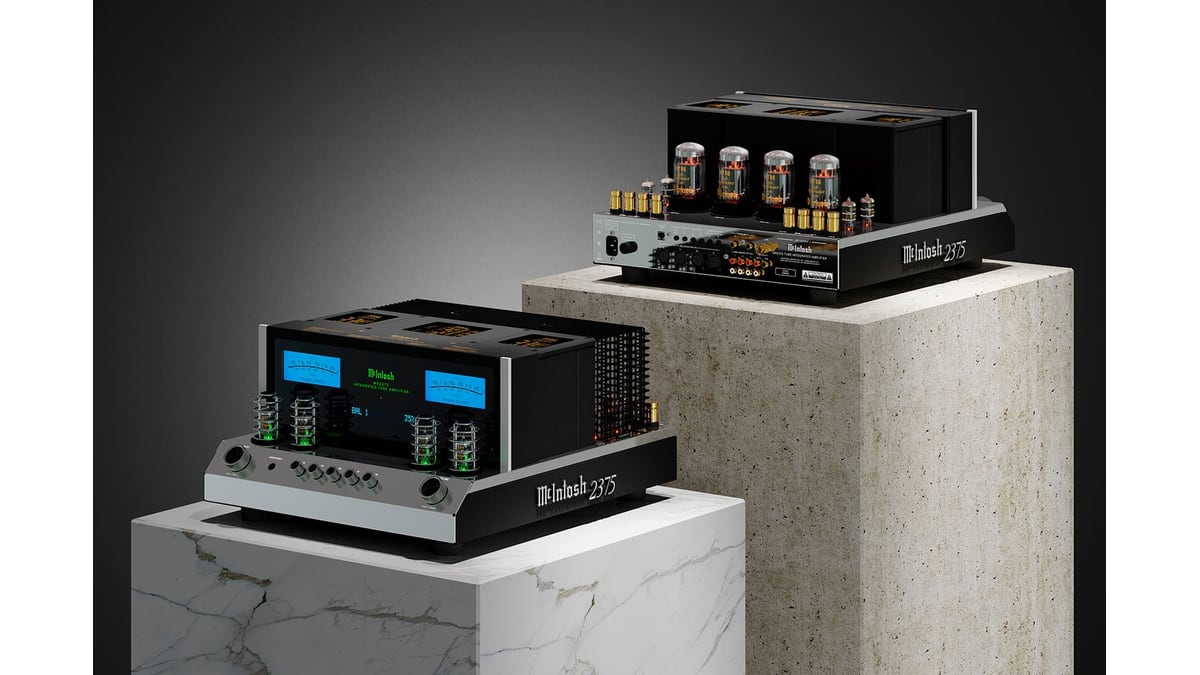 McIntosh returns to all-tube integrateds with the $15,000 MA2375McIntosh's MA2375 is its first all-valve integrated in over a decade — 75 watts per channel, pure analogue, with phono and headphone stages built in.
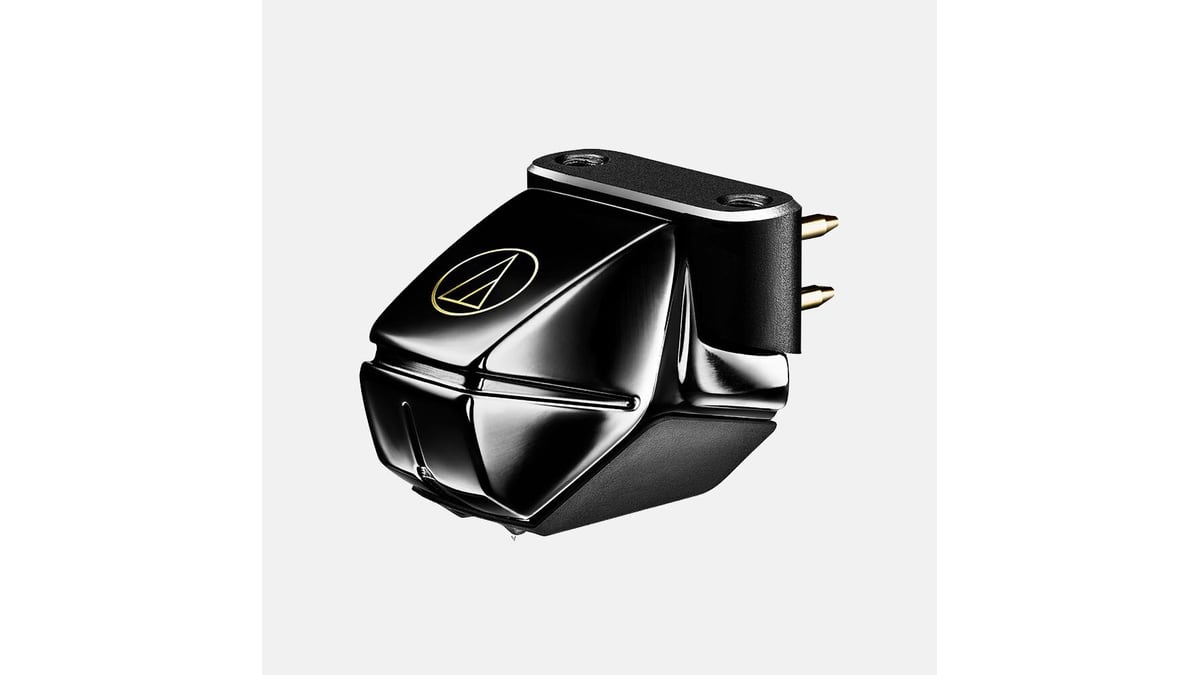 Audio-Technica's AT-MCD1 flagship cartridge debuts with a one-piece diamond stylus and cantileverAudio-Technica's AT-MCD1 arrives June 4, 2026, with a unified CVD diamond cantilever-and-stylus and dual moving-coil design at US$11,000.
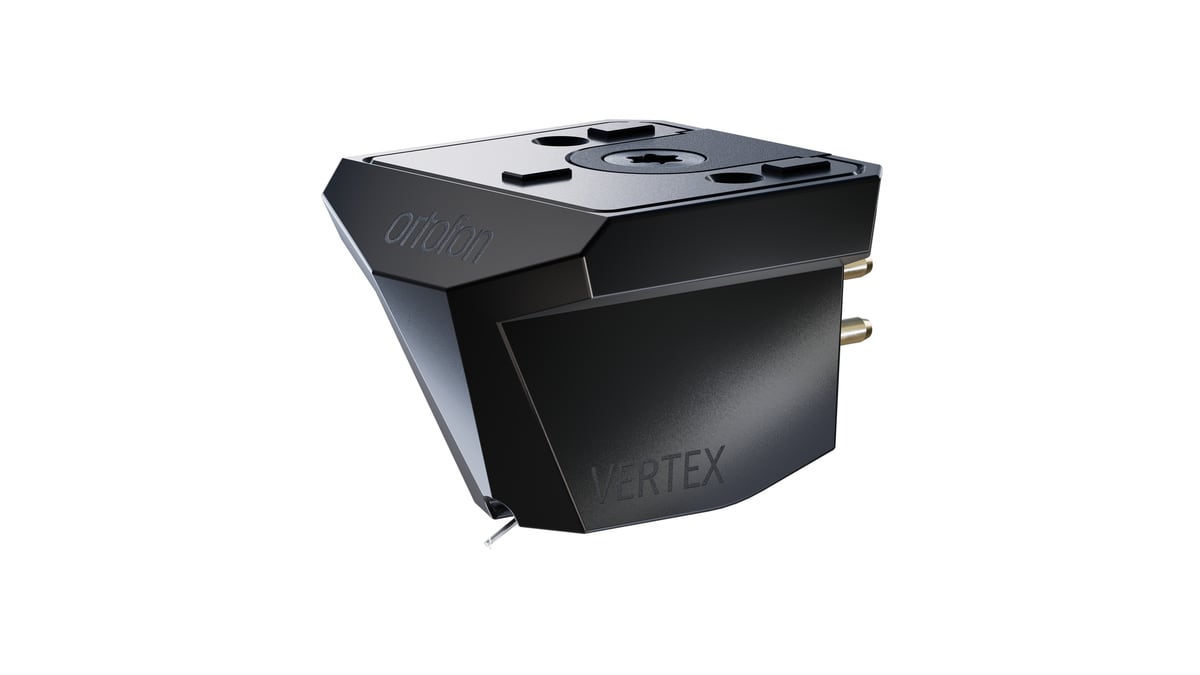 Ortofon's MC Vertex: a solid-diamond cantilever arrives at the top of the rangeOrtofon unveiled its most advanced moving-coil cartridge ever at High End Vienna on June 4, 2026. Here's why the MC Vertex matters for serious vinyl listeners.
 US vinyl revenue breaks $1 billion for the first time — and what it means for Australian record buyersThe RIAA confirmed US vinyl hit $1.04 billion in 2025 — its 19th straight year of growth. We look at what the milestone means for AU buyers.
 Australia posts a seventh straight year of growth, with vinyl up againARIA's 2025 figures confirm seven consecutive years of growth for Australian recorded music, with vinyl revenue rising 4.1% to A$46.3 million.
 UK Vinyl Hits a 30-Year High as the Recorded-Music Market Tops £1.5 BillionBPI data shows UK vinyl revenue surged 19.9% to £174.7m in 2025 — the highest in over 30 years. What does it mean for Australian enthusiasts?