HDMI eARC and a separate DAC: why your home cinema digital source is a compromise
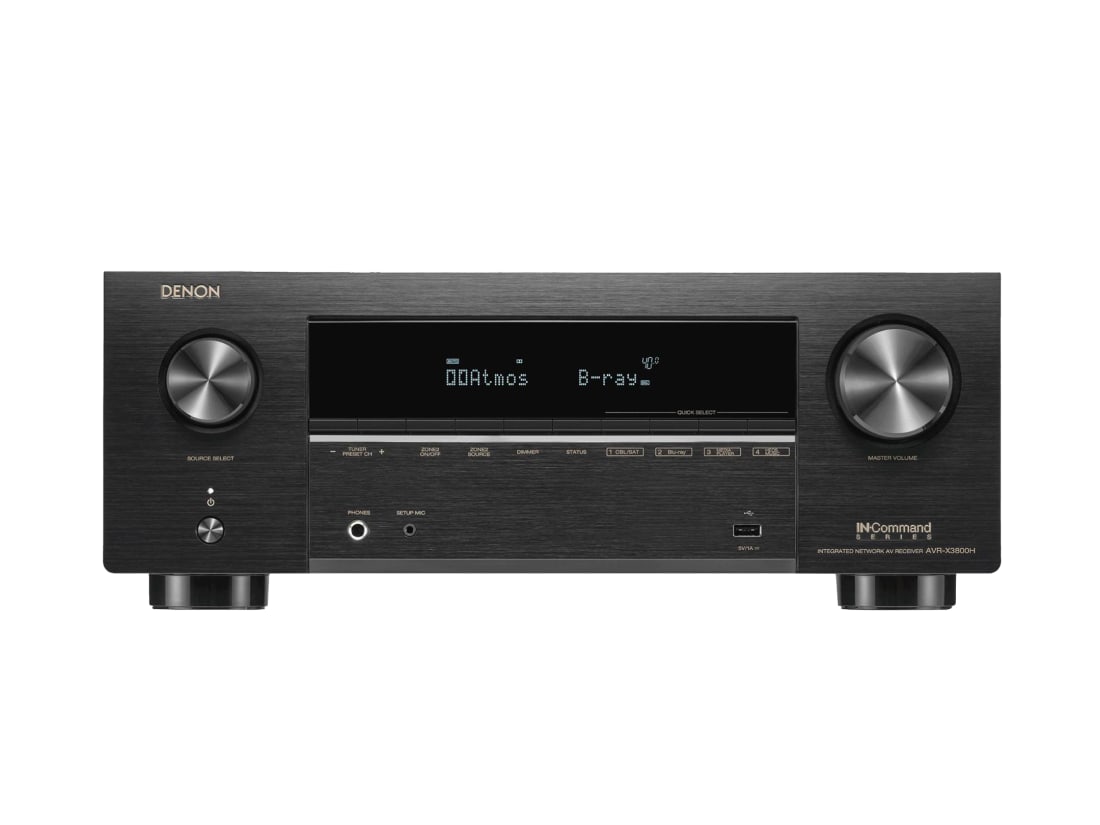
I had a client in Paddington last year, gorgeous Queenslander, who'd spent close to fifteen grand on a Denon AVR-X3800H, a pair of decent floorstanders and a pair of in-ceiling Atmos speakers, and he couldn't work out why his two-channel streaming sounded flat compared to the demo he'd heard at a mate's place running a proper streamer. The AVR was doing everything right on the movie side. On music, it was quietly the weak link. Nobody had told him that the same box handling his Dolby Atmos decode was also acting as his DAC for every Spotify Connect stream and Tidal session, and that those two jobs don't get equal love from the engineers who build these things.
This is the bit that gets skipped in most home cinema builds, and it's worth unpacking properly, because it changes how you should spend your money.
What eARC actually is (and isn't)
Enhanced Audio Return Channel is a genuinely useful piece of engineering. It lets your TV send audio back down the same HDMI cable that's sending it video, at enough bandwidth to carry uncompressed multichannel formats like Dolby TrueHD and DTS-HD Master Audio, plus object-based stuff like Dolby Atmos. Before eARC, you were stuck with the original ARC spec, which choked at compressed formats only. The HDMI Forum's spec details are public if you want the plumbing, and it's a sensible standard, doing exactly what it says.
What eARC does not do is guarantee anything about audio quality once that signal lands inside your AVR or soundbar. It's a transport, not a promise. The digital audio gets to your amp intact — that part is genuinely bit-perfect, no argument — but then it has to go through a DAC chip, an analogue output stage, and whatever power amplification is driving your speakers. That's where the compromise lives, and it's got nothing to do with eARC itself.
Why the AVR's DAC section is built to a different brief
An AV receiver in the $2,000-$4,000 bracket, the Denon AVR-X3800H included, is an extraordinary piece of engineering for what it does. It's decoding up to eleven or thirteen channels, running room correction across all of them, handling HDMI switching for four or five sources, doing video processing, and powering multiple amplifier channels, all inside one chassis that costs less than some standalone stereo DACs. Something has to give, and what usually gives is the amount of engineering attention paid to any single channel's DAC performance.
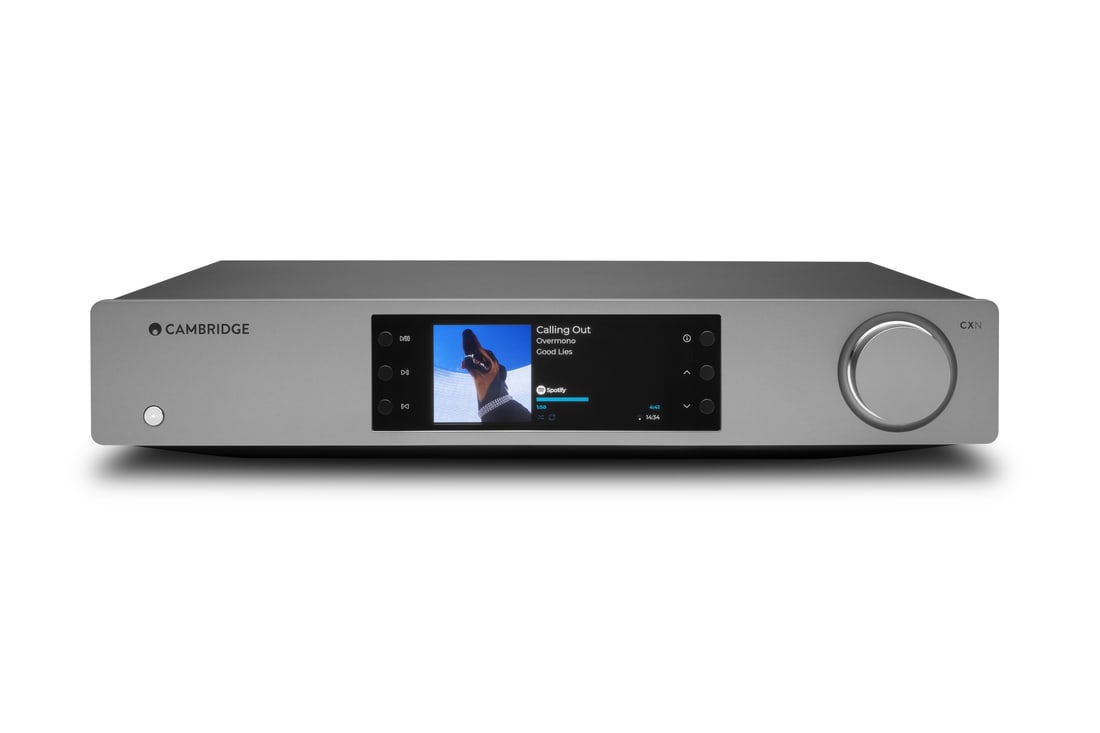
Most AVRs use a multichannel DAC chip that handles all channels off one silicon package, sharing power supply rails, clock circuitry and analogue stages designed for "good enough across thirteen channels" rather than "exceptional on two." I'm not saying it sounds bad. I've sat through plenty of demos where a modern AVR handled two-channel material perfectly well for background listening. But sit it next to a dedicated stereo DAC costing a third of the price, something like the Cambridge Audio CXN100 or even an RME ADI-2 DAC FS, and the difference in resolution, soundstage depth and low-level detail is not subtle once you're actually paying attention instead of half-watching a film.
The AVR's job is to be brilliant at everything at once. A dedicated DAC's job is to be brilliant at one thing. That's the whole story, really, and it's why so many two-channel obsessives keep a separate front end even in a full home theatre.
Where this actually matters versus where it doesn't
Here's my honest take, and I'll admit it's taken me a while to land on this after enough installs to lose count: if 90 percent of your listening in that room is movies and TV, the AVR's DAC section is not your problem. Multichannel Atmos mixes are busy, layered, full of sound effects and dialogue competing for attention, and the kind of DAC-level nuance that separates a good streamer from a great one gets buried in the mix anyway. I've never had a client complain their Atmos soundtrack sounded thin because of the DAC chip. Not once.
Where it bites is the growing number of people who want their theatre room to double as a serious two-channel space, background music during the day, a proper sit-down album listen in the evening. That's a completely reasonable ask given how much these rooms cost to build, and it's exactly the situation where routing everything through eARC into the AVR's onboard DAC leaves real quality on the table.
I'd argue the industry doesn't talk about this enough because it's an awkward message for AVR manufacturers to have their own product positioned as "good enough but not great" for the very use case a lot of buyers care about most. Fair enough from a marketing point of view, but it means the burden falls on installers and reviewers to actually say it.
The fix, and it's simpler than people expect
You don't need to rebuild the room. The straightforward move is to keep the AVR doing what it's brilliant at, HDMI switching, Atmos decode, room correction, amplification for the surround channels, and bring a separate two-channel source into the front left/right pair via a dedicated stereo input or a pre-out to a separate stereo amp, bypassing the AVR's internal DAC and amp section entirely for music.
A streamer like the WiiM Ultra or Cambridge Audio CXN100 into a proper stereo amp, feeding the same front L/R towers your AVR uses for movies, gives you a genuinely different listening experience for music while changing nothing about your cinema setup. Some AVRs even let you assign a "Pure Direct" or equivalent mode that bypasses processing for exactly this reason, though you still want the DAC stage separate if you're chasing real gains.
For clients who don't want two separate amps cluttering the rack, a decent streaming integrated like the NAD C 3050 or Naim Uniti Atom can sit alongside the AVR and simply take over front-stage duties for music via a speaker switch, or by physically swapping banana plugs, which sounds primitive but works fine if you're not doing it fifty times a day. It's not elegant, but it's honest, and it costs a lot less than people assume once they understand what they're actually buying.
What about hi-res streaming through eARC?
This is where the myths pile up. People assume eARC "can't do hi-res" or that streaming through the TV somehow degrades the file before it even reaches the AVR. Neither is generally true. eARC has plenty of bandwidth for high-resolution PCM, and your TV isn't the bottleneck for a Tidal or Qobuz stream, the streaming app or the network path is doing that work upstream, well before HDMI enters the picture.
The real limitation is almost always that many TVs downsample or reprocess audio internally before handing it off over eARC, especially if you've got any TV sound processing modes switched on. If you're going to use eARC for music at all, check your TV's audio settings and make sure whatever "enhancement" mode is on by default gets turned off, because that's doing more damage than the DAC chip ever will.
A word on the bigger picture
None of this means eARC is bad tech, or that you've wasted money on your AVR. For the job it's built for, which is decoding a dozen channels of object-based audio and driving your whole room, it's honestly remarkable value. The mistake is expecting one box to be excellent at two very different jobs and then being disappointed when the compromise shows up exactly where you'd expect it to: in the two-channel listening you do when the credits roll and you just want to put an album on.
If you're planning a build from scratch, this is worth factoring into the budget order from day one rather than bolting on later. I've written before about how I'd sequence a home cinema build for spending priority, and a separate stereo front end sits fairly early on that list if music matters to you at all. It's cheaper to wire it in during the first fit-out than to retrofit a second amp and streamer into a finished rack.
Worth checking your own listening habits honestly before you spend anything, though. If you genuinely never sit and listen to an album start to finish in that room, save the money and let the AVR do both jobs. It's a perfectly sensible way to run a system, and I've built plenty of rooms exactly that way for clients who wanted movies done properly and treated music as background. There's no shame in that. The problem is only when you've paid for a room that could do both and you're only getting one.
The short version for your next build
Let the AVR handle video switching, Atmos decode and multichannel amplification, because it's genuinely excellent at that and eARC gets it there without loss. If two-channel listening matters in that same room, bring a dedicated DAC and amp path to the front speakers rather than routing music through the AVR's onboard DAC, the same way you'd choose a proper DAC and streamer for a dedicated hi-fi setup. It's not a huge spend relative to the rest of the build, and it's the difference between a theatre room that plays music competently and one that actually makes you want to sit down and listen.
— Jonno Fraser, Home Cinema & Custom Install Editor
Common questions
- Does eARC compress or degrade the audio signal itself?
- No. eARC has enough bandwidth to carry uncompressed multichannel formats and high-resolution PCM without loss. The signal arriving at your AVR is intact. Any quality loss happens afterward, in the DAC chip and analogue stage, or upstream if your TV applies its own sound processing before sending audio out.
- Will a separate DAC actually make an audible difference with an AVR like the Denon AVR-X3800H?
- On busy multichannel movie soundtracks, honestly not much, the mix is too dense for subtle DAC-level differences to register. On two-channel music through the front speakers, most listeners can hear a real improvement in detail and soundstage once they compare properly, because a dedicated stereo DAC isn't sharing its power supply and clock across a dozen other channels.
- Can I just use my AVR's Pure Direct mode instead of buying separate gear?
- Pure Direct bypasses room correction and some digital processing, which helps, but the signal is generally still running through the AVR's internal DAC and amp section. It's a free improvement worth using, but it won't get you the gains of an actually separate DAC and amplifier path.
- Is it worth running a separate stereo amp just for the front two speakers?
- If music listening is a real part of how you use the room, yes. You can keep the AVR doing everything for movies and switch the front L/R speakers to a separate streaming amp for two-channel listening, either via a speaker switch or by reassigning the front pre-outs, without touching the rest of the surround setup.

G'day, Jonno here. I spent the better part of twelve years as a custom installer building theatres — everything from a media room squeezed into a Queenslander to a fully blacked-out, acoustically-treated cinema with a hundred grand of gear behind the screen. The thing nobody tells you is that the room matters more than the boxes, and I'll bang on about acoustics until you're sick of me. If you're planning a theatre, talk to me before you spend a cent on speakers.
Ex CEDIA-trained installer; dedicated-theatre and Atmos specialist
More from Jonno Fraser
 Guest Wi-Fi and audio: why visitor networks break multiroomGuest Wi-Fi networks isolate devices by design, which quietly breaks multiroom audio. Here's why it happens and how to fix it properly.
- Ceiling speakers vs upfiring Atmos modules: what actually worksCeiling speakers vs upfiring Atmos modules compared for real rooms: when in-ceiling wins, when upfiring is the better call, and why.
- Why your home cinema amp runs hotter on movies than musicFilm soundtracks push amplifier channels harder and longer than stereo music ever does. Here's why that matters for topology, power supplies and what actually fails.
- Screen-wall speaker placement: building around a UST projector properlyUltra short throw projectors sit right where your centre channel wants to be. Here's how I actually solve that in real theatre builds, not in theory.
 Headphone isolation vs room noise: why your desk setup fights youOpen-back headphones and a noisy home office don't mix. Here's how to actually diagnose room noise before you blame the gear.
 Toe-in and rake: the free speaker tuning most owners never touchToe-in angle and cabinet rake cost nothing but change tonal balance and imaging more than most upgrades. Here's how I set both on site.