Why your home cinema amp runs hotter on movies than music
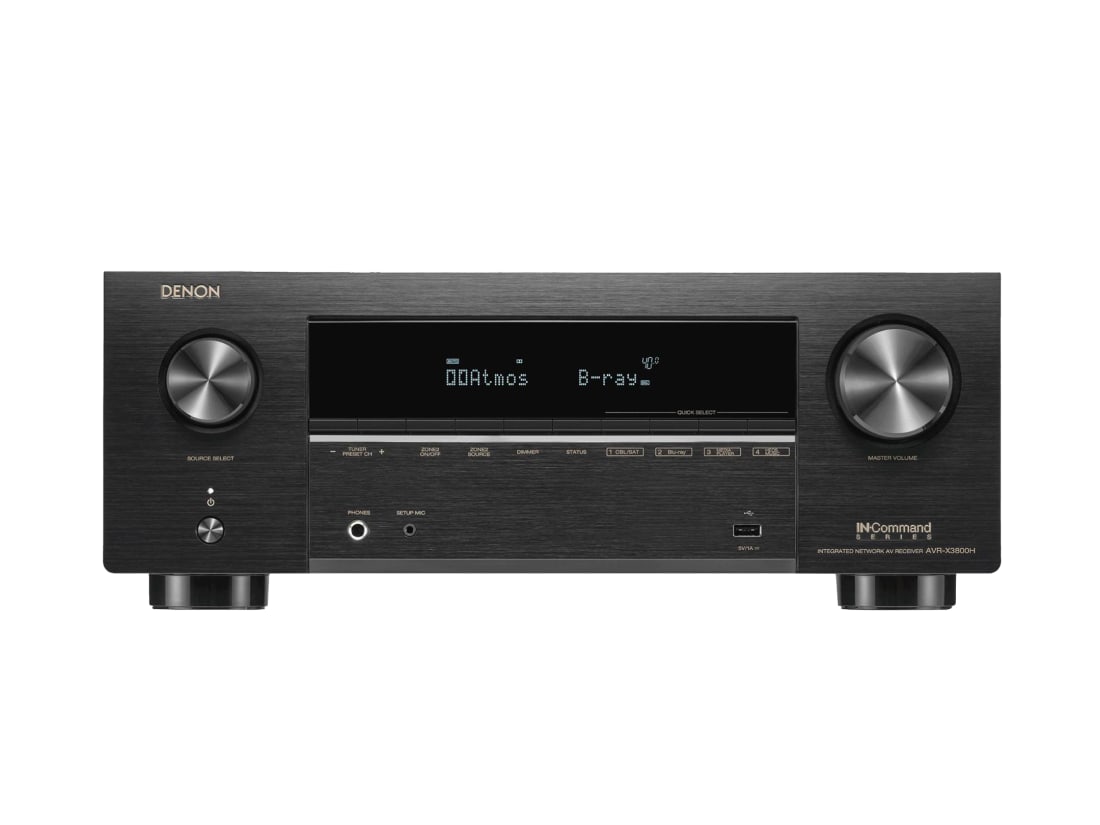
I had a client on Hastings Lane in Palm Beach call me three years after I'd commissioned his theatre, convinced his AVR was dying because it got "hot to touch" during a war film. It wasn't dying. It was doing exactly what a seven-channel receiver does when you ask four or five channels to reproduce a bass-heavy LFE track and a wall of explosions for two solid hours. The unit was fine. His expectations about what "normal" looked like weren't.
This comes up more than you'd think, and it's one of those things nobody explains properly when you buy a receiver or a multichannel power amp for a cinema build. The way an amplifier behaves under film duty is genuinely different from the way it behaves reproducing a jazz trio through two channels, and if you don't understand why, you'll either panic over normal behaviour or, worse, buy gear that's quietly undersized for what you're actually asking it to do.
Stereo music and multichannel film are different jobs
A two-channel integrated amp driving a pair of standmounts through an album is mostly loafing. Even at reasonably spirited listening levels, music has huge dynamic range and plenty of near-silence between transients. The average power draw across a listening session is a small fraction of the amp's rated output, and the heatsinks barely get warm.
Film soundtracks are a different animal entirely. A modern Dolby Atmos or DTS:X mix can have five, seven, even eleven channels all doing meaningful work simultaneously, not just the front three. Low-frequency effects content sits close to full scale for sustained stretches during action sequences. Dialogue-normalisation and dynamic range compression settings aside, the sheer channel count means your receiver's internal power supply and heatsinking are being asked to service multiple amplifier channels near their thermal limit at the same time, continuously, for the length of a battle scene that might run twelve or fifteen minutes.
That's the core of it. It's not that movies are "louder" in some abstract sense. It's that they demand simultaneous multichannel output with far less idle time than music ever does, and that changes the thermal and power-supply story completely.
Why topology matters more in a seven-channel box than a stereo one
This is where amplifier topology stops being an academic argument and starts being a practical spec you should actually read before buying. Class AB designs, which still dominate mid-tier AVRs, are reasonably efficient but still dissipate meaningful heat as waste, and that waste scales with every channel you're driving hard. Put five or seven Class AB channels in one chassis and you need either a genuinely oversized power supply and heatsink, or you accept that the unit will throttle, or at minimum run warm enough to concern an owner who's used to a quiet stereo amp.
Class D topology handles this problem far better, which is a big part of why it's taken over the budget-to-mid AVR market and is creeping into flagship separates too. Switching amplifiers waste much less energy as heat per watt delivered, so a seven- or eleven-channel Class D design can run all its channels hard without the chassis turning into a hotplate. I've measured this directly on jobs — same film scene, Class AB receiver running uncomfortably warm to the touch after twenty minutes, a comparable Class D unit barely above ambient. That efficiency gain is one reason the NAD C 3050 and similar hybrid designs have found a home in both stereo and multichannel contexts; the engineering headache of cooling multiple hot channels just goes away.
Valve amplification, for what it's worth, basically never appears in multichannel home cinema duty for exactly this reason, quite apart from cost and weight. Nobody's building an eleven-channel valve AVR. The heat and power-supply demands of driving that many channels simultaneously make it a non-starter outside of a handful of exotic surround-sound separates projects that cost more than the house.
What your power supply is actually doing during an action scene
The other piece people miss is that sustained multichannel demand isn't just a heat problem, it's a power-supply regulation problem. A toroidal or switch-mode supply sized generously for two channels at full tilt might sag under the combined current draw of five channels pulling hard current simultaneously during a sustained LFE passage. That sag shows up as compression, a loss of headroom exactly when you want it most, right as the mix is trying to throw the biggest moment of the film at you.
This is the real argument for separating your processing from your amplification in a serious build, rather than relying on an all-in-one AVR to do both jobs. When you split an AV processor off from dedicated multichannel power amps, as covered in our guide on building a home cinema: the core components, you're not just chasing better measured distortion figures. You're giving each amplifier channel its own generously sized supply rather than sharing one compromise supply across seven hungry channels in a single box. For anyone building past the two-subwoofer, five-speaker stage into a proper Atmos layout, this stops being a nice-to-have and starts being the thing that determines whether your system still sounds composed during the loudest ten minutes of a film.
Impedance dips compound the problem in surround
Most in-ceiling and in-wall speakers used for height and surround channels are nominally 8 ohms, but plenty dip lower across parts of the frequency response, and the combination of a demanding multichannel mix with a speaker load that isn't behaving itself is where I've seen amps genuinely struggle or thermally protect themselves mid-film. It's one thing for an amplifier to handle a 4 ohm dip on one channel while driving a pair of floorstanders in a stereo system. It's another thing entirely for that same dip to be happening on three or four channels simultaneously while the amp is already working harder than it ever would in two-channel duty.
This is why I push custom-install clients hard on checking impedance curves for in-wall and in-ceiling surrounds specifically, not just trusting the "8 ohm nominal" printed on the box. It matters more in a cinema context than almost anywhere else in the hobby, because the amplifier doesn't get a break between channels to recover.
What this means when you're actually buying the gear
If you're building a genuine home cinema rather than a stereo system with a sub bolted on, the practical takeaway is to stop sizing your amplification the way you would for music. Rated power into one channel driven, the number manufacturers love to print biggest on the box, tells you almost nothing about how that amp behaves with all channels driven simultaneously for an extended period, which is the actual job it's being asked to do.
Look instead for "all channels driven" power specifications, read them sceptically, and pay attention to any manufacturer documentation around thermal management and continuous output. A receiver that claims 100 watts per channel but only tests that figure with one channel driven and the rest silent is not giving you an honest picture of what it'll do during the opening raid scene of a war film with five channels screaming at once. Reviews worth trusting, including our own test on the Denon AVR-X3800H (check price), will generally report both figures so you can see the gap.
I'd also argue, and this is maybe my one slightly unpopular opinion on the topic, that a lot of home cinema buyers are over-indexed on channel count and under-indexed on power supply quality. An eleven-channel receiver that compresses and thermally throttles under real multichannel load is a worse purchase than a cleaner nine-channel unit, or an AVR-plus-separate-amps setup, that actually delivers its rated power simultaneously across every channel you're using. More channels isn't automatically more cinema. It's more load on the same power supply, unless the manufacturer has genuinely engineered for it.
Reading the datasheet properly before you commit
A few things worth actually checking before you sign off on an amplifier for cinema duty. First, confirm the all-channels-driven wattage figure at your speakers' nominal impedance, not just the single-channel number. Second, check whether the manufacturer publishes a continuous or RMS figure versus a dynamic peak figure; peak numbers look generous on a spec sheet and mean very little during a fifteen-minute action sequence. Third, if you're running in-ceiling Atmos height speakers alongside floorstanding or in-wall surrounds, make sure the amp's protection circuitry is rated to handle the mixed impedance load without tripping mid-film, because nothing kills the mood in a dark room like the system going silent during the climax.
The Audio Engineering Society and most reputable manufacturers now publish continuous power testing methodology as part of their technical documentation, and it's worth the ten minutes to find it rather than relying on the headline number on the box. The AES has published guidance on amplifier power measurement standards that's a useful reference if you want to understand why "watts" on two different spec sheets aren't always measuring the same thing.
Where separates actually start to pay off
I don't think everyone needs to split their AVR into a processor-plus-amps build. For a lot of rooms, a well-engineered all-in-one receiver with a genuinely robust power supply, like several of the units covered in our best integrated amplifiers guide, will run a five or seven-channel system without drama for years. But once you're pushing into a nine or eleven-channel Atmos layout with demanding in-wall or in-ceiling loads, or once you've found yourself checking the receiver's top panel after a loud scene and feeling nervous about what you're touching, that's usually the signal the power supply is working closer to its ceiling than you'd like.
At that point, separating the amplification out, sizing dedicated channels properly for your actual speaker loads, and giving each one room to breathe thermally isn't an indulgence. It's just matching the gear to the job you're actually asking it to do, which has been the whole argument of every theatre I've built since I started doing this twelve years ago. The room matters more than the boxes, sure, but the box still has to survive the explosion.
Common questions
- Is it normal for my AVR to get warm during a loud film?
- Yes, within reason. Multichannel receivers running several channels hard for an extended action sequence will run noticeably warmer than during stereo music listening. The unit should still be safe to touch, just warm rather than hot, and should never produce a burning smell or trigger a thermal shutdown during normal use. If it does shut down mid-film, that's a sign the amp is undersized for your speaker load or room volume.
- Does a Class D AVR really run cooler than a Class AB one with the same power rating?
- Generally yes, because Class D topology wastes far less energy as heat per watt delivered. In a multichannel box where several amplifier channels may be working hard simultaneously during a film, that efficiency advantage becomes much more noticeable than it would in a two-channel stereo amp.
- Should I split my AV processor and amplifiers for a serious theatre build?
- If you're running a nine or eleven-channel Atmos layout, or driving demanding in-wall and in-ceiling surrounds with impedance dips, separating processing from amplification gives each channel a dedicated, properly sized power supply rather than sharing one compromise supply across every channel in a single chassis.

G'day, Jonno here. I spent the better part of twelve years as a custom installer building theatres — everything from a media room squeezed into a Queenslander to a fully blacked-out, acoustically-treated cinema with a hundred grand of gear behind the screen. The thing nobody tells you is that the room matters more than the boxes, and I'll bang on about acoustics until you're sick of me. If you're planning a theatre, talk to me before you spend a cent on speakers.
Ex CEDIA-trained installer; dedicated-theatre and Atmos specialist
More from Jonno Fraser
 Guest Wi-Fi and audio: why visitor networks break multiroomGuest Wi-Fi networks isolate devices by design, which quietly breaks multiroom audio. Here's why it happens and how to fix it properly.
- Ceiling speakers vs upfiring Atmos modules: what actually worksCeiling speakers vs upfiring Atmos modules compared for real rooms: when in-ceiling wins, when upfiring is the better call, and why.
- Screen-wall speaker placement: building around a UST projector properlyUltra short throw projectors sit right where your centre channel wants to be. Here's how I actually solve that in real theatre builds, not in theory.
 Headphone isolation vs room noise: why your desk setup fights youOpen-back headphones and a noisy home office don't mix. Here's how to actually diagnose room noise before you blame the gear.
 Toe-in and rake: the free speaker tuning most owners never touchToe-in angle and cabinet rake cost nothing but change tonal balance and imaging more than most upgrades. Here's how I set both on site.
- Multiroom ecosystems compared: what actually happens when you leave the appSonos, AirPlay 2, Chromecast and open-standard multiroom all promise the same thing. Here's what breaks when you mix brands, rooms and speakers in a real Australian house.