Screen-wall speaker placement: building around a UST projector properly
I had a client in Paddington last year who'd already bought the projector before he called me. A cracking ultra short throw unit, sitting on a low credenza about 20cm off the screen wall, throwing a beautiful 120-inch image up a painted plasterboard surface. Lovely picture. Then he asked where the centre channel should go, and I had to tell him the honest answer: there wasn't a good spot left. The projector body was sitting exactly where the centre speaker needed to be, and the screen itself wasn't acoustically transparent, so we couldn't go behind it either. We ended up pulling the whole front end apart and starting again.
This is the single most common mistake I see in home cinema builds now, and it's getting more common, not less, because UST projectors have become the default recommendation for anyone who doesn't want a drop-down screen and a ceiling-mounted unit. Fair enough too — they're genuinely good now, the lumens are real, and the convenience is hard to argue with. But nobody talks about what a UST does to your speaker layout, and it does plenty.
Why UST and centre channels are fighting for the same real estate
A traditional long-throw projector lives on the ceiling or on a shelf at the back of the room, well away from the screen wall. That leaves the entire wall behind and around the screen free for an acoustically transparent screen with the centre, left and right all firing straight through the fabric at ear height. It's the gold standard layout and it's why dedicated cinema rooms almost always use it. A UST unit throws from roughly 20 to 40cm away, sitting low and close to the wall, right in the zone where a centre channel wants to live — directly below or above the middle of the screen, on axis, close to the same height as the main left and right speakers. Put a centre speaker in its usual spot and the UST's lens, or its exhaust vents, or just its physical bulk, gets in the way. Some installers try to shove the centre underneath, angled up. That works until you realise the projector's fan noise is now sitting right next to your dialogue speaker, and the off-axis angle is doing nasty things to vocal clarity.
The acoustically transparent screen question
The clean fix, if your budget allows it, is an acoustically transparent (AT) screen with the centre, left and right all mounted behind it at ear height, firing through perforations in the material. This is standard practice in proper cinema rooms and it's the layout I push for whenever I can. The problem with UST is that most AT screens are designed for long-throw projection and the weave or perforation pattern that's "acoustically transparent" to sound can also scatter or dim a UST's very steep throw angle in ways that create hotspotting or brightness fall-off you won't see with a conventional projector. There are now a handful of UST-specific ALR (ambient light rejecting) screens that are also acoustically transparent, and if you're building from scratch, that's the spec sheet line to chase. They're not cheap, and the selection in Australia is still narrower than I'd like, but they solve the problem at the root rather than working around it. If you're speccing new, I'd rather you spend the extra money here than on the fourth height channel.
When you can't go acoustically transparent
Most of the rooms I actually walk into aren't getting a full AT screen rebuild. The client's already bought the projector, the screen's already on the wall, or the budget simply doesn't stretch. In that case you're building the centre channel position around the projector, not through the wall, and there are a few approaches that actually work. The first is a centre speaker mounted above the screen rather than below it, angled down toward the main listening position. This keeps it clear of the UST unit entirely and, in my experience, measures better than an under-screen placement because you're not fighting reflections off the credenza or shelf the projector sits on. It's not textbook — ideally the centre sits dead centre at screen height — but a speaker angled down from 15 to 20 degrees above the picture, aimed correctly, beats a compromised under-screen position every time I've measured it. The second option, and the one I used in that Paddington job eventually, is going wide with the centre duties split differently: using a genuinely capable left/right pair with a tight, narrow listening position and letting the AVR's centre-channel processing (phantom centre, or a slightly reduced level with careful toe-in) carry more of the dialogue load. This isn't my first preference for a dedicated theatre, but for a family room doing double duty, it's a legitimate compromise, and it avoids a speaker sitting in a bad spot measuring worse than no centre at all.
Left and right placement gets harder too
People assume the UST problem is only about the centre channel, but the low, wide footprint of most UST units also eats into where you'd normally put left and right mains if you were going for an in-wall or close-to-wall configuration. The unit itself, plus its heat exhaust, plus the cabling for it, often forces the L/R out wider than ideal or further forward than the screen plane. Wider than ideal isn't the end of the world — you can compensate with toe-in, which is one of the few genuinely free tuning moves in this hobby and something I think gets underused generally (I've written about toe-in and rake adjustments elsewhere, worth a look if you haven't dialled yours in properly). But forward of the screen plane is a real problem, because now your left and right are closer to the listening position than the centre, and the image localises oddly. Measure the distance from each speaker to the main seating position and keep them within a few centimetres of each other if at all possible; it's a cheap thing to check and an annoying thing to fix after the plasterboard's closed up.
Height channels and the UST ceiling conflict
There's a second, less obvious conflict. A lot of UST owners also want Atmos height channels, and the natural place for front-height speakers is on the ceiling roughly above and slightly forward of the main listening position — which, depending on your room depth, can be uncomfortably close to where the UST's throw path crosses the room. I haven't seen this cause acoustic problems (sound doesn't care about light paths) but I have seen plenty of installs where the height speaker bracket ends up partially obstructing the projected image because nobody checked the throw cone before drilling. Get the UST's throw ratio and lens offset from the manufacturer's spec sheet before you plan height channel positions, not after. It's a ten-minute check with a tape measure and the manual, and I've had to apologise to exactly one client for skipping it on a job in my early years — never again.
What I actually spec now
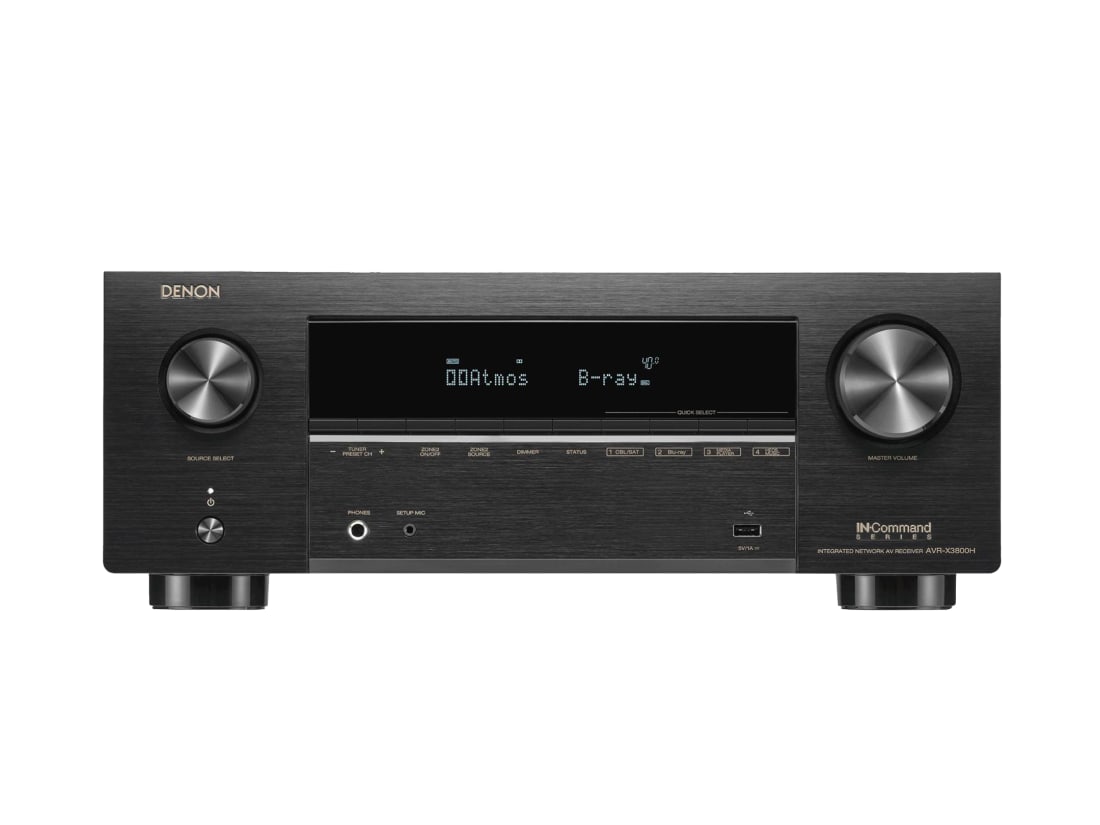
For a new build going UST, my order of operations has changed. I used to design the speaker layout first and fit the projector into it. Now I confirm the UST model, its throw distance and lens offset, and its physical footprint before I touch the speaker plan at all. Then I decide whether an AT UST-specific screen is in the budget. If it is, centre, left and right go behind it at proper ear height and the UST problem essentially disappears — it's just living in front of a transparent surface like any other projector. If it's not in the budget, I'm going above-screen for the centre, checking L/R distance symmetry carefully, and confirming height channel brackets against the actual throw cone before anything gets fixed to the ceiling. None of this is exotic. It's just a sequence that respects the fact that a UST projector isn't a neutral object sitting near your screen — it's actively competing for the best acoustic real estate in the room, and if you don't plan around it, it wins by default. If you're starting the broader build from scratch, it's worth reading through our rundown on the core components of a home cinema before you lock in any single piece, because the UST-versus-speaker conflict is exactly the kind of sequencing issue that bites people who buy gear in the wrong order. An AVR like the Denon AVR-X3800H (check price) will happily process a phantom centre or run height channels either way — it's the physical layout that needs sorting first, not the electronics.
A room I'd do differently
Honestly, if I'm building a dedicated, blacked-out room from a bare shell — the kind of job I used to love getting called out for — I still lean long-throw and acoustically transparent screen as the default, not UST. The convenience argument for UST is real in a living room doing double duty as a theatre, where nobody wants a ceiling mount and a bulky screen housing. But in a purpose-built room where you control every variable, long-throw still gives you the cleanest speaker layout with the fewest compromises, and I'll keep recommending it until UST throw geometry and AT-screen compatibility catches up properly. That's not a popular opinion with anyone currently spruiking UST as the automatic upgrade path, but it's what the acoustic measurements keep telling me. The Sony VPL-XW5000ES (check price), for what it's worth, is a long-throw unit and a good example of why I still default there for serious rooms — it leaves the entire screen wall free for proper speaker integration, UST convenience be damned.
For technical background on how object-based height channels are meant to be deployed once your front soundstage is sorted, the Dolby Atmos technology overview is worth a read, and CEDIA's installation guidance covers acceptable speaker-to-screen tolerances if you want the industry reference rather than my opinion on it, via the CEDIA global standards body.
Common questions
- Can I just put the centre channel speaker on top of the UST projector?
- Physically yes, but it's rarely a good outcome. You're close to the heat exhaust, the fan noise sits right next to your dialogue channel, and the speaker is now off the ideal vertical axis. An above-screen angled placement almost always measures better.
- Do UST-compatible acoustically transparent screens actually exist in Australia?
- Yes, though the range is narrower than for long-throw AT screens. A handful of ALR screen makers now offer perforated or woven options rated for steep UST throw angles. Confirm the throw ratio compatibility with the specific screen manufacturer before ordering, because not every AT weave suits every UST lens.
- Will a phantom centre setup actually sound worse than a badly placed physical centre speaker?
- Not necessarily. In a tight, symmetrical seating position with a genuinely capable left/right pair, a well-configured phantom centre can outperform a centre speaker that's been jammed into a bad spot with poor off-axis response. It's a legitimate compromise, not just a fallback.
- Does UST throw distance affect where I can put ceiling height speakers?
- It can, if the throw cone passes close to where a height speaker bracket would sit. Always check the projector's throw ratio and lens offset specs against your planned bracket positions before drilling anything into the ceiling.

G'day, Jonno here. I spent the better part of twelve years as a custom installer building theatres — everything from a media room squeezed into a Queenslander to a fully blacked-out, acoustically-treated cinema with a hundred grand of gear behind the screen. The thing nobody tells you is that the room matters more than the boxes, and I'll bang on about acoustics until you're sick of me. If you're planning a theatre, talk to me before you spend a cent on speakers.
Ex CEDIA-trained installer; dedicated-theatre and Atmos specialist
More from Jonno Fraser
 Guest Wi-Fi and audio: why visitor networks break multiroomGuest Wi-Fi networks isolate devices by design, which quietly breaks multiroom audio. Here's why it happens and how to fix it properly.
- Ceiling speakers vs upfiring Atmos modules: what actually worksCeiling speakers vs upfiring Atmos modules compared for real rooms: when in-ceiling wins, when upfiring is the better call, and why.
- Why your home cinema amp runs hotter on movies than musicFilm soundtracks push amplifier channels harder and longer than stereo music ever does. Here's why that matters for topology, power supplies and what actually fails.
 Headphone isolation vs room noise: why your desk setup fights youOpen-back headphones and a noisy home office don't mix. Here's how to actually diagnose room noise before you blame the gear.
 Toe-in and rake: the free speaker tuning most owners never touchToe-in angle and cabinet rake cost nothing but change tonal balance and imaging more than most upgrades. Here's how I set both on site.
- Multiroom ecosystems compared: what actually happens when you leave the appSonos, AirPlay 2, Chromecast and open-standard multiroom all promise the same thing. Here's what breaks when you mix brands, rooms and speakers in a real Australian house.