Jitter, oversampling and filters: which DAC specs actually matter
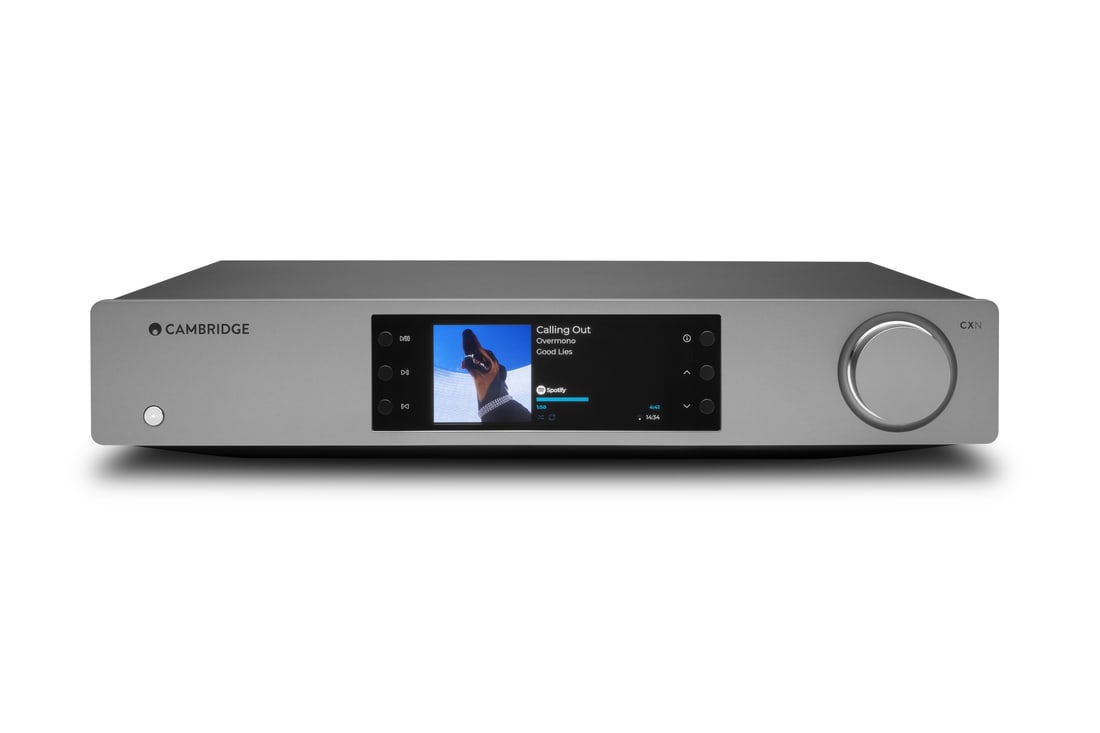
I had a reader email me last month with a screenshot from a DAC's product page boasting "ultra-low jitter: 1 picosecond." No context, no measurement method, no comparison point. Just a number, bolded, next to a photo of a chassis machined from a single billet of aluminium. That's the state of DAC marketing in 2024, and it's why I want to walk through three terms — jitter, oversampling, and digital filters — that get thrown around constantly but rarely explained honestly.
Some of this matters. Some of it stopped mattering around 2015 and nobody told the marketing department. Let's sort the two piles.
Jitter: real, but mostly solved
Jitter is timing error. Digital audio works by taking samples at precise, evenly-spaced intervals — 44,100 times a second for CD-quality audio, more for hi-res. If the clock generating those intervals wavers even slightly, the samples land at the wrong moments and the reconstructed analogue waveform is subtly wrong. In the worst cases this shows up as a raised noise floor or audible sidebands around test tones. I've measured it on a spectrum analyser plenty of times in my old design job — it's real, it's not folklore.
Here's the part that doesn't get said enough: jitter was a genuine problem in the 1990s and early 2000s, when DACs derived their clock from the incoming digital signal (S/PDIF, in particular, is a jitter-prone transport because clock and data are recovered from the same stream). A cheap CD transport feeding a DAC over a long coax cable could genuinely sound different from a good one, and some of that was jitter-related.
Modern async USB, and pretty much every well-designed DAC since asynchronous USB audio became standard, sidesteps most of this. The DAC's own crystal oscillator sets the pace and requests data from the source to match, rather than being a slave to a noisy incoming clock. Chips like ESS Sabre, AKM's newer parts, and Texas Instruments' PCM series all include jitter-reduction stages that push residual jitter into territory that's very hard to measure, let alone hear, on a competently engineered product. When I run loopback jitter tests on decent current DACs — the RME ADI-2 DAC FS is a good example I keep coming back to for its published measurement suite — the numbers are so far below audibility thresholds that quoting a jitter figure in picoseconds is close to meaningless as a purchase decision. It's a number without a threshold. What matters is whether it's audible, and on any DAC design from the last decade with a competent implementation, it generally isn't.
My honest take: if a brand leads with a jitter figure and gives you no comparison or context, that's a marketing decision, not an engineering one. Ask for a full measurement suite instead — total harmonic distortion plus noise, dynamic range, and a jitter spectrum plot if they have one. The Audio Engineering Society has published extensively on jitter audibility thresholds over the decades, and the consensus in that literature is that well-implemented modern designs sit well under the levels where anyone has demonstrated reliable detection in controlled listening.
Oversampling: doing what it says, mostly transparently
Oversampling takes your incoming digital signal and mathematically inserts additional sample points before conversion, running the actual digital-to-analogue conversion at a much higher internal rate than the source material. A CD-quality 44.1kHz signal might get oversampled to 176.4kHz, 352.8kHz, or higher inside the chip before it ever reaches the analogue stage.
Why bother? Because oversampling pushes the unavoidable filtering required near the Nyquist frequency (half the sample rate) further away from the audible band, which lets designers use gentler, lower-distortion filter slopes rather than brutal, phase-nasty ones close to 20kHz. This is genuinely useful engineering and it's been standard practice since the 1980s. Nearly every delta-sigma DAC chip on the market — which is to say nearly every DAC chip full stop — oversamples internally as part of how the architecture works. It's not optional, and it's not really a selling point either; it's just how the conversion happens.
Where it gets marketed dishonestly is when a brand implies their oversampling ratio is a meaningful spec to compare across products, as if "8x oversampling" beats "4x oversampling" the way more horsepower beats less. It doesn't work that way. The ratio interacts with the filter design, the chip's internal noise-shaping, and the analogue output stage in ways that a single number can't capture. I've measured DACs with modest oversampling ratios that comfortably out-perform higher-ratio competitors on real distortion and noise figures, because the rest of the implementation mattered more.
Digital filters: the one area where you might actually hear something
This is the one I'd tell you to spend actual attention on, because it's also the one most likely to produce a real, describable difference at the listening chair.
Most modern DAC chips offer a handful of switchable digital filter options — commonly labelled things like "fast roll-off," "slow roll-off," "minimum phase," "apodizing," or brand-specific names. These filters trade off differently between frequency response flatness, pre-ringing, post-ringing, and phase linearity. A steep, linear-phase filter gives you the flattest frequency response but introduces symmetrical ringing before and after transients — theoretically inaudible pre-ringing has been debated in the AES literature for years, with genuinely mixed findings. A minimum-phase filter pushes the ringing to occur only after the transient, which some listeners find more natural on percussive material, at the cost of a very slight rise in the treble or a softer roll-off above 20kHz.
I've done blind-ish home comparisons (not rigorous ABX, I'll be honest about that limitation) switching filters on DACs like the RME ADI-2 DAC FS, which exposes several filter choices in its menu, and on some source material — well-recorded acoustic percussion in particular — I can hear a difference in perceived attack and decay. It's subtle. It's genuinely there. Whether you prefer the "more accurate on paper" fast linear-phase filter or the softer minimum-phase option is a matter of taste, not correctness, and I'd encourage anyone with a DAC that offers switchable filters to actually try them rather than assume the default is best.
This is also, incidentally, one of the few digital audio topics where I think the golden-ears crowd and the measurement crowd can both be right at once. The measurements show real, describable differences in impulse response and frequency response between filter types. The dispute is entirely about audibility and preference, which is a legitimate argument to have, unlike jitter specs measured in picoseconds with no context.
What I actually check when I review a DAC
When a new DAC comes across my desk, I ignore the marketing copy entirely for the first hour. I want RMAA or Audio Precision-style measurements: THD+N at a standard level, dynamic range, frequency response across the audible band, and if I can get it, a jitter spectrum via loopback test. I want to know the output impedance, because that interacts with whatever amplifier or headphone you're pairing it with — a topic I've covered in more depth when talking about desktop DAC/amps. And I want to actually listen with filters switched, if the unit offers them, rather than trust that the manufacturer picked the best default for my ears.
None of this requires six figures of budget. A genuinely well-measuring, well-engineered DAC exists at nearly every price point in Australia right now, and I've written before about the diminishing-returns curve on where to spend on a digital front end — the short version is that the big, audible gains happen early, and the remaining differences get progressively harder to hear and more expensive to chase.
Where this leaves you as a buyer
If a product page leads with a jitter number in picoseconds and nothing else, be sceptical — that's decoration, not information, on any competently designed modern DAC. If it leads with an oversampling ratio as though it's a horsepower figure, same scepticism applies. If it mentions switchable digital filters and actually explains what each one trades off, that's a brand that understands its own product, and it's worth spending time with the filter options yourself once you own it.
I'd also say — and this is the mildly unpopular part — that I think too many DAC reviews spend paragraphs on chip architecture and clock design and barely mention the output stage, which in my experience does more to shape the actual tonal character you hear than the digital front end ever does. The conversion chip gets you correct numbers. The analogue stage after it is where most of a DAC's "sound" actually comes from, and that's the section of a spec sheet most buyers skip straight past. For DACs built into streamers or all-in-ones, I've gone into how that output stage interacts with your speakers in our piece on matching the digital front end to your speaker pair.
The Bluetooth SIG and AES both publish useful reference material if you want to go deeper on the transport and filter-design side of this than a single article can cover — worth a read if any of this genuinely interests you rather than just needing a buying decision made.
None of this is exotic. It's mostly settled engineering that's been dressed up in fresh marketing language every few years to justify a new product cycle. The graph doesn't change just because the copywriting around it does.
A quick word on hi-res files and whether any of this changes at higher sample rates
Short answer: not much, in ways that matter to jitter or filter choice. Higher sample rate source material does push the Nyquist frequency further from the audible band, which gives filter designers more room to work with and can reduce the audible impact of filter choice — one reason some listeners report less difference between filter settings when playing high-resolution files versus standard-resolution ones. But the jitter picture doesn't meaningfully change with sample rate on a well-designed async USB DAC, and oversampling ratios inside the chip adjust automatically regardless of what you feed it. If you want the fuller picture on what higher numbers on a spec sheet actually buy you, I'd point you to our explainer on sample rate and bit depth rather than repeat it here.
Buy the DAC that measures cleanly, sounds right to you on your own material, and has an output stage that suits your amplifier or headphones. Everything else on the spec sheet is context, not gospel.
— Marcus Vale, Editor · Electronics & Measurement
Common questions
- Does jitter still matter if I'm streaming over Wi-Fi rather than using USB or coax?
- Network-based streaming (via apps like Roon, AirPlay, or a streamer's own app) buffers data before playback, which effectively removes the transport-related jitter that affected older real-time digital connections like S/PDIF. Any residual jitter comes from the DAC's own internal clock, which on a competent modern design is already very low.
- Should I always use the 'fast roll-off' filter because it measures flattest?
- Not necessarily. Fast roll-off filters typically show the flattest frequency response on a graph, but they introduce more pre-ringing around transients, which some listeners find less natural on percussive or vocal material. I'd suggest trying both if your DAC offers the option and trusting your own ears for this particular decision — it's genuinely a preference call, not a right-or-wrong one.
- Is a higher oversampling ratio a sign of a better DAC?
- No. Oversampling ratio is one design choice among many inside a DAC chip and doesn't correlate reliably with measured performance. A DAC with a lower headline oversampling number can easily out-measure one with a higher figure if the rest of the implementation, particularly the analogue output stage, is better executed.
- Can I actually hear jitter on a modern DAC?
- On a well-designed asynchronous USB DAC from the last decade, published research and my own measurements suggest residual jitter sits well below any level that's been reliably demonstrated as audible in controlled testing. It was a real issue with older synchronous digital transports; it's largely a non-issue on current well-engineered gear.

I'm Marcus, and I'll be honest up front: I trust a measurement before I trust my own ears, because my ears lie to me daily. I spent fifteen years designing audio electronics before I started writing about them, so when a brand tells me a number, I want to see the graph. That doesn't make me cold about this hobby — I love a system that disappears as much as anyone — it just means I'll tell you when an expensive box is selling you confidence rather than performance.
Former audio electronics engineer; objectivist; runs the test bench
More from Marcus Vale
- Why your turntable's earth wire isn't optionalTurntable earthing fixes most phono hum problems. Here's how grounding actually works, why it fails, and how to track down a noisy connection.
 Why your AVR runs cool on music but throttles on AtmosAVR thermal throttling explained: why nine-channel Atmos mixes push receivers into protection mode that two-channel music never triggers.
- Subwoofer delay settings: why your AVR's number is a guessAVR auto-calibration estimates subwoofer delay from distance, not timing. Here's how to measure and correct it properly for tighter bass.
- AVR auto-calibration: what Audyssey, YPAO and Dirac actually measureAudyssey, YPAO and Dirac Live all run a mic sweep and spit out numbers, but they're not measuring the same things or fixing the same problems. Here's what's actually happening.
- Cartridge break-in: what actually changes in the first 40 hoursDoes a new cartridge really need 40 hours to "open up"? I measured one to find out what's mechanical fact and what's audiophile folklore.
- DAC output stages: what the chip doesn't tell youThe DAC chip gets all the marketing attention, but the analogue output stage after it does most of the work shaping what you actually hear.