Feedback and damping factor: what negative feedback actually does in an amplifier
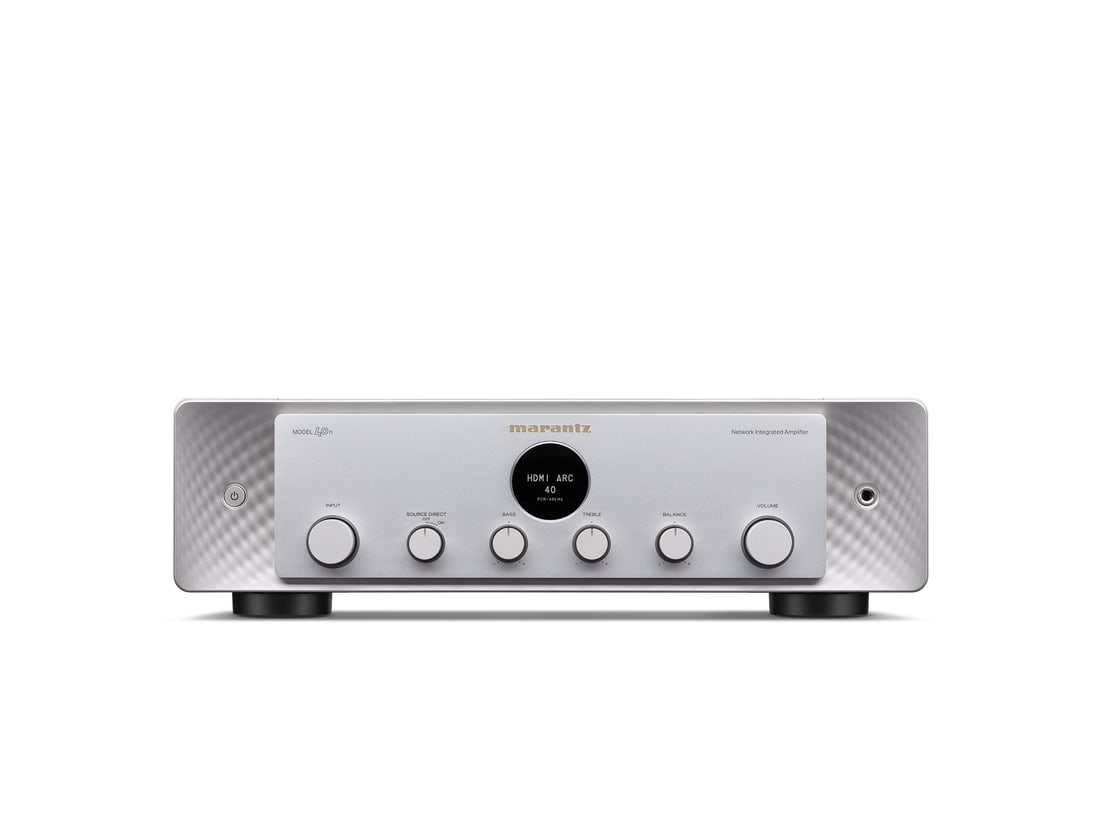
A reader emailed me last month with a genuinely good question, buried inside a fairly confident bit of folklore: "Doesn't negative feedback ruin the sound? My valve amp has none and it's the best-sounding thing I own." He'd read this somewhere, believed it, and built a whole purchasing philosophy around it. I get some version of this email every few weeks, usually after someone's been down a forum rabbit hole at midnight. So let's actually pull the concept apart, because negative feedback is one of the most misunderstood ideas in amplifier design and one of the most argued-about on every hi-fi forum from here to Perth.
The short version: negative feedback is a control-loop technique, not a sonic signature. It reduces distortion and output impedance by comparing the amplifier's output back against its input and correcting the difference, many thousands of times a second. Used well, it's close to free lunch. Used badly, or used to paper over a shonky output stage, it can sound exactly as bad as its critics claim. Both things are true at once, and that's why the debate never quite resolves.
What negative feedback is actually doing, mechanically
Take a chunk of the amplifier's output signal, invert it, and feed it back into the input stage alongside the incoming signal. If the output has drifted from what the input asked for — because of distortion, because of a load pulling current, because of thermal drift in the output devices — the feedback signal cancels a slice of that error before it reaches the speaker terminals. Do this continuously, at gain-bandwidths far beyond audio frequencies, and the amplifier's actual behaviour tracks its ideal behaviour far more closely than the raw open-loop circuit ever could on its own.
This is not exotic. It's the same principle behind every op-amp ever made, every servo motor, every cruise control system in a modern car. Harold Black patented the concept for Bell Labs telephone repeater amplifiers back in the 1920s, precisely because open-loop tube amplifiers of the day drifted and distorted too much to be useful over long telephone lines. Negative feedback is close to a century old and it's still how the vast majority of the world's amplification, audio or otherwise, gets its stability.
What it buys you, concretely: lower total harmonic distortion, flatter frequency response into varying loads, and — this is the one that actually matters most for speaker matching — lower output impedance, which shows up on a spec sheet as a higher damping factor.
Damping factor, and why the number gets oversold
Damping factor is the ratio of the speaker's nominal impedance to the amplifier's output impedance. An amplifier with 0.01 ohms output impedance driving an 8-ohm speaker has a damping factor of 800. One with 0.5 ohms output impedance driving the same speaker sits around 16. In principle, a higher number means the amplifier has a tighter grip on the speaker cone's back-EMF, the reverse voltage a moving woofer generates as its own inertia carries it past the intended waveform. More grip, in theory, means tighter, better-controlled bass.
In practice, above roughly 20 the returns flatten out hard. Your speaker cables and crossover components add their own resistance in series with the amplifier's output, and that resistance dwarfs the difference between a damping factor of 100 and one of 800. A few metres of reasonably thick speaker cable can add 0.1 to 0.2 ohms on its own. So chasing a headline damping factor number past the low hundreds is mostly a marketing exercise, not an audible one — I've said this in reviews before and had emails accusing me of not caring about bass control, which, no. I care about the actual physics, which says the cable in your wall is doing more to that number than the last 50% of the amplifier's spec sheet claim.
Where damping factor genuinely matters is at the low end of the scale. A valve amplifier without an output transformer feedback loop might sit at a damping factor of 5 to 15 depending on design. That's low enough to interact audibly with a speaker's impedance curve, particularly a speaker with wild swings across the crossover region. This is a real interaction, not folklore, and it's the reason certain valve amps sound distinctly different driving one speaker versus another — see our piece on how to make valve amps and loudspeakers actually work together for the loudspeaker side of that pairing question.
Why valve amps often run little or no global feedback
Classic valve output stages, especially single-ended triode designs, have comparatively high open-loop distortion and high output impedance because output transformers and valve output impedances are what they are — there's no getting around the physics of a few hundred to a few thousand ohms plate impedance needing to be matched down to 4 or 8 ohms via a transformer. Designers have two broad choices: wrap heavy global feedback around the whole thing to force distortion and output impedance down, or leave it largely open-loop and let the distortion profile be what it naturally is.
Here's the bit that actually explains a lot of the folklore: valve output stages left without heavy feedback tend to produce predominantly second-harmonic distortion, an even-order artefact that our ears process as warmth or richness rather than harshness. It measures as "worse" on a distortion percentage basis. It often sounds, to a lot of listeners including plenty of people on my own team, more pleasant. That's not negative feedback being sonically evil. That's a specific, measurable distortion signature that some listeners genuinely prefer, dressed up after the fact as an argument about feedback philosophy.
Priya's covered the emotional case for this kind of gear elsewhere on the site and I won't relitigate it — I'd rather just be honest that "sounds nicer to me" and "measures better" are different claims, and audiophile writing conflates them constantly.
Where feedback actually goes wrong, and it isn't the concept
The genuine, well-documented failure mode is transient intermodulation distortion, sometimes called slew-induced distortion, identified properly back in the 1970s by researchers including Matti Otala. Apply a large, fast-rising signal to an amplifier with a lot of global feedback but an output stage that can't slew fast enough to keep up, and the feedback loop briefly loses its reference — the output can't move fast enough to match what the input is asking for, the error signal spikes, and you get a burst of high-order distortion products right when a cymbal crashes or a kick drum hits. This was a genuine problem in a lot of 1970s solid-state designs that used ever-larger feedback factors to chase ever-lower steady-state THD figures on a bench, while quietly getting worse on fast transient material.
Modern solid-state and Class D designs mostly solved this by widening bandwidth and improving slew rate well ahead of where feedback is applied, so the loop never runs out of headroom on real music. This is genuine engineering progress, not marketing spin. It's also why a well-designed modern integrated amplifier, even one running substantial global feedback, doesn't exhibit the transient smear that gave heavy feedback its bad reputation in the first place.
Class D and feedback: a slightly different conversation
Class D amplifiers add a wrinkle because the output stage is switching, not linear, and the feedback loop has to correct for the switching process itself alongside ordinary distortion and load variation. Early Class D designs, and some cheap ones still, apply feedback after the output filter, which introduces enough loop delay that dynamic behaviour and distortion at higher frequencies suffer. Better modern Class D designs, including the module technologies used in amplifiers I rate highly like the Naim Uniti Atom (check price), apply feedback earlier in the switching stage itself, correcting the pulse-width modulation before the output filter smooths it. This is a genuinely different engineering approach from 15 years ago, and it's a big part of why modern Class D measures and sounds nothing like the crude switching amps that gave the topology its early reputation for grain and edge.
If you want the wider context on choosing between these three topologies for a real system, I'd point you at our guide to choosing valve, solid-state or Class D, which covers the practical buying decision rather than the feedback theory underneath it.
What this actually means for buying decisions
Ignore damping factor numbers above a couple of hundred; they're not telling you anything the last figure didn't already cover, and your speaker cable run matters more anyway. Do pay attention to how an amplifier's output impedance interacts with your specific speaker's impedance curve, especially if you're running something with an unusual crossover — this is where the numbers become genuinely predictive rather than decorative, and it's the same territory covered in our piece on loudspeaker sensitivity and amplifier matching.
If you're drawn to a low-feedback or zero-feedback valve design, that's a legitimate, defensible choice on sonic preference grounds. Just be honest with yourself, and with anyone you're trying to convince at a dinner party, that you're choosing a specific even-order distortion signature you find pleasant, not avoiding some engineering flaw that ruins solid-state sound. Both camps have real physics behind them. Neither camp has the whole story, and I reckon most of the internet arguments about this would evaporate if people just looked at a distortion spectrum plot instead of arguing from first principles at 1am.
None of this is really about digital audio, which is usually my patch on this site, but it's the kind of question that keeps coming up whenever readers ask me why their streaming amp and their mate's valve integrated sound so different off the same file. The DAC and the file were never the variable. The output stage always was.
A quick reality check on measurements versus marketing
One thing I'd flag for anyone reading a spec sheet with a critical eye: THD figures quoted at 1kHz into a resistive 8-ohm load tell you almost nothing about real-world behaviour into a reactive speaker load across the audio band. The Audio Engineering Society has published extensively on more meaningful multitone and intermodulation test methods, and a handful of manufacturers, McIntosh among the more transparent, publish fuller measurement sets rather than a single flattering number. If a spec sheet gives you one THD figure and nothing else, treat it as marketing until proven otherwise.
Common questions
- Does negative feedback make an amplifier sound worse?
- Not inherently. Well-implemented feedback with adequate slew rate and bandwidth reduces distortion and output impedance with no audible downside. Poorly implemented feedback in amplifiers with slow output stages can cause transient intermodulation distortion, which is a real, measurable problem, but it's a design flaw in the implementation, not a flaw in the concept of feedback itself.
- What damping factor number should I actually look for?
- Anything above roughly 20 to 50 is generally sufficient for most speaker and cable combinations, since cable resistance and crossover components add their own series resistance that swamps small differences at the high end. Numbers in the hundreds or thousands on a spec sheet are mostly not delivering audible extra grip on the speaker cone.
- Why do some valve amplifiers have such low damping factor?
- Valve output stages typically use an output transformer to match high plate impedance down to speaker impedance, and without heavy global feedback wrapped around that stage, output impedance stays comparatively high, sometimes giving a damping factor of only 5 to 15. This can audibly interact with a speaker's impedance curve, particularly around the crossover region.
- Is Class D amplification held back by its feedback design?
- Older or cheaper Class D designs that apply feedback after the output filter can suffer loop delay issues. Modern Class D modules that apply feedback earlier, correcting the switching signal before filtering, largely avoid this and measure very well, which is part of why current-generation Class D has shed its earlier reputation for a grainy top end.

Theo here. By day I write software, by night I argue with people on forums about whether bit-perfect playback is "solved" (it mostly is, and then it isn't). I cover the digital end — DACs, streamers, servers, the whole messy ecosystem of getting a file to sound its best. My promise to you: I'll separate the genuine engineering from the audiophile folklore, and I'll never tell you a $500 streaming bridge sounds "blacker" unless I can explain why.
Software engineer; network-audio and DAC specialist
More from Theo Mensah
 Dongle DAC power limits: when a phone can't drive headphonesDongle DACs are brilliant until they aren't. Here's how to work out whether your phone-and-dongle rig actually has the current to drive your headphones.
 DNS and multiroom: why your streamer drops out at the worst timeMultiroom dropouts are rarely your Wi-Fi. Here's why DNS resolution quietly breaks streaming apps, and how to fix it for good.
- Parallel vs series IEM crossovers: why multi-driver in-ears sound so differentWhy do two IEMs with the same driver count sound nothing alike? The crossover topology is doing more work than the drivers themselves.
- Streaming a subwoofer's EQ filters: why your network player might be the bottleneckYour sub's miniDSP or app-based EQ can only act on a signal your streamer hasn't already mangled. Here's where network audio and bass management actually interact.
 Amplifier gain structure: the setting that decides your noise floorGain mismatches between DAC, preamp and power stage quietly wreck dynamic range. Here's how to actually set gain structure instead of guessing at the volume knob.
 Bass management by the numbers: what your AVR's crossover and slope actually doCrossover frequency gets all the attention, but slope, distance settings and speaker size flags quietly decide whether your bass management works or fights itself.