Phono stage budget: how much do you actually need to spend?
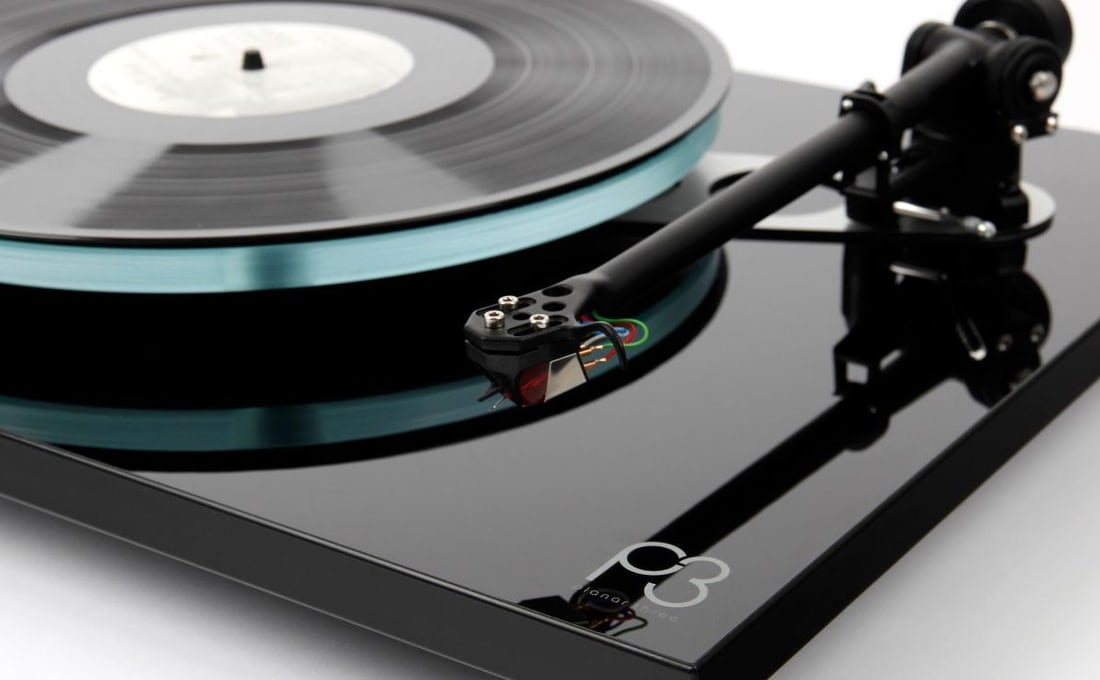
A good mate of mine runs a solid vinyl setup — Rega Planar 3, decent MM cartridge, nice integrated amp. For eighteen months he was using the built-in phono stage on his amp and thought it sounded fine. Then he spent $180 on a standalone phono stage, and his exact words were: "Where has this been my whole life?" He'd been leaving real performance on the table, and he had no idea.
That story plays out constantly in the vinyl world. People will agonise over which pressing to buy, spend hours cleaning records, obsess over cartridge loading — and then plug into whatever phono stage happened to come bundled with their amp or turntable. Which is often the worst component in the chain by a considerable margin.
But here's the flip side, and it matters just as much: the phono stage market also has some genuinely silly prices at the top end, and the law of diminishing returns bites hard. So let's be honest about where the thresholds actually sit.
What a phono stage actually does (and why it's harder than it looks)
A phono stage has two jobs. First, it amplifies a cartridge signal that is tiny — a moving magnet cartridge outputs somewhere around 3–5 millivolts; a low-output moving coil can be as low as 0.2–0.5 millivolts. A line-level source (your streamer, your CD player) outputs 2 volts or more. So the phono stage needs to add serious gain: 40 dB for MM, often 60–70 dB for MC.
Second, it applies the RIAA equalisation curve. Vinyl is cut with bass rolled off and treble boosted — if you played it flat, it would sound thin and harsh. The phono stage reverses this, boosting the bass and rolling the treble back to something approximating flat. The accuracy of that RIAA correction matters to how the record ultimately sounds.
Both of these jobs are hard to do well at very low price points, because high gain amplification at low noise is genuinely difficult engineering. A cheap phono stage can introduce hum, hiss, distortion, or inaccurate RIAA curves — any one of which will hurt your sound noticeably.
The built-in phono stage question
Some integrated amplifiers and receivers include a phono input with a built-in stage. Whether it's worth using depends almost entirely on the price bracket of the amp.
At the budget end — under $600 or so — built-in stages are usually an afterthought. They work, but they're designed to a cost, and the noise floor is often mediocre. You'll hear more hiss on quiet passages than you should, and the RIAA accuracy can be off enough to make the sound subtly wrong — slightly thin in the bass, slightly etched in the highs.
Mid-range integrateds (say $1,500–$4,000) often have genuinely respectable phono stages. I've heard the phono section in several amplifiers in that range and been pleasantly surprised. If your amp is already there, it's worth auditioning it properly before adding a separate box.
Some turntables, including many entry-level decks, have a built-in phono stage with a bypass switch. The Rega Planar 1, for instance, ships with an option to add the built-in Rega stage. It's usable, but most serious listeners will outgrow it fairly quickly.
The under-$250 bracket: genuine value exists here
This is where it gets interesting for the budget-conscious buyer, because there are phono stages in the $100–$250 range that are genuinely, honestly good. Not "good for the money" in a sycophantic way — actually good, full stop, for a standard MM cartridge in a real listening setup.
The Pro-Ject Phono Box E (around $120 street price in Australia) is the most obvious example. Clean noise floor, accurate enough RIAA, does exactly what it says. It's not exciting — it has no MC support, limited loading options — but for someone running an MM cart on a budget deck, it works.
The Pro-Ject Phono Box S3 B (around $200–$230) steps up meaningfully: better RIAA accuracy, lower noise, and it'll do basic MC with switchable gain. That's a lot of phono stage for the price.
Also worth knowing about: the Schiit Mani 2, which typically lands around $200 AUD imported (Schiit ships to Australia directly, though lead times vary). It has genuine MC support, four loading options, and Schiit's characteristically low noise floor. I'd argue it punches significantly above its price category. Not perfect — the power supply is outboard and can pick up interference if you're careless — but for the money it's hard to fault.
Below $100 you're in survival territory. Things like the ART DJ Pre II work in the strictest sense, but the noise floor and RIAA accuracy are compromised enough that I'd save the extra $50 and get something better.
The $250–$800 sweet spot for MM/MC
This is, honestly, where I'd spend most people's phono stage money. Between $250 and $800, you can find units that handle both MM and low-output MC cartridges properly, with adjustable loading and gain, a low noise floor, and accurate RIAA.
The Pro-Ject Phono Box DS3 B (around $500–$550 AU) is a proper step up — balanced outputs, a very clean noise floor, adjustable subsonic filter. It's the one I'd pair with a mid-range MC cartridge without hesitation.
The Cambridge Audio Duo (around $400 AU) deserves mention too. It includes a built-in headshell demagnetiser and MM/MC support with sensible loading options. A well-thought-out product from a company that genuinely knows what it's doing — and if you already have Cambridge kit, it integrates neatly.
The Rega Fono MC (around $600 AU) is a different philosophy: fixed loading, fixed gain, no frills, very quiet. Rega's approach is always "we've chosen the right settings, trust us" and for most Rega cart/deck combinations, they're right. If you're in a Rega ecosystem, it makes a lot of sense. Worth reading our Rega Planar 3 review (check price) alongside this, because the deck-and-stage pairing matters.
Moving coil: where the budget calculus shifts
Low-output MC is where the phono stage budget genuinely needs to increase, and there's a reason for it. You're asking for more gain (60–70 dB), and that means noise matters more. A phono stage that's perfectly adequate for MM can sound grainy and hissy with a low-output MC, because you're amplifying the noise floor along with the signal.
My honest threshold: for a low-output MC, I wouldn't go under $400 for the phono stage, and I'd rather be in the $500–$800 range. The step from a $200 stage to a $600 stage with a proper MC cart is audible and significant. The step from a $600 stage to a $2,000 stage with the same cart is much harder to justify.
Alternatively — and this is worth considering — you can use a step-up transformer (SUT) ahead of a good MM phono stage. A SUT passively boosts the MC signal to MM levels, letting your MM stage do the rest. Good SUTs at $300–$600 (Lundahl-wound units, for example) can sound exceptional with the right cart. It's a bit more fiddly to set up, but it's a legitimate path if you already have a strong MM stage and want to add MC capability.
For a fuller picture of how cartridge loading interacts with phono stage design, our guide on cartridge loading and capacitance goes deep on the specifics — worth reading before you finalise any MC setup.
Where spending more genuinely makes a difference
Above $800, improvements become more specific and more dependent on your system. The things that genuinely improve at higher price points:
Noise floor. A properly engineered $1,500 phono stage will be quieter than a $400 one, especially with MC. On a very revealing system with a quiet low-output cart, this matters. On a mid-tier system, it matters less.
RIAA accuracy. Measured deviations from the RIAA curve are generally smaller on more expensive units. Whether you can hear a 0.3 dB error versus a 0.8 dB error depends on the rest of your system and your ears. Some people can; many honestly can't.
Loading flexibility. Higher-end stages often let you dial in resistance and capacitance loading to very precise values. This is genuinely useful if you own multiple cartridges or if you're optimising a specific MC for its ideal load impedance.
Power supply isolation. This is real. A well-designed linear power supply, properly isolated, reduces the noise floor and hum that can come from switching supplies or shared regulators. Several well-regarded stages at $800–$1,500 separate the PSU entirely, and you can hear the benefit.
Above $2,000, you're largely buying luxury and diminishing returns. I've heard some $3,000–$5,000 phono stages that are extraordinary — the Manley Chinook is a particular favourite of mine — but I'm a realist. Unless you're running a $3,000-plus cartridge on a serious reference arm, the phono stage probably isn't your constraint. The Chinook is beautiful. It's also not what most people need.
Practical recommendations by budget
Let me be direct, because hedging helps nobody.
Under $200, MM only: Pro-Ject Phono Box E or S3 B. Honest, clean, does the job. The S3 B is meaningfully better and worth the extra $80.
$200–$400, MM with some MC: Schiit Mani 2. If you need a local warranty option, the Pro-Ject Phono Box S3 B with its switchable MC gain covers most low-gain MC carts adequately, though not ideally.
$400–$800, proper MM/MC: Pro-Ject Phono Box DS3 B, Cambridge Audio Duo, or Rega Fono MC depending on your ecosystem. All three are genuinely excellent.
$800–$1,500, reference-adjacent for serious carts: the Parasound JC 3 Jr. (around $1,400 AU) is one of the best value propositions in this tier — very quiet, very accurate, adjustable. The Lehmann Audio Black Cube SE II is another one that shows up on this list for good reason.
One last thing worth flagging: the phono stage is only one part of the chain, and it's easy to over-invest here while under-investing elsewhere. If your tonearm geometry is off, or your cartridge tracking weight is wrong, a better phono stage won't save you. The foundational setup work — overhang, azimuth, VTA, tracking force — has to come first. Our guide on tonearm geometry covers the specifics of getting that right.
And if you're still building out the rest of your system alongside the vinyl front-end, our vinyl front-end guide covers the full picture of where to spend and where to save across every component. The phono stage is a bigger deal than most beginners realise — but it's not the whole story.
The short version: most people are underserving their cartridge with a weak phono stage, and $200–$400 fixes that completely for MM, $500–$800 for MC. Beyond that, buy what you can afford without stress, and don't let anyone tell you that spending four grand on a phono stage is necessary. It isn't.
— Dave Okafor, Value & Giant-Killers Contributor
Common questions
- Do I need a phono stage if my amp already has one?
- It depends on the amp. Budget integrateds (under $600) often have phono stages that are noisy or inaccurate enough that a separate $150–$200 unit will improve things noticeably. Mid-range and higher integrateds sometimes have genuinely good onboard phono stages — worth auditioning your existing one properly before adding a separate box.
- Can I use a cheap phono stage with a moving coil cartridge?
- Technically yes, but you're likely to hear hiss and grain, because low-output MC needs high gain (60–70 dB) and cheap stages don't achieve that quietly. For a low-output MC, aim for at least $400–$500 in your phono stage budget. A step-up transformer (SUT) ahead of a good MM phono stage is a legitimate alternative.
- What does phono stage loading actually do?
- Loading sets the impedance seen by the cartridge output, which affects frequency response and distortion — particularly for moving coil cartridges. Most MM cartridges are happy at 47kΩ (the standard). MC cartridges are more sensitive to loading; the optimal value depends on the specific cartridge and is usually stated by the manufacturer as a recommended range.
- Is a separate phono stage always better than built-in?
- Not automatically. A dedicated $300 phono stage is almost certainly better than the built-in on a budget amp. But a dedicated $200 stage might not beat the built-in on a $3,000 integrated. Separate doesn't equal better by definition — quality of execution is what matters.

I'm Dave, and I'm the cheapskate of the team — and proud of it. My whole thing is finding the gear that punches three times above its price, the so-called "giant-killers," because most people don't have forty grand for a system and shouldn't feel bad about it. I've heard the megabucks stuff, and a lot of it is gloriously good; I've also heard $800 setups that get you 85% of the way there. I'll always tell you where the law of diminishing returns kicks in.
Lifelong bargain-hunter; budget-to-midfi specialist
More from Dave Okafor
 Matching speaker and amp cost: ignore the price-parity mythForget the old rule of matching speaker and amp cost dollar-for-dollar. Here's what actually decides a good pairing, and why it isn't price.
 Turntable mats and platters: what actually changes the soundFelt, rubber, cork or acrylic — turntable mats and platter materials change the sound more than most upgrades. Here's what actually works.
- Buying a demo unit: the giant-killer move retailers hateEx-demo hi-fi gear can save 20-40% with near-zero risk. Here's how to actually negotiate it, what to check, and when to walk away.
- Flutter echo: the room fault that sounds like nothing's wrongFlutter echo blurs detail in parallel-wall rooms without obvious boom. Here's how to find it cheaply and kill it without over-treating.
 Amp power ratings into 8 vs 4 ohms: the spec sheet trapWhy an amp's 4-ohm wattage figure can mislead buyers, and how to actually match power output to real speaker loads on a budget.
 5.1.2 vs 7.1.4: the Atmos layout decision for real roomsChoosing between 5.1.2 and 7.1.4 Atmos layouts comes down to room shape and seating, not speaker count. Here's the giant-killer logic.