Acoustic treatment at the statement level: what six figures of speaker buys you in a bad room
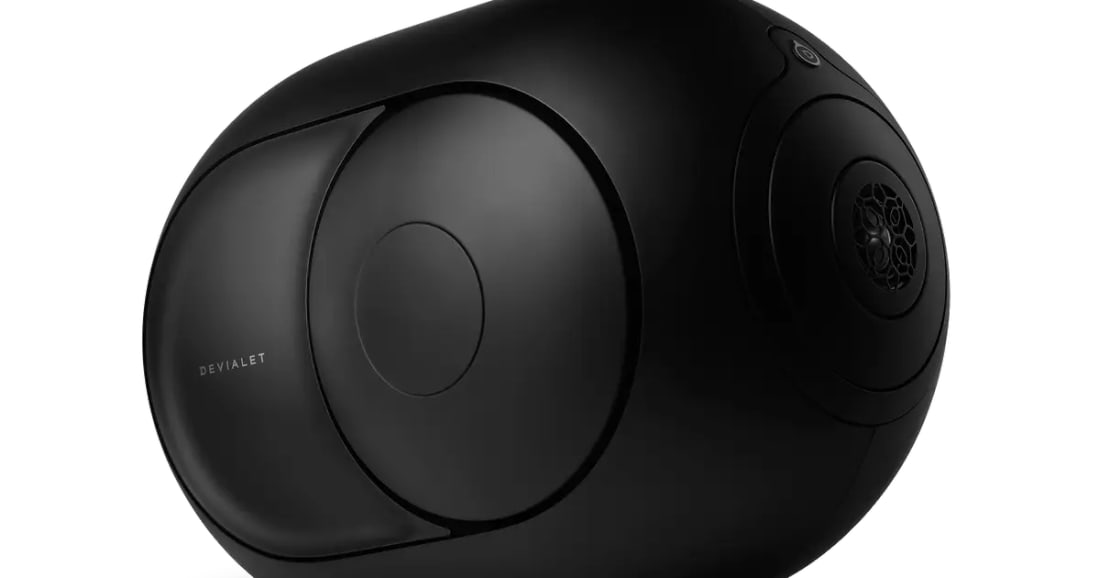
I sat in a room in Vaucluse last year with a pair of loudspeakers that, on paper, retail for more than most Australians' cars. The owner had spent accordingly on amplification, on a turntable that needed its own dedicated sub-floor, on cabling I won't even try to price. And the bass was a mess. Not subtle-mess. Boom-at-40Hz, disappear-at-60Hz mess. He'd spent the price of a decent hatchback on the last percentage point of driver linearity and hadn't spent a cent on the one variable that was actually running the show: the room.
This is the conversation I have more than any other at this end of the market, and it never gets easier to have, because nobody wants to hear that the four corners of drywall around their reference system are doing more damage than any component choice they've made. Room acoustics and treatment isn't glamorous. There's no ego in a bass trap the way there is in a monoblock amplifier with a faceplate machined from a single billet of aluminium. But it's the part of a statement system that decides whether all that other spending actually reaches your ears intact.
Why the room matters more as the system gets better
Here's the part that counters most people's intuition: the better your loudspeakers and electronics, the more the room's flaws show up, not less. A mediocre speaker already has resonances and colourations of its own that mask room problems to some degree — everything sounds a bit smeared, so you don't notice the extra smear the room adds. A genuinely resolving loudspeaker, the kind Sofia-adjacent budgets tend to buy, has none of that masking. Every reflection, every mode, every bit of flutter echo off a hard ceiling arrives at your ears with the same clarity as the music. You've paid for transparency and the room is using it against you. This is why some of the most sonically disappointing rooms I've measured belong to systems that cost more than my car. The gear was never the bottleneck. The room was.
First reflections: the cheapest fix that gets ignored the most
Grab a mirror and walk it along your side walls at ear height, between your listening position and each speaker. Wherever you can see the tweeter of the loudspeaker reflected in the mirror, that's a first-reflection point, and untreated, it's smearing your stereo image and adding a comb-filtering effect to the treble that no amount of speaker cable will undo. It's a five-minute exercise and it costs nothing but a spare afternoon. Treating those points with absorption panels — not foam egg-crate off a hardware site, but genuine broadband absorbers rated for the frequency range you're trying to control — restores image precision that a lot of owners assume is a speaker limitation. I've had clients swap loudspeakers twice trying to chase focus that a $600 pair of well-placed panels would have solved. The ceiling reflection point matters too, and it's the one almost everyone skips, because a cloud panel overhead doesn't look as tidy as a wall panel. It matters just as much.
Bass traps: why corners aren't the whole story
Low frequencies behave nothing like the midrange and treble your first-reflection treatment is managing. Room modes — the resonant frequencies set up by the distances between parallel surfaces — dominate everything below roughly 300Hz in a typical domestic room, and they don't care what you spent on your subwoofer or your floorstanders' bass alignment. We've covered why standmounts sometimes outperform floorstanders in the wrong-sized room, and modal behaviour is a big part of that story. Corner bass trapping helps because pressure zones for room modes tend to be strongest in corners, but it's not universal. A room with a strong first axial mode along its length will have pressure maxima and minima at specific points along that dimension, not just in the corners, and if you've only treated corners you may have missed the actual problem entirely. This is where a proper measurement sweep, not guesswork, earns its keep. I've written before about locating the correct spot for a single sub by measurement rather than crawling the floor, and the same discipline applies to bass trap placement — measure first, treat second, remeasure to confirm. For rooms carrying serious bass energy — anything driven by a subwoofer stack, or full-range floorstanders working hard below 60Hz — floor-to-ceiling corner traps with real depth (200mm-plus) are doing meaningful work. Thin foam wedges marketed as bass traps are, at low frequencies, mostly decorative.
Room correction: useful, and honestly overstated by some marketing
I'll say the mildly unpopular thing here: some of the room-correction systems bundled into high-end processors are genuinely excellent at what they do, and some of the marketing around them oversells what that actually is. Digital room correction is very good at fixing frequency-response anomalies below the transition frequency — broadly, the bass region where room modes dominate and speaker positioning alone can't solve it. It is not good at un-smearing a first reflection, and it can't fix a resonant mode's time-domain behaviour the way physical bass trapping can, because ringing in the time domain isn't purely a frequency-response problem that EQ curves correct. We've dug into this properly elsewhere — room correction can't fix your DAC and your DAC can't fix your room is a piece from this team I still send people to, and the short version holds at the statement level too: correction is a layer on top of treatment, not a replacement for it. Run the correction after the room is physically sorted, not instead of sorting it. I've measured systems where correction was asked to flatten a 12dB peak that four bass traps would have knocked down to 4dB with none of the phase-domain side effects DSP correction can introduce when it's working that hard.
What actually changes at the statement-system budget
At the level I usually cover, clients are often building dedicated rooms from scratch, which changes the calculus. You're not retrofitting panels into a lounge room that also needs to function as a lounge room. You can specify room dimensions with non-coincident modal ratios before a wall goes up, which is the single highest-leverage acoustic decision anyone will ever make and it costs nothing beyond an architect who'll listen. I've worked with clients whose acousticians modelled the room in software before a slab was poured — that's the kind of spend that actually maps to performance, unlike some of the exotica further down a component list. Bespoke rooms also mean treatment can be engineered into the architecture: absorption behind fabric-wrapped wall panels that double as art, diffusion built into a ceiling design rather than bolted on as an afterthought. The AES has published extensively on room acoustics measurement standards, and any acoustician working at this level should be referencing that body of work rather than working from instinct alone. None of this is cheap, and I won't pretend it is. But per dollar, treatment and room geometry return more audible improvement than the last upgrade tier on almost any component in the chain. If you've read our piece on where statement systems actually spend their money, the room sits underneath all of it — it's the thing that determines whether the rest of that spending is audible at all.
A practical order of operations
If you're building or fixing a serious room and don't know where to start, the sequence I'd suggest — and the one I use when a client calls me before they've bought anything — goes room geometry and speaker/listening position first (informed by measurement, not the coffee table's existing position), first-reflection points second, bass mode treatment third, and digital room correction last, as a fine-tuning layer over physical treatment rather than a substitute for it. Subwoofer integration deserves its own pass within that sequence too — level, phase and delay matching between subs and mains is a separate discipline from bass trapping, and doing one without the other leaves real performance on the table. If you're running a sealed sub alongside a turntable in the same room, there are specific interactions worth understanding before you commit to placement. I'd add one more thing that's less about acoustics than psychology: don't treat a room once and consider it finished. I revisit client rooms a year later more often than you'd think and find furniture moved, a rug removed, a bookshelf swapped for glass doors — all of it changing the acoustic signature of a room that was previously dialled in. Treatment isn't a purchase, it's a maintained condition.
The honest verdict on where the money goes
The uncomfortable truth for anyone assembling a reference system is that a modest loudspeaker in a properly treated room will usually outperform a reference loudspeaker in an untreated one, at almost any price point above entry level. That's not a popular thing to say in a job that mostly involves writing about speakers costing more than a small car, but it's what the measurements and, more importantly, the listening keeps telling me. None of this means the electronics don't matter — they absolutely do, and I've spent enough columns making that case. It means the room is not optional, and at the statement end of this hobby, where every other variable has already been optimised within an inch of its life, it's usually the last honest place left to find real improvement.
— Sofia Laurent, High-End & Statement Systems Editor
Common questions
- Is acoustic treatment really worth it if I've already spent a lot on speakers and amplification?
- In my experience it's usually the highest-return spend left once the electronics are sorted. A well-treated room with modest speakers will often outperform an untreated room with reference-level ones, particularly in the bass.
- Should I do room correction or physical treatment first?
- Physical treatment first, always. Digital room correction works well on frequency-response problems below the transition frequency, but it can't fix time-domain ringing from an untreated mode or a smeared first reflection the way absorption and bass trapping can.
- Do bass traps only work in corners?
- No. Corners are common pressure zones for room modes, but the actual maxima depend on your room's dimensions. A measurement sweep will tell you where the modal energy actually sits, which is sometimes along a wall rather than in a corner.
- Can I treat a room without it looking like a recording studio?
- Yes, especially with a purpose-built room. Fabric-wrapped panels can double as wall art, and diffusion can be designed into ceiling treatments rather than bolted on. It costs more to make treatment invisible, but it's entirely achievable.

I'm Sofia, and I get to play with the silly stuff — the statement amplifiers, the reference loudspeakers, the cost-no-object systems that most of us will only ever hear at a show. Someone has to, and I take it seriously: at this level the price stops mapping to performance and starts mapping to engineering, craft and ego, and part of my job is telling you which is which. I love the extreme end of this hobby, but I'm not dazzled by a big number on a price tag.
Covers flagship and cost-no-object reference systems
More from Sofia Laurent
 Negative feedback in amplifier design: the argument that never endsNegative feedback cuts amplifier distortion but divides designers. Here's what it does, why some statement amps avoid it, and what it means for you.
- The synergy tax: why mismatched gear costs more than cheap gearThe synergy tax explained: why pairing mismatched hi-fi components quietly costs more than buying modest, well-matched gear.
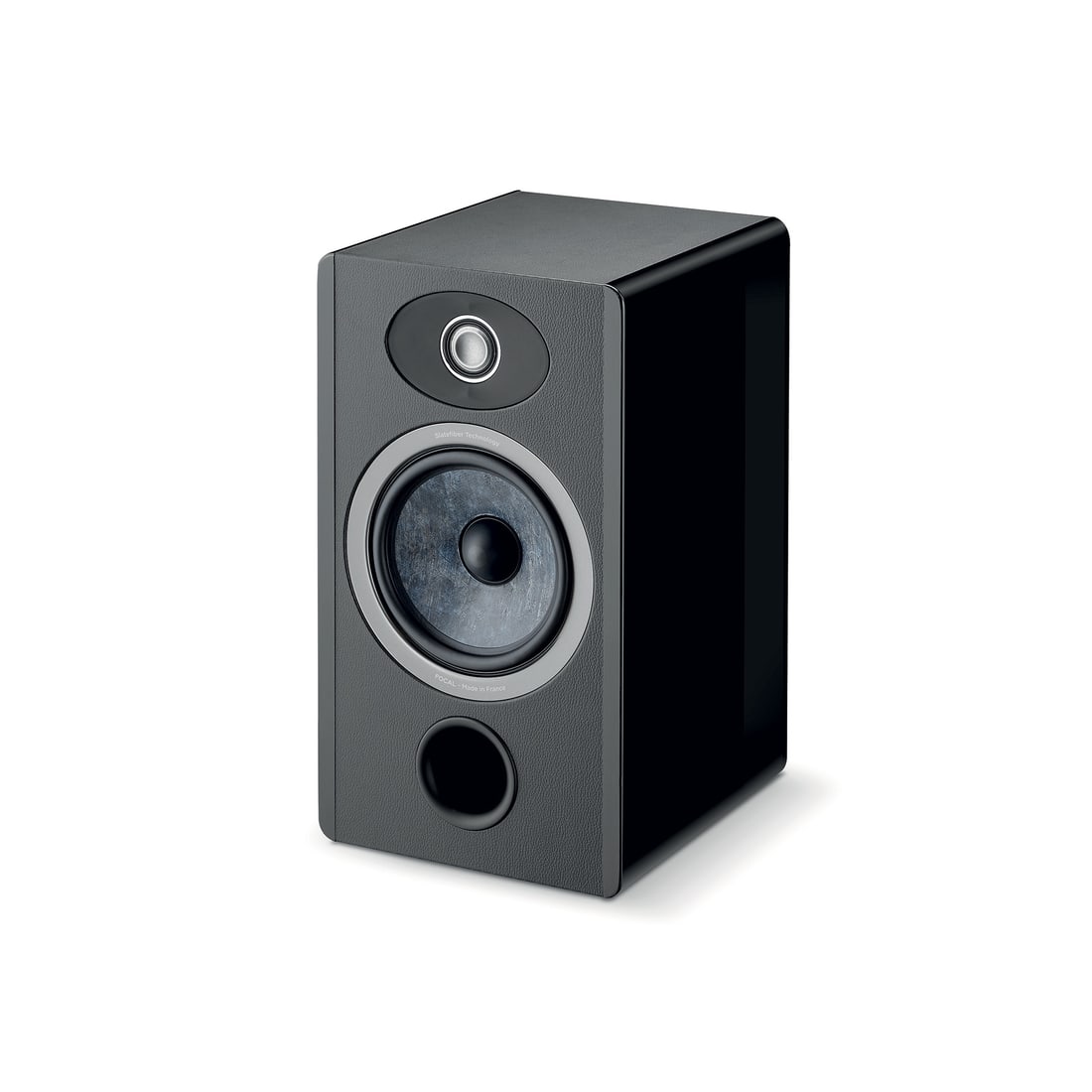 Rear-port floorstanders near a glass wall: a risky pairingRear-ported floorstanders against glass walls cause boundary reinforcement and reflections. Here's how to place, measure and tune them properly.
- Infrasonic bass below 20Hz: chasing the octave you feel, not hearBelow 20Hz is infrasonic bass: felt more than heard. Here's what it takes to reproduce it properly, and whether a statement system should bother.
- Why statement systems still get beaten by the zone two speakerA $150,000 reference system is only as good as the worst-sounding zone it's networked to. Here's why multiroom integration is the statement system's real weak point.
- Why a statement floorstander can be the wrong speaker in the roomSix-figure floorstanders fail in rooms that were never built for them. Here's how to tell if your space can actually support one before you buy.