Negative feedback in amplifier design: the argument that never ends
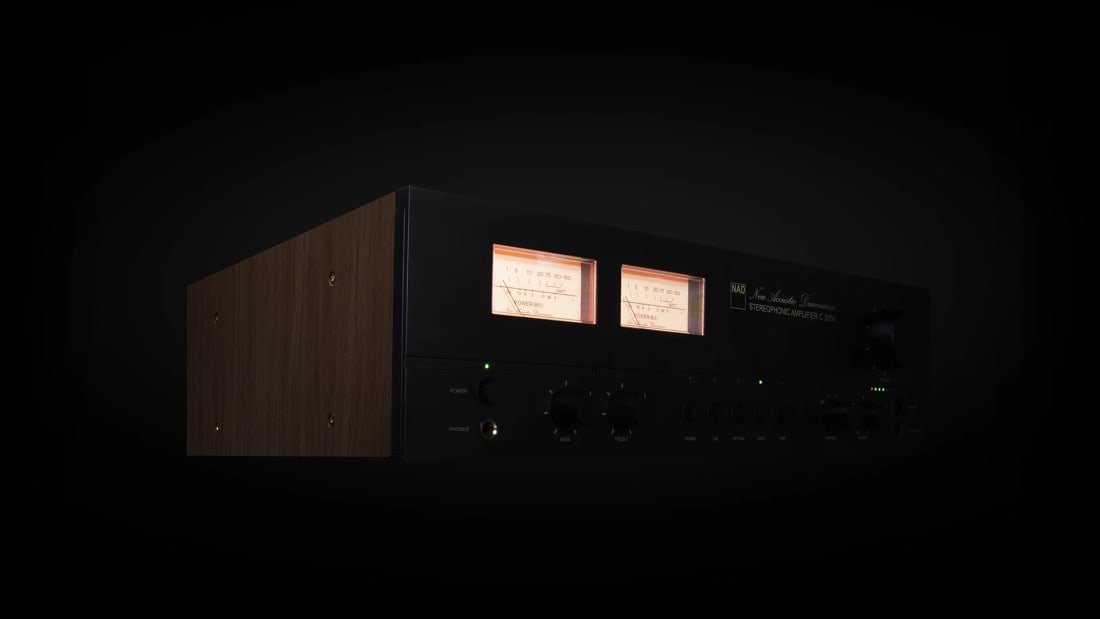
I was at a distributor demo in Alexandria a few months back, listening to two amplifiers from the same stable, same output power, same price bracket, playing the same pair of speakers. One used generous loop feedback, the other almost none. They did not sound like siblings. One was tighter and more controlled on bass transients. The other had more harmonic bloom, more air around voices, and measured noticeably worse on a distortion analyser. Guess which one the room preferred by a show of hands. It wasn't unanimous, and that's the whole story in miniature.
Negative feedback is one of those topics that splits engineers and listeners into tribes, and both tribes have a point, which is annoying if you want a tidy answer. I don't have one. What I have is twenty-odd years of listening to amplifiers that chase vanishingly low THD figures and some that barely bother, and an opinion about which problem actually matters more at the top end of this hobby.
What feedback actually does
Negative feedback takes a sample of an amplifier's output, inverts it, and feeds it back into the input stage to cancel errors. It was patented by Harold Black at Bell Labs in 1934, originally to fix distortion in long-distance telephone repeaters, and it remains one of the foundational concepts in electronic circuit design, documented at length by the IEEE and summarised clearly on Wikipedia. The more feedback you apply, the lower your measured total harmonic distortion, the higher your damping factor, and the flatter your frequency response tends to be across the audible band.
On paper this is an unambiguous win. Lower distortion, lower output impedance, better control over the speaker's voice coil. Our piece on damping factor and what the spec actually measures goes into how that control translates to bass, and it's a real effect, not folklore. A well-fed-back solid-state amplifier will typically measure an order of magnitude cleaner than a feedback-shy valve design at the same power output. If distortion figures were the whole story, this debate would have ended decades ago.
It hasn't ended, because the ear doesn't weight distortion products the way a THD meter does, and because feedback introduces its own side effects that don't show up cleanly on a single-tone test.
The case against heavy feedback
The argument against large amounts of loop feedback isn't that it fails to reduce distortion. It's that the distortion it adds back, called transient intermodulation distortion or TIM, tends to be concentrated at high frequencies and correlates poorly with steady-state THD measurements taken at 1kHz. This was documented by Matti Otala in the 1970s, and while the engineering community has since refined and partly challenged his original claims, the underlying mechanism is accepted: feedback loops have finite bandwidth and finite slew rate, and when the correction signal arrives late relative to a fast transient, you get a brief period of uncorrected, higher-order distortion exactly when the music is at its most demanding.
The practical upshot is that two amplifiers with near-identical THD-at-1kHz specs can sound different on a snare hit or a plucked double bass string, because the steady-state number tells you almost nothing about how the feedback loop behaves on a 10-microsecond edge. This is part of why spec-sheet shopping is such a trap, something we've hammered on before in our look at how power ratings into 8 versus 4 ohms mislead buyers. THD is one number among many, and not even the most predictive one.
Designers who avoid heavy feedback, including most single-ended valve designs and a handful of boutique solid-state houses, are essentially trading a worse THD figure for a loop that never has to chase a fast-moving target. The amplifier runs with more open-loop gain error, sure, but nothing in the circuit is ever playing catch-up.
Topology changes the calculus entirely
This is where valve, solid-state and Class D amplifiers genuinely diverge, and it's worth being precise rather than tribal about it.
Valve output stages, especially single-ended triode designs, often run with zero or minimal global feedback because the output transformer already limits bandwidth and because even-order harmonics from triodes are, within reason, tolerated or even liked by the ear. Push-pull valve amps frequently do use some feedback around the output transformer to tame distortion and tighten bass, and the amount used is one of the biggest sonic variables between otherwise similar valve designs.
Solid-state amplifiers almost universally rely on feedback, because bipolar and MOSFET output devices have comparatively high open-loop distortion that needs correcting to hit acceptable THD figures at sensible cost. The skill in a good solid-state design is less about whether to use feedback and more about keeping the open-loop bandwidth wide enough that the loop isn't working desperately hard at audio frequencies, which is exactly the slew-rate and TIM problem above.
Class D is the interesting middle case. The switching output stage has its own distortion mechanisms entirely unrelated to valve or classic solid-state behaviour, and manufacturers like Purifi and Hypex have spent the best part of fifteen years engineering feedback loops specifically fast enough to correct switching artefacts without introducing new timing errors. Purifi's own technical documentation on its Eigentakt feedback architecture is unusually candid about this, because the whole pitch of modern Class D is that feedback done properly, at enormous loop bandwidth, solves the problem rather than causing it. We've covered why some of these modules still divide listeners in our piece on matching amp topology to speakers rather than ego, and the feedback question is a big part of why that divide persists even as the measurements keep improving.
What your ears are actually doing
Here's my mildly contrarian bit. I think most of the feedback debate in enthusiast forums massively overstates how audible TIM actually is on real music through real speakers in a real room, and massively understates how much of the "valve sound no feedback gives you" is actually just second-harmonic distortion and a rising top end that measures worse but flatters recordings. Both camps are, in a sense, right about the mechanism and wrong about magnitude.
What I'd say with more confidence is that feedback amount interacts with the speaker load in ways that matter more at the extremes. A heavily fed-back amplifier with a high damping factor will grip a speaker's voice coil hard regardless of impedance swings, which is genuinely useful if you're running something like a demanding electrostatic or a speaker with a nasty impedance dip. A low-feedback valve amp with a high output impedance will let the speaker's own impedance curve shape the frequency response, which is sometimes a problem and sometimes, with the right speaker, part of the magic. This is exactly the territory covered in our piece on matching speakers to valve amps by sensitivity rather than watts, and it's not a coincidence that low-feedback amps and high-sensitivity, benign-impedance horn or single-driver speakers tend to travel together.
How this plays out at the statement end
At the price points I usually cover, you'll find both philosophies taken to extremes, and neither is dishonest. A reference monoblock running six-figure price tags might use a sophisticated multi-loop feedback architecture specifically designed to keep loop bandwidth absurdly wide, chasing distortion figures that are genuinely inaudible in isolation but which correlate with an amplifier that never seems to struggle regardless of load. Equally, a flagship single-ended 300B design with a handful of watts and no global feedback at all can sound extraordinary into the right 97dB-sensitive horn, and utterly wrong into anything that dips below 6 ohms. Neither approach is the "more honest" one. They're different bets about where distortion should live and how much of it your ears will forgive. I'd argue the industry spends too much energy arguing about which bet is objectively correct, when the actual answer is that it depends entirely on the speaker at the other end of the cable, which is the same conclusion our piece on pairing statement amps and speakers beyond watts landed on from a different angle.
What this means when you're actually choosing an amp
Don't use feedback topology as a proxy for quality, in either direction. A low-feedback design isn't automatically more musical, and a heavily fed-back design isn't automatically sterile. Listen with your speaker, not a demo pair, because the feedback-and-impedance interaction is the single biggest reason an amp that sounded glorious at a dealer sounds thin or loose at home.
If you're running speakers with an easy, flat impedance curve above 6 ohms and reasonable sensitivity, you have the luxury of choosing on sound and ignoring topology, because none of these feedback behaviours will be stressed. If you're running something trickier, an electrostatic hybrid, a vintage horn, anything with a published impedance graph that looks like a rollercoaster, pay attention to output impedance and damping factor specifically, not just THD, because that's where the feedback decision actually shows up at the speaker terminal.
And be sceptical of marketing copy on either side of this argument. "Feedback-free design" is not automatically a virtue, and "0.001% THD" is not automatically meaningless. Both numbers are trying to sell you a story. The engineering underneath is more interesting, and more honest, than either slogan.
— Sofia Laurent, High-End & Statement Systems Editor, Sound Technology
Common questions
- Does more negative feedback always mean lower distortion?
- Measured THD at a single frequency, yes, typically. But total distortion across a complex musical signal depends on loop bandwidth and slew rate too, which is why two amps with similar THD specs can behave differently on fast transients.
- Why do some expensive valve amplifiers avoid feedback entirely?
- Many single-ended triode designs skip global feedback because the output transformer already limits bandwidth, and because the resulting even-order harmonics are often judged pleasant rather than problematic by designers and listeners, even though they measure as distortion.
- Is Class D amplification inherently more or less reliant on feedback than solid-state?
- Class D relies heavily on feedback, but it has to correct switching artefacts specifically, which is why companies like Purifi have invested in very high-bandwidth feedback loops rather than avoiding feedback altogether.
- How do I know if feedback topology will actually matter for my speakers?
- Check your speaker's impedance curve. A flat, benign curve above 6 ohms makes feedback topology largely a matter of taste. A curve with big swings or dips rewards amplifiers with higher damping factor and tighter output impedance control.

I'm Sofia, and I get to play with the silly stuff — the statement amplifiers, the reference loudspeakers, the cost-no-object systems that most of us will only ever hear at a show. Someone has to, and I take it seriously: at this level the price stops mapping to performance and starts mapping to engineering, craft and ego, and part of my job is telling you which is which. I love the extreme end of this hobby, but I'm not dazzled by a big number on a price tag.
Covers flagship and cost-no-object reference systems
More from Sofia Laurent
 The synergy tax: why mismatched gear costs more than cheap gearThe synergy tax explained: why pairing mismatched hi-fi components quietly costs more than buying modest, well-matched gear.
 Rear-port floorstanders near a glass wall: a risky pairingRear-ported floorstanders against glass walls cause boundary reinforcement and reflections. Here's how to place, measure and tune them properly.
- Infrasonic bass below 20Hz: chasing the octave you feel, not hearBelow 20Hz is infrasonic bass: felt more than heard. Here's what it takes to reproduce it properly, and whether a statement system should bother.
- Why statement systems still get beaten by the zone two speakerA $150,000 reference system is only as good as the worst-sounding zone it's networked to. Here's why multiroom integration is the statement system's real weak point.
- Why a statement floorstander can be the wrong speaker in the roomSix-figure floorstanders fail in rooms that were never built for them. Here's how to tell if your space can actually support one before you buy.
- Diffusion in statement rooms: when scattering sound beats absorbing itIn a statement room, piling on absorption kills the air around the music. Here's when diffusion is the better tool, and where I've seen it misused.