Speaker matching to valve amps: sensitivity beats watts every time
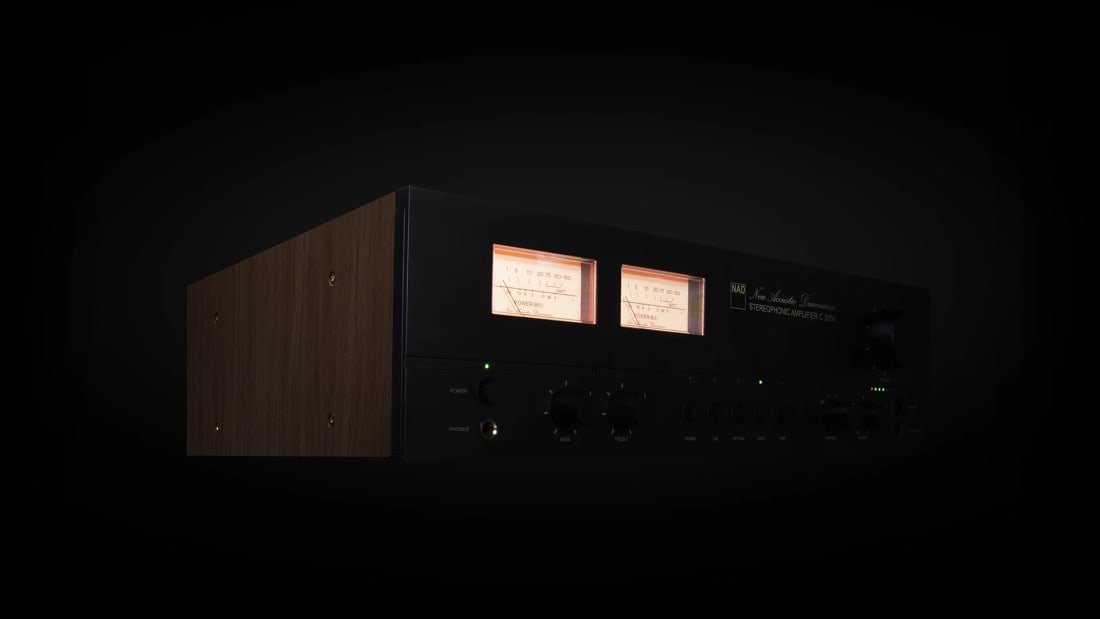
A bloke came into the shop on Brunswick Street years back with a gorgeous little 8-watt single-ended triode amp and a pair of speakers rated at 86dB sensitivity. He wanted to know why, at anything past nine o'clock on the dial, the amp sounded like it was having an anxiety attack. The answer wasn't the amp. It wasn't the speakers either, not really. It was the pairing. Nobody had told him that watts are almost the least useful number on either spec sheet when valves are involved.
I've sold a few hundred valve amps in my time and matched them to speakers that ranged from horn-loaded monsters to little two-way standmounts that should never have been paired with anything under 50 watts solid-state. The pattern repeats: people buy the amp first, fall in love with the sound in a shop demo, then go home and wonder why their own speakers don't sing the same way. Nine times out of ten it's a sensitivity mismatch, and it's entirely avoidable if you read the spec sheet in the right order.
Why watts lie when there's a transformer involved
Solid-state amps are current monsters. Give them a low-impedance load and most will just push harder, within reason, because the output stage is a direct, low-impedance connection to the speaker terminals. Valve amps don't work that way. Every valve amplifier — single-ended or push-pull, triode or pentode — has an output transformer sitting between the valves and your speaker, stepping the high-impedance, high-voltage swing of the tubes down to something a speaker can use. That transformer is doing an enormous amount of quiet, unglamorous work, and it's also the reason the watt figure on the box tells you so little.
An 8-watt SET amp and an 8-watt push-pull pentode amp will behave completely differently into the same speaker, because the output impedance, the damping factor and the way each handles a dipping impedance curve are all different. A 60-watt solid-state integrated and a 20-watt valve amp can sound like they're putting out similar perceived loudness in a lot of rooms, because loudness isn't linear with watts — it's logarithmic, and sensitivity does far more of the heavy lifting than raw power.
Sensitivity is the number that actually matters
Speaker sensitivity, usually quoted as dB at 1 watt measured at 1 metre, tells you how loud a speaker gets for a given input. The scale is logarithmic: a 3dB increase needs roughly double the power to achieve it. So the difference between an 84dB speaker and a 90dB speaker isn't "a bit louder" — it's four times the power required to reach the same SPL. That's the whole story in one sentence, and it's the one most buyers skip past because the headline watts number feels more concrete.
If you're running a 300B single-ended amp putting out 8 watts per channel, you want speakers rated 90dB or higher, ideally closer to 94-96dB if you like your music with any real dynamic headroom. Drop that same amp onto an 84dB standmount and you'll run out of clean power at moderate volumes, with the amp clipping and the sound compressing in a way that's genuinely unpleasant — not warm, not "tube magic", just distorted.
Push-pull valve amps with more power on tap, say 35-60 watts from a pair of EL34s or KT88s, have more flexibility and can work with speakers down around 87-88dB without drama. But the general rule holds: the lower the amp's power, the higher the speaker sensitivity needs to be, and that relationship compounds faster than most people expect because of the logarithmic scale.
The impedance curve is the trap nobody reads
Sensitivity gets you most of the way there, but it's only half the story. The other half is how a speaker's impedance behaves across the frequency range, and this is where I've seen more valve-speaker pairings go wrong than almost anywhere else.
Most speakers are nominally rated at 8 ohms or 4 ohms, but that's an average, not a constant. A speaker's actual impedance swings up and down as frequency changes, and some designs dip quite low, sometimes down to 3 ohms or less, in the bass region or around the crossover point. Solid-state amps generally shrug this off. Valve amps, because of that output transformer, are tapped for specific impedances, usually 4 ohms and 8 ohms, and the amp is only optimally matched at those tap points. Feed a hard 3-ohm dip to an 8-ohm tap and you're asking the output transformer to do something it wasn't designed for, and it shows up as compressed, grainy sound right at the frequencies where the dip occurs, not an overall problem but a specific, audible one.
This is why I always tell people buying a valve amp to actually look at the published impedance curve of the speaker, not just the nominal number on the box. Wharfedale's Diamond 12.1 (check price) is a genuinely benign load for a valve amp, with a fairly flat curve and sensible sensitivity for the price. Something like a KEF LS50 Meta (check price), gorgeous as it sounds, is a trickier load with lower sensitivity and a more demanding impedance curve, and it genuinely prefers a solid-state amp with high current reserves over most valve designs. I'd argue KEF never really designed the LS50 with valve amps in mind, and that's fine, not every speaker has to suit every amp topology.
Horn speakers and high-efficiency designs: the other end of the spectrum
At the other end of the market sit horn-loaded and high-efficiency speaker designs, some pushing 96-100dB sensitivity or higher, built specifically with low-powered valve amps in mind. These are a different conversation entirely, because a 3-5 watt SET amp into a 98dB horn can produce startling dynamics and a sense of effortlessness that a 200-watt solid-state amp into an inefficient box simply can't replicate at the same volume, regardless of how many watts are notionally available.
This is the pairing I actually chase in my own listening room, and it's why I've never been fully convinced by the "just buy more watts" school of system building. More watts into an inefficient speaker gets you louder, sure, but it doesn't necessarily get you more dynamic or more alive, and valve amps in particular seem to do their best, most engaging work when they're not being asked to work hard. A valve amp loafing along at 2-3 watts into an efficient speaker usually sounds more relaxed and more textured than the same amp straining toward its ceiling into something that needed 15 watts for the same loudness.
Reading a spec sheet in the right order
When I'm helping someone put a valve amp and speaker together, I go through the numbers in this order: sensitivity first, impedance curve second, then power handling, and watts dead last. Power handling tells you what the speaker can survive, not what it needs — it's a ceiling, not a target, and conflating the two is one of the most common mistakes I see.
Sensitivity above 88dB is my rough comfort line for anything under 20 valve watts. Below that, you want either more power from the amp or you're choosing the wrong speaker. The impedance curve matters almost as much; ask the dealer or check a published measurement review for the actual curve, not just the nominal figure, because that's where the nasty surprises live. And remember that room size plays into all this too — a small room needs less SPL than a big one, which gives you a bit of breathing room if your sensitivity numbers are marginal.
If you're assembling a valve-driven system from scratch, I'd also point you toward our guide on the best standmount speakers for serious listening, several of which are sensible valve-amp partners precisely because the reviewers there have paid attention to sensitivity and impedance behaviour rather than just frequency response. And if you're trying to decide on amp topology more broadly before you even get to speaker matching, our piece on the best integrated amplifiers covers a mix of solid-state and valve options with an eye on exactly this kind of pairing question.
What this actually sounds like when it's wrong
The symptoms of a bad match are fairly consistent and worth knowing, because they get misdiagnosed constantly. Compression at moderate volume, where the dynamics flatten out and loud passages sound congested rather than big, is the classic sign of an underpowered amp straining into a low-sensitivity speaker. A hardness or grain that appears only on certain notes, often in the midbass, usually points to an impedance dip hitting at an awkward frequency. And a general sense that the amp "runs out of puff" well before you'd expect, based on the volume knob position, almost always traces back to sensitivity being lower than the amp was designed to drive comfortably.
None of these are faults with valve amplification as a technology — they're pairing mistakes, and they're avoidable with about ten minutes of spec-sheet reading before you buy. I'll admit I used to just trust my ears in the shop and skip the numbers, which worked fine when I had both pieces of gear sitting there to demo together. It's a much riskier approach when you're buying the amp and speakers from two different places, possibly months apart, which is how most people actually build a system.
Matching amp power to the room, not just the speaker
There's a final variable that sensitivity and impedance specs don't capture on their own: your room. A valve amp that's borderline on paper for a given speaker can work fine in a small, lively room where you don't need much SPL, and struggle badly in a large, heavily furnished one where the same speaker needs several more dB to fill the space. This is worth factoring in before you write off a pairing based purely on the spec sheet, and it's also why dealer demos in a room closer to your own size are worth more than a glowing review written in someone else's listening space.
The Australian Hi-Fi and AV market has enough variety in both valve amps and efficient speaker designs that getting this right isn't actually hard, it just requires doing the sensitivity and impedance homework before the cheque gets written, rather than after. For a deeper look at what's actually happening at the output stage of any amplifier topology, the Audio Engineering Society's technical library is a genuinely useful reference if you want to go further than spec-sheet reading, and most valve amp manufacturers publish their own output transformer tap specifications if you ask, which is worth doing before you buy rather than after.
Common questions
- What sensitivity do I need for a low-powered valve amp?
- As a rough guide, anything under 20 watts from a valve amp wants speakers rated 88dB or higher, and single-ended triode amps under 10 watts are genuinely happiest with 92dB-plus efficient designs or horn-loaded speakers built for exactly that purpose.
- Can I use a valve amp with a 4-ohm speaker?
- Yes, provided the amp has a 4-ohm output tap and you use it. Using an 8-ohm tap with a 4-ohm speaker, or vice versa, is the most common wiring mistake I see and it genuinely damages the sound quality even though the amp usually survives.
- Does more power always fix a sensitivity mismatch?
- Not necessarily. Because the scale is logarithmic, doubling power only buys you about 3dB, so a big sensitivity gap needs a disproportionate jump in power. Sometimes the better fix is a more efficient speaker rather than chasing a bigger valve amp.
- Is a flat impedance curve always better for a valve amp?
- Generally yes, a flatter curve is an easier, more predictable load across the frequency range, but it's not the only consideration. A speaker with a high sensitivity and a moderate dip is often a better valve-amp partner than a low-sensitivity speaker with a perfectly flat curve.

Hello — I'm Priya. I ran a second-hand record shop in Fitzroy for the better part of a decade, which is a polite way of saying I have three thousand records and nowhere to put them. I listen to vinyl through valve amplification because I like the ritual as much as the sound, and yes, I know the measurements aren't perfect — I don't care, and I'll explain why on the page. If you want someone to tell you a turntable is "just a motor and a bearing," I am not your person.
Record collector (3,000+); valve-amp enthusiast; ex record-shop owner
More from Priya Anand
 USB vs S/PDIF for DACs: does the digital input matter?USB, coaxial and optical into a DAC: which digital input actually changes the sound, and when the difference is real versus imagined.
- Qobuz vs Tidal for your record collection's digital halfQobuz vs Tidal compared for vinyl collectors who want a digital half that matches their records, not just a bigger catalogue.
 Why a subwoofer makes a valve system sound more honestAdding a subwoofer to a valve amp system can tighten bass, cut distortion and let low-power tubes sing. Here's how to do it properly.
- Tidal vs Qobuz vs Apple Music: which one actually suits a valve systemStreaming services aren't interchangeable once you're running valves. Here's how Tidal, Qobuz and Apple Music actually behave through a warm front end.
- Your phone's volume slider is quietly re-encoding your musicTurning your phone down before a Bluetooth speaker or DAC often re-processes the digital signal. Here's what's actually happening, and when it matters.
- MQA is dead. Here's what that actually tells us about hi-res audioMQA's unwinding wasn't a fluke. It's a lesson in what hi-res audio actually needs from a format, and what was always marketing.