Tidal vs Qobuz vs Apple Music: which one actually suits a valve system
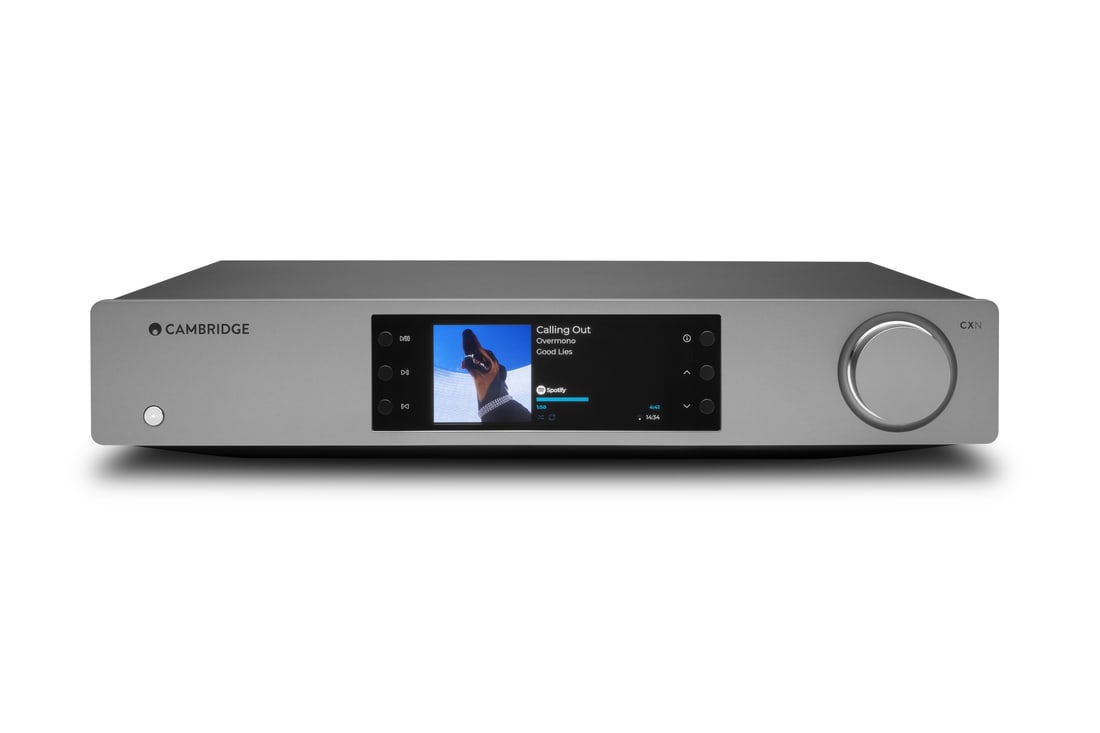
A customer used to come into the Fitzroy shop every second Saturday, buy two records he didn't need, and ask me the same question: "which streaming app should I run into the Leben?" I never had a clean answer for him back then because I wasn't running much digital myself. These days I've got a WiiM feeding an EL84 integrated in the listening room, and after eighteen months of actually paying attention, I reckon the question matters more than people give it credit for. Not because the bits are different — they mostly aren't — but because of what each service assumes about your system, and what that means for how you actually use it.
This isn't a "which has the biggest catalogue" piece. It's about which streaming service behaves well paired with gear that has its own personality, because valves are not neutral and pretending otherwise is how people end up chasing the wrong fix.
The variable nobody mentions: your amp already has an opinion
Here's the thing I didn't appreciate until I'd lived with it. A solid-state amp is mostly getting out of the way. A valve amp — my EL84 integrated, your 300B single-ended rig, whatever's sitting in your rack — is adding something. Usually warmth through the midrange, a softened top end, some second-harmonic distortion that our ears read as pleasant rather than as an error. That's not me being unscientific about it; Marcus would tell you the same thing with a graph in hand, he'd just say it with less affection.
What that means practically is this: a streaming service's mastering chain, encoding choices and even its loudness normalisation interact with your amp's colour, not with some theoretical flat reference. A service that leans slightly bright and detailed on a solid-state system might sound exactly right through valves. A service that's already warm and rolled-off might turn to mush. You can't answer "which is best" in the abstract. You can only answer it for your chain.
Tidal: the known quantity, and why that's not nothing
Tidal's been doing lossless (and now hi-res via its FLAC catalogue) long enough that it's basically the incumbent most of us measure everything else against. I still use it as my daily driver for new release browsing because the editorial side — the playlists, the context — hasn't been matched by Qobuz in Australia, even with Qobuz's strong liner-notes culture.
Through valves, Tidal's default encoding is clean enough that it doesn't fight your amp's colour. I haven't found it to be "digital sounding" in the way some people mean that as a slur. The bigger issue for Tidal users with a tube front end is less about the stream and more about how you're receiving it — more on that below under bit-perfect, because that's where the actual damage gets done.
Qobuz: the audiophile default, and where it genuinely differs
Qobuz is the one most audiophile forums treat as gospel, and I get why — the hi-res catalogue is deep, the French classical and jazz back catalogue is genuinely excellent, and its masters program means you're often getting a specific, identified transfer rather than a generic stream. For someone running a phono-adjacent valve chain who also wants digital sources that feel curated the way a record shop felt curated, Qobuz is the closer analogue.
I'd argue Qobuz's recent commercial momentum — its revenue growth has outpaced the broader streaming market by a wide margin according to its own published results — reflects exactly this kind of listener. People who want context on a recording, not just the recording.
Through a valve amp, I haven't noticed Qobuz sounding meaningfully different from Tidal at matched bit depth and sample rate — which is the unglamorous, correct answer most of the time. The difference is catalogue depth and mastering choice on specific albums, not some service-wide sonic signature. Be sceptical of anyone who tells you Qobuz "sounds warmer" as a blanket statement. It doesn't, structurally. Individual masters can.
Apple Music: the dark horse for a tube system
This is where I'll say something a bit contrarian. Apple Music is bundled into a phone plan for half my customers already, its lossless and hi-res lossless tiers came at no extra cost, and the Dolby Atmos Music catalogue is bigger than either of the "serious" hi-fi services. If you're running a valve integrated with a reasonably forgiving speaker — something like a pair of Wharfedale Diamond 12.1 (check price) standmounts, say — Apple Music through a decent app is a genuinely satisfying everyday source, and I say that as someone who spent a decade selling records to people who'd have scoffed at the idea.
Apple's own engineering lead made a comment last year that's stuck with me: that most listeners genuinely can't distinguish lossless from well-encoded lossy under normal conditions. I think that's broadly true and also slightly beside the point for us — we're not most listeners, we bought a tube amp on purpose. But it's a useful reality check before you spend an afternoon convinced your service choice is the bottleneck when your real issue is a dirty USB cable or a cheap wall wart.
Bit-perfect matters more than service choice
If there's one thing I'd tell that Fitzroy customer now, it's this: your choice of app matters less than whether your streamer is handing the DAC a clean, unaltered signal. A phone's OS doing its own volume-level resampling, or a cheap streaming device downsampling in the background, will do more damage to the sound through a valve amp than any difference between Tidal and Qobuz's actual files. This is true whether you're running a WiiM Ultra (check price) or something fancier.
Valve amps are revealing of grain and hash in a way that's counterintuitive if you assume "warm" means "forgiving." They're forgiving of harshness in the upper midrange. They are not forgiving of a digitally mangled signal sitting underneath that warmth — it just sounds like warmth over mud, which is unpleasant in its own specific way. Get the signal path right first. Service choice is the smaller lever.
Practical pairing: what I'd actually recommend
If you're running something like a Rega Brio Mk7 (check price) into standmounts in a smallish room, any of the three services will sound good once you've confirmed bit-perfect playback and matched sample rate at the DAC. Past that, pick on catalogue and app usability, not imagined sonic differences:
Qobuz if you care about liner notes, specific masters, and a classical/jazz-leaning library. Tidal if you want the best editorial discovery and you're already locked into its ecosystem. Apple Music if cost matters, you're an iPhone household anyway, and you want the broadest everyday catalogue including a serious amount of Atmos Music content, which is a different conversation entirely and genuinely worth exploring if your system extends into a home cinema setup — see our building a home cinema guide if that's where you're headed.
One extra wrinkle for valve owners specifically: if your amp runs genuinely warm and rolled-off — think 300B single-ended, no negative feedback — I'd lean toward a service and app combination that doesn't itself apply loudness normalisation aggressively, because double-softening a signal through both DSP and tube colour is how you end up with a system that sounds pleasant for twenty minutes and then just a bit boring. Check your app's normalisation setting. All three major services let you turn it off or set it to a lower target; most people never look.
What actually changes the sound in your room
I'll be honest about where I land on this, because it's the mildly unpopular opinion: the service matters far less than your amp, your speakers, your DAC's output stage, and whether you've bothered to check your network player isn't quietly resampling everything to 44.1kHz regardless of source. People spend hours in forums arguing Tidal versus Qobuz sound quality and ten minutes on actually confirming what their hardware is doing with the signal. I'd flip that ratio.
If you want a deeper look at how the DAC's own circuitry shapes what you hear before any of this streaming-service debate even starts, it's worth reading up on the best DACs and network streamers currently on the market — that's the layer doing most of the actual sonic work, streaming service notwithstanding.
The Australian context, briefly
Pricing and catalogue completeness between the three shifts around a bit in Australia compared with the US and UK markets, and availability of certain hi-res masters can lag. None of that changes the valve-matching logic above — it just means it's worth trialling each service's free period with your actual system before committing to a yearly plan. I did this myself over a long weekend with nothing but a kettle, a stack of records for comparison, and more patience than I usually have for digital gear. It was worth the Saturday.
What I came away with wasn't a definitive ranking. It was the realisation that my amp — warm, mildly rolled at the top, generous through the mids — was doing more to flatter or expose each service than the service itself ever would on a neutral system. That's probably the most useful thing I can tell you, and it's not the clean answer forums want, but it's the honest one.
Common questions
- Does a valve amp need a specific streaming service to sound its best?
- No. The amp's own colour matters far more than which service you use. Confirm bit-perfect playback and check loudness normalisation settings before worrying about service choice.
- Is Qobuz actually higher quality than Tidal or Apple Music?
- At matched sample rate and bit depth, no reliable difference exists structurally. Qobuz's advantage is catalogue curation and specific identified masters, not an inherent sonic edge.
- Should I turn off loudness normalisation when running a valve amp?
- Generally yes, or set it to a lower target. Aggressive normalisation stacked on top of a naturally warm, soft-topped valve sound can leave music sounding flat and under-energised.
- Does Apple Music's lossless tier matter if I can't hear the difference?
- It costs nothing extra, so there's no downside to having it enabled. The bigger win for many listeners is Apple Music's size and its growing Dolby Atmos Music catalogue.

Hello — I'm Priya. I ran a second-hand record shop in Fitzroy for the better part of a decade, which is a polite way of saying I have three thousand records and nowhere to put them. I listen to vinyl through valve amplification because I like the ritual as much as the sound, and yes, I know the measurements aren't perfect — I don't care, and I'll explain why on the page. If you want someone to tell you a turntable is "just a motor and a bearing," I am not your person.
Record collector (3,000+); valve-amp enthusiast; ex record-shop owner
More from Priya Anand
- USB vs S/PDIF for DACs: does the digital input matter?USB, coaxial and optical into a DAC: which digital input actually changes the sound, and when the difference is real versus imagined.
- Qobuz vs Tidal for your record collection's digital halfQobuz vs Tidal compared for vinyl collectors who want a digital half that matches their records, not just a bigger catalogue.
 Why a subwoofer makes a valve system sound more honestAdding a subwoofer to a valve amp system can tighten bass, cut distortion and let low-power tubes sing. Here's how to do it properly.
 Speaker matching to valve amps: sensitivity beats watts every timeWhy sensitivity, not power output, decides whether a valve amp and speaker pair actually works together — and how to read a spec sheet properly.
- Your phone's volume slider is quietly re-encoding your musicTurning your phone down before a Bluetooth speaker or DAC often re-processes the digital signal. Here's what's actually happening, and when it matters.
- MQA is dead. Here's what that actually tells us about hi-res audioMQA's unwinding wasn't a fluke. It's a lesson in what hi-res audio actually needs from a format, and what was always marketing.