Your phone's volume slider is quietly re-encoding your music
A customer used to come into the shop on Brunswick Street with the same complaint every few months: his "hi-res" setup sounded thinner than the free Spotify trial he'd had before he bought it. Took me a while to twig what was going on. He was streaming at full digital volume into a DAC, then riding the DAC's analogue volume knob — fine. But his housemate, on the same system, had the habit of turning the phone down to "a safe level" before anything else, then leaving the amp cranked. Two people, same gear, genuinely different sound. Nobody ever explains this properly, so I'm going to try.
The short version: there are two completely different places volume can be controlled in a digital chain, and they are not interchangeable. One happens in the analogue domain, after your DAC has already done its job converting bits to voltage. The other happens in the digital domain, before conversion, and it involves actual arithmetic being performed on your music file in real time. Get the second one wrong — pull it down too far, too often — and you are measurably throwing away resolution before the music even reaches your amplifier.
What "digital volume control" actually does to a signal
Every sample in a digital audio file is a number. At 16-bit, that number has 65,536 possible values; at 24-bit, nearly 17 million. When you turn a digital volume control down, the software or firmware doesn't physically "turn something down" the way a potentiometer does — it multiplies every single sample by a scaling factor less than one, then rounds the result back to fit the format's bit depth.
That rounding is the part that matters. If you're at full digital volume, you're using the full numeric range the format provides. Pull the digital slider down by, say, 20dB, and you're now using roughly a tenth of that range — meaning a 16-bit stream is effectively behaving more like 13-bit, with the remaining bits spent on silence or noise rather than musical information. This isn't folklore or marketing; it's the maths of how PCM scaling works, and it's well documented in the engineering literature around digital signal processing and in AES technical papers on bit-depth and dither.
Good implementations manage this gracefully. They apply dither — a tiny, deliberately added noise — before rounding, which smooths out the harshness that hard truncation causes and pushes the error down into a less audible noise floor rather than audible distortion. Devices like the RME ADI-2 DAC FS (check price) do this properly, with a volume stage designed by people who actually measure what happens at each step. Cheap Bluetooth receivers and some phone operating systems do not always bother, and the difference shows up as a flatter, grainier top end the further down the slider you go.
Where this actually bites you in a real system
Here's the practical bit. If your phone is streaming over Bluetooth to a receiver, or over AirPlay/Chromecast to a network streamer, the volume slider on your phone screen is very often a digital control sitting upstream of the DAC inside that receiving device. Turn it down there and you've already thinned the signal before it even leaves your phone. Then if you compensate by turning the amplifier up, you've got a quieter, lower-resolution signal being amplified more — the worst of both worlds.
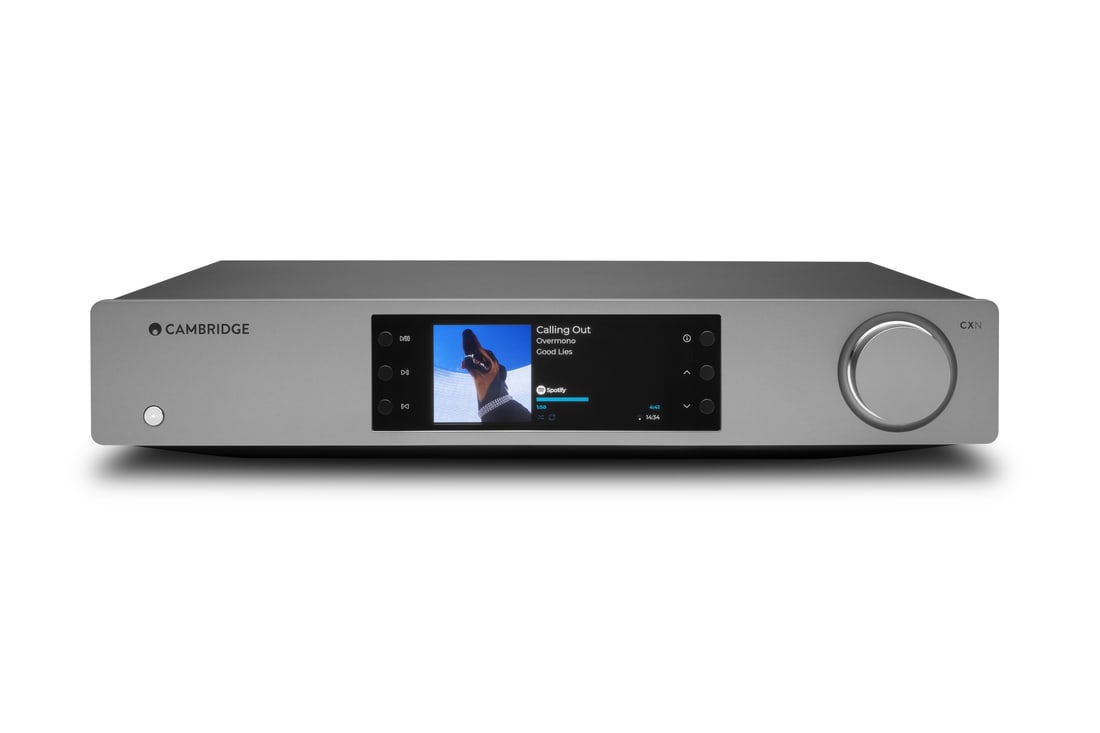
Compare that to a setup where your streamer or DAC has its own analogue volume stage, or where the digital volume control is left at or near full (sometimes called "line level" or "fixed output" on the source side), with all the actual level-setting happening at the amplifier. That's the arrangement I'd push anyone towards, and it's one of the reasons an integrated amp like the Rega Brio Mk7 (check price) or a DAC/amp like the Cambridge Audio CXN100 (check price) feeding a separate power stage is still, in my view, a more honest way to build a system than an all-in-one phone-to-speaker Bluetooth chain where you've got no idea what's scaling what.
Streaming amplifiers like the Naim Uniti Atom (check price) or units covered in our best streaming amplifiers and all-in-one systems guide generally handle this sensibly — their digital volume stages are engineered at 32-bit float or similar internally, which gives enormous headroom before any audible degradation shows up, even at fairly low listening levels. The problem isn't digital volume control as a concept. It's cheap or badly implemented digital volume control stacked on top of itself across multiple devices in the chain, each one doing its own quiet rounding.
The multi-device stacking problem nobody warns you about
This is where it gets genuinely messy in a modern household. Say you're casting from a streaming app, through your phone's system volume, into a Chromecast-equipped device, into a soundbar's own internal processing, which then applies its own volume scaling before DSP and EQ. That's potentially three or four separate digital volume stages, each one capable of truncating bit depth, before the signal ever reaches a speaker. None of them individually might be dramatic. Stacked, they add up to audible mush, especially at low listening volumes where the scaling factor is most aggressive.
I'd argue this is a genuinely under-discussed problem in multiroom and casting setups, more so than sample rate mismatches, which get far more attention online despite usually mattering less in practice. If you want one piece of homework from this article: pick one point in your chain to control volume, set every other digital volume control to 100% or "fixed," and leave it there. Usually that means your amplifier or your DAC's own analogue stage does the job, and everything upstream just passes data through unscaled.
Testing it yourself, roughly
You don't need test equipment to get a feel for this, though a proper measurement would use a null test or an FFT analyser to show the noise floor lifting as digital volume drops. The rough-and-ready home version: play a quiet, well-recorded acoustic track — something with natural decay, a brushed cymbal, a double bass note that trails off — at a sensible listening level using two different methods. First, phone volume near maximum, amp volume doing the actual level-setting. Second, phone volume down low, amp compensating by being turned up. On a half-decent system the second version will sound slightly flatter in the decay, a touch more grain in the quiet passages. It's subtle. It's also real, and it compounds the more digital stages are in the signal path.
Where this stops mattering, to be fair, is at 24-bit depths with good dither, which is most competent modern DACs and streamers. A 24-bit signal has so much numeric headroom that even a substantial digital volume reduction still leaves more effective resolution than a 16-bit CD track at full scale. This is part of why the practical difference between formats gets overstated in some corners of the hi-res conversation — it's not the sample rate doing the heavy lifting, it's bit depth and how gracefully the volume stage handles scaling.
Analogue volume control isn't automatically better, either
I don't want to oversell this as "digital bad, analogue good," because that's not the whole story and I'd be lying if I said otherwise. A cheap analogue potentiometer with channel imbalance at low volumes, scratchy contacts, or poor tracking between channels can introduce its own problems — unevenness between left and right that's arguably worse than a well-dithered digital scale. The valve gear I run at home uses a stepped attenuator rather than a continuous pot for exactly this reason; it's a compromise, like everything in this hobby, just a different one.
The point isn't that one domain is inherently superior. It's that you want volume control happening once, in a well-engineered stage, rather than scattered across three or four devices each doing their own rounding without knowing what the others are up to. A single well-designed analogue stage downstream of a fixed-output digital source is, in my experience, the most reliably good-sounding arrangement, and it's the logic behind most proper two-box or three-box hi-fi separates.
What to actually check in your own setup
Have a look at your streamer or DAC's settings menu — most decent units, including things like the WiiM Ultra (check price) or FiiO K11 (check price), let you choose between "variable" and "fixed" digital output. If you're running it into a preamp or integrated amp, set it to fixed and let the amp do the work. If the DAC is feeding powered monitors or active speakers with no separate amp stage, you'll need the DAC's own volume control, in which case check whether it's genuinely a high-bit-depth internal scale or a crude app-level slider sitting on top of the OS volume as well — that's the double-dip that causes the worst results.
For home cinema setups the logic is similar but the stakes are usually lower, since AVRs and processors are built from the ground up with proper gain-staging in mind — see our piece on building a home cinema: the core components for how that chain is generally structured. It's phones, laptops and casual Bluetooth streaming where the stacking problem sneaks in, mostly because none of those interfaces were designed with audiophiles in mind — they were designed so your nephew can get Triple J onto the kitchen speaker without reading a manual, and fair enough too.
None of this is an argument for obsessing over every dB. It's an argument for picking one place in the chain where volume actually happens, understanding whether that stage is doing clever 32-bit scaling with dither or crude 16-bit rounding, and getting everything else out of the way. The AES and the Audio Engineering Society's published work on dither and requantisation is the place to go if you want the maths in full; I've kept it practical here because that's generally more useful at eleven o'clock on a Tuesday night with a glass of wine and a turntable you'd rather be using instead.
— Priya Anand, Vinyl & Valves Editor, Sound Technology
Common questions
- Does this mean I should never use my phone's volume buttons?
- No — just be aware of where the scaling happens. If your phone is feeding a DAC or amp with its own volume control, set the phone to near full and let the downstream device do the level-setting. If the phone is the only volume control you've got, that's fine too; it's stacking multiple digital volume stages across several devices that causes the real degradation.
- Is this the same issue as the 'bit-perfect' debate?
- Related but different. Bit-perfect is about whether the data reaching your DAC matches the source file exactly, with no resampling or format conversion. Digital volume scaling is a deliberate, necessary process that happens even in a bit-perfect chain the moment you're not at full volume — it's not an error, it's just worth knowing it's there.
- Does a 24-bit stream make this a non-issue?
- It makes it much less of an issue. The extra numeric headroom in 24-bit means even a significant volume reduction leaves plenty of effective resolution. It's 16-bit sources pulled down hard, especially stacked across several devices, where the truncation becomes more audible.

Hello — I'm Priya. I ran a second-hand record shop in Fitzroy for the better part of a decade, which is a polite way of saying I have three thousand records and nowhere to put them. I listen to vinyl through valve amplification because I like the ritual as much as the sound, and yes, I know the measurements aren't perfect — I don't care, and I'll explain why on the page. If you want someone to tell you a turntable is "just a motor and a bearing," I am not your person.
Record collector (3,000+); valve-amp enthusiast; ex record-shop owner
More from Priya Anand
- USB vs S/PDIF for DACs: does the digital input matter?USB, coaxial and optical into a DAC: which digital input actually changes the sound, and when the difference is real versus imagined.
- Qobuz vs Tidal for your record collection's digital halfQobuz vs Tidal compared for vinyl collectors who want a digital half that matches their records, not just a bigger catalogue.
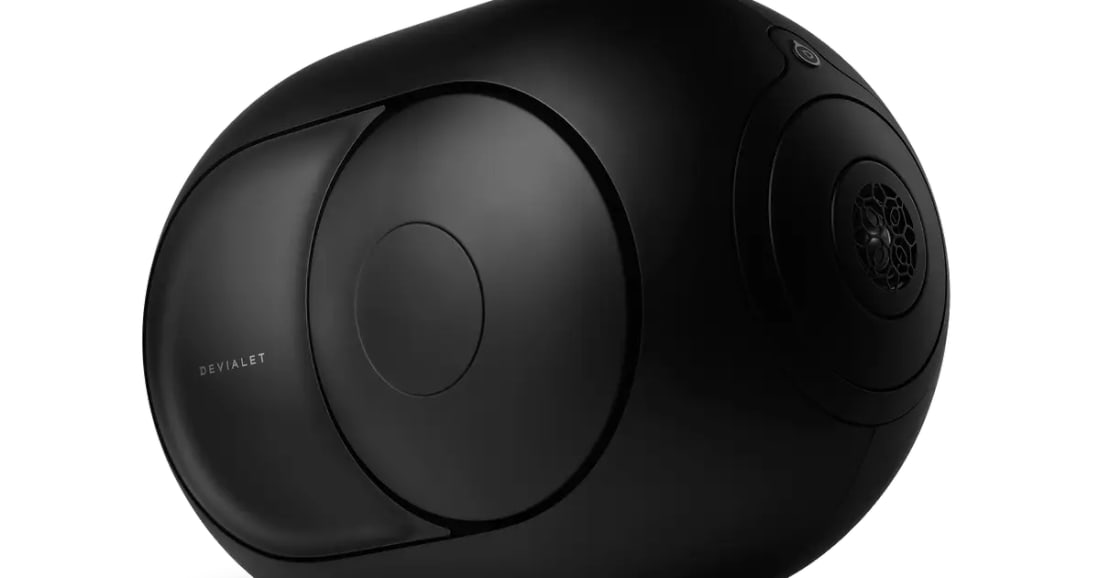 Why a subwoofer makes a valve system sound more honestAdding a subwoofer to a valve amp system can tighten bass, cut distortion and let low-power tubes sing. Here's how to do it properly.
- Tidal vs Qobuz vs Apple Music: which one actually suits a valve systemStreaming services aren't interchangeable once you're running valves. Here's how Tidal, Qobuz and Apple Music actually behave through a warm front end.
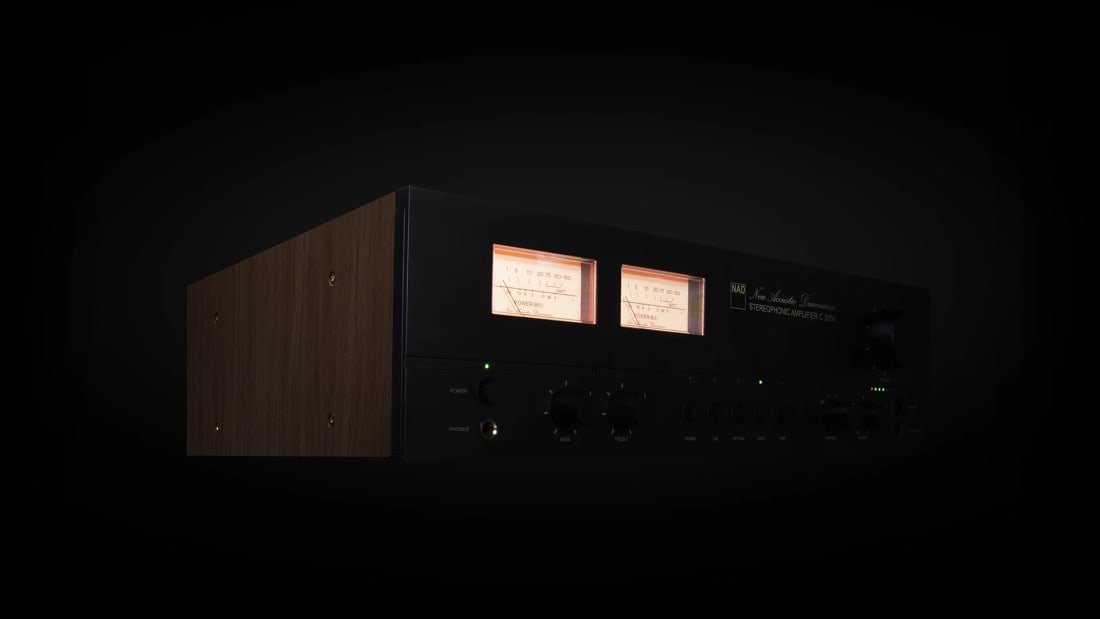 Speaker matching to valve amps: sensitivity beats watts every timeWhy sensitivity, not power output, decides whether a valve amp and speaker pair actually works together — and how to read a spec sheet properly.
- MQA is dead. Here's what that actually tells us about hi-res audioMQA's unwinding wasn't a fluke. It's a lesson in what hi-res audio actually needs from a format, and what was always marketing.