Damping factor: the amplifier spec everyone misreads
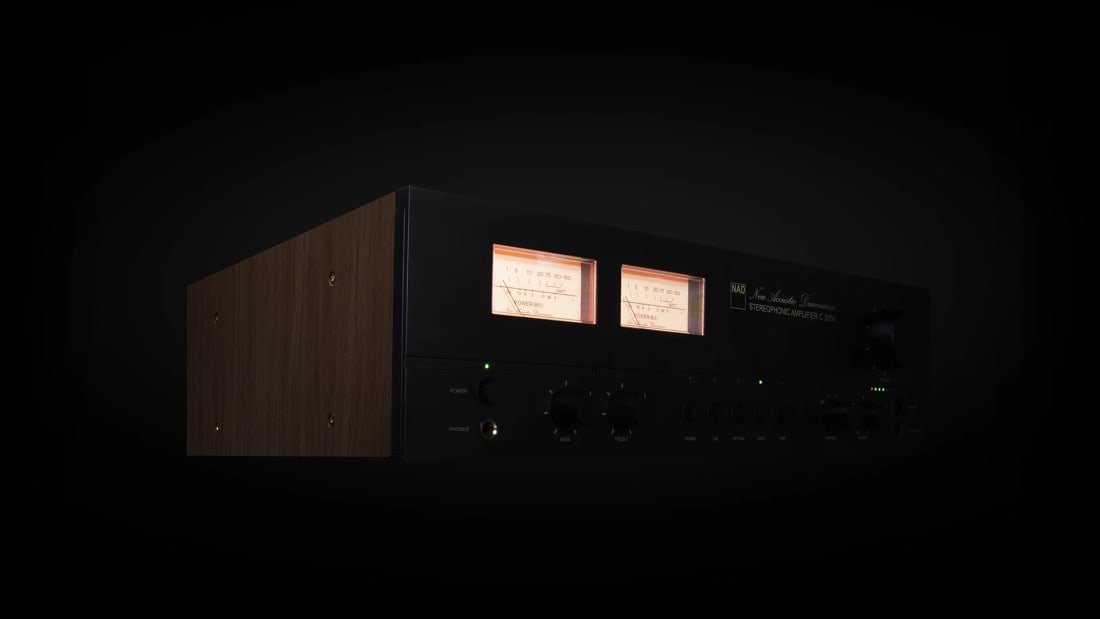
I had a reader email me last month with a screenshot from a forum thread claiming his new integrated's damping factor of 800 made it "objectively more accurate" than his old amp's 180. He wanted to know if he'd wasted three years with the old one. Short answer: no. Slightly longer answer is this whole article, because damping factor is one of those specs that's genuinely rooted in real electrical engineering, and then gets stretched by marketing copy until it means almost nothing.
I spent a chunk of my previous career designing power amplifier output stages, so I've got some sympathy for both sides of this argument. The number is real. The physics behind it is real. But the way it's printed on a spec sheet, isolated from load impedance and frequency, tells you almost nothing about what you'll hear in your lounge room in Coburg or Camberwell or wherever your rack happens to live.
What damping factor actually measures
Damping factor is simply the ratio of your speaker's nominal impedance to the amplifier's output impedance. If your speaker is rated at 8 ohms and the amp's output impedance is 0.02 ohms, you get a damping factor of 400. It's a proxy for how tightly the amplifier can control the speaker cone's motion after the signal stops, particularly at bass frequencies where the cone wants to keep moving due to its own mass and suspension.
A woofer's voice coil generates a back-EMF as it moves. A low output impedance amplifier acts almost like a short circuit across that back-EMF, damping the unwanted motion quickly. A higher output impedance amplifier, like most valve amps with an output transformer, lets more of that back-EMF do its own thing, which changes the way bass notes decay and, more importantly, changes the frequency response depending on the impedance curve of the speaker you've connected.
That second part is the bit that actually matters, and it's the bit the "bigger number is better" crowd skips over.
Where the numbers stop mattering
Here's the uncomfortable truth for the spec-sheet warriors: once you're above roughly 20 to 50, further increases in damping factor make no audible or even measurable difference to the vast majority of speakers. The reason is simple. Your speaker cable has resistance too, typically somewhere between 0.05 and 0.2 ohms for a sensible run of decent gauge cable, and that resistance is now in series with the amplifier's output impedance, swamping any difference between a damping factor of 200 and a damping factor of 800.
I ran the numbers on this properly a few years back when a manufacturer rep tried to sell me on a damping factor of "over 1000" as a headline feature. Add three metres of bog-standard 16-gauge speaker cable and that 1000 effectively becomes something like 40 once you measure at the speaker terminals rather than the amplifier's binding posts. The spec sheet number is measured at the amp, full stop, not where it counts.
This is exactly the kind of number that reads well in a brochure and tells you almost nothing about the signal path a listener actually hears. I'd argue most amplifiers with a quoted damping factor over 100 are already well past the point of any real-world relevance, and printing 500 versus 1000 on a spec sheet is closer to willy-waving than engineering communication.
Why valve amps get punished unfairly here
This is where I want to be careful, because it's tempting to use damping factor as a stick to beat valve amplifiers with, and that's not quite fair either. A typical valve integrated with an output transformer might sit at a damping factor of 10 to 20, sometimes lower. On paper that looks alarming next to a solid-state amp's 200-plus. In practice, that lower damping factor interacts with your speaker's impedance curve to produce a frequency response that isn't flat, and can genuinely add warmth in the midbass or a slight lift where the speaker's impedance rises.
Whether that's "wrong" depends entirely on what you're chasing. If you want flat, neutral, source-accurate reproduction, low damping factor is a real limitation worth understanding, not dismissing. If you love how your particular speakers sound with a particular valve amp because the interaction flatters the midrange or firms up the top end, that's a legitimate reason to own it. Just don't call it neutral, and don't be surprised when it measures differently on someone else's speakers. My colleague Priya has written plenty about this pairing philosophy, and I'd point you to our roundup of the best integrated amplifiers if you want a sense of how differently these topologies present on a spec sheet before you've even plugged one in.
The speaker side of the equation nobody checks
Damping factor is only half the story, and it's the half everyone obsesses over because it's printed in bold on page one of the amp's manual. The other half is your speaker's impedance curve, and almost nobody looks at it.
A speaker's impedance isn't a flat 8 ohms across the audio band. It swings, sometimes wildly, dipping to 3 or 4 ohms at certain frequencies and rising above 20 ohms near resonance points, particularly around the bass driver's free-air resonant frequency and again where the crossover hands off between drivers. An amplifier with high output impedance (low damping factor) will produce a frequency response that follows the shape of that impedance curve. An amplifier with genuinely low output impedance won't care what the curve does; it holds voltage steady regardless.
This is why the "right" amplifier for a given speaker isn't purely about power, and it's a topic we've covered from the speaker sensitivity side in why your amplifier struggles below 4 ohms. Some speaker designs, particularly certain vintage or deliberately voiced modern designs, are engineered assuming a specific amplifier characteristic. Pair a low damping factor valve amp with a speaker whose impedance curve was voiced for one, like some classic horn or high-sensitivity designs, and the interaction can sound intentional and right. Pair the same amp with a modern speaker voiced flat for a solid-state reference amplifier, and the tonal balance can shift in ways the designer never intended.
Class D changes the conversation again
Class D amplifiers complicate this further because their output stage topology is fundamentally different from a traditional linear amp. Many good modern Class D designs, the sort using post-filter feedback around the output inductor and capacitor, achieve genuinely excellent damping factor figures, often rivalling or beating traditional Class AB designs. But cheaper or older Class D implementations without that feedback correction can have output impedance that rises with frequency, meaning the damping factor spec measured at 1kHz doesn't represent behaviour at 10kHz or 15kHz.
This is one of the reasons I've been fairly blunt in the past about treating Class D amplifier reviews on their measured performance rather than the topology's general reputation. We went through this in more detail in why some Class D amps still sound like a spreadsheet, and damping factor across the frequency band, not just the single number at 1kHz, is one of the measurements that actually separates the good implementations from the ordinary ones. If a manufacturer only quotes damping factor at one frequency, that's worth noticing.
What to actually do with this information
If you're shopping for an amplifier and comparing damping factor figures between two solid-state or Class D designs both rated above 100, stop comparing damping factor and look at something else entirely, like current delivery into 4 ohms, THD at rated power, or build quality of the output stage. The number has already told you everything useful it's going to tell you.
If you're comparing a valve amp against a solid-state amp, the damping factor gap is real and will audibly affect bass control and tonal balance, particularly with speakers that have a lively impedance curve, like many two-way standmounts with a rear port. This is exactly the kind of pairing question my colleague Hannah covers from the speaker side, and it's worth reading alongside our guide to standmount speakers if you're trying to work out which cabinet suits which amplifier philosophy.
Cable matters more than people think in this specific context too. If you've spent money on a high damping factor amplifier and then run six metres of thin cable to your speakers, you've thrown away a meaningful chunk of that number before the signal even reaches the terminals. The Audio Engineering Society has published papers on cable resistance effects on damping if you want to go down that rabbit hole properly, and it's a more productive place to spend research time than debating whether 400 sounds better than 600.
The honest bottom line
Damping factor is one of the few specs on an amplifier's data sheet that used to mean something clean and specific, and got run through the marketing wringer until the number itself became a kind of proxy war between topologies. It's a genuine electrical measurement with a genuine effect on speaker behaviour, but that effect saturates hard past a fairly modest threshold, and gets swamped by cable resistance and speaker impedance curves that nobody prints on a box.
I reckon the honest way to use this spec is as a sanity check, not a tiebreaker. If an amp quotes something absurdly low, like under 10, and you're not deliberately chasing a valve sound, ask questions. If it quotes anything from 50 upward, move on to specs and listening tests that will actually differentiate the units in front of you, and consider whether your speaker choice, from something like the KEF R3 Meta (check price) to a more traditional design, was voiced with a particular amplifier characteristic in mind in the first place.
— Marcus Vale, Editor · Electronics & Measurement, Sound Technology
Common questions
- Is a higher damping factor always better?
- No. Past roughly 50 to 100, further increases make negligible audible or measurable difference because speaker cable resistance and the speaker's own impedance curve dominate the total system behaviour long before the amplifier's contribution matters.
- Why do valve amps have such low damping factor figures?
- The output transformer used to match the valve's high impedance to a speaker's low impedance introduces significant output impedance of its own, typically giving damping factors of 10 to 20 rather than the hundreds common in solid-state designs.
- Does damping factor matter more for certain speakers?
- Yes. Speakers with a wildly varying impedance curve, common in some two-way ported standmounts, will show more audible interaction with an amplifier's output impedance than a speaker with a relatively flat, well-controlled impedance curve.
- Can speaker cable really undo a high damping factor spec?
- Absolutely. A few metres of ordinary speaker cable can add 0.1 ohms or more of series resistance, which reduces an amplifier's quoted damping factor of several hundred down to something in the tens once measured at the speaker terminals.

I'm Marcus, and I'll be honest up front: I trust a measurement before I trust my own ears, because my ears lie to me daily. I spent fifteen years designing audio electronics before I started writing about them, so when a brand tells me a number, I want to see the graph. That doesn't make me cold about this hobby — I love a system that disappears as much as anyone — it just means I'll tell you when an expensive box is selling you confidence rather than performance.
Former audio electronics engineer; objectivist; runs the test bench
More from Marcus Vale
 Why your turntable's earth wire isn't optionalTurntable earthing fixes most phono hum problems. Here's how grounding actually works, why it fails, and how to track down a noisy connection.
 Why your AVR runs cool on music but throttles on AtmosAVR thermal throttling explained: why nine-channel Atmos mixes push receivers into protection mode that two-channel music never triggers.
- Subwoofer delay settings: why your AVR's number is a guessAVR auto-calibration estimates subwoofer delay from distance, not timing. Here's how to measure and correct it properly for tighter bass.
- AVR auto-calibration: what Audyssey, YPAO and Dirac actually measureAudyssey, YPAO and Dirac Live all run a mic sweep and spit out numbers, but they're not measuring the same things or fixing the same problems. Here's what's actually happening.
- Cartridge break-in: what actually changes in the first 40 hoursDoes a new cartridge really need 40 hours to "open up"? I measured one to find out what's mechanical fact and what's audiophile folklore.
- DAC output stages: what the chip doesn't tell youThe DAC chip gets all the marketing attention, but the analogue output stage after it does most of the work shaping what you actually hear.