Pairing statement amps and speakers: watts are the least of it
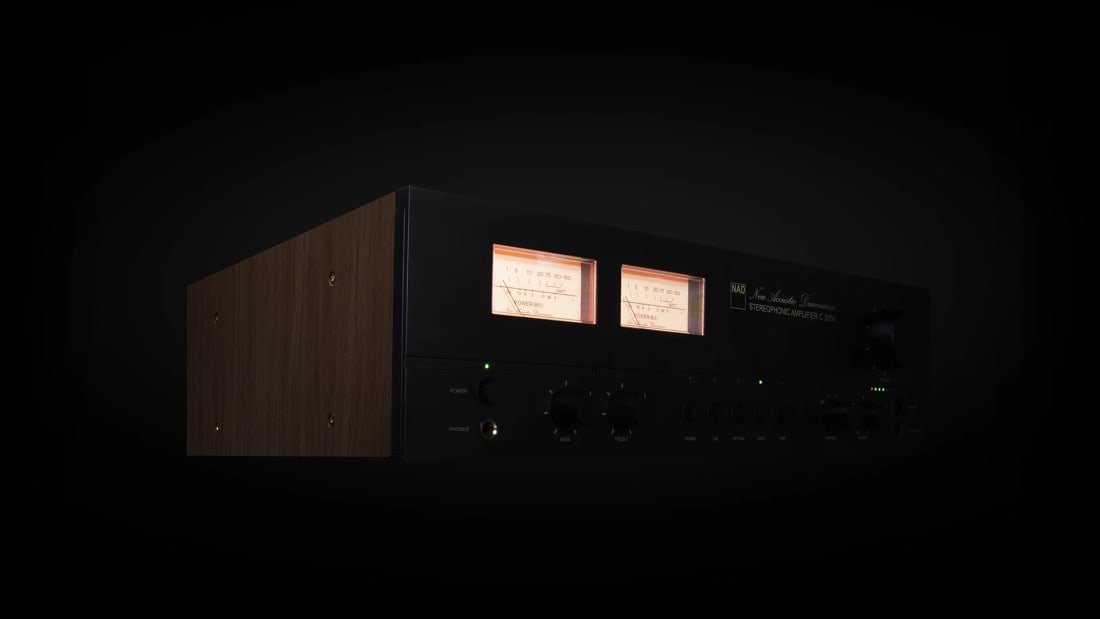
I sat in a room in Sydney last month with a pair of speakers that measured a genuinely difficult 2.8 ohms in the bass, paired with a 300-watt-per-channel solid-state amplifier that should, on paper, have made a mockery of them. It didn't sound bad. It sounded flat, congested, oddly small for the money on both sides of the equation. Swap in a 150-watt amp with twice the current delivery into that load and the same speakers opened up completely — more scale, more grip, more of everything that the bigger number promised and didn't deliver. That's the lesson I keep relearning at this end of the hobby: the watts on the box are almost the least useful number you'll look at when building a statement pairing.
This is where amplifier matching for high-end speakers stops being arithmetic and starts being engineering literacy. Everyone below a certain budget gets away with rough rules of thumb — buy enough power, don't run 4-ohm speakers off a receiver that hates 4 ohms, done. Above that budget, the rough rules stop working because the speakers get harder to drive at exactly the same rate that the amplifiers get more idiosyncratic. A statement floorstander with a complex passive crossover and a low, wobbly impedance curve is a genuinely different electrical animal to a simple two-way standmount, and the amplifier you put in front of it needs to be chosen accordingly, not just sized up.
Why the impedance curve matters more than the impedance number
Every speaker has a nominal impedance printed on the back — 8 ohms, 6 ohms, sometimes 4. That number is close to useless on its own. What actually matters is the impedance curve across the full frequency range, and on a lot of ambitious loudspeaker designs that curve dips well below the nominal figure at specific frequencies, often in the upper bass or lower midrange where a lot of musical energy actually lives. A speaker rated "nominally 8 ohms" can drop to 3 ohms at 100Hz and swing to a nasty phase angle at the same time, which is a much harder combination for an amplifier to deal with than a flat 4-ohm load would be.
Phase angle is the bit most buyers skip entirely, and it's the bit that actually separates amplifiers that cope from amplifiers that don't. A speaker load isn't purely resistive — it's reactive, meaning voltage and current fall out of step with each other at certain frequencies. A benign 4-ohm load with a phase angle near zero is far easier to drive than an "easy" 6-ohm load with a nasty capacitive phase angle at 200Hz. This is why two speakers with near-identical nominal ratings and sensitivity can behave completely differently on the same amp, and why I'd treat any spec sheet without a published impedance and phase graph with a bit of suspicion once you're spending serious money. Manufacturers like Focal and B&W publish these curves for a reason — go looking for them before you go listening.
We've covered why amplifiers struggle below 4 ohms in more technical depth elsewhere on the site, but the short version for statement systems is this: the dip matters more than the average, and the average printed on the box tells you almost nothing about the dip.
Valve, solid-state and Class D behave differently under load, not just differently on paper
This is where the three amplifier topologies genuinely diverge, and it's not really about sound signature — it's about output impedance and how each design responds when the load gets difficult.
A valve amplifier, particularly one without a huge amount of negative feedback, typically has high output impedance relative to solid-state. That gives it a low damping factor, and it means the amp's output voltage will actually sag or rise slightly depending on the speaker's impedance curve at any given frequency — the amp and speaker interact rather than the amp simply dictating terms. This is exactly why speaker sensitivity and impedance behaviour matter enormously with valves; a speaker designed with a benign, flattish curve and reasonably high sensitivity will let a modest valve amp sing, while a low-impedance, low-sensitivity speaker will leave even a well-regarded valve amplifier sounding soft and underpowered regardless of its rated wattage. I wrote more on this pairing logic in our piece on matching speakers to valve amps, and it's still the first thing I check before recommending any tube gear at the top end.
Solid-state, particularly well-designed Class A/B and A designs from the likes of McIntosh or the better Class D implementations, generally holds output voltage far more consistently regardless of load, which is why solid-state has traditionally been the safer bet into difficult, low-impedance speakers. High damping factor gives the amplifier tighter control over the speaker's cone motion, particularly in the bass, which is one reason solid-state often measures — and sometimes sounds — tighter and more controlled on difficult loads than valves do.
Class D deserves its own paragraph because it's stopped being the story people think it is. Modern Class D modules from the serious manufacturers have addressed a lot of the historical weaknesses around output impedance and high-frequency behaviour into reactive loads, and some now measure as well into difficult speakers as good linear amplifiers. I'd point you to our earlier piece on why Class D has won on paper but some designs still sound like a spreadsheet — the short version is that the topology is no longer the limiting factor, the implementation still is, and that's true of impedance matching as much as anything else.
Current delivery, not watts, is the number that actually predicts behaviour
Two amplifiers can both be rated at 100 watts into 8 ohms and behave completely differently once the load gets to 4 ohms. If an amplifier doubles its power into half the impedance — 100 watts at 8 ohms becoming close to 200 watts at 4 ohms — that's a genuine current-delivery amplifier with a substantial power supply and output stage behind it. If it barely increases, or actually drops, you're looking at an amp that's going to struggle, clip early, or simply sound thin and constricted the moment the speaker's impedance dips under load, regardless of how generous the 8-ohm number looked in the shop.
This is the single spec I'd tell any statement-system buyer to actually chase down before auditioning anything. It rarely gets printed prominently because it's not flattering for a lot of designs, but the better manufacturers publish it, and it's worth asking a dealer directly if it isn't on the datasheet. An amplifier's stated power at 8 ohms tells you almost nothing about how it will cope with a speaker that dips to 3 ohms in the bass; the doubling behaviour tells you almost everything.
Sensitivity is the multiplier everyone forgets
None of the impedance discussion matters much if the speaker's sensitivity is wildly mismatched to the amplifier's actual delivered power. A speaker rated at 84dB sensitivity needs roughly four times the power of one rated at 90dB to reach the same volume in the same room, and that's before you account for room size and listening distance. I've seen buyers spend enormous money on a beautifully engineered 40-watt valve amplifier and pair it with a low-sensitivity, low-impedance floorstander that needed closer to 200 watts of current-capable solid-state power to actually work properly. The amp wasn't bad. The pairing was simply wrong, and no amount of cable or mains conditioning was going to fix it.
Sensitivity, impedance curve and amplifier current capability form a single decision, not three separate ones. Get the sensitivity match roughly right, then check the impedance curve against the amp's doubling behaviour, and you'll avoid the vast majority of expensive mismatches I see in home audition rooms.
Damping factor: useful signal, easy to overrate
Damping factor gets treated as a marketing number by some brands and dismissed entirely by others, and the truth sits in between. It's a genuinely useful indicator of how tightly an amplifier controls a woofer's motion, particularly relevant with ported or larger-diaphragm bass drivers where uncontrolled cone motion shows up as loose, boomy, one-note bass. But damping factor above a certain point — and that point arrives earlier than most spec sheets imply — stops making an audible difference, because speaker cable resistance and crossover components in the signal path swamp any further gains at the amplifier's output stage. A damping factor of 400 does not sound meaningfully different to one of 150 in most real systems; a damping factor of 15 into a demanding sealed cabinet very much can. It's a threshold effect, not a linear one, and I'd treat any claim otherwise with a raised eyebrow.
What this looks like in an actual system decision
When I'm advising on a statement pairing, the order of operations is always the same. Establish the speaker's real sensitivity and its full impedance curve, not just the nominal figure. Work out the room size and realistic listening distance, because that determines how much sustained power you actually need rather than how much looks impressive on a spec sheet. Then match amplifier topology to the speaker's electrical behaviour — valve for a benign, sensitive load where the interaction is part of the character you want; high-current solid-state or a serious Class D implementation for anything that dips hard or reads unkindly on sensitivity. Only after all of that does the actual sound of the amplifier — its distortion character, its noise floor, its tonal balance — come into the decision. I'd argue most retail floors run this process backwards, letting the amplifier's brand reputation or power rating drive the decision and treating the speaker's electrical demands as an afterthought. That's how you end up with a beautifully reviewed amp sounding wrong in someone's actual lounge room.
None of this is exotic engineering — it's the same physics whether you're spending $2,000 or $200,000, and reputable manufacturers publish enough data for AES and IEC standard measurement practice to make the comparison fair. The difference at the statement end is simply that the margins for error shrink and the cost of getting it wrong grows. A mismatched budget system sounds mediocre. A mismatched six-figure system sounds like an expensive mistake, and I've sat through a few of those in showrooms that should have known better.
If you're assembling a serious system from scratch, it's worth reading our broader piece on system-building order of operations before you fall in love with any one component, amplifier included. The room and the speaker come first; the amplifier is chosen to serve that pairing, not the other way around.
A short, honest checklist before you sign anything
Ask for the full impedance and phase curve, not just the nominal figure. Ask whether the amplifier's power output doubles from 8 ohms to 4 ohms, and get a straight answer. Match sensitivity to your room size and realistic listening levels before you fall for a particular sound signature. And listen to the actual pairing in a space that resembles yours, because an amplifier that sails through a dealer's treated demo room can behave very differently into your speakers in your untreated living room.
For reference points on current-capable integrated designs at more accessible prices, our guide to the best integrated amplifiers is a reasonable starting point, and the McIntosh MA352 (check price) remains a useful example of a solid-state design built with current delivery, not just wattage, front of mind.
Common questions
- Does a higher wattage amplifier always drive difficult speakers better?
- Not necessarily. What matters more is whether the amplifier's power output roughly doubles as impedance halves, which indicates real current delivery. A high-wattage amp with a weak power supply can still struggle into a 3-ohm dip that a lower-rated but current-capable design handles easily.
- Are valve amps a bad choice for hard-to-drive speakers?
- Generally yes, unless the speaker was specifically designed with a benign, high-sensitivity load in mind. Valve amplifiers typically have lower damping factor and higher output impedance, so pairing them with a low-sensitivity, low-impedance speaker usually leaves both components underperforming.
- Is damping factor worth chasing on a spec sheet?
- Up to a point. Very low damping factor genuinely causes loose, uncontrolled bass, but once you're above roughly 50-100, speaker cable resistance and crossover components dominate, so a manufacturer's claim of 400 versus 150 rarely translates into an audible difference.
- How do I find a speaker's real impedance curve if it's not published?
- Ask the manufacturer or an authorised dealer directly for the impedance and phase measurement graph, or check independent measurement publications. If neither exists, treat the nominal rating with caution and audition through an amplifier known for strong current delivery rather than assuming an easy load.

I'm Sofia, and I get to play with the silly stuff — the statement amplifiers, the reference loudspeakers, the cost-no-object systems that most of us will only ever hear at a show. Someone has to, and I take it seriously: at this level the price stops mapping to performance and starts mapping to engineering, craft and ego, and part of my job is telling you which is which. I love the extreme end of this hobby, but I'm not dazzled by a big number on a price tag.
Covers flagship and cost-no-object reference systems
More from Sofia Laurent
- Negative feedback in amplifier design: the argument that never endsNegative feedback cuts amplifier distortion but divides designers. Here's what it does, why some statement amps avoid it, and what it means for you.
 The synergy tax: why mismatched gear costs more than cheap gearThe synergy tax explained: why pairing mismatched hi-fi components quietly costs more than buying modest, well-matched gear.
 Rear-port floorstanders near a glass wall: a risky pairingRear-ported floorstanders against glass walls cause boundary reinforcement and reflections. Here's how to place, measure and tune them properly.
- Infrasonic bass below 20Hz: chasing the octave you feel, not hearBelow 20Hz is infrasonic bass: felt more than heard. Here's what it takes to reproduce it properly, and whether a statement system should bother.
- Why statement systems still get beaten by the zone two speakerA $150,000 reference system is only as good as the worst-sounding zone it's networked to. Here's why multiroom integration is the statement system's real weak point.
- Why a statement floorstander can be the wrong speaker in the roomSix-figure floorstanders fail in rooms that were never built for them. Here's how to tell if your space can actually support one before you buy.