Active versus passive in 2026: amplifier inside the speaker

Active versus passive: something shifted at CES 2026
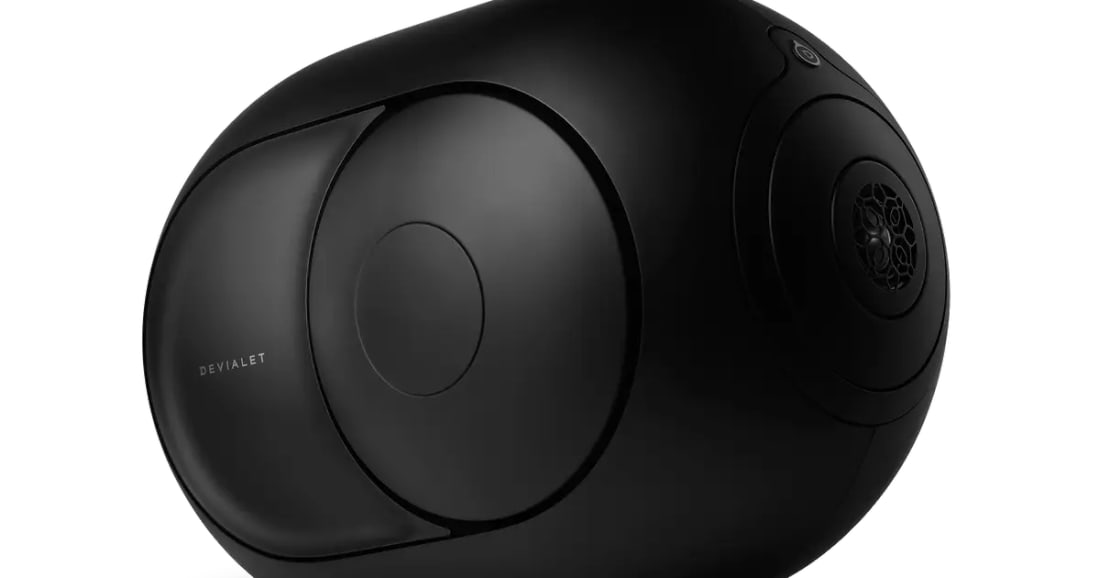
The active versus passive debate used to be settled by a single assumption. "Smart" speakers meant a Bluetooth puck on a kitchen bench, tolerated rather than respected by anyone who cared about sound. So when eCoustics reported that CES 2026 was the first Consumer Electronics Show at which not a single new passive speaker debuted on the show floor, I had to sit with that for a moment. Not one. In a room, figuratively speaking, packed with audio brands all jostling for column inches and retail orders, every speaker manufacturer either stayed home or turned up with something that had amplification baked in.
That is not a blip. That is a signal.
T3 named powered wireless speakers the biggest hi-fi trend of 2026, pointing to a cluster of genuinely serious products: the Yamaha NX-70A, the Cambridge Audio L/R, the Technics SC-CX700, the KEF LSX II LT, and the Dali Vega. These aren't lifestyle accessories with a hi-fi badge glued on. They are considered engineering efforts from brands that built their reputations on passive transducers and separate amplification. When Dali and Technics both decide the amplifier belongs inside the cabinet, the conversation has moved well past niche. Our look at the Cambridge Audio L/R Series covers one of those launches in more detail.
But before we declare the passive speaker dead (and I want to be clear, it is absolutely not dead), it's worth understanding why this shift is happening, what you give up and gain by going active, and how Australian buyers should be thinking about it in 2026.
What "active" actually means, and why it matters acoustically
The terminology gets sloppy in the market, so let's be precise. A powered speaker has an amplifier inside but is driven by a single amplifier channel per cabinet feeding a passive crossover. An active speaker, in the strict sense, has the crossover operating at line level before the amplification stage, with dedicated amplifier channels for each driver. The tweeter gets its own amp, the woofer gets its own amp, and so on. The acoustic and electrical implications of that distinction are significant.
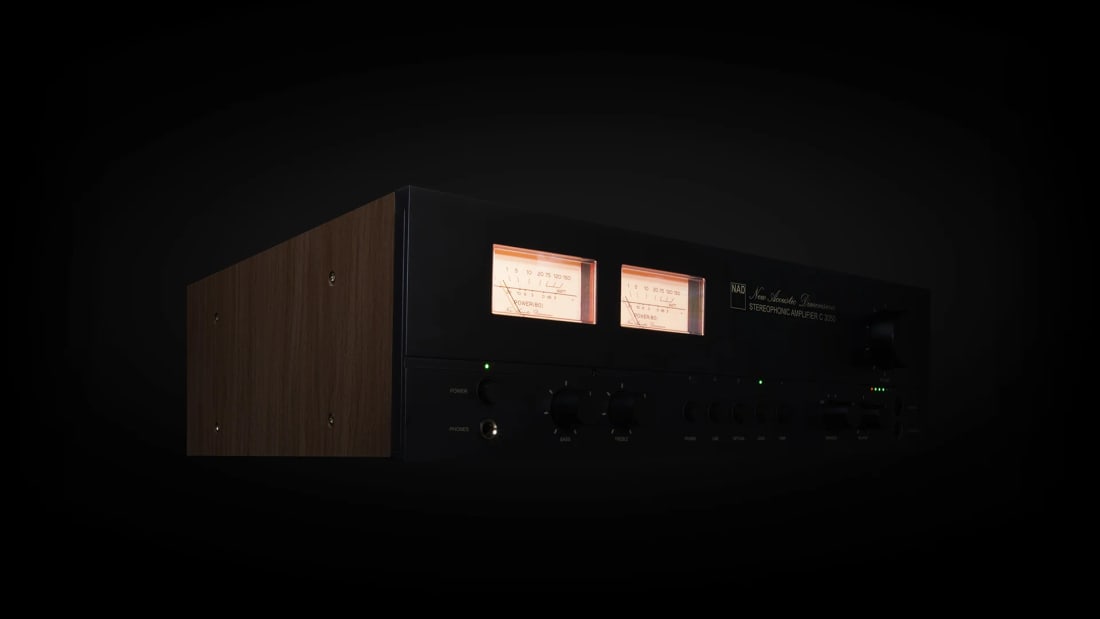
In a traditional passive system, your amplifier drives the full-range signal into the speaker's passive crossover network, a collection of capacitors, inductors and resistors that divide the signal by frequency before it reaches each driver. That crossover does its work in the power domain, burning energy as heat and introducing phase shifts and reactive loads that your amplifier has to manage. The relationship between your amplifier's output impedance and the speaker's impedance curve becomes genuinely important. A speaker that dips to 2 ohms at certain frequencies and demands high current can expose the limitations of an amplifier that looked perfectly adequate on paper. Our guide to matching sensitivity, impedance and power walks through that sum.
Move the crossover upstream of the amplification, the active topology, and all of that changes. Each amplifier is now working into a known, well-behaved load: a single driver. The crossover operates at low signal levels where component tolerances have far less audible impact. The amplifier can also be matched by the designer to exactly the driver it's running, with the gain structure and damping factor that driver needs. There's no guesswork, no compatibility lottery. The engineer who designed the woofer also specified the amplifier running it. That is a meaningful acoustic advantage, and it's one of the core reasons studio monitors went active decades ago. If you want the background on where those filters sit, see crossover points and driver integration.
Understanding sensitivity matters here too. Passive speakers are often designed with higher sensitivity partly because they need to work with a wide range of third-party amplifiers. An active designer can work with a lower-sensitivity, better-controlled driver and simply dial in the appropriate gain, a freedom that has real downstream benefits for distortion and dynamic headroom.
The 2026 product landscape: what's actually available
The T3 list gives you a decent cross-section of where the category sits. The KEF LSX II LT is effectively the most accessible entry point from a brand with serious passive pedigree, with KEF's Uni-Q driver array translating well into a compact active format. If that price tier interests you, the KEF Coda W review looks at an all-in-one active standmount. The Dali Vega represents the premium end of the wireless active market, carrying a price tag that would make passive speaker buyers do a double take until they remembered they're also buying amplification, a DAC, and often a network streamer in the same box.
CES 2026 itself threw up a couple of interesting data points beyond the passive-speaker absence. The Naim CI-Uniti 102, priced at $1,799 and delivering 150 watts per channel from a Class-D amplification stage, landed as one of the show's standout integrated/active picks, alongside the Klipsch The Sevens II. The Naim is interesting because it sits at the intersection of the integrated amplifier and the active speaker ecosystem. That 150W/ch Class-D figure suggests Naim is leaning hard into efficiency and power density, which is what you need when you're packaging amplification into spaces never designed to dissipate heat. Naim's own site, Naim Audio, is the place to confirm specifications.
Class-D gets a bad reputation in some audiophile circles, largely earned by early implementations that were efficient but somewhat sterile. If you want the engineering basics, the Class-D amplifier article on Wikipedia is a fair primer. The current generation of Class-D modules, particularly those using GaN (gallium nitride) switching technology, is a different proposition. The fact that Naim, a brand historically associated with Class-A/B designs that run warm enough to heat a small room, is now shipping Class-D products tells you something about where the engineering has landed.
The amplifier isn't going anywhere
Here's the part of this story that the trend pieces tend to skim over: amplifiers still accounted for 42% of total hi-fi sector revenue in the figure cited. That is not a category in freefall. That is a category that is evolving, adapting, and in some cases being folded into products that look like speakers but contain amplifier DNA. The revenue is shifting in how it's packaged, not disappearing.
The high-end passive speaker market, with standmount speakers matched carefully to separate amplification, remains healthy, particularly at price points where buyers are making considered, long-term purchasing decisions. If you've spent serious money on a well-regarded integrated amplifier, discarding it in favour of powered speakers isn't just philosophically uncomfortable; it's financially irrational unless the active alternative genuinely outperforms the combination you already have.
The upgrade path question is real. A passive system is modular by design. Your speakers can outlast three or four amplifiers, and you can upgrade your source, your amplifier and your speakers independently, responding to budget cycles or genuine improvements in technology. With a self-contained active speaker, you're buying a closed ecosystem. When the amplifier inside develops a fault five years from now, or when a newer DSP platform offers meaningfully better room correction, your options are limited. You're not swapping the amplifier module; you're either living with what you have or buying new speakers entirely.
That said, the counter-argument from the active camp is equally valid: how many passive speaker owners actually upgrade their amplifiers? How many have a speaker-amp pairing that was chosen casually rather than through careful matching? The theoretical flexibility of a passive system only matters if you exercise it, and for a significant portion of the market, the appeal of a well-engineered active speaker is that someone else has already done the matching work.
Room correction: the hidden advantage
If there is one genuinely transformative argument for active speakers in 2026, it is DSP-based room correction. Getting this right in a passive system requires either a separate DSP unit in the chain or an amplifier with built-in room correction, both of which add cost and complexity. In an active speaker, the DSP lives alongside the amplification, with direct access to the signal before it reaches the drivers. The designer can implement correction filters, driver protection, dynamic limiting and bass alignment all within a single, coherent signal chain.
For Australian buyers particularly, this matters. We tend to live in rooms that were not designed with acoustics in mind: hard floors, glass, irregular dimensions. The ability to correct for room modes and boundary effects without a separate component or a calibration microphone setup is a genuine quality-of-life improvement. It doesn't replace proper acoustic treatment, and anyone who tells you otherwise is selling you something, but it goes a long way toward making an imperfect room more listenable.
The wireless question: convenience versus compromise
Wireless connectivity, specifically the ability to receive audio wirelessly between the two speaker cabinets and from source devices, is a significant part of what's driving the trend. Running speaker cables between left and right cabinets is a practical obstacle that kills sales, and eliminating it opens up placement options that simply aren't available with traditional passive setups.
The audio quality of wireless inter-speaker links has improved substantially. Early wireless speaker systems used compressed audio between cabinets; current implementations from reputable manufacturers transmit losslessly or at very high bit rates, and latency has come down to the point where it isn't audible in stereo listening. The connection between your source and the speakers is a separate matter. If you're using Bluetooth, you're still subject to codec limitations (the Bluetooth SIG publishes the official specifications), and for serious listening, a wired network connection or at minimum aptX Lossless or LDAC remains preferable. For a deeper look at the streaming source side, our guide to the best DACs and network streamers is worth your time if you're planning a hybrid setup, and our piece on streaming to passive speakers covers the other route.
Who should go active in 2026, and who shouldn't
Let me be direct about this, because the trend pieces won't be.
You should seriously consider powered wireless active speakers if: you are setting up a new system from scratch and don't have an existing amplifier investment to protect; your listening room is challenging and you'd benefit from integrated DSP correction; you prioritise setup simplicity and cable minimisation; or you're buying at a price point where the passive-plus-amplifier alternative would require genuine compromise on one side of the equation.
You should think carefully before abandoning a passive system if: you have an amplifier you love and a speaker-amp pairing that works; you are an active upgrader who gets genuine satisfaction from component rolling; you're at the high end of the market where bespoke passive systems with carefully matched amplification still represent the performance summit; or longevity and repairability are priorities. The modular nature of passive systems means your speakers can keep working long after the original amplifier has been superseded.
There's also a middle path: the all-in-one streaming amplifier category, covered in our best streaming amplifiers guide, pairs a conventional separate amplifier with integrated streaming and DAC functionality, then drives passive speakers of your choice. For buyers who want a single-box source-and-amplification solution but aren't ready to give up speaker choice, this category remains highly compelling in 2026.
The bigger picture
The CES 2026 observation, no passive speaker debuts, is striking, but context matters. CES is a consumer technology show, not a specialist audio exhibition. The brands showing passive speakers at Munich High End in May 2026 weren't suddenly converted. The high-end passive speaker market, the one this publication cares most about, is not pivoting to powered wireless products en masse. What CES reflected is the mainstream and upper-mainstream market, where the value proposition of active speakers (known performance, simplified setup, integrated room correction) is increasingly compelling against passive alternatives at equivalent price points.
What the 42% amplifier revenue figure tells me is that the industry is bifurcating cleanly. The entry to mid-market is going active, fast. The high end is staying passive, or hybridising in interesting ways. The tension is in the upper-middle market, the $3,000 to $8,000 price bracket where buyers are serious but not unlimited, and I'd argue that's where the next few years will be most instructive to watch.
For now, the honest answer is that active speakers in 2026 are better than they have ever been, and the engineering case for the topology is solid. But passive speakers with carefully matched amplification remain capable of performance that current active designs at the same price haven't consistently matched. Both things are true, the market is large enough to hold both, and buyers who understand the trade-offs are in a genuinely good position.
What's changed is that the default assumption, that a serious hi-fi system means separate speakers and a separate amplifier, is no longer automatic. That's not a crisis. It's the category growing up.
Common questions
- Is it true that no passive speakers were launched at CES 2026?
- According to eCoustics' CES 2026 wrap, no new passive speaker debuted on the show floor — which was noted as a notable first for the event. It's worth contextualising this: CES is a consumer electronics show rather than a specialist high-end audio exhibition, so it reflects the mainstream and upper-mainstream market more than the boutique high-end sector. Passive speakers are still very much alive, particularly at the high end, but the CES data point does confirm that the mainstream audio industry has moved decisively toward powered and active designs.
- What is the difference between a powered speaker and an active speaker?
- A powered speaker has a built-in amplifier, but it still uses a passive crossover inside the cabinet — the amplifier drives the full-range signal, and the crossover splits it to the drivers after amplification. A true active speaker, by contrast, has the crossover operating at line level before amplification, with dedicated amplifier channels for each individual driver. Active designs allow each amplifier to be precisely matched to its driver and eliminate the power losses and phase complications of passive crossover networks — which is why professional studio monitors have used the active topology for decades.
- Will active speakers replace passive speakers in hi-fi?
- Not at the high end, and probably not wholesale across the market either. Amplifiers still account for 42% of total hi-fi sector revenue, which indicates the category is evolving rather than collapsing. What's more likely is a continuing bifurcation: the mainstream and upper-mainstream market moves toward active and powered wireless designs, while the high-end and enthusiast market retains the passive plus separate amplification model where upgrade flexibility and the ability to fine-tune component matching remain priorities.
- What should Australian buyers consider before switching from a passive to an active speaker system?
- The key considerations are: the value of your existing amplifier investment (active speakers make most sense when you're starting fresh or the active option genuinely outperforms your current combination); upgrade flexibility (passive systems allow independent component upgrades; active systems are closed ecosystems); room correction needs (active speakers with built-in DSP correction can be a major advantage in acoustically difficult Australian living rooms); and long-term repairability. If an amplifier module inside an active speaker fails outside warranty, your options are more limited than with a separate component that can be independently serviced or replaced.

Hi, I'm Hannah. Speakers are my thing — specifically, the conversation between a speaker and the room it's in, which is where most systems are won or lost. I did acoustics at uni and never quite got it out of my system. I'll measure your room's bass response and then gently break the news that the $20,000 speakers aren't the problem, the untreated wall behind your sofa is. Stand-mounts on good stands are criminally underrated and I will die on that hill.
Acoustics background; loudspeaker and room-treatment specialist
More from Hannah Reid
 Headphone stands and hooks: the desk accessory that changes your soundHeadphone stands aren't just tidy storage. How you park your cans between sessions affects driver life, cable strain and even headband fit.
 First reflections: finding them, and what to actually do about themThe mirror trick still finds first reflection points better than any app. Here's how to locate them and what treatment actually earns its keep.
- Headphone soundstage: why some pairs sound "wide" and others don'tSoundstage in headphones isn't magic or marketing. It comes from crossfeed, driver geometry and pad depth — here's what's actually happening and what you can change.
- Turntable wall shelves versus stands: what actually kills footfall bassFootfall bass in vinyl playback usually isn't the turntable's fault. It's the floor. Here's how to work out whether a wall shelf or a proper stand fixes it.
 Why your amplifier struggles below 4 ohms (and when to actually worry)Impedance dips scare buyers more than they should. Here's how to read a speaker's impedance curve and match it to an amp that won't run out of puff.
- Subwoofer placement: the crawl test still beats any appRoom-correction apps are handy, but the old carpet-crawl method still finds the seat-by-seat bass problems software glosses over.