Where you put the DAC in the signal chain (and why it changes the sound)
Last month a reader emailed me a photo of his rack: a streamer, a separate DAC, an integrated amp, and roughly a metre and a half of interconnect looped twice around the shelf because he'd bought cables before he'd worked out where anything was going to sit. The system sounded fine. It just sounded fine in a slightly worse way than it should have, and the reason had nothing to do with any of the boxes themselves. It was where the conversion from digital to analogue was happening relative to everything else, and how far the analogue signal then had to travel before it got amplified. I spend most of my working life thinking about speakers and rooms, but the digital front end doesn't get a pass just because it's not my main patch. Where you place the DAC in the chain, physically and topologically, changes three things that actually matter: noise floor, volume control behaviour, and cable-induced signal loss. None of that is exotic. All of it is measurable. And almost nobody thinks about it until after they've bought the gear.
The three places a DAC conversion can happen
Broadly there are three architectures on the market, and most home systems are some version of one of them.
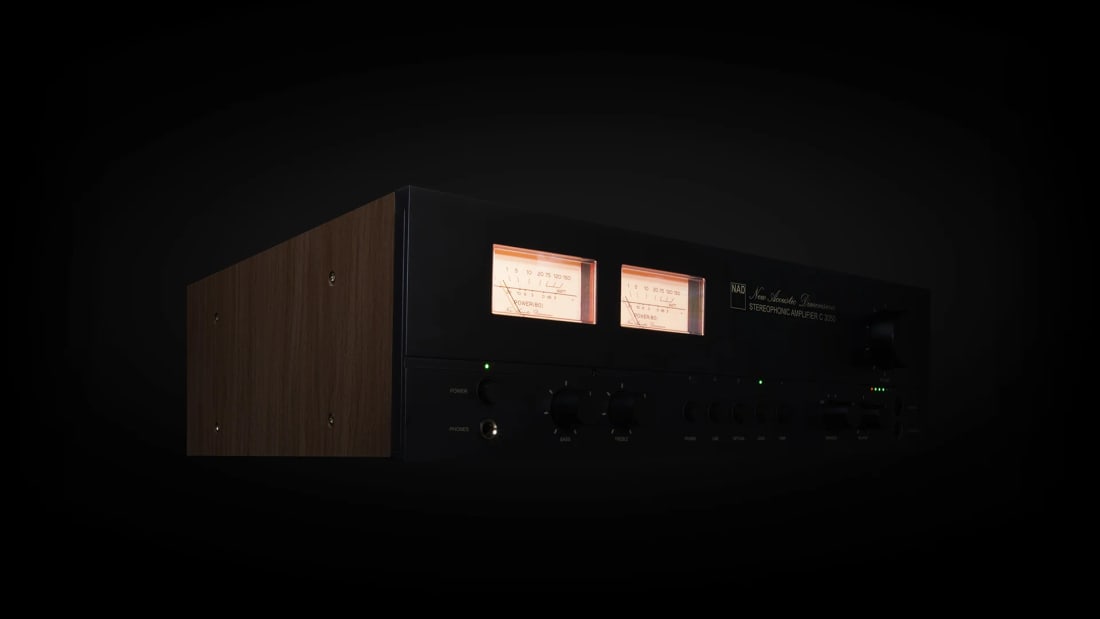
The first is the all-in-one streaming amplifier or streaming integrated, where the DAC chip sits on the same board as the preamp and power amp, inside one chassis. Something like the Naim Uniti Atom (check price) or the NAD C 3050 (check price) works this way. The digital-to-analogue conversion happens right next to the volume control and the amplification stage, so the analogue signal barely travels at all before it's doing useful work.
The second is a separates chain: a network streamer feeding digital out to a standalone DAC, which then feeds analogue into a preamp or straight into a power amp. This is the classic high-end arrangement, and it's where most of the interesting decisions live, because now you've got a digital cable run and an analogue cable run and a question about which box is doing volume control.
The third, increasingly common at the affordable end, is the desktop or near-field setup: a DAC/amp combo like the FiiO K11 (check price) or iFi Audio ZEN DAC 3 (check price), where conversion, volume and amplification are all crammed into one small box sitting thirty centimetres from your ears, with almost no cable run at all in any direction.
Each of these has a different failure mode. None of them is universally "correct."
Why the analogue cable run matters more than people think
Digital signals are robust. A USB or coax digital cable carrying S/PDIF or a USB audio stream is transmitting a stream of ones and zeros with error correction or at minimum a well-defined clock recovery process, and a metre of decent cable versus five metres of decent cable is not going to audibly change what arrives at the DAC chip. This is one of the genuine hi-res myths worth killing off directly, and I've made the case in more detail in bit-perfect and PCM vs DSD: the data either arrives correctly or it doesn't, and modern digital transmission almost always gets it right up to sensible cable lengths. Analogue is a different animal entirely. Once the DAC has done its job and you've got a continuous voltage waveform running down an interconnect, that cable is now an antenna, a low-pass filter, and a potential source of induced hum, all depending on its length, shielding and the impedance it's terminated into. A short analogue run into a nearby power amp is close to a non-issue. A long unbalanced analogue run across a rack, near mains cabling, into a preamp with mediocre input impedance, is where you start losing top-end sparkle and picking up noise you can't easily diagnose. This is the actual argument for keeping DAC and amplification close together, or for using balanced XLR analogue connections when the run has to be long. It's got nothing to do with the DAC chip's resolution and everything to do with basic cable physics.
Digital volume control is not free, and it matters where it sits
A lot of separates DACs, and most streaming integrateds, offer a digital volume control in the DAC itself, letting you skip a preamp stage entirely and run straight into a power amp. It's convenient and it measures well on paper — but only within a certain window. Digital volume attenuation works by scaling down the bit values before the conversion happens, and every step down from full scale throws away resolution. At -10dB you're still using most of the DAC's native resolution. At -40dB, on a garden-variety 16 or even 24-bit implementation, you're throwing away enough bits that the noise floor relative to the signal gets audibly worse, particularly on quiet, dynamic material. The practical fix is simple and almost nobody does it: set your system gain structure so your DAC's digital volume sits somewhere in the top third of its range at normal listening levels, rather than running a hot output into a heavily attenuated preamp or power amp input. If you find yourself always listening with the DAC's volume down around -35dB or lower, that's usually a sign the output level is mismatched to the rest of the chain, not that you've found your ideal listening volume. I'd rather see people run the DAC closer to unity and use the amplifier's own gain or input trim to get to a sensible listening level. This is a boring fix, but it's one of the few in this whole conversation that's actually free.
Where the streamer, DAC and preamp should physically live
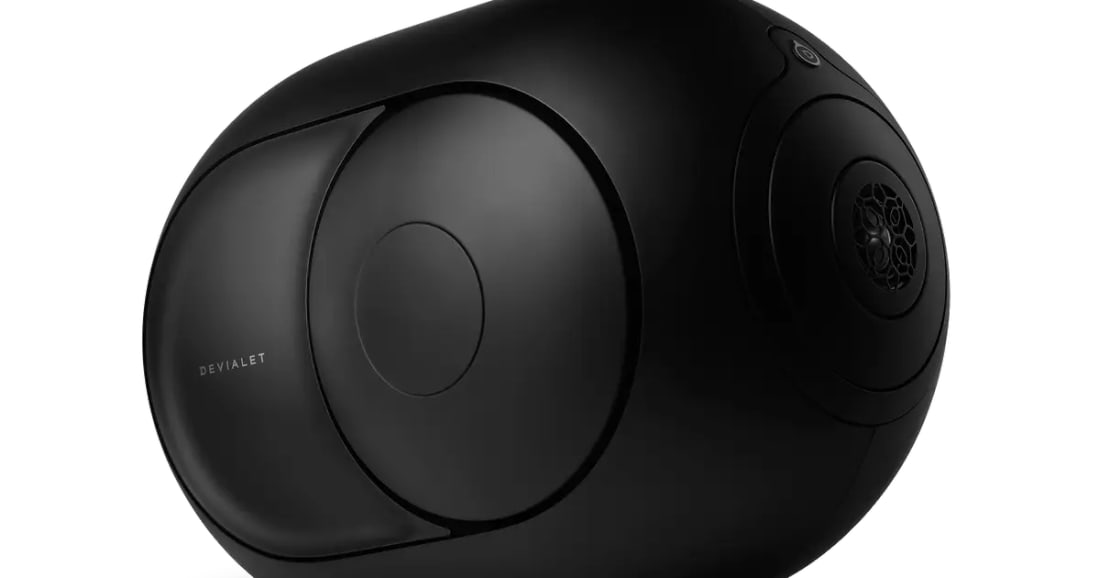
If you're building separates, my honest preference — and this is the mildly contrarian bit, because plenty of retailers will sell you six metres of premium interconnect and call it an upgrade — is to physically locate the DAC as close to the power amp or active speakers as the room allows, and treat the digital cable run (Ethernet, USB, or coax/optical from streamer to DAC) as the long leg of the journey, not the analogue leg. Ethernet in particular doesn't care about length up to 100 metres under the Cat5e/Cat6 spec; you can run your streamer wherever the router and rack furniture make sense and keep the DAC-to-amp cable short. This is part of why I think the "streamer feeding a DAC feeding active speakers" arrangement, which I've covered when writing about streaming amplifiers and all-in-one systems, is underrated for anyone not chasing a full separates rack. Products like the Devialet Phantom I 103 dB (check price) collapse DAC, amplification and speaker into one enclosure, which sidesteps the whole analogue cable question because there effectively isn't one of any meaningful length. It's not the "purist" answer, but it measures cleanly and it removes an entire category of setup mistakes.
USB, network streaming, and where the real bottleneck sits
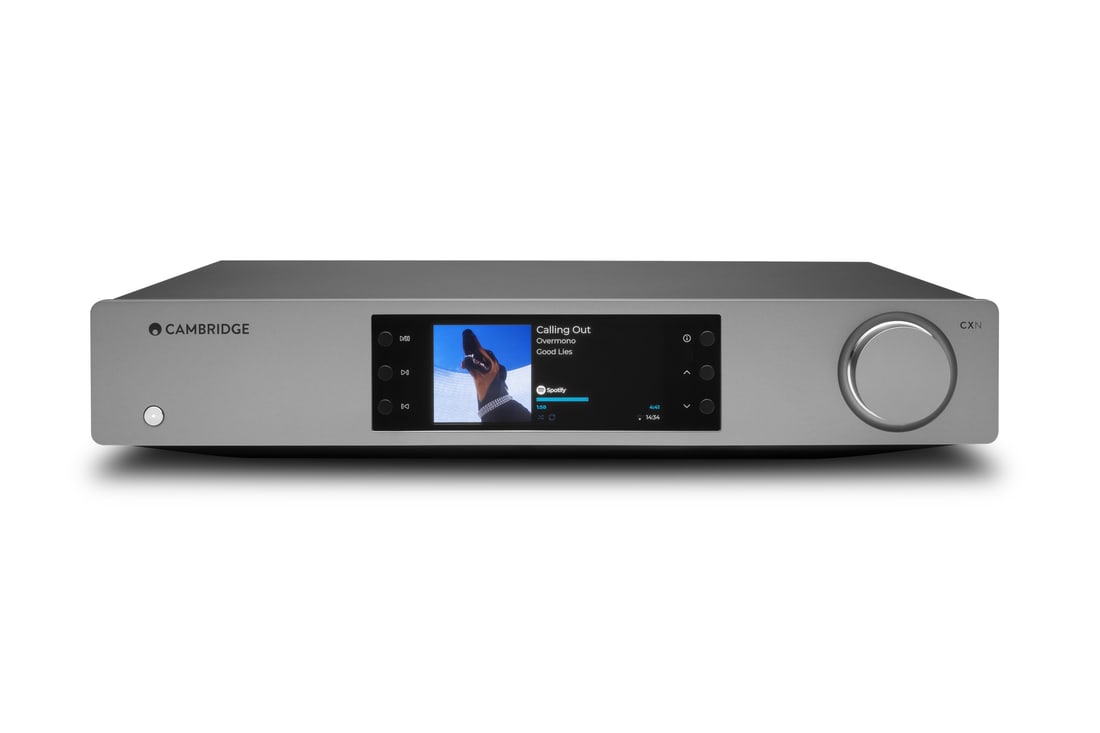
None of this changes if your source is a USB stick off a laptop, a Roon endpoint, or a dedicated streamer like the WiiM Ultra (check price) or Cambridge Audio CXN100 (check price). The transport matters for jitter in theory, but in practice, modern asynchronous USB implementations — where the DAC's own clock governs data transfer rather than the source's — have made transport-induced jitter close to a non-issue on any competently engineered DAC built in the last decade. I've gone through this in more detail in USB audio drivers and async transfer, and the short version is that the DAC's own reclocking, not the cable or the source computer, does the heavy lifting. Where placement genuinely bites on network streaming is Wi-Fi versus wired Ethernet to the streamer itself, not the DAC-to-amp leg. A congested 2.4GHz Wi-Fi connection can introduce dropouts on high-bitrate or DSD streams in a busy household, which has nothing to do with your ISP's plan speed and everything to do with local network congestion — a point I've made at length in relation to streaming resolution and bandwidth. If your rack lets you run a physical Ethernet cable to the streamer, do it, and keep the Wi-Fi as backup rather than the primary path.
A worked example from a reader's rack
Back to that reader's photo. His chain was: streamer in the study, six metres of unbalanced interconnect running down a hallway to a separate DAC near the amp, then a short balanced run into a Marantz Model 40n (check price)-style integrated. The long run was on the wrong side of the conversion — six metres of analogue cable carrying an already-converted signal past household wiring, when it could have been six metres of digital coax or an Ethernet run instead, with the DAC sitting right next to the amp doing a two-centimetre analogue handoff. We swapped it: streamer stayed in the study, a long digital coax ran to the DAC now sitting on the amp's shelf, and the analogue path shrank to almost nothing. No new equipment, no chip upgrade, and a noticeably quieter noise floor and tighter top end on his stand-mounts. He'd assumed the improvement, when he heard it, meant his old interconnect was "bad." It wasn't bad. It was just doing the wrong job in the wrong place.
What actually to do with your own rack
If you're assembling a system from scratch, decide the DAC's physical position before you buy cable, not after. Keep the analogue leg — DAC to preamp, or DAC to power amp — as short as sensibly possible, and push any long cable runs onto the digital side of the conversion, where length is nearly free. Set your gain structure so digital volume controls sit high in their range rather than heavily attenuated. And if you're choosing between a streaming integrated and a full separates stack, be honest about whether you actually need the separates flexibility, because collapsing DAC and amplification into one chassis removes an entire category of cabling mistakes before you've even made them. None of this is about chip specs or hi-res file formats. It's plumbing, and like most plumbing, it only gets attention once something's leaking.
Common questions
- Does a longer analogue interconnect actually make an audible difference?
- Beyond a couple of metres, yes, it can — mostly through increased susceptibility to induced noise and high-frequency roll-off, not through some mysterious loss of detail. Balanced XLR cabling is far more resistant to this than unbalanced RCA over longer runs, so if you can't shorten the cable, switch to balanced if your gear supports it.
- Should I use my DAC's digital volume control or a separate preamp?
- Either can work well, but digital volume loses resolution as you attenuate further from full scale. If you're routinely running the DAC's volume below about -30dB to reach comfortable listening levels, your gain structure is mismatched and you'll get a cleaner result from adjusting output level upstream or adding a passive/active preamp stage.
- Does Ethernet cable length or quality affect sound quality to a streamer?
- No, not within normal home lengths. Ethernet is a data protocol with error checking; a correctly received packet sounds identical regardless of cable brand. Focus cable spend on the analogue side of your chain instead, where physical signal integrity actually varies with length and shielding.
- Is a streaming integrated amp a worse choice than DAC-plus-amp separates?
- Not inherently. Integrating the DAC and amplifier in one chassis removes the analogue cable run almost entirely, which sidesteps several of the placement issues in this piece. Separates give you more flexibility to upgrade individual pieces later, but only if you get the cabling and gain structure right.

Hi, I'm Hannah. Speakers are my thing — specifically, the conversation between a speaker and the room it's in, which is where most systems are won or lost. I did acoustics at uni and never quite got it out of my system. I'll measure your room's bass response and then gently break the news that the $20,000 speakers aren't the problem, the untreated wall behind your sofa is. Stand-mounts on good stands are criminally underrated and I will die on that hill.
Acoustics background; loudspeaker and room-treatment specialist
More from Hannah Reid
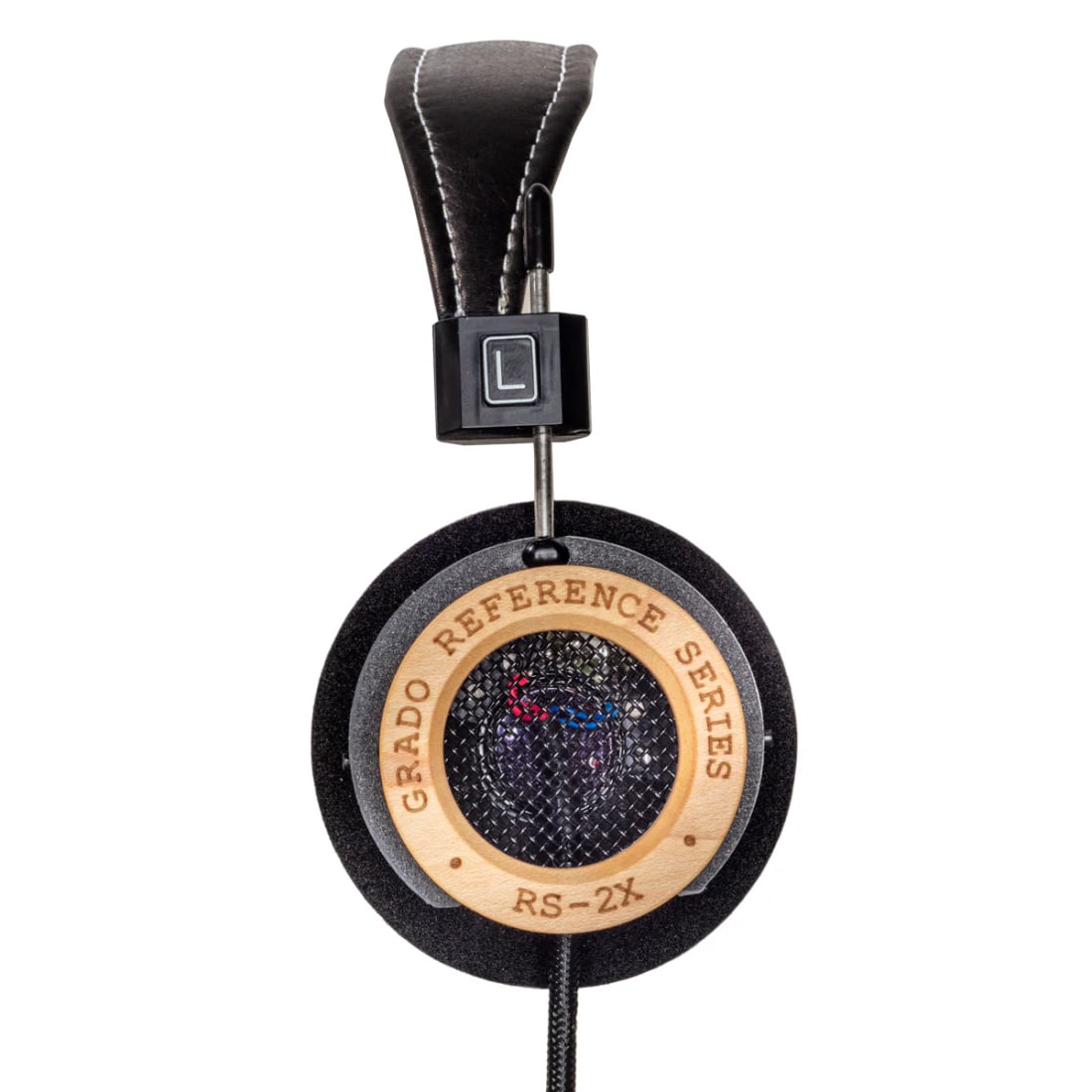 Headphone stands and hooks: the desk accessory that changes your soundHeadphone stands aren't just tidy storage. How you park your cans between sessions affects driver life, cable strain and even headband fit.
 First reflections: finding them, and what to actually do about themThe mirror trick still finds first reflection points better than any app. Here's how to locate them and what treatment actually earns its keep.
- Headphone soundstage: why some pairs sound "wide" and others don'tSoundstage in headphones isn't magic or marketing. It comes from crossfeed, driver geometry and pad depth — here's what's actually happening and what you can change.
- Turntable wall shelves versus stands: what actually kills footfall bassFootfall bass in vinyl playback usually isn't the turntable's fault. It's the floor. Here's how to work out whether a wall shelf or a proper stand fixes it.
 Why your amplifier struggles below 4 ohms (and when to actually worry)Impedance dips scare buyers more than they should. Here's how to read a speaker's impedance curve and match it to an amp that won't run out of puff.
- Subwoofer placement: the crawl test still beats any appRoom-correction apps are handy, but the old carpet-crawl method still finds the seat-by-seat bass problems software glosses over.