First reflections: finding them, and what to actually do about them
Last month I sat in a client's lounge room on Kooyong Road in Armadale, in front of a pair of standmounts that had cost more than my car, and watched the owner nod along to a mix he'd heard a hundred times sound subtly wrong. Not bad. Just smeared, like the image had a light fog over it. The speakers were fine. The room wasn't talking to itself properly, and the culprit was sitting eighteen centimetres off the side wall, doing nothing about the sound bouncing straight past it into his ear half a millisecond after the direct signal arrived.
That's a first reflection problem, and it's the single most cost-effective thing you can fix in a domestic listening room. Not because it's the biggest acoustic issue — bass modes usually are — but because the fix is cheap, fast, and the improvement is genuinely audible to anyone, not just people who've spent a decade doing critical listening for a living.
What a first reflection actually is
When a speaker fires sound into a room, your ear receives two versions of almost everything. The direct sound arrives first, in a straight line from the driver. A fraction of a second later, sound that bounced off the nearest side wall, ceiling, or floor arrives too, having travelled a slightly longer path. That reflected version is called the first reflection because it's the first bounce to reach you, before the sound has had time to bounce around the whole room and turn into general reverberation.
The problem isn't that reflections exist. Every real room has them, and a completely reflection-free room sounds sterile and unnatural, which is why professional mastering suites go to a lot of trouble to control reflections rather than eliminate them entirely. The problem is timing and level. When a strong reflection arrives within about 10 to 20 milliseconds of the direct sound, your brain doesn't hear it as a separate echo — it hears it as smearing, a softening of transients, a blurring of the stereo image. Handclaps lose their snap. Vocal centre images get wide and vague instead of pinned in place. Cymbals sound splashy rather than detailed.
This is distinct from room modes, which are a bass phenomenon caused by standing waves at wavelengths that fit the room's dimensions. First reflections are a midrange and treble phenomenon, and they behave more like a mirror than a spring. That distinction matters because the fixes are completely different — you don't treat first reflections with a bass trap, and you don't fix a 45Hz null with a foam panel on the side wall, no matter what the box says.
The mirror trick, and why it still beats the apps
Every measurement app on the market will happily give you a waterfall plot and tell you something is wrong. None of them will tell you exactly where on the wall to put a panel, because that depends on the geometry of your specific chair, your specific speakers, and your specific room — not a generic average.
The old trick still works better than anything digital I've tried: sit in your listening chair, have a mate hold a mirror flat against the side wall, and slide it along the wall while you watch. The exact point where you can see the reflection of the tweeter in the mirror from your seated position is the exact point sound is bouncing off that wall and into your ear. Mark it. Do the same on the ceiling, the floor if it's hard surfaced, and the opposite side wall for the other speaker. You'll usually find four to six points that matter: two side wall points, a ceiling point, sometimes a floor point, and occasionally a rear wall point behind the listening position if the room is small.
I still do this on every acoustic consult I run, including the six-figure systems, because it takes ten minutes and it's more accurate than modelling software for this specific job. It's also the kind of thing an app genuinely can't replace — you need the actual ears, in the actual chair.
What to put there, and what not to bother with
Once you've found the points, the treatment itself is unglamorous. A reasonably dense open-cell foam or mineral wool panel, at least 5 to 10cm thick, covering roughly 60cm square at each reflection point, will absorb the mid and high frequencies responsible for most of the smearing. Thinner egg-crate foam sold as "acoustic panels" in bulk packs does very little below about 1kHz — it looks the part in photos and does almost nothing for the frequencies that actually matter for imaging. If you're buying treatment, check the published absorption coefficient data (NRC rating) rather than trusting the marketing photo. A panel with an NRC around 0.8-1.0 at 2-3cm effective thickness with an air gap behind it is doing real work; a thin foam tile with no NRC data quoted at all usually isn't.
Diffusion is the other option at these points, and it's the one I'd argue is underused in Australian lounge rooms specifically because most people don't have a spare wall to dedicate to it. A quadratic residue diffuser scatters the reflection in time and direction rather than absorbing it outright, which keeps the room feeling more alive. For a formal two-channel room I'd generally still start with absorption at the first reflection points and consider diffusion for the rear wall behind the listening seat, where you want to break up slap echo without deadening the room completely.
One thing I'll say that puts me slightly at odds with some of the acoustic treatment sellers: you don't need to treat every reflection point to hear a real improvement. If you can only afford or fit two panels, do the side walls first. That's where the ear-level reflection does the most damage to stereo imaging, and it's usually the cheapest to sort because most side walls are bare and accessible, unlike ceilings.
Why this matters more on stand-mounts than floorstanders
I've banged on before about why stand-mounts on proper stands punch above their price, and first reflections are part of why the room work pays off disproportionately on this class of speaker. A well-designed stand-mount like the KEF LS50 Meta (check price) or the Bowers & Wilkins 705 S3 (check price) is built around a tight, coherent driver array that images precisely when the room lets it. Feed that speaker a clean first-reflection zone and you hear exactly what the designer intended — a tight, stable centre image and real depth. Feed it a bare plasterboard wall at ear height and you're throwing away a chunk of what you paid for.
Floorstanders aren't immune, but their reflection geometry is often more forgiving simply because the drivers are spread across a taller baffle and the ceiling reflection path changes. Stand-mounts, sitting at a fixed height with a compact, point-source-like driver array, are more sensitive to exactly this kind of treatment. It's one of the reasons a $1,500 stand-mount in a treated room will often out-image a $4,000 stand-mount in an untreated one, which is an uncomfortable thing to tell people who've just spent the money on the wrong end of the problem.
Where room correction fits, and where it doesn't
I get asked constantly whether software-based room correction — the convolution-based systems I've covered previously — makes physical treatment redundant. Short answer: no, and the physics explains why. Digital room correction, whatever the implementation, works primarily in the frequency domain. It's very good at flattening a frequency response that's been distorted by room modes and reflections combining at the listening position. What it generally can't do is un-smear a transient that arrived twice, once direct and once reflected, because by the time both copies hit the microphone the timing information the correction engine needs is not simply "boost this frequency, cut that one." Room correction can improve the tonal balance in a poorly treated room. It's much less effective at recovering image precision and transient clarity, which is fundamentally a timing problem, not a level problem.
My rule of thumb, and I'll admit this is a personal one rather than a universal law: fix the first reflections and the worst bass modes acoustically first, then apply digital correction to clean up what's left. Reverse that order and you're asking software to compensate for a physical problem it's not well suited to solving, and you'll often hear artefacts in the correction filter itself as a result.
A practical order for a real lounge room
If you're starting from nothing, I'd sequence it like this. Sort speaker and seating position first, because moving furniture is free and changes everything else. Run the mirror test from your actual listening seat once the layout is settled. Treat the side-wall first reflection points, then the ceiling point if you can manage it aesthetically — a lot of Australian rooms have exposed beams or bulkheads that make ceiling treatment awkward, and that's fine, it's the lowest-priority point of the four anyway. Then step back and listen before you spend another cent. Only after that would I look at bass trapping in corners, which is a separate and honestly bigger job that deserves its own budget line.
None of this requires touching your amplifier or your source. It's genuinely the cheapest meaningful upgrade available to most systems, and it's evergreen advice — the physics hasn't changed and won't. AS ISO 3382, the standard that governs how we measure reverberation time in rooms, has been around for exactly the same reason: because reflection behaviour in an enclosed space follows predictable rules, not trends.
When you should call someone in
The mirror test and a couple of panels will get most rooms 80% of the way there for the cost of an afternoon and a modest outlay. Where I'd suggest bringing in someone with a measurement microphone is if you've done the obvious treatment and something still feels off, or if you're building a dedicated room from scratch and want to get bass trap placement right before the plasterboard goes up — that's a much cheaper time to solve it than after. If you're pairing serious stand-mounts with a system worth protecting, it's also worth reading up on how speaker choice and room work interact before you spend more on the electronics than the room can currently reveal.
The client on Kooyong Road, for what it's worth, ended up with two panels and a rug over his hardwood floor. He rang me a week later slightly annoyed that something so unglamorous had made that much difference. Fair enough — I'd be annoyed too, if I'd spent five figures on speakers before anyone told me about the wall.
Common questions
- How many first reflection points do I actually need to treat?
- Most rectangular rooms have four main points worth treating: two side walls at ear height, a ceiling point, and sometimes a floor point if it's hard-surfaced. Start with the side walls, they usually do the most audible work for the least cost.
- Do thin foam tiles from a hardware store do anything useful?
- They'll take the edge off very high frequencies but do very little below about 1kHz, which is where most of the smearing that affects imaging happens. Look for published NRC ratings rather than trusting the packaging photo.
- Will room correction software fix first reflections for me?
- Not really. Convolution-based correction is strong at flattening frequency response but doesn't reliably fix the timing-based smearing that reflections cause. Treat the room acoustically first, then apply correction to what's left.
- Does this matter less if I have floorstanding speakers?
- It matters somewhat less because the reflection geometry changes with a taller driver array, but it's not irrelevant. Stand-mounts at a fixed ear-height position tend to be more sensitive to side-wall reflections specifically.

Hi, I'm Hannah. Speakers are my thing — specifically, the conversation between a speaker and the room it's in, which is where most systems are won or lost. I did acoustics at uni and never quite got it out of my system. I'll measure your room's bass response and then gently break the news that the $20,000 speakers aren't the problem, the untreated wall behind your sofa is. Stand-mounts on good stands are criminally underrated and I will die on that hill.
Acoustics background; loudspeaker and room-treatment specialist
More from Hannah Reid
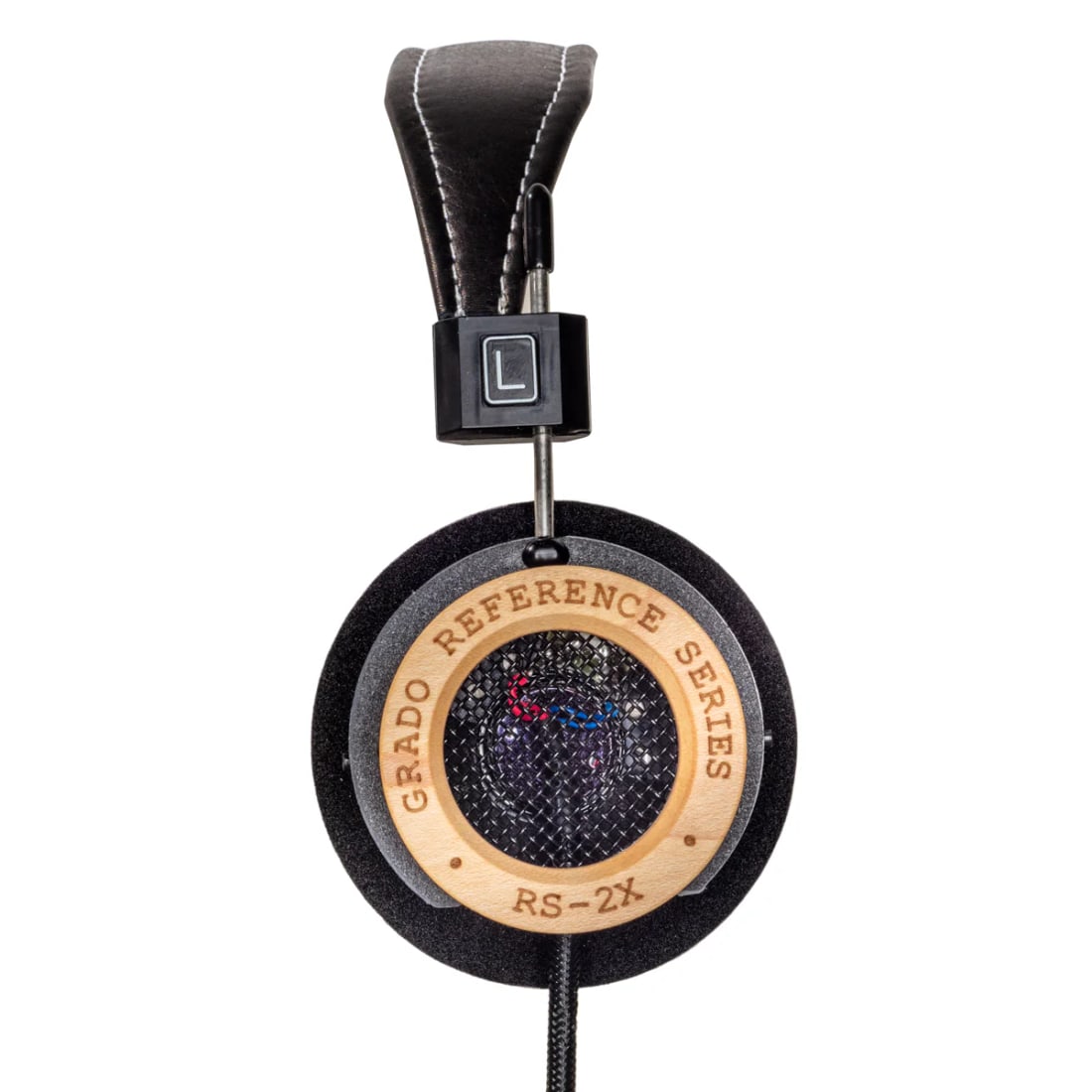 Headphone soundstage: why some pairs sound "wide" and others don'tSoundstage in headphones isn't magic or marketing. It comes from crossfeed, driver geometry and pad depth — here's what's actually happening and what you can change.
- Turntable wall shelves versus stands: what actually kills footfall bassFootfall bass in vinyl playback usually isn't the turntable's fault. It's the floor. Here's how to work out whether a wall shelf or a proper stand fixes it.
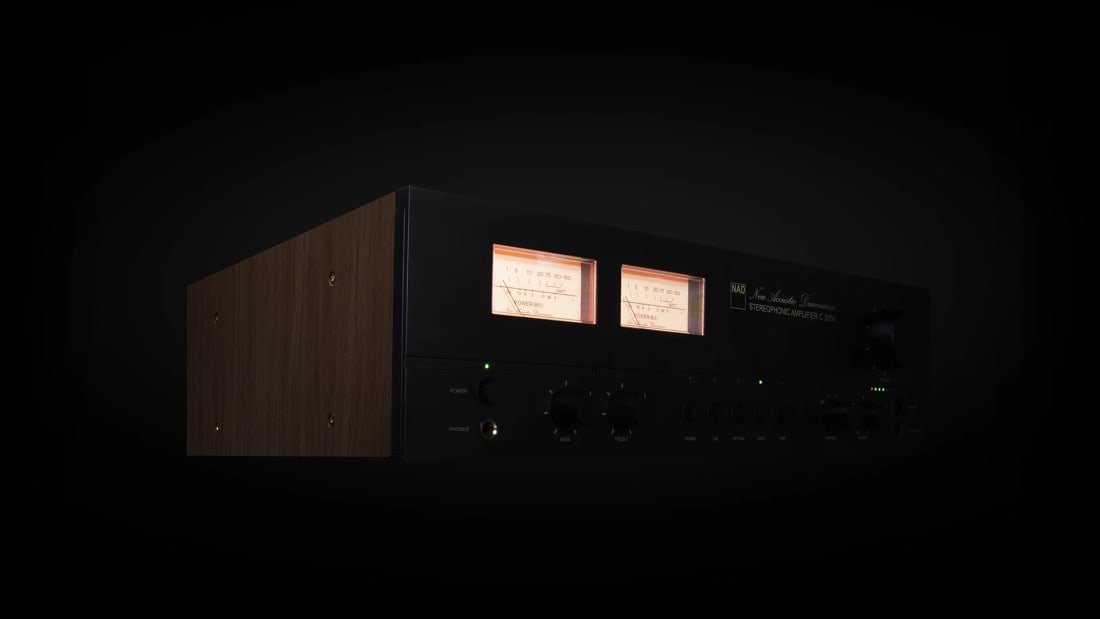 Why your amplifier struggles below 4 ohms (and when to actually worry)Impedance dips scare buyers more than they should. Here's how to read a speaker's impedance curve and match it to an amp that won't run out of puff.
- Subwoofer placement: the crawl test still beats any appRoom-correction apps are handy, but the old carpet-crawl method still finds the seat-by-seat bass problems software glosses over.
- Plinth-to-wall distance: the turntable spec nobody checksWhere you put the turntable on the rack matters as much as the rack itself. Here's how boundary distance and shared surfaces feed feedback into the cartridge.
- Corner bass traps: how many you actually need before diminishing returns kick inTwo traps help, four help more, but the eighth one rarely does much. Here's how to work out where your room's bass treatment budget stops paying off.