Headphone stands and hooks: the desk accessory that changes your sound
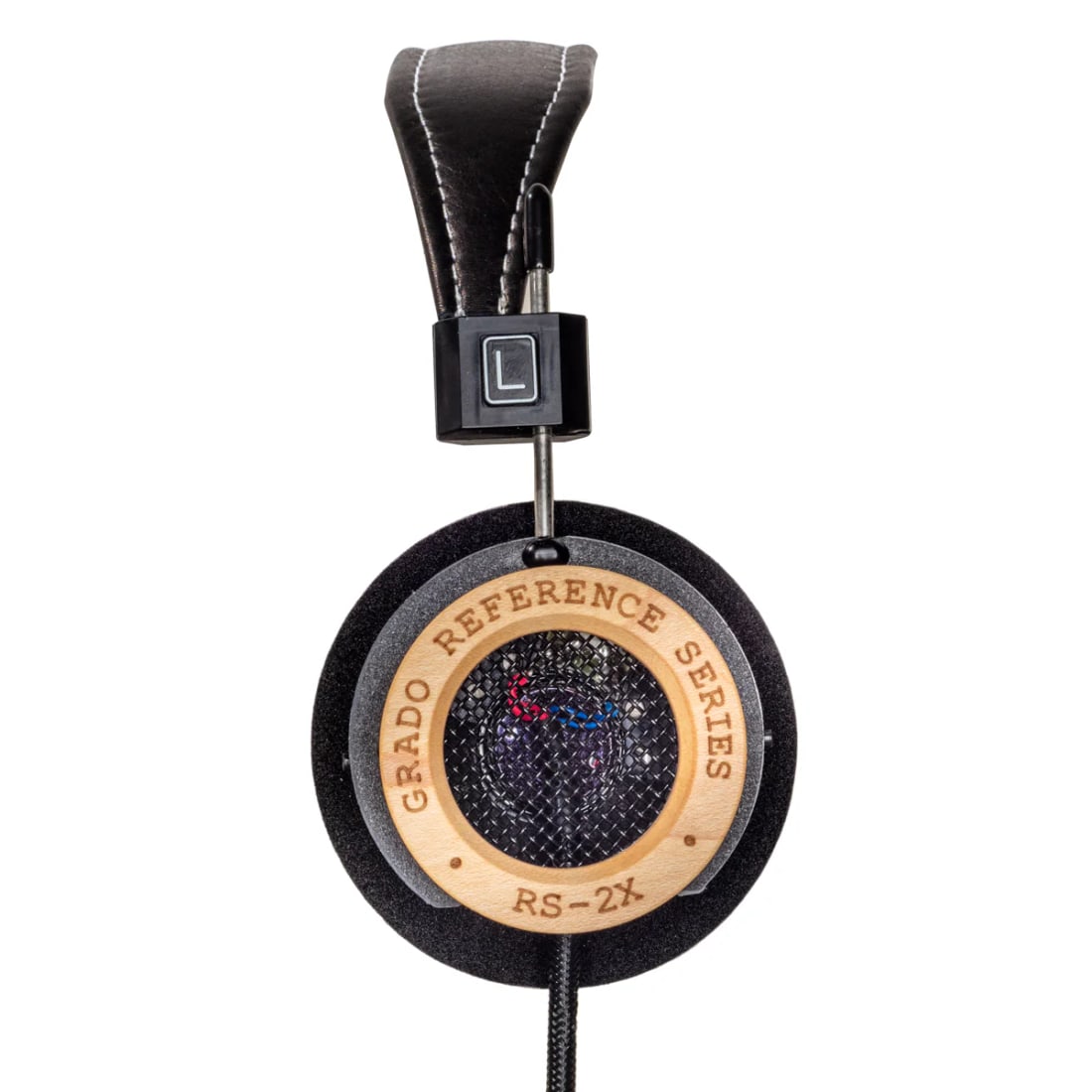
I own four headphone stands I didn't plan to buy. Each one replaced a habit that was quietly doing damage: cans left face-down on a desk, hung by one earcup off a monitor arm, coiled cable under a laptop bag. None of it felt careless at the time. It's only when you measure headband tension or look closely at earpad foam after a year of bad storage that the cost becomes obvious. This is a smaller, cheaper problem than most things I write about, but it's one almost nobody at a desk actually thinks through, and the fixes are so simple there's no excuse not to.
My background is in speakers and rooms, not personal audio, but I share an office with Nell often enough to have absorbed her opinions on headphone care by osmosis, and she's right that this is underrated. A stand is not a style accessory. It's doing three specific jobs: protecting the headband's spring tension, keeping cable strain off the jack and the earcup connectors, and stopping dust and skin oils from building up inside the earpads and grilles in ways that change how the headphone actually sounds over time.
Headband memory and why "face down" is the enemy
Most headphone headbands, whether it's a steel band under leather like a Sennheiser HD 660S2 (check price) or a self-adjusting suspension strap like on many Beyerdynamic and AKG designs, rely on spring tension to hold clamping force. Leave the headphones lying flat on a desk, cups down, band splayed outward, for months at a time, and you're storing that spring in a stretched position indefinitely. Steel does relax under sustained load, a property called creep, and while a quality headband is engineered to resist it for a long time, resting it in the worst possible position every single night doesn't help.
The practical result years down the track is a looser headband, less consistent earpad seal, and for open-back and semi-open designs particularly, a seal change that actually does affect bass response, because the earpad-to-ear seal is doing real acoustic work even on an open-back cup. I wrote about the acoustic consequences of seal and desk environment in our piece on open-back headphones at your desk, and headband sag is one of the mechanical causes that sits upstream of the symptoms described there.
To put a rough number on it: a healthy steel headband on a typical over-ear design exerts somewhere in the order of 4 to 6 newtons of clamping force when new, measured across the two cups. That's not a figure manufacturers publish consistently, so treat it as a ballpark rather than a spec, but it's enough that a 10 to 15 percent drop over several years of poor storage is genuinely audible as a looser fit, not just a comfort niggle. You'll notice it first as the cups shifting slightly when you nod your head, long before you notice any tonal change. By the time the tonal change is obvious, the mechanical damage is already done.
What a stand actually does for the headband
A proper stand, even a basic one, holds the headphone in roughly its worn position, cups hanging naturally under gravity with the band supported from the top. That's close to a neutral rest state rather than a stretched one. It's not going to reverse years of sag, but it stops adding to it.
Cheap wooden or metal "T" stands do this job fine. You don't need the $200 carved oak versions some retailers push, and in my experience in-wall or under-desk hooks work just as well provided the hook radius isn't so tight it kinks the headband arc. A rounded hook, roughly the diameter of a standard coffee mug, is a reasonable rule of thumb. Sharp, narrow pegs sold as generic "hook" hardware from a hardware store are the main thing to avoid; they create a localised bend point rather than distributing the band's natural curve.
Worth saying plainly, since I get asked this a lot: a $25 stand from a general homewares shop does the mechanical job just as well as a boutique $180 one, provided the support radius is right. The expensive versions buy you aesthetics, a weighted base that won't tip under a heavier planar design, and sometimes a nicer cable channel. None of that changes the physics of how the headband rests. If your desk setup is purely functional, spend the money elsewhere in the chain and buy the cheap stand.
Cable strain is the quieter failure mode
The second job a stand does is keep cable weight and strain away from the jack and the earcup connector, which on a lot of modern headphones is a small 2.5mm or proprietary locking connector rather than a hardwired cable. Coil a cable tightly under a laptop bag or let it hang with the full weight of the plug pulling sideways on the jack for a year, and you're the one responsible when that connection gets intermittent or noisy.
This matters more for higher-end gear using balanced cables and premium connectors, the sort of thing you'd pair with a desktop DAC/amp from our best desktop DAC/amps guide, because those connectors are often smaller-gauge and more finicky than the chunky 6.35mm jacks on older gear. A stand with even a basic cable wrap at the base removes this risk almost entirely, and most decent stands include one.
The failure mode I see most often in practice isn't a dead cable, it's an intermittent one: a channel that cuts out when the cable's twisted a certain way, or crackles under slight pressure near the jack. That's usually a cold solder joint or a stressed strain-relief boot, both of which get worse under repeated flexing from a cable that's been yanked sideways every time someone stands up from the desk without unplugging first. A stand doesn't fix a bad joint that's already there, but it stops the flexing that creates one in gear that's currently fine. I've swapped out two cables in the last eighteen months purely because of this, both on headphones that otherwise had years of life left in them.
Earpads, grilles and the slow sound change nobody notices
Here's the part that actually affects sound quality directly rather than just mechanically. Earpads left resting face-down on a desk collect dust, skin oils and whatever's on the desk surface itself, directly into the foam and fabric. Over months this changes pad density and can clog the acoustic venting that many driver housings rely on for their tuned frequency response.
I'd call this a genuinely contrarian opinion among headphone owners: most people treat pad degradation as purely a comfort and hygiene issue, replace-when-gross, and ignore that it's also a measurable acoustic one. A driver tuned with a specific pad thickness and venting assumption will drift from that target as the pad compresses unevenly or gets partially blocked. It's a slow enough change that you adapt to it rather than noticing it, which is exactly the kind of drift that makes an old favourite headphone suddenly sound flat and lifeless when you finally A/B it against a fresh pair.
A stand, cups facing outward or resting naturally rather than pressed into a surface, keeps air moving through the pads and keeps them off anything that can physically clog the grille.
If you want a quick worked example of how much this compounds, think about a desk that also hosts a coffee cup and a bag of chips most afternoons. Dust from a carpeted office floor, skin oil transferred from hands resting near the pads, and crumbs are all finding their way into an earpad lying face-down within reach of all three. Compare that to the same pad hanging on a stand fifteen centimetres above the desk surface, cup facing sideways rather than down. The exposure difference over a year is not subtle. I've pulled grilles off headphones that have lived face-down on a desk for two years and found a felt-like layer of compacted dust sitting directly against the driver mesh, which no amount of gentle brushing fully clears without risking the driver itself.
Where this intersects with open-back designs specifically
Open-back headphones have an added reason to care about storage position. The whole point of the open rear chamber, as Sennheiser's engineering notes describe for the HD series design approach, is letting air move freely in and out of the driver's rear. Store an open-back cup face-down on a dusty desk and you're inviting debris straight into that open mesh with none of the protection a sealed closed-back rear housing would offer.
This is a small, cumulative risk rather than a dramatic one. Nobody's open-backs have died from a week on the desk. But years of it, combined with the headband sag issue above, is a real reason some heavily-used reference headphones in reviewer collections sound audibly different from a fresh retail pair of the same model, something worth knowing if you're ever comparing notes against a published review using a brand-new sample.
The practical fix for open-back owners specifically is cheap: orient the stand so the cups face away from the desk surface and any airflow from a nearby air-conditioning vent, which carries its own fine dust. It sounds fussy written down, but it's a once-off decision when you first set the stand up, not an ongoing chore.
The desk-space argument people underrate
Beyond preservation, there's a straightforward ergonomic case. A stand gets the headphones up off the desk surface entirely, out of the way of keyboard, mouse and the inevitable coffee cup. I've watched more than one decent pair of cans get a drink spilled directly into an earcup because they were lying flat next to a keyboard rather than hanging six inches above it. That's not a subtle acoustic argument, that's just common sense, but it's the reason half of Nell's headphone stand recommendations exist in the first place.
If you're building out a proper desktop rig, the stand is genuinely one of the cheapest, lowest-risk purchases in the whole chain, well behind getting your DAC and amp pairing right or sorting your headphone isolation against room noise, but ahead of most cable upgrades in terms of actual, measurable benefit per dollar spent.
What to actually look for when buying one
Skip anything with a narrow metal peg under about 40mm diameter; it's a headband stress point waiting to happen. Look for a rounded support, ideally with a slight downward curve matching a typical headband arc, and weighted or clamped base if you're using heavier over-ear designs like an Audeze LCD-X (check price) or similar planar, since top-heavy headphones on a light stand will tip. A cable channel or small hook at the base is a nice-to-have rather than essential, but it does stop the cable-strain problem entirely if you use it consistently.
Under-desk clamp mounts are worth considering if desk space is genuinely tight, they free up the surface entirely, though you do want to check the clamp doesn't interfere with keyboard tray mechanisms or monitor arm clamps already occupying that same desk edge. The Wikipedia overview of headphone construction is a reasonable primer if you want to understand headband material choices, steel-band suspension versus self-adjusting strap, before deciding how fussy you need to be about storage.
A rough setup checklist I'd actually follow: measure the support diameter before buying, not after, since online product photos make most hooks look rounder than they are in hand. Sit the headphone on the stand and check the band's resting curve looks natural rather than kinked at the support point. If you're mounting under a desk, test clearance with the headphones on the stand and a chair pushed all the way in, because the collision point is almost always at knee height rather than head height. And if you own more than one headphone, don't crowd two onto a single narrow stand; the second pair usually ends up hanging at an angle that stresses one side of the band more than the other.
None of this is going to transform your listening the way a better amp or a room fix will. But it's a five-minute decision that protects a few hundred, sometimes a few thousand, dollars of gear from a slow, cumulative decline that most owners never trace back to the real cause. I'd rather spend the money on a stand than on replacement earpads two years early.
— Hannah Reid, Loudspeakers & Acoustics Editor, Sound Technology
Common questions
- Does a headphone stand really affect sound quality, or is it just about tidiness?
- Mostly it's about preservation rather than immediate sound quality. Storing headphones badly over months or years can cause headband sag, which loosens earpad seal, and can let dust clog earpad foam and driver venting, both of which gradually shift the tuned sound away from what the headphone was designed to deliver.
- Is an under-desk hook as good as a proper stand?
- Yes, provided the hook has a rounded radius similar to a standard mug, roughly 40mm or more, rather than a narrow peg. A narrow hook creates a localised stress point in the headband arc rather than supporting its natural curve.
- Do open-back headphones need more careful storage than closed-back ones?
- A little, yes. The open rear chamber that gives open-back headphones their airy sound also leaves the driver more exposed to dust if the cups are left face-down on a desk. Closed-back designs have a sealed rear housing that offers some natural protection.
- Will a stand fix headphones that are already sagging or loose?
- No. A stand prevents further sag by holding the headband in a near-neutral position, it won't reverse spring tension that's already relaxed from months or years of poor storage. For older headphones with noticeable headband sag, some manufacturers sell replacement headband assemblies.

Hi, I'm Hannah. Speakers are my thing — specifically, the conversation between a speaker and the room it's in, which is where most systems are won or lost. I did acoustics at uni and never quite got it out of my system. I'll measure your room's bass response and then gently break the news that the $20,000 speakers aren't the problem, the untreated wall behind your sofa is. Stand-mounts on good stands are criminally underrated and I will die on that hill.
Acoustics background; loudspeaker and room-treatment specialist
More from Hannah Reid
 First reflections: finding them, and what to actually do about themThe mirror trick still finds first reflection points better than any app. Here's how to locate them and what treatment actually earns its keep.
- Headphone soundstage: why some pairs sound "wide" and others don'tSoundstage in headphones isn't magic or marketing. It comes from crossfeed, driver geometry and pad depth — here's what's actually happening and what you can change.
- Turntable wall shelves versus stands: what actually kills footfall bassFootfall bass in vinyl playback usually isn't the turntable's fault. It's the floor. Here's how to work out whether a wall shelf or a proper stand fixes it.
 Why your amplifier struggles below 4 ohms (and when to actually worry)Impedance dips scare buyers more than they should. Here's how to read a speaker's impedance curve and match it to an amp that won't run out of puff.
- Subwoofer placement: the crawl test still beats any appRoom-correction apps are handy, but the old carpet-crawl method still finds the seat-by-seat bass problems software glosses over.
- Plinth-to-wall distance: the turntable spec nobody checksWhere you put the turntable on the rack matters as much as the rack itself. Here's how boundary distance and shared surfaces feed feedback into the cartridge.