Toe-in angle: the free speaker upgrade nobody bothers measuring
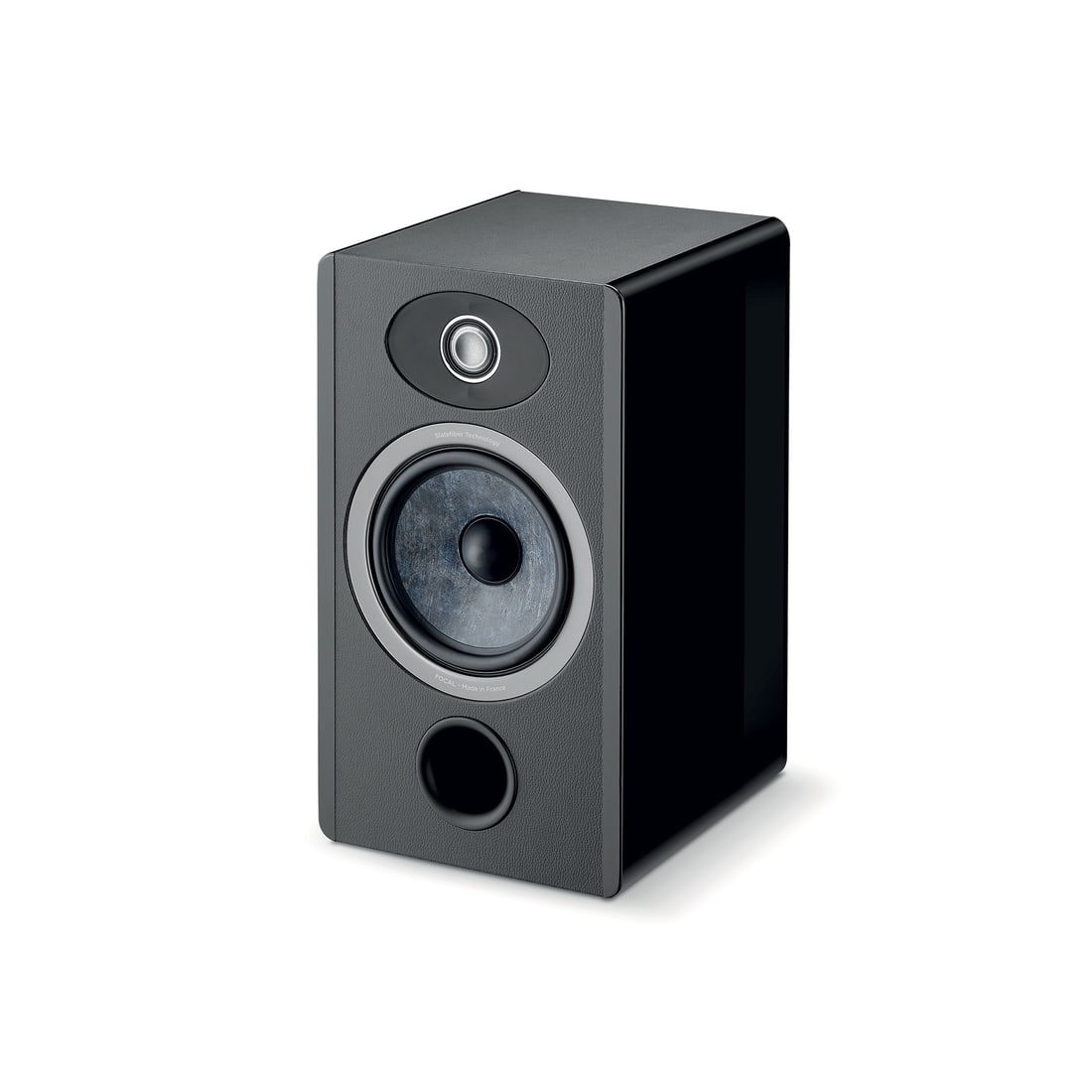
I was in a client's living room off Barkly Street in Footscray a few months back, standing behind a pair of stand-mounts that were, on paper, excellent. Good drivers, sensible cabinet, well-reviewed. They sounded thin, a bit hard in the top end, and the vocal was smeared half a metre wide instead of sitting where it should. Twenty minutes with a laser and a tape measure later, nothing had changed except the toe-in angle. Same speakers, same room, same amp. Completely different presentation. The client's response was something close to disbelief, and to be honest, I still get a small thrill out of that reaction even after years of doing this.
Toe-in — the angle at which you rotate your speakers inward toward the listening position — is the cheapest, fastest, most consequential adjustment in the entire hi-fi hobby, and almost nobody spends real time on it. People will drop four figures on a cable and skip the fifteen minutes it takes to get their speaker angle right. I understand the psychology; angle doesn't feel like an upgrade because you didn't buy anything. But the resulting change to tonal balance and stereo imaging is often larger than what separates a good speaker from a great one at the same price point.
What toe-in actually does to the sound you hear
Every speaker has an off-axis response that differs from its on-axis (straight-ahead) response, usually quite a lot above 2-3kHz where the tweeter starts to beam. Point the speaker straight at you and you get the full on-axis treble energy, which on some designs is bright or forward. Angle it away and you're hearing more of the off-axis roll-off, which softens the top end and changes the relationship between direct sound and the sound reflecting off your side walls.
This is why the exact same speaker can sound "warm and laid-back" in one room and "aggressive and shouty" in another — often the difference isn't the room's reverberant character at all, it's that one owner toed the speakers in hard and the other left them facing straight ahead. I see this constantly with speakers that have a slightly hot tweeter on-axis; toe-in is frequently the fix, not a return trip to the shop.
The imaging effect is separate but related. Toe-in controls how much your ears hear the direct sound from each speaker versus the early reflection off the nearest side wall. Too little toe-in (speakers firing straight ahead, parallel to each other) and the stereo image tends to widen and lose centre-fill — vocals smear, the soundstage gets vague at the edges. Too much toe-in (speakers aimed to cross well in front of the listening seat) and you get a hyper-focused, narrow image with an exaggerated centre and a soundstage that collapses inward, sometimes with an odd hole-in-the-middle effect if you sit off-axis.
Where to actually start the adjustment
Forget the manufacturer's diagram in the box — it's a generic starting point, not a room-specific answer. I start every setup with speakers angled so their axes cross just behind the listener's head, not directly at the seat. That's a slightly more conservative toe-in than a lot of forum wisdom suggests, and it works for most two-way stand-mounts with a moderately directional tweeter. From there I adjust by ear and by measurement, moving in increments of maybe five degrees at a time.
The room's side-wall distance matters as much as the angle itself. If your speakers sit close to side walls (say, under a metre) the first reflection arrives sooner and louder, so you generally want more toe-in to reduce how much of that reflected treble energy reaches your ears. Speakers pulled well into the room, three-quarters of a metre or more from the nearest side wall, can often run with less toe-in because the reflection is already delayed and attenuated by distance. This is one reason two identical speakers in two different rooms need genuinely different angles — it's not a personal preference thing, it's physics responding to your specific boundary distances. If you haven't sorted basic boundary distance yet, that's worth doing before you fine-tune angle; I've written about it separately because the two interact constantly.
The straight-ahead camp isn't wrong, either
I'll admit a mild bias upfront: I lean toward more toe-in than a lot of my colleagues, because I prioritise imaging precision over a wide, diffuse soundstage. But there's a legitimate school of thought — and some genuinely excellent speaker designs — built around firing straight ahead or with only a few degrees of angle, relying on wide, even off-axis dispersion to fill the room with reflected energy and create a big, enveloping stage rather than a pinpoint one. Some wide-baffle and dipole-adjacent designs are voiced with this in mind, and forcing heavy toe-in onto them actually breaks the intended balance because you're throwing away exactly the off-axis energy the designer was counting on.
The practical takeaway: check what your speaker's dispersion pattern is actually like before assuming steep toe-in is the answer. A narrow, well-controlled waveguide tweeter (common on a lot of modern stand-mounts, including several in our standmount speaker roundup) tends to reward more toe-in because its off-axis response drops away cleanly rather than misbehaving. A speaker with a wide, shallow baffle and less tweeter control often sounds more natural with less.
A simple way to find your own sweet spot
You don't need lab gear for this, just patience and a track you know intimately. I use a vocal-forward recording with a well-defined centre image — something acoustic, minimal production, so smearing and hardness are obvious rather than masked by a busy mix. Sit in your actual listening seat, not standing behind it pretending you're seated.
Start with speakers close to parallel, firing straight down the room. Note where the vocal sits and how wide or vague the image feels. Then add toe-in in small steps, listening after each adjustment for three things: does the vocal tighten and move to true centre, does the top end get harder or softer, and does the stage width start to collapse. There's a point — and it's genuinely audible, not subtle — where the image locks into focus and the tonal balance stops sounding thin or shouty. Push past that point and you'll hear the stage start to narrow unpleasantly and the sense of air disappear. That narrow window, usually only five or ten degrees wide, is where you want to land.
It's worth doing this exercise with the lights on and a genuine tape measure rather than eyeballing it, because asymmetry between the two speakers' angles is more audible than most people expect and very easy to introduce by accident once you're nudging cabinets around by feel.
Where toe-in and speaker format collide
Floorstanders complicate this because you're often dealing with more than one tweeter-height driver array, and the taller cabinet interacts with your seated ear height differently than a stand-mount on a proper stand does. I've covered the standmount-versus-floorstander decision itself elsewhere, but on the toe-in question specifically: floorstanders with a narrower baffle and a well-controlled tweeter behave much like stand-mounts and respond well to the same process. Wider-baffle floorstanders, and anything with a co-axial or wide-dispersion driver array, often want less toe-in than instinct suggests.
Stand height and rake also change the effective toe-in geometry, because tilting a stand-mount slightly forward or back on its stand shifts the vertical axis relative to your ears, which in turn changes how the horizontal toe-in interacts with dispersion. If you're using stands with adjustable spikes or shims, it pays to check that both speakers are tilted identically — I see mismatched rake far more often than I see mismatched toe-in, and it produces a similar-sounding problem that people then misdiagnose as an amp or cable issue.
When toe-in reveals a bigger room problem
Sometimes you do the whole process properly and there's still no angle that resolves things — the image stays vague at every setting, or the tonal balance stays harsh no matter how much you rotate the cabinets. That's usually the point where toe-in has done its job of exposing rather than fixing a genuine room issue: a hard, untreated side wall producing a reflection so strong that no reasonable angle tames it, or a listening position sitting inside a room mode that's colouring the midrange regardless of speaker orientation. In those cases the fix isn't more angle, it's a reflection point treatment panel on the side wall, or moving the listening seat, or in the worst cases accepting that the room itself needs acoustic attention before the speakers can be judged fairly.
That's the conversation I end up having most often with clients, and it's rarely a popular one. People want the fix to be a component. Sometimes it is. Often it's a fifteen-minute adjustment with a tape measure, and occasionally it's neither — it's the wall.
For reference on how the Audio Engineering Society and speaker manufacturers themselves describe the interaction between dispersion and listening position, the AES's published research on loudspeaker directivity is a genuinely useful rabbit hole if you want the underlying acoustics rather than just the practical version I've given here.
Common questions
- Should I toe-in floorstanders and stand-mounts the same way?
- Not necessarily. Narrow-baffle designs with a well-controlled tweeter behave similarly regardless of format, but wide-baffle floorstanders and anything with a co-axial driver often want less toe-in than a typical stand-mount. Check your speaker's dispersion character before assuming one rule applies.
- Is there a universal toe-in angle that works in most rooms?
- No, and I'd be wary of anyone who tells you there is. The right angle depends on your side-wall distance, your listening distance, and the specific speaker's off-axis response. A reasonable starting point is aiming the axes to cross just behind the listening seat, then adjusting from there by ear.
- Can toe-in fix a speaker that sounds too bright?
- Often, yes, if the brightness comes from on-axis tweeter energy. Angling the speakers away from a direct aim at your ears reduces that on-axis energy and can genuinely tame perceived harshness without touching EQ or amplification.
- How do I know if my problem is toe-in or the room itself?
- If you find a narrow angle range where imaging locks in and tone balances out, toe-in was the issue. If no angle resolves a harsh top end or vague image, you're likely looking at a strong side-wall reflection or a room mode that needs acoustic treatment rather than further speaker adjustment.

Hi, I'm Hannah. Speakers are my thing — specifically, the conversation between a speaker and the room it's in, which is where most systems are won or lost. I did acoustics at uni and never quite got it out of my system. I'll measure your room's bass response and then gently break the news that the $20,000 speakers aren't the problem, the untreated wall behind your sofa is. Stand-mounts on good stands are criminally underrated and I will die on that hill.
Acoustics background; loudspeaker and room-treatment specialist
More from Hannah Reid
 First reflections: finding them, and what to actually do about themThe mirror trick still finds first reflection points better than any app. Here's how to locate them and what treatment actually earns its keep.
 Headphone soundstage: why some pairs sound "wide" and others don'tSoundstage in headphones isn't magic or marketing. It comes from crossfeed, driver geometry and pad depth — here's what's actually happening and what you can change.
- Turntable wall shelves versus stands: what actually kills footfall bassFootfall bass in vinyl playback usually isn't the turntable's fault. It's the floor. Here's how to work out whether a wall shelf or a proper stand fixes it.
 Why your amplifier struggles below 4 ohms (and when to actually worry)Impedance dips scare buyers more than they should. Here's how to read a speaker's impedance curve and match it to an amp that won't run out of puff.
- Subwoofer placement: the crawl test still beats any appRoom-correction apps are handy, but the old carpet-crawl method still finds the seat-by-seat bass problems software glosses over.
- Plinth-to-wall distance: the turntable spec nobody checksWhere you put the turntable on the rack matters as much as the rack itself. Here's how boundary distance and shared surfaces feed feedback into the cartridge.