Why your streamer's output stage still shapes the sound at the speaker
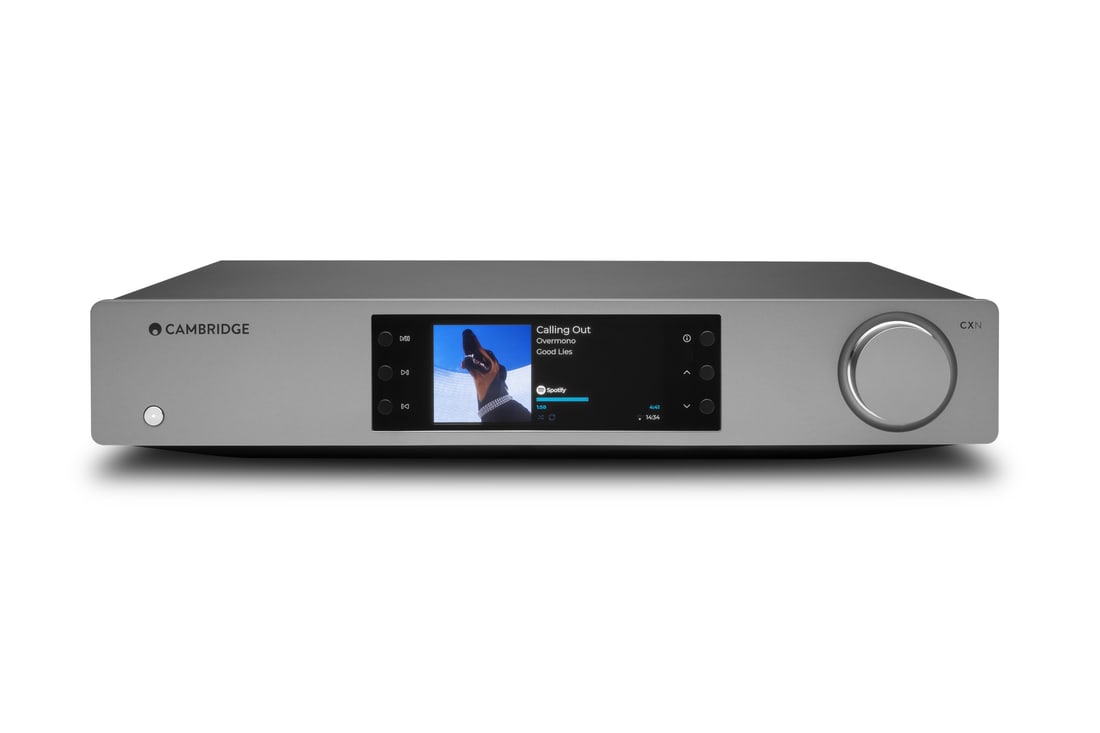
I had a reader email me last month convinced his new streamer had "opened up the soundstage" on a pair of standmounts he'd owned for three years. Same speakers, same room, same amp. He'd swapped a budget network player for something roughly twice the price, and the difference, in his words, was "night and day." I believe him. I also think most people would tell him the bits are the bits, digital is digital, and he was hearing what he wanted to hear. I don't think that's right, and I want to explain why, because the answer sits in a part of the streamer nobody talks about: the analogue output stage after the DAC chip has done its job.
This is a genuinely useful topic because it cuts against two popular but incomplete stories. One says all DACs sound the same once you've got a competent chip, so spend your money elsewhere. The other says streamers are basically interchangeable digital plumbing and the "sound" comes entirely from your speakers and room. Both have a kernel of truth. Neither is the whole picture, and the gap between them is exactly where your money either does something or doesn't.
The DAC chip finished its job before the sound starts
Let's get the boring bit out of the way, because it matters for what follows. Once a decent modern DAC chip converts a digital stream to an analogue voltage, the conversion accuracy itself is essentially solved. ESS, AKM, Texas Instruments and the rest have been putting out chips with measured performance well beyond audibility thresholds for close to a decade now. If you want the deeper dive on this, I'd point you to our piece on DAC chip specs being marketing more often than substance — the conversion stage genuinely isn't where the differences you're hearing come from, in the overwhelming majority of cases.
But a DAC chip doesn't output a line-level signal ready to drive an amplifier input directly at the level and impedance most gear expects. That raw output gets buffered, filtered, and shaped by an analogue output stage: op-amps or discrete transistor circuits, a low-pass filter to remove ultrasonic switching noise, sometimes a volume control if the unit's got a digital-to-analogue-with-preamp design, and a power supply feeding all of it. This is the part that varies enormously between a $400 streamer and a $2,500 one, and it's the part actually driving your amplifier's input stage and, indirectly, your speakers.
Output impedance and why your amp cares
Every line output has an impedance, and every amplifier input has one too. In a well-designed system the source's output impedance is low relative to the amp's input impedance, by a factor of at least ten, ideally more. When that ratio breaks down, high-frequency response can sag slightly, and in the worst cases you get audible interaction depending on cable capacitance and interconnect length. Most of the time this is invisible on a spec sheet because manufacturers rarely publish output impedance for line-level sources the way they do for headphone outputs. I've measured units differing by a factor of five here, and the cheaper ones are frequently the higher-impedance ones, which is not what most buyers assume.
This isn't purely theoretical hand-waving. The same principle governs headphone amp matching, which we've covered in detail — see the piece on headphone impedance and why your amp's output matters more than watts — and the physics doesn't change just because you've swapped a headphone for a power amplifier input. What changes is how forgiving the downstream gear is. A modern integrated amp like the Naim Uniti Atom (check price) or a streaming amp such as the NAD C 3050 (check price) has been designed with input stages that are fairly tolerant of source variation, which is one reason all-in-one streaming amplifiers tend to sound more consistent across different digital front ends than separates systems do. Worth reading our guide on the best streaming amplifiers and all-in-one systems if you're weighing that route.
Filter design and the thing nobody photographs
Reconstruction filters — the circuits removing the high-frequency artefacts left over from digital-to-analogue conversion — get a slice of the sonic character conversation that's disproportionate to how often it's discussed properly. Different filter slopes and topologies (minimum phase versus linear phase, for instance) trade off pre-ringing against post-ringing, and some listeners genuinely do prefer one flavour to another in blind tests, even when frequency response measures nearly identical. This is one of the few areas in digital audio where I'll concede there's a real, measurable, non-placebo difference that doesn't show up as a simple frequency response deviation. The RME ADI-2 DAC FS is a good example of a unit that gives you the filter choice explicitly rather than hiding the decision inside firmware — worth a look if you want to hear this for yourself rather than take my word for it.
I'll admit this section runs slightly against my usual instinct, which is to distrust anything that sounds like audiophile mysticism. Filter behaviour isn't mysticism. It's measurable and it's documented in the AES literature on oversampling and reconstruction filter design. It's just a smaller effect than most forum threads suggest, and it's easily swamped by room and speaker issues if those aren't sorted first.
Power supply noise and the ground loop nobody wants to admit exists
Here's the part that actually explains most of the audible differences between streamers in the real world, in my experience measuring rooms and systems rather than reading spec sheets. Network streamers sit on your home network, often powered by a switch-mode wall wart, sometimes drawing power over the same USB or Ethernet cable carrying data. Switch-mode supplies are efficient and cheap, but they're also a well-known source of high-frequency noise that can leak into the analogue output stage if the internal supply regulation and shielding aren't up to scratch. This is precisely the kind of gremlin that separates a $250 streaming board from something like the Cambridge Audio CXN100 or WiiM Ultra, both of which put real engineering effort into supply regulation rather than treating it as an afterthought.
You can hear this as a faint grain or hardness on top notes, sometimes described as digital glare, and it's the sort of thing that measures as an elevated noise floor well above audibility on a datasheet but interacts audibly with your amp's own noise performance once everything's connected and grounded together in your actual rack, not a lab bench. I've walked into rooms in Brunswick and Fitzroy where a client swapped nothing but the streamer and the top end audibly settled. It's not always the streamer's fault either — sometimes it's a ground loop between the streamer and a poorly isolated power board, which is a wiring problem dressed up as a product problem.
Where this actually sits in your priority list
Now the bit I always come back to, because it's my actual job: none of this outranks the room. I'll say the mildly contrarian thing plainly — if your listening position sits against an untreated brick wall with a hard floor and no rug, spending an extra $1,500 chasing a "better" streamer's output stage is close to pointless until that's addressed. The room and the speaker-boundary relationship swamp output-stage refinement by an order of magnitude in most Australian living rooms I've measured. Get your standmount or floorstander placement right, sort your first reflection points, and only then start worrying about whether your streamer's filter topology is costing you top-end air.
That said, once the room's sorted, the source does matter, and I don't think it's snake oil to say so. My own sequence for a client on a budget would be: room treatment and speaker placement first, then amplifier matching, then loudspeaker choice if the amp and room are already good, and the streamer's analogue output stage comes in after that, as a refinement rather than a foundation. If you're building a system from scratch and want the order laid out properly, our guide on the best DACs and network streamers covers specific units worth auditioning at each price point.
A practical test you can run yourself
If you want to know whether your current streamer's output stage is actually limiting your system, the test is simple and doesn't require new gear. Borrow a different streamer or DAC in the same price bracket from a friend or dealer, connect it via the same interconnect and input, and do a level-matched A/B on a familiar track with vocals and cymbals, the two elements most sensitive to noise floor and filter artefacts. Use test tones or a phone-based SPL app to roughly match output level first — a level mismatch of even 1dB will bias the comparison badly and is the single most common mistake in home A/B testing. If you hear a genuine difference in top-end grain or soundstage depth with levels matched, you've found something real. If you don't, you've saved yourself money and confirmed the room is your actual bottleneck, which, honestly, it usually is.
Standards bodies like the AES publish detailed technical papers on DAC filter design and jitter if you want to go deeper than what I've covered here, and the Bluetooth SIG's own documentation is worth a read if any part of your chain is going wireless, since that introduces its own set of compromises entirely separate from anything discussed above.
Common questions
- Does a more expensive streamer always sound better than a cheap one?
- Not always, and not proportionally. Once you're past a certain baseline of competent power supply regulation and output stage design, gains flatten quickly. The bigger jumps tend to happen between a genuinely budget unit and a mid-range one, not between mid-range and flagship.
- Should I upgrade my streamer or treat my room first?
- Room first, almost every time. An untreated room with poor speaker placement will mask or distort far more than an output stage upgrade will ever recover. I'd rather see the money go to acoustic treatment or proper stand placement before a source upgrade.
- Can a USB cable or network cable actually change the sound from a streamer?
- Data integrity itself is essentially bulletproof with modern error correction, but a poorly shielded USB cable carrying power alongside data can introduce noise into a badly isolated output stage. It's a real but secondary effect, and it matters far less than the streamer's own internal supply design.
- Is it worth choosing a DAC with selectable filter modes?
- If you're curious and want to hear the difference for yourself, yes, units like the RME ADI-2 DAC FS make this an easy, reversible experiment. It won't transform your system, but it's a legitimate, measurable variable rather than a placebo.

Hi, I'm Hannah. Speakers are my thing — specifically, the conversation between a speaker and the room it's in, which is where most systems are won or lost. I did acoustics at uni and never quite got it out of my system. I'll measure your room's bass response and then gently break the news that the $20,000 speakers aren't the problem, the untreated wall behind your sofa is. Stand-mounts on good stands are criminally underrated and I will die on that hill.
Acoustics background; loudspeaker and room-treatment specialist
More from Hannah Reid
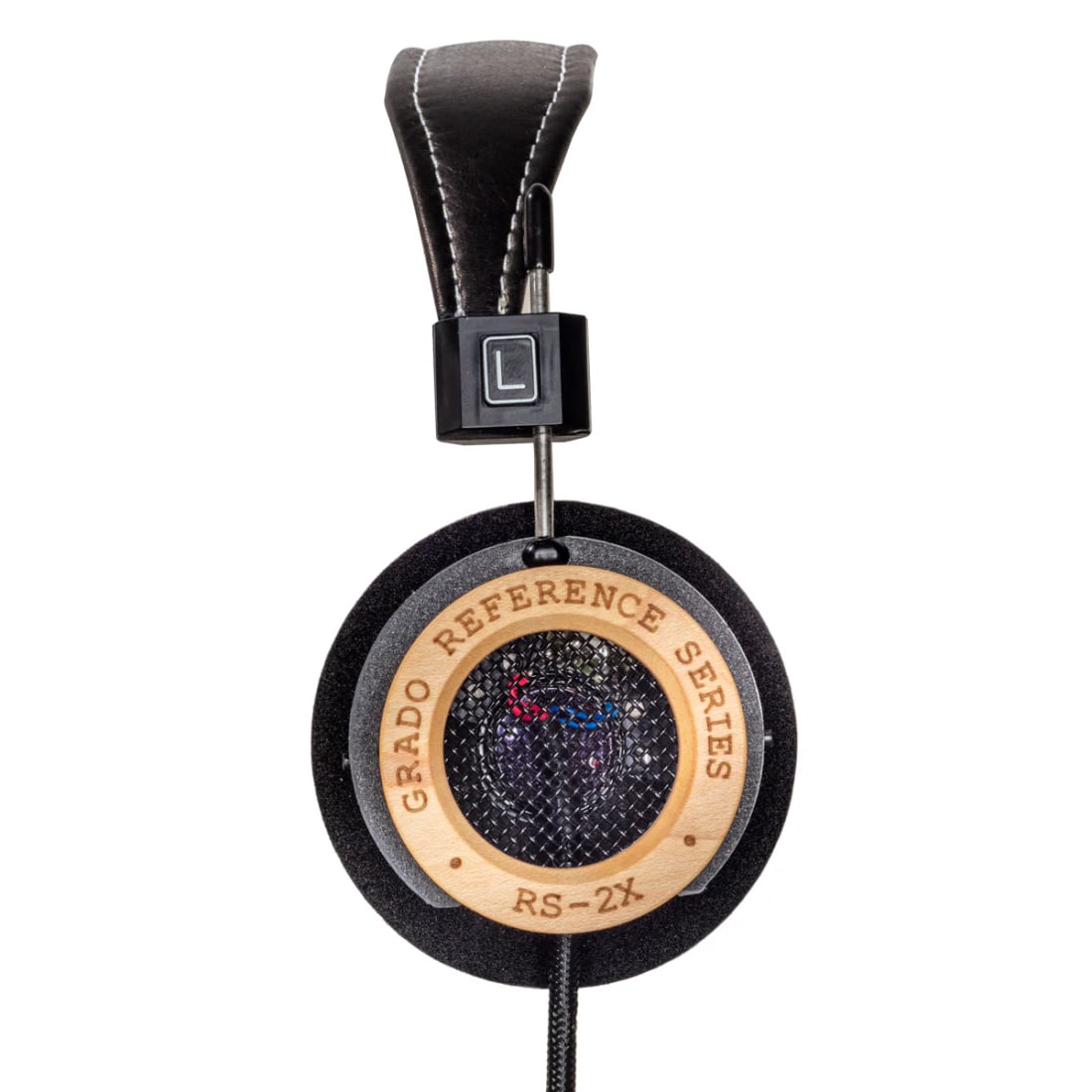 Headphone stands and hooks: the desk accessory that changes your soundHeadphone stands aren't just tidy storage. How you park your cans between sessions affects driver life, cable strain and even headband fit.
 First reflections: finding them, and what to actually do about themThe mirror trick still finds first reflection points better than any app. Here's how to locate them and what treatment actually earns its keep.
- Headphone soundstage: why some pairs sound "wide" and others don'tSoundstage in headphones isn't magic or marketing. It comes from crossfeed, driver geometry and pad depth — here's what's actually happening and what you can change.
- Turntable wall shelves versus stands: what actually kills footfall bassFootfall bass in vinyl playback usually isn't the turntable's fault. It's the floor. Here's how to work out whether a wall shelf or a proper stand fixes it.
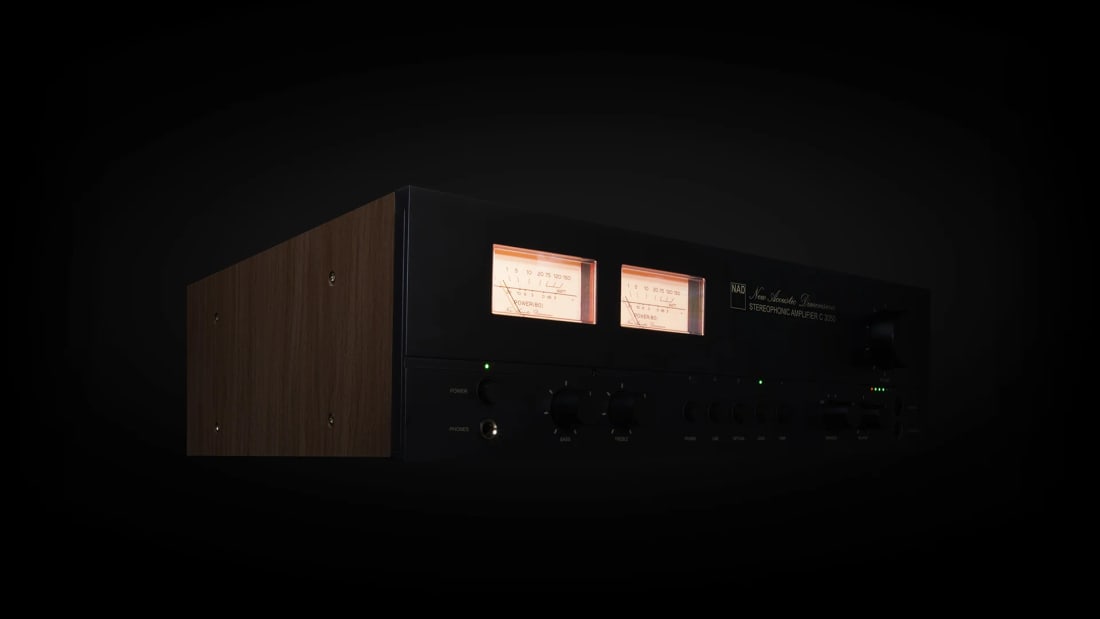 Why your amplifier struggles below 4 ohms (and when to actually worry)Impedance dips scare buyers more than they should. Here's how to read a speaker's impedance curve and match it to an amp that won't run out of puff.
- Subwoofer placement: the crawl test still beats any appRoom-correction apps are handy, but the old carpet-crawl method still finds the seat-by-seat bass problems software glosses over.