Bridging stereo amps to mono: a giant-killer's real cost
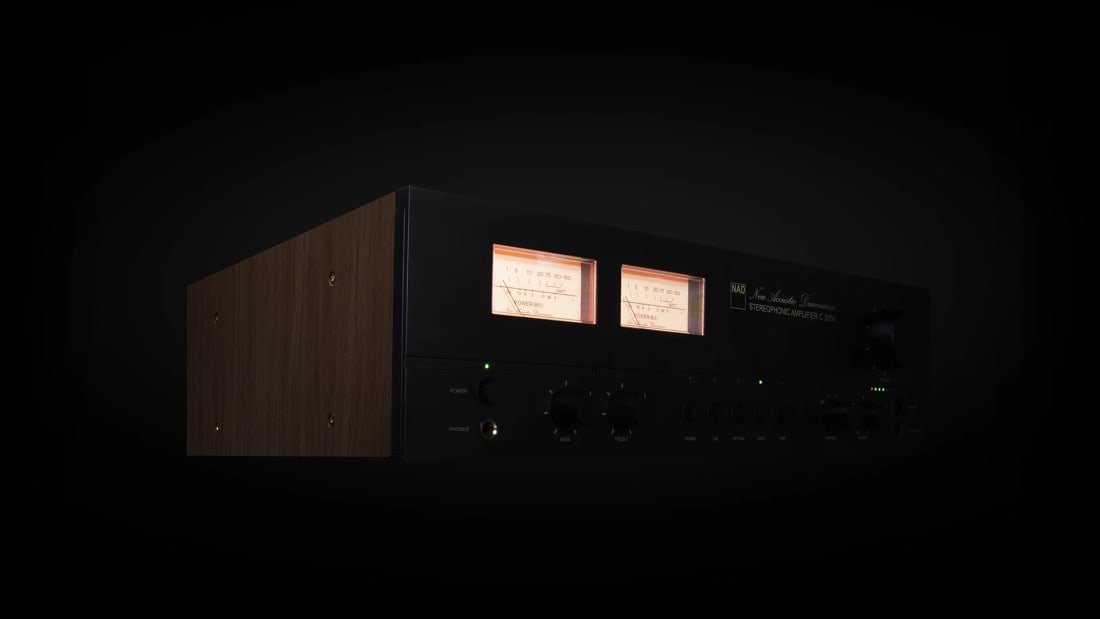
A mate rang me last month asking if he should buy two identical $600 stereo amps and bridge each one to mono, rather than spend $1,800 on a "proper" stereo power amp. Good question. Also, the wrong question, because bridging isn't a free lunch, it's a trade. You get more voltage swing into the same speaker, but you also halve the load the amp thinks it's seeing, and that's where a lot of giant-killer plans fall over around the 4-ohm mark.
I've been doing this trick for probably fifteen years now, ever since a secondhand pair of pro-audio power amps taught me the hard way what "bridged mono" actually costs an amplifier's output stage. It's a genuinely good giant-killer move when you understand the limits. It's an expensive mistake when you don't. And honestly, the number of forum posts I see recommending bridging without ever mentioning impedance curves tells me this still isn't common knowledge, even among people who should know better.
What bridging actually does inside the amp
A stereo amplifier has two channels, each driving its own speaker against a common ground. Bridge it to mono and you're using both channels to drive a single speaker, out of phase with each other, so the speaker sees the full swing of both channels added together rather than one channel against ground. Roughly, that doubles the voltage across the speaker terminals for the same input signal. Since power scales with the square of voltage, you can see on paper why a 60-watt stereo amp might claim something like 180-200 watts bridged into 8 ohms.
The catch nobody puts on the box in big letters: from the amplifier's perspective, that bridged 8-ohm speaker now looks like a 4-ohm load, because each half of the bridge is effectively driving half the impedance it would normally see. Bridge the same amp into a 4-ohm speaker and the amp thinks it's looking at 2 ohms. Most domestic amps, Class D included, are not happy down there for sustained periods. Current draw goes up fast, and current is what kills output transistors and fries power supply rails, not voltage. The Wikipedia entry on bridged and paralleled amplifiers lays out the basic circuit topology if you want the diagrams.
Worth sitting with that halving for a second, because it's the whole crux of the article. An amp confidently rated at 100 watts into 8 ohms and, say, 150 watts into 4 ohms, is telling you something about its current delivery, not just its voltage swing. Bridge that same amp and feed it an 8-ohm nominal speaker, and you're now asking the power supply and output devices to behave as though they're driving 4 ohms continuously, for the whole programme, not just on transient peaks. Some amps handle that with headroom to spare. Plenty don't, and the spec sheet rarely tells you which camp yours falls into unless you go looking for the fine print.
Why Class D changed the economics of this trick
Ten years ago bridging a cheap Class AB amp was risky because the linear power supply and output devices weren't built with headroom for it. Class D has shifted that calculus meaningfully. Modules built around designs like Purifi's Eigentakt platform run cooler, have tighter current limiting, and their switch-mode supplies regulate far better under the kind of transient current spikes bridging produces. You can see the engineering pitch directly on Purifi's own site, which publishes the measured distortion and thermal figures rather than just marketing claims. That's part of why bridging Class D amps to mono has become a legitimate budget strategy rather than a workshop stunt, and we've gone into the specific mechanics of it in our piece on bridging a Class D amp to mono.
That said, "cooler running" doesn't mean "immune to Ohm's law". A Class D module with a published continuous rating into 4 ohms will still throttle or protection-trip if you bridge it into something that drops to 3 ohms in the bass. Loudspeaker impedance isn't a fixed number, it's a curve, and most "8 ohm nominal" speakers dip well under that somewhere in the midbass. Check the published impedance curve if the manufacturer provides one, not just the nominal figure on the spec sheet. We've covered how misleading that single number can be in amp power ratings into 8 vs 4 ohms: the spec sheet trap.
There's also a practical switch-mode supply quirk worth knowing. Because Class D amps regulate their rail voltage dynamically rather than relying purely on a big linear transformer and reservoir capacitors, they tend to sag more gracefully under load rather than clipping hard the way an underpowered AB amp does. That graceful sag is partly why bridged Class D feels more forgiving in the real world than the spec sheet maths would suggest. It's not a free pass though, it just moves the failure point further out, and a sustained bass-heavy transient at high volume can still find it.
The maths you actually need before you buy the second amp
Before anyone bridges anything, I want three numbers: the amp's stable minimum load (from the spec sheet or, better, from an independent bench test), the speaker's minimum impedance across its curve (not nominal), and the room's actual power requirement given speaker sensitivity and listening distance. Most people skip straight to "bigger number, more better" and skip the actual arithmetic.
Take an 87dB sensitivity standmount in a mid-sized room. You don't need 400 watts to get convincingly loud in there, you need maybe 60-80 watts with headroom for peaks, and the headroom matters more than outright wattage. Bridging buys you headroom cheaply, which is genuinely valuable for dynamic peaks in orchestral or electronic music, but if your speaker's impedance dips to 3.2 ohms at 90Hz and your bridged amp's stable floor is 4 ohms, you've built yourself a protection-circuit trip waiting to happen on a big kick drum hit, not a giant-killer system.
Let's put real numbers through it, because the abstract version never sticks the way a worked example does. Say your amp is specified at 70 watts into 8 ohms and 110 watts into 4 ohms, continuous, unbridged. Bridge it and the datasheet (if the manufacturer actually publishes bridged figures, which not all do) might claim something like 220 watts into 8 ohms. Fine on paper. But if your speaker's nominal 8-ohm rating hides a 3.5-ohm dip at 120Hz, where a lot of midbass energy and kick drum fundamentals live, you're asking that bridged amp to behave as though it's seeing roughly 1.75 ohms at that frequency. Very few domestic amps, bridged or not, are rated to sit there happily for more than a few milliseconds, let alone a sustained note. That's the gap between a 200-watt number on a box and what actually happens on your lounge room floor at 9pm on a Friday with the volume up.
This is the same matching discipline we push on speaker sensitivity generally; there's a reason we wrote speaker matching to valve amps: sensitivity beats watts every time, because the instinct to chase a power number over a proper load match shows up everywhere in this hobby, not just with bridging.
Heat, current limiting and the bits that actually fail
I've killed one amp doing this, years ago, a pair of budget AB monoblocks bridged into a 4-ohm floorstander that I hadn't checked the impedance curve on. It ran fine at low-to-moderate volume for about a fortnight, then died mid-song during a bass-heavy track. The post-mortem was unglamorous: the output stage overheated under sustained current draw the power supply couldn't comfortably deliver, protection circuitry either didn't trip fast enough or wasn't rated for it, and that was that.
The fix isn't exotic. Buy an amp with genuine 4-ohm stability specified by the manufacturer, not inferred from marketing copy, check the actual minimum impedance of your speaker (many manufacturers publish the curve on request even if it's not on the box), and if you're running the amp bridged, treat the speaker's "4 ohm nominal" rating as a 3-ohm worst case for planning purposes. Give the amp ventilation. Cheap Class D modules in particular are often built into enclosures that assume stereo duty cycles, not sustained bridged mono current.
If you want a sanity check before committing a second amp purchase, here's roughly the process I actually run through with mates now. First, pull the amp's spec sheet and look specifically for a stated bridged-mode minimum load, not just a stereo 4-ohm figure, because the two aren't the same thing and reputable manufacturers do list them separately. Second, ring the speaker manufacturer or check their technical documentation for the actual impedance curve rather than trusting the nominal number on the box. Third, run the amp bridged at a realistic listening level for an extended session, an hour or more of the bassiest material you own, not a five-minute demo track, and feel the heatsink. If it's uncomfortably hot to the touch after sustained use, that's your early warning, well before a protection circuit trips or a component lets go.
Where this genuinely beats buying a bigger amp
Here's the part that makes this worth the hassle. Two identical $600-800 Class D stereo integrateds, bridged to mono and run as monoblocks, will often out-muscle a single $2,000 integrated amp's stereo output, for less outlay, while also giving you a dedicated power supply and output stage per channel. That's a real, repeatable giant-killer win, not wishful thinking, and it's the same logic behind building a decent multiroom rig on a budget, which I wrote up in the WiiM playbook.
The honest trade-off: you lose the single-chassis convenience, you need two mains outlets and more rack space, and you need an active preamp or streamer with two sets of outputs (or a splitter) to feed both monoblocks identically. For some people that's a dealbreaker. For a lot of us chasing headroom on a budget, it's a small inconvenience for a genuinely large power dividend, and I'd argue it's a better use of money than buying one expensive "do everything" integrated amp that's mediocre at the top of its own power band.
There's a secondary benefit people rarely mention: channel separation. With two genuinely separate monoblocks, there's zero shared power supply or shared ground path between your left and right channels, which on paper should improve crosstalk and imaging precision slightly over a single-chassis stereo amp, even a good one. I wouldn't build my buying decision around that alone, it's a minor benefit compared to the power and headroom story, but it's a nice side effect of going down this path rather than a cost.
Checking your speakers before you commit
Don't bridge blind. If you can't find a published impedance curve, a decent hi-fi retailer or installer can measure it in minutes with an impedance analyser, and it's worth the ask before you buy a second amp. A speaker rated "8 ohms" by a manufacturer can legally dip to 3 ohms or lower at certain frequencies and still carry that nominal label, which is precisely the gap that catches people out with bridging.
If you're building from scratch rather than retrofitting existing speakers, pairing bridged monoblocks with a speaker that has a genuinely benign, flat impedance curve removes most of the risk. Plenty of well-regarded standmounts and floorstanders are deliberately designed to be amp-friendly in this way; it's worth asking the brand or retailer directly rather than assuming. Our best standmount speakers for serious listening guide flags a few models that behave well under exactly this kind of scrutiny.
What I'd actually do with a $1,500 budget right now
If someone handed me $1,500 today and said "giant-killer power, go", I'd be looking hard at two matching Class D stereo amps with genuine 4-ohm stability on the spec sheet, bridged to mono, feeding a speaker whose impedance curve I'd already checked against the amp's data. That beats, in my experience, a single higher-wattage integrated at the same price, because you get dual power supplies, dual output stages, and real headroom rather than a single chassis straining at its ceiling.
It's not the tidiest solution. Two boxes, two power leads, a slightly more complicated signal chain. But giant-killer hi-fi was never about tidy, it was about getting more sound per dollar than the showroom wants you to think is possible. Check the impedance curve, check the amp's bridged spec, and you'll get there without the smoke I produced on my own lounge room floor all those years back.
— Dave Okafor, Value & Giant-Killers, Sound Technology
Common questions
- Can I bridge any stereo amp to mono?
- Only if the manufacturer explicitly supports it and publishes a bridged-mode spec. Bridging an amp never designed for it risks damaging the output stage, because the load impedance the amp sees is effectively halved.
- Does bridging always double the power?
- Roughly, under ideal conditions into a stable load, but real-world gains are usually somewhat less once you account for power supply limits and thermal headroom. Check the manufacturer's published bridged-mode wattage rather than doing the maths yourself.
- Is Class D safer to bridge than Class AB?
- Generally yes. Modern Class D modules run cooler and often have tighter current limiting, which gives more margin under the higher current draw bridging produces, but they still have real minimum load limits you need to respect.
- What's the single biggest mistake people make bridging amps?
- Trusting the nominal impedance number on the speaker's spec sheet instead of checking the actual impedance curve, which can dip well below nominal at certain frequencies and trip protection circuits or damage the amp.

I'm Dave, and I'm the cheapskate of the team — and proud of it. My whole thing is finding the gear that punches three times above its price, the so-called "giant-killers," because most people don't have forty grand for a system and shouldn't feel bad about it. I've heard the megabucks stuff, and a lot of it is gloriously good; I've also heard $800 setups that get you 85% of the way there. I'll always tell you where the law of diminishing returns kicks in.
Lifelong bargain-hunter; budget-to-midfi specialist
More from Dave Okafor
 Matching speaker and amp cost: ignore the price-parity mythForget the old rule of matching speaker and amp cost dollar-for-dollar. Here's what actually decides a good pairing, and why it isn't price.
 Turntable mats and platters: what actually changes the soundFelt, rubber, cork or acrylic — turntable mats and platter materials change the sound more than most upgrades. Here's what actually works.
- Buying a demo unit: the giant-killer move retailers hateEx-demo hi-fi gear can save 20-40% with near-zero risk. Here's how to actually negotiate it, what to check, and when to walk away.
- Flutter echo: the room fault that sounds like nothing's wrongFlutter echo blurs detail in parallel-wall rooms without obvious boom. Here's how to find it cheaply and kill it without over-treating.
- Amp power ratings into 8 vs 4 ohms: the spec sheet trapWhy an amp's 4-ohm wattage figure can mislead buyers, and how to actually match power output to real speaker loads on a budget.
 5.1.2 vs 7.1.4: the Atmos layout decision for real roomsChoosing between 5.1.2 and 7.1.4 Atmos layouts comes down to room shape and seating, not speaker count. Here's the giant-killer logic.