Why a $400 subwoofer with a mic beats a $1200 one without
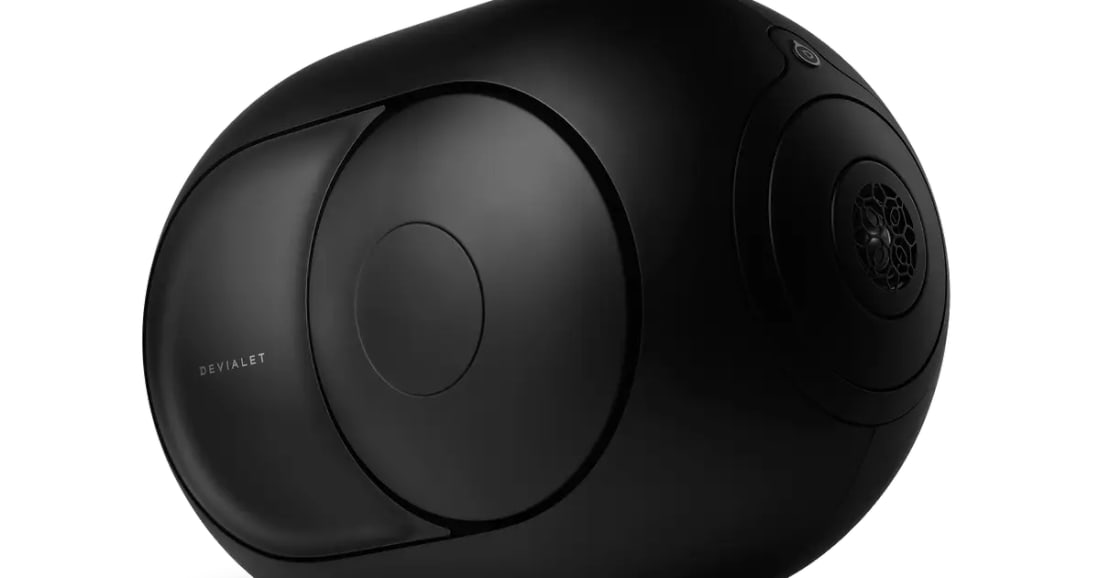
I spent an afternoon a few months back at a mate's place in Burleigh Heads, comparing his old $1400 sealed sub against a sub I'd picked up for under $450 that happened to ship with a calibration mic and a basic parametric EQ app. On paper the expensive box wins everywhere: bigger driver, bigger amp, better cabinet bracing. In his lounge room, with a nasty 45Hz mode sitting right where his listening chair lives, the cheap sub with DSP sounded tighter, cleaner and frankly more enjoyable. That's not a fluke. It's the entire argument of this article.
Everyone obsesses over driver size, amplifier wattage and sealed-versus-ported when they're shopping for a subwoofer. Fair enough, those things matter. But in a real room, with real walls and real furniture, none of it matters as much as whether the sub can measure and correct for the mess your room is about to make of its output. A $400 subwoofer with even a basic onboard DSP and a calibration mic will, in most suburban rooms, sound better integrated than a subwoofer twice or three times its price with no correction at all. I'll die on this hill.
The room wins every argument you didn't have
Low frequencies below roughly 200Hz behave less like "sound" and more like pressure waves that bounce around a room and pile up or cancel depending on where you sit and where the sub sits. A room the size of a typical Australian living room, say four by five metres, will have several room modes sitting between 30Hz and 80Hz. These modes don't care what you paid for your subwoofer. A $6000 subwoofer dropped into the wrong corner will generate the same nasty 15dB peak at 50Hz that a $300 unit would in the same spot.
This is the bit that trips people up when they're comparing gear on paper rather than in a room. The subwoofer's own frequency response, measured in an anechoic chamber by the manufacturer, tells you almost nothing about what you'll hear at your listening position. What matters is the combined response of driver plus room plus placement. A sub with DSP can measure that combined response with a supplied microphone and pull down the peaks that are making your bass sound "boomy but late," to borrow a phrase we've used before when talking about group delay on this site (see our piece on subwoofer group delay if that term is new to you). A sub without DSP just reproduces the mess faithfully, driver quality and all.
What DSP on a budget sub actually does
Strip away the marketing and the onboard correction in most sub-$600 subwoofers does three things: parametric EQ (cutting specific frequency peaks, usually two to four bands), a basic crossover/phase adjustment, and sometimes a rudimentary room-gain compensation that boosts the very lowest octave to counter the natural loss of bass energy as sound radiates outward in a real room rather than a lab. None of this is exotic. It's the same maths that underpins full-blown convolution-based room correction systems like Dirac, just implemented with far fewer EQ bands and less processing grunt. The honest caveat: a cheap sub's DSP won't fix everything. If you've got two deep nulls thirty centimetres apart at your listening position, no amount of EQ moves the physics of destructive interference. But for the single most common problem in Australian living rooms, a single dominant peak from a room mode, a handful of parametric EQ bands solves the bulk of it. I've measured this myself with a cheap USB mic and free software (Room EQ Wizard, if you want to try it) often enough to trust the pattern.
Where the expensive sub without DSP actually loses
I want to be fair to the pricier boxes here, because a lot of them genuinely do things better. Bigger drivers move more air with less distortion at high output. Better amplifiers clip more gracefully. Heavier cabinets resonate less. All of that is real, and at the very top end of the market it's why you'll see brands building four-sub statement systems with enormous individual boxes rather than relying purely on correction, because once you're chasing reference-level output and extension, raw hardware quality starts mattering more than EQ tricks.
But most of us aren't building statement systems. Most of us are trying to get clean, tuneful bass out of a single subwoofer in a lounge room that also has to function as a lounge room, meaning the sub can't always go in the acoustically ideal spot. That's precisely the scenario where DSP earns its keep, because it's compensating for placement compromises you were always going to have to make anyway. Read our guide on finding the ideal spot with the crawl test and you'll notice the best spot for smooth bass is rarely the spot that doesn't annoy your partner or trip the dog.
The sealed versus ported question gets less important with DSP
Sealed subs generally give you a more linear, predictable roll-off and tend to respond better to EQ boosting in the lowest octave, since there's no port tuning frequency creating a steep mechanical cutoff below resonance. Ported subs can go louder for less amplifier power around their tuning frequency but the roll-off below that point is much steeper, and EQ can't boost what the cabinet mechanically can't move. This is a genuinely useful distinction if you're planning to lean hard on DSP to extend low-frequency output, which is why a lot of budget DSP-equipped subs lean sealed. It's not the whole story though, and if you want the deeper dive on why the calculus changes again once you're building a reference-level multi-sub system, we've covered that separately in our piece on sealed versus ported design at the top end.
What to actually look for at the sub-$600 price point
Don't get fixated on the presence of an app as a marketing checkbox. Check whether the DSP includes an actual calibration microphone or relies purely on manual EQ sliders you set by ear, because auto-EQ with a real measurement is doing genuine acoustic work while manual sliders are just a tone control with extra steps. Check how many EQ bands are available; two bands will handle one dominant peak, four bands gives you more flexibility if your room has multiple problem frequencies, which most rectangular rooms do. Also check whether the sub lets you adjust phase in fine increments rather than the old 0/180-degree switch, since phase alignment between sub and mains is often the difference between bass that reinforces your speakers and bass that partially cancels it. This ties directly into getting the crossover point itself right, which is a separate but related headache we've gone through in detail in our explainer on subwoofer crossover settings.
A worked example from an actual lounge room
Back to my mate's place in Burleigh. His old sub, sealed, no DSP, decent 10-inch driver, reasonably well regarded when it launched, was putting out a peak of roughly 12dB at 45Hz measured at the main seating position, according to a quick sweep I ran with a calibrated mic and Room EQ Wizard on my laptop. That's not subtle. It's the difference between kick drum that sounds like one clean note and kick drum that sounds like it's got a boomy echo trailing behind it, exactly the "boomy but late" symptom of excess group delay building up around a resonant peak. Swap in the cheaper sub, run its auto-calibration routine with the supplied mic, and that same measurement position showed the peak pulled down to around 3-4dB, a night-and-day difference in how tight the low end felt on movie soundtracks and on recordings with real double bass. The expensive sub, on raw driver quality, might well have measured flatter in an anechoic chamber. In his actual lounge room it didn't get the chance to prove it, because nobody had corrected for the room it was sitting in.
Where I'd still spend more, and where I wouldn't
I'm not telling you to buy the cheapest sub you can find and call it a day; there's a floor below which build quality, port noise, and amplifier clipping under load start to genuinely compromise sound, and going too cheap just buys you a different set of problems. What I'm arguing is that once you're choosing between subs in a similar bracket, say $400 to $1200, the presence of proper measured DSP correction should weigh more heavily in your decision than another inch of driver diameter or another 50 watts of class-D amplifier power that you'll rarely use anyway. If you're running a full AV receiver setup rather than a standalone sub, it's also worth remembering that a lot of this correction job can be handled upstream by the receiver's own room correction engine rather than the sub's onboard DSP, something we've gone through properly in our guide to bass management and subwoofer integration. Either layer works. What doesn't work is having neither.
The honestly contrarian bit, and I'll own this: I reckon a lot of the more expensive subwoofer market is selling driver bragging rights to people who never measured their room in the first place. A twelve-inch driver sounds impressive on a spec sheet. A flat, controlled response at your actual couch sounds impressive in your actual lounge room. Only one of those is guaranteed to happen without a microphone.
Common questions
- Can I add DSP to a subwoofer that doesn't have it built in?
- Yes, a standalone DSP unit like a miniDSP box sits between your AV receiver or amp and the subwoofer's line input, giving you the same kind of parametric EQ and phase control a built-in system offers. It costs extra and adds a box to your rack, but it's a legitimate way to correct an older or more basic sub rather than replacing it.
- Does room correction replace the need for good subwoofer placement?
- No. DSP corrects frequency response problems but it can't fix a position with a deep cancellation null, and it can't make a sub louder than its driver and amplifier allow. Placement still comes first; the crawl test or a proper measurement sweep should happen before you start reaching for the EQ.
- Is a calibration microphone that ships with a budget sub actually accurate enough to trust?
- For the job of finding and reducing a dominant room mode peak, yes, a basic electret measurement mic is accurate enough even if it's not lab-grade. The accuracy that matters most is relative, finding where the peaks are, not absolute, matching a reference standard, and budget mics do that job fine.

I'm Dave, and I'm the cheapskate of the team — and proud of it. My whole thing is finding the gear that punches three times above its price, the so-called "giant-killers," because most people don't have forty grand for a system and shouldn't feel bad about it. I've heard the megabucks stuff, and a lot of it is gloriously good; I've also heard $800 setups that get you 85% of the way there. I'll always tell you where the law of diminishing returns kicks in.
Lifelong bargain-hunter; budget-to-midfi specialist
More from Dave Okafor
- Matching speaker and amp cost: ignore the price-parity mythForget the old rule of matching speaker and amp cost dollar-for-dollar. Here's what actually decides a good pairing, and why it isn't price.
 Turntable mats and platters: what actually changes the soundFelt, rubber, cork or acrylic — turntable mats and platter materials change the sound more than most upgrades. Here's what actually works.
- Buying a demo unit: the giant-killer move retailers hateEx-demo hi-fi gear can save 20-40% with near-zero risk. Here's how to actually negotiate it, what to check, and when to walk away.
- Flutter echo: the room fault that sounds like nothing's wrongFlutter echo blurs detail in parallel-wall rooms without obvious boom. Here's how to find it cheaply and kill it without over-treating.
 Amp power ratings into 8 vs 4 ohms: the spec sheet trapWhy an amp's 4-ohm wattage figure can mislead buyers, and how to actually match power output to real speaker loads on a budget.
 5.1.2 vs 7.1.4: the Atmos layout decision for real roomsChoosing between 5.1.2 and 7.1.4 Atmos layouts comes down to room shape and seating, not speaker count. Here's the giant-killer logic.