Diffusion vs absorption: the treatment decision statement rooms get wrong
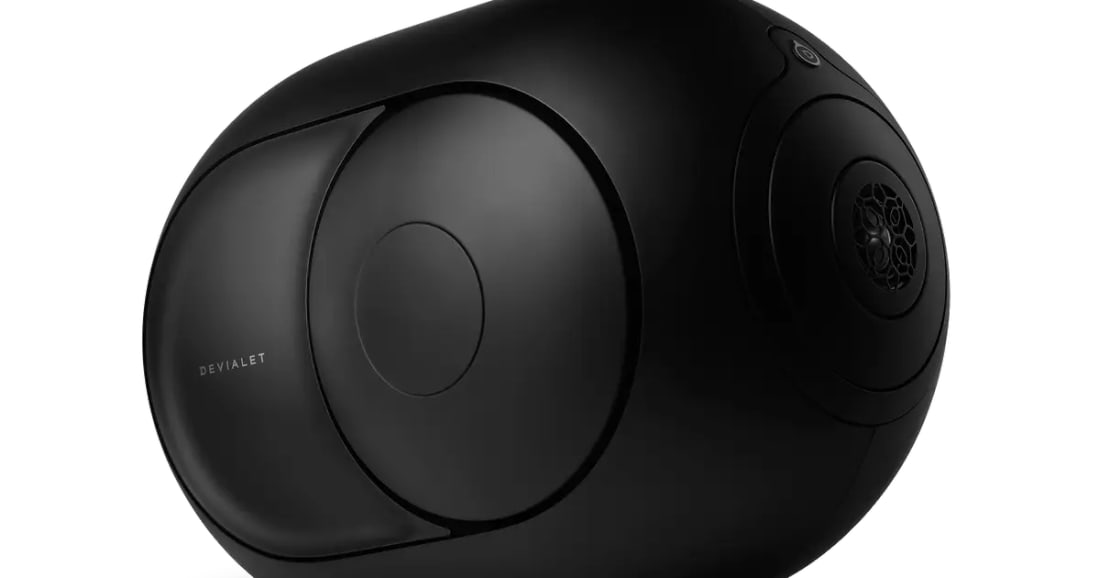
I sat in a room in the eastern suburbs a few months back with a pair of speakers that cost more than most people's cars, driven by an amplifier built by a man who hand-selects his own output transistors. The measurement rig said the response was within a decibel and a half from 40Hz to 12kHz. And it still sounded like listening to music through a shoebox. Flat, correct, and somehow lifeless. The owner had spent enormously on electronics and treated the room himself with foam panels from an online cart, stuck on every wall at ear height. Textbook first-reflection points, technically. Also textbook overcorrection.
This is the thing nobody tells you when you're spending real money on a system: the room decision that matters most isn't how much absorption to add. It's the ratio of absorption to diffusion, and almost everyone gets it backwards because absorption is the easy, visible, "I did something" fix, while diffusion requires you to trust your ears over a foam-panel checklist.
Why absorption alone kills a good room
Absorption removes energy. That's what it's for — you point a panel at a first-reflection point, it soaks up the early reflection, and the imaging tightens because the direct sound arrives at your ears without a smeared, delayed copy chasing half a millisecond behind it. This works. I'm not disputing the physics.
The problem is what happens when you do it everywhere, with the same material, at the same thickness, treating every reflection like it's the enemy. A room with excessive broadband absorption starts to sound acoustically dead — the reverberant field collapses, the sense of space around instruments disappears, and paradoxically the system can sound smaller than a much cheaper rig in a room with sensible, uneven treatment. I've heard this exact failure mode in three separate statement systems this year alone, all owned by people who did their own research and followed generic first-reflection diagrams to the letter without ever taking a step back to listen to what they'd done to the room's character.
The rooms that actually sing at the top end almost always use absorption surgically — bass traps in corners, some broadband treatment at the primary first-reflection points on the side walls — and then use diffusion everywhere else to scatter energy rather than kill it. Diffusion preserves the room's liveliness while breaking up the specific reflections that smear imaging. It's a completely different tool solving a related but distinct problem, and treating them as interchangeable is where a lot of expensive rooms go wrong.
What diffusion actually does that absorption can't
A diffuser — whether it's a quadratic residue design, a simple set of asymmetric wooden battens, or one of the commercial skyline-style panels — takes an incoming reflection and scatters it in multiple directions rather than either reflecting it cleanly back (like a bare wall) or removing it entirely (like a thick absorber). The energy stays in the room, but it arrives at your ears from many angles at slightly different times, which the brain reads as ambience rather than as a discrete, localisable echo.
This matters enormously for depth and soundstage. A well-diffused rear wall behind the listening position, for instance, gives you a sense of the room the recording was made in rather than a sense of your own listening room intruding. I've sat in reference rooms — including a couple of the well-known demo spaces used at Australian hi-fi shows — where the rear wall treatment is almost entirely diffusive, and the difference compared to a flat absorptive rear wall is not subtle. The soundstage gains depth you can point to, not just width.
The rear wall, and to a lesser extent the wall behind the speakers, are where diffusion earns its keep. The first-reflection points on the side walls and ceiling are where absorption still does the heavy lifting, because those reflections arrive early enough and are strong enough that scattering them isn't as effective as simply removing them. So the sensible split, in a serious room, is absorption at the primary early-reflection zones, corner bass trapping for low-frequency modal control, and diffusion at the rear wall and any large flat expanse that would otherwise slap sound straight back at you.
Bass traps are non-negotiable, and most rooms have too few
Before any of the mid and high-frequency treatment matters, the low end has to be under control, and this is where I still see six-figure systems let down by a room that's never had proper corner treatment. Room modes — the resonant build-ups and cancellations caused by low frequencies reflecting between parallel surfaces — don't care what speaker you own. A cheap standmount in a well-trapped room will out-bass a reference floorstander in an untreated one, every time, because the untreated room is adding 6-10dB of peaks and nulls that no amount of driver engineering can fix from the other end.
Corner bass traps — floor-to-ceiling, tri-corner units with real depth, not the thin foam wedges sold as an afterthought — need to go in all four vertical corners of the room if you're serious, not just the two behind the speakers. The corners where wall meets wall meets ceiling or floor are pressure zones for standing waves, and that's where absorptive material actually has enough boundary interaction to do meaningful low-frequency work. A four-inch foam panel on a flat wall does almost nothing below 200Hz; it needs mass, depth, or a tuned resonant design working well below that.
This is also where I'd point you toward proper measurement rather than a subwoofer crawl or a guess. If you're running a serious system with multiple subs or a full-range floorstander pair, getting a calibrated measurement microphone and running a sweep before and after treatment tells you far more than moving a panel around and listening for "better." Room correction software has its place here too, though I'd argue — and this is where I part ways with some of my colleagues — that DSP correction should be the last five per cent, not the first fix. You want the room physically sorted first; asking correction software to fix a room with no bass trapping and no diffusion is asking it to paper over a structural problem with an EQ curve, and it will always sound like exactly that. Our DACs and network streamers guide covers a few of the modern streamers with genuinely capable room correction built in, but even the best implementation is working with what the room gives it.
The specific mistake: symmetrical, uniform treatment
Here's the mildly contrarian bit. I think the acoustic treatment industry — and I say this as someone who has spent plenty of client money on it — has oversold the idea that a room needs to be perfectly symmetrical and uniformly treated to sound "correct." In practice, some of the best-sounding statement rooms I've measured have deliberately asymmetric treatment, because the room itself is asymmetric — a doorway on one side, a bookshelf on the other, different furniture. Chasing perfect mirror-image treatment on both side walls when the room geometry isn't mirror-image to begin with is solving for a spreadsheet, not for what you actually hear.
What matters is that each first-reflection point, calculated properly using the mirror trick (sit in your listening position, have someone slide a mirror along the side wall until you can see the speaker's tweeter in it — that's your reflection point) gets treated appropriately for what's happening at that specific spot, not that the whole wall looks symmetrical from the doorway.
Where the money actually goes in a treated statement room
If you're building this properly rather than piecemeal, the spend generally breaks down as: four solid corner bass traps first, because they fix the thing that's audible from every seat in the house and at every volume. Then first-reflection absorption at the calculated side-wall and ceiling points — usually four to six panels depending on room width. Then diffusion at the rear wall and, in larger rooms, at the wall directly behind the speakers if it's close enough to create a strong early reflection off the front baffle.
That ordering matters because it mirrors audibility. Bass problems are audible on everything, all the time, regardless of what you're playing. First reflections affect imaging precision on well-recorded material. Diffusion affects the sense of space and is the most subtle of the three to a newcomer's ear, though it's often the one that makes experienced listeners say a room finally sounds "right" rather than just "clean." I've seen clients spend the diffusion budget first because the panels look impressive, and the bass budget last because a subwoofer or bass trap doesn't photograph as well as a wall of wooden diffusers. That's the wrong order every time.
For context on how the electronics side of a statement build should be sequenced against the room spend, it's worth reading our piece on what a statement system actually buys you — the same logic about diminishing returns and correct sequencing applies to loudspeaker systems, just with an added variable, because unlike headphones, a loudspeaker system's performance is genuinely capped by the room it's in. You can read more on the broader principle in our piece on statement-level treatment as well, which goes into what a poorly treated room costs you even with reference-grade speakers.
A practical starting point if you're not ready to gut the room
Not everyone is renovating a dedicated listening room with the council's blessing and a budget to match. If you're working within an existing living space, the sequence I'd suggest is: get the corners sorted first with whatever tri-corner bass trapping fits the room and the household's tolerance for visible acoustic furniture, then find your actual first-reflection points with the mirror method rather than guessing, treat those specifically, and only then consider diffusion for the rear wall — a bookshelf full of irregularly-sized books actually works surprisingly well here, and it's not a joke suggestion, uneven surfaces with varied depth genuinely scatter sound in a way a flat wall doesn't.
The National Acoustic Laboratories and various AS/NZS acoustic standards documents cover the physics of absorption coefficients if you want to go deeper into the material science, and the Acoustical Society of America publishes accessible primers on diffuser design if you're the sort who wants to understand the maths behind quadratic residue panels rather than just buying what a dealer recommends. Worth the read if you're spending real money on this — it stops you being sold treatment you don't need.
Standmounts on proper stands away from the wall, floorstanders with real breathing room behind them — the speaker positioning conversation is really the first half of this discussion, and our guide to standmount speakers touches on why boundary distance changes what a good speaker can do before treatment even enters the conversation. But treatment is where the second half of the performance lives, and it's the half that gets skipped when the budget's already gone on the electronics.
The room that started this piece
I went back to that eastern suburbs room about six weeks after the first visit. We'd pulled roughly a third of the foam off the side walls, added two proper corner bass traps that hadn't been there before, and put a simple diffuser array on the rear wall behind the listening chair. Same electronics, same speakers, same measurement showing much the same flat response on the sweep. Completely different room to sit in. The soundstage had actual depth for the first time, and the system stopped sounding like it was working hard to be correct and started sounding like it was just playing music. That's the difference diffusion makes, and no amplifier, however beautifully engineered, was ever going to buy that back.
— Sofia Laurent, High-End & Statement Systems Editor
Common questions
- Should I add diffusion or absorption first if I can only afford one?
- Absorption, but only at the corners for bass control and the calculated first-reflection points — not broadband treatment across every wall. Diffusion is the refinement step once the fundamentals are handled; skipping straight to diffusers on an untreated, bass-heavy room won't fix the more audible problem.
- Can room correction software replace physical treatment?
- No. DSP-based room correction can address certain frequency-response anomalies, particularly in the bass, but it can't fix the smeared imaging caused by uncontrolled early reflections or restore the sense of space that diffusion provides. Treat the room physically first and let correction handle what's left.
- How do I find my first-reflection points without expensive equipment?
- Sit in your listening seat and have someone slide a mirror along the side wall, ceiling and floor. Wherever you can see the speaker's tweeter reflected in the mirror is a first-reflection point worth treating.
- Is a bookshelf a legitimate diffuser?
- Genuinely, yes, provided the books are irregular in size and depth rather than uniform. The uneven surface scatters mid and high-frequency energy in a similar way to a purpose-built diffuser, which is why many well-regarded listening rooms use a loaded bookshelf on the rear wall rather than commercial panels.

I'm Sofia, and I get to play with the silly stuff — the statement amplifiers, the reference loudspeakers, the cost-no-object systems that most of us will only ever hear at a show. Someone has to, and I take it seriously: at this level the price stops mapping to performance and starts mapping to engineering, craft and ego, and part of my job is telling you which is which. I love the extreme end of this hobby, but I'm not dazzled by a big number on a price tag.
Covers flagship and cost-no-object reference systems
More from Sofia Laurent
 Negative feedback in amplifier design: the argument that never endsNegative feedback cuts amplifier distortion but divides designers. Here's what it does, why some statement amps avoid it, and what it means for you.
- The synergy tax: why mismatched gear costs more than cheap gearThe synergy tax explained: why pairing mismatched hi-fi components quietly costs more than buying modest, well-matched gear.
 Rear-port floorstanders near a glass wall: a risky pairingRear-ported floorstanders against glass walls cause boundary reinforcement and reflections. Here's how to place, measure and tune them properly.
- Infrasonic bass below 20Hz: chasing the octave you feel, not hearBelow 20Hz is infrasonic bass: felt more than heard. Here's what it takes to reproduce it properly, and whether a statement system should bother.
- Why statement systems still get beaten by the zone two speakerA $150,000 reference system is only as good as the worst-sounding zone it's networked to. Here's why multiroom integration is the statement system's real weak point.
- Why a statement floorstander can be the wrong speaker in the roomSix-figure floorstanders fail in rooms that were never built for them. Here's how to tell if your space can actually support one before you buy.