Digital volume control vs analogue: which actually degrades your signal?
Spend enough time on audio forums and you'll hit this argument within about three posts: someone mentions they're controlling volume digitally and half the thread piles on like they've admitted to ripping CDs at 128kbps. "You're throwing away bits!" "Always use the preamp!" "Digital volume control is for convenience, not quality." I've seen that exchange play out hundreds of times, and the honest answer is more nuanced than either camp admits.
This matters practically. More systems than ever route volume through software — Roon's DSP volume, a streamer's built-in control, a DAC with a digital attenuator on the front panel. If those paths genuinely damage sound quality in a meaningful way, that's worth knowing. If the damage is theoretical or vanishingly small in real use, that's also worth knowing. Let's work through the actual signal chain.
What digital volume control actually does to the numbers
A digital volume control is multiplication. You take each PCM sample — a number, typically signed 16-bit or 24-bit — and you multiply it by a value less than 1.0. At full volume that multiplier is 1.0 and nothing changes. At half volume (roughly −6 dB) you're multiplying by about 0.5. At a quarter volume (roughly −12 dB) you're multiplying by about 0.25.
The problem is that digital audio has a fixed word length. A 16-bit sample has 65,536 possible values. When you multiply every sample by 0.5, the result in theory has half as many distinct levels: effectively 15-bit resolution. The quiet bottom half of the dynamic range has been discarded. You haven't "lost bits" in a catastrophic sense, but you have reduced the signal-to-noise ratio by 6 dB for every halving of voltage. In a 16-bit system, cutting volume by 6 dB costs you one effective bit. That matters.
In a 24-bit system, less so. A perfect 24-bit path has theoretical dynamic range around 144 dB. Real-world DAC analogue stages rarely do better than 120–130 dB SNR anyway, so the first several dB of digital attenuation are coming out of headroom you can't actually hear. You could attenuate by 20 dB digitally in a good 24-bit implementation and still have more resolution than most analogue stages can resolve. That's the key insight the forum sceptics miss.
Where 16-bit streaming sources complicate things
Tidal and Qobuz deliver FLAC at either 16-bit/44.1 kHz (CD resolution) or the various hi-res 24-bit tiers above it. Spotify's lossless tier, when it eventually properly lands in Australia, is also 16-bit/44.1 kHz at its standard quality ceiling. So a non-trivial portion of what most people actually stream is 16-bit.
At 16-bit, digital volume control deserves more respect. If your streamer or software is attenuating a 16-bit source in 16-bit arithmetic and sending the result to your DAC, you're losing effective resolution faster than you would with a 24-bit source. The right fix is to process at higher internal precision — most competent implementations dither and process in 32-bit or 64-bit floating point internally before truncating back to the output word length. Whether your specific device does that well is a hardware and firmware question, not a fundamental objection to digital volume control per se.
I spent a couple of evenings last month going through the documentation for several popular streamers available here in Australia, and the transparency around internal processing precision is genuinely poor. Some manufacturers mention 64-bit floating-point DSP in passing; others say nothing useful at all. If you're running a dedicated streamer and considering a firmware upgrade, it's worth actually asking the manufacturer about their volume control implementation. You might not get a straight answer, but the question is legitimate.
Analogue volume control: the idealised version versus reality
The audiophile default is to run your DAC at fixed output (or 100% digital volume) and control level with an analogue potentiometer or stepped attenuator in a preamp. In the idealised version this is clearly superior: you're keeping the full digital resolution intact and doing attenuation in the analogue domain, where the physics of resistor voltage dividers is well understood and doesn't involve any bit-reduction at all.
Real analogue volume controls are not ideal, though. A cheap carbon-track potentiometer introduces channel imbalance at low settings, adds a noise floor of its own, and often sounds better at 12 o'clock than at 7 o'clock for reasons that have nothing to do with digital versus analogue. A quality stepped attenuator — the kind you find in a good passive preamp or a well-implemented active stage — is genuinely excellent. But it costs real money to execute properly, it adds circuit complexity, and it can interact with the output impedance of your DAC and the input impedance of your amplifier in ways that a purely digital path avoids entirely.
I'd argue the audiophile assumption that "analogue = better" for volume control is only true when the analogue implementation is actually good. A mediocre pot is not automatically superior to a well-implemented 64-bit floating-point digital attenuator running into a 24-bit DAC operating well within its SNR ceiling. That's an uncomfortable thing to say on certain forums, but the maths supports it.
The fixed-output DAC argument — and when it actually applies
A lot of dedicated DACs, including some of the better ones reviewed here like the Chord Electronics Mojo 2 (check price), include their own volume control. Others are designed as fixed-output sources, meant to feed a preamp stage. The question of which you need depends entirely on your system topology.
If you're running DAC → integrated amplifier or DAC → receiver, the amp's volume control handles attenuation. Your DAC stays at full output. Fine. If you're running DAC → power amplifier direct (no preamp), you need some form of volume control — and then the quality of either the DAC's built-in volume or an outboard passive/active preamp genuinely matters.
For a desktop headphone rig, this plays out differently again. I covered some of this territory in an earlier piece on the best DACs and network streamers, but the short version is that if your DAC has a competent output stage running at high bit depth with proper dither on the volume path, running it volume-out direct to a power amp or headphone amp is a viable and often preferable approach. Removing a circuit stage removes a potential noise and distortion source, even if it's a good analogue stage.
Roon volume levelling and DSP volume — a specific case
Roon's volume control options are worth their own section because a lot of serious listeners use Roon and the options generate confusion. Roon offers three modes: fixed (DAC at 100%, Roon does nothing), DSP volume (Roon attenuates in software before sending to the DAC), and device volume (Roon sends volume commands to the DAC's own hardware control).
Roon's DSP volume implementation uses 64-bit floating-point arithmetic internally. On a 24-bit output path, with modest attenuation — say, up to 30 dB — the loss in effective dynamic range is below the noise floor of virtually any real DAC analogue stage. The audible difference between Roon DSP volume at −15 dB and a quality analogue attenuator at the same perceived loudness is, in my testing, not reliably identifiable. That will get me in trouble with someone, but I stand by it for well-implemented 24-bit paths.
What does matter in Roon is whether you're doing volume levelling (normalising tracks to a target loudness level). Roon's volume levelling applies an offset based on its analysis of the track. This is effectively the same as digital volume control from a bit-reduction standpoint. For 16-bit tracks being levelled down significantly, some resolution is genuinely being sacrificed. The practical audibility of that is debatable. My own position: use volume levelling for casual listening and browsing; bypass it for serious critical sessions.
Streamers with built-in digital volume: what to look for
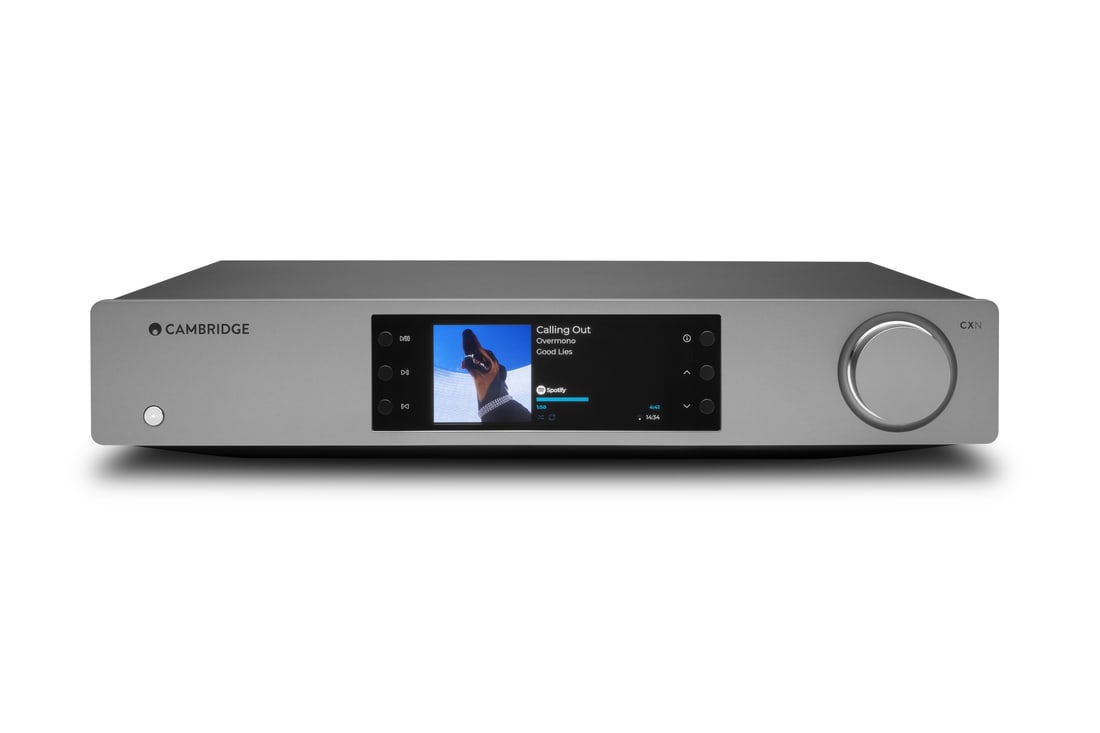
If you're buying a standalone streamer — something like the Cambridge Audio CXN100 (check price) — check whether the internal volume path is documented as 32-bit or better. A number of integrated streamer/DAC units in the $1,000–$3,000 range do this well; some cheaper units do not. The tell is whether the manufacturer mentions their volume implementation at all. Silence on the subject is not encouraging.
A few things to actually look for:
- Internal processing bit depth — 32-bit fixed or 32/64-bit floating point is what you want.
- Whether dithering is applied when truncating back to the DAC's output word length. Without proper dither, digital attenuation adds quantisation noise that sounds worse than the simple SNR maths would predict.
- Channel tracking at low volumes. Digital control is inherently perfect in this regard — left and right attenuate identically, always. An analogue pot often doesn't. At volume settings below about 9 o'clock on many potentiometers, the channel imbalance is audible.
That last point is genuinely underrated. If you regularly listen at low levels — late at night, in a small room, or with high-sensitivity speakers — a digital volume control can actually sound more even than a cheap analogue pot, simply because the channel balance is perfect at all settings.
The practical verdict for different system types
For a system built around a quality integrated amplifier with its own analogue volume stage — a Naim, a Marantz, a quality receiver — run your DAC or streamer at fixed output and use the amp's control. No debate needed. See our broader streaming amplifier guide for how those systems are typically configured.
For a DAC running direct to a power amplifier, or for serious headphone listening with a high-current amp, the quality of the volume implementation matters. A competent 24-bit digital volume with proper dither is a legitimate choice — not a compromise. A poorly-implemented analogue pot is not automatically better.
For Roon users: DSP volume on a 24-bit path, with moderate attenuation, is not the catastrophe the forums suggest. Volume levelling is more nuanced; use it selectively.
The honest summary is that digital volume control in 2025 is largely a solved problem at 24-bit depth with competent implementation — and an unsolved one when the implementation is lazy or undocumented. The question worth asking isn't "digital or analogue?" It's "how carefully has this manufacturer actually thought about signal integrity through the attenuation path?" That's harder to find out, but it's the right question.
Anyway. My forum arguments continue, as they should.
— Theo Mensah, Digital, DACs & Streaming Editor
Common questions
- Does digital volume control really reduce bit depth?
- It does reduce effective resolution mathematically — approximately one bit per 6 dB of attenuation in a fixed-point system. However, a properly implemented system processes attenuation in 32-bit or 64-bit floating point before outputting to the DAC, and on a 24-bit path this means many dB of attenuation can occur before the loss reaches audible significance. The real concern is whether your device actually implements it well, not whether digital attenuation is inherently flawed.
- Should I run my DAC at 100% and use my amplifier's volume control instead?
- If your amplifier has a quality analogue volume stage, yes — that's the simplest approach and avoids any digital attenuation entirely. But if you're running a DAC direct to a power amplifier, or if your integrated's volume pot has poor channel tracking at low settings, a well-implemented digital volume control can genuinely perform as well or better. The topology of your system matters more than a blanket rule.
- Is Roon's DSP volume any good?
- Roon's DSP volume uses 64-bit floating-point internal processing, which is technically sound. On a 24-bit playback path with moderate attenuation, the audible difference compared to a quality analogue control is not reliably detectable in careful testing. Volume levelling (normalisation across tracks) is a separate consideration and worth disabling for critical listening sessions.

Theo here. By day I write software, by night I argue with people on forums about whether bit-perfect playback is "solved" (it mostly is, and then it isn't). I cover the digital end — DACs, streamers, servers, the whole messy ecosystem of getting a file to sound its best. My promise to you: I'll separate the genuine engineering from the audiophile folklore, and I'll never tell you a $500 streaming bridge sounds "blacker" unless I can explain why.
Software engineer; network-audio and DAC specialist
More from Theo Mensah
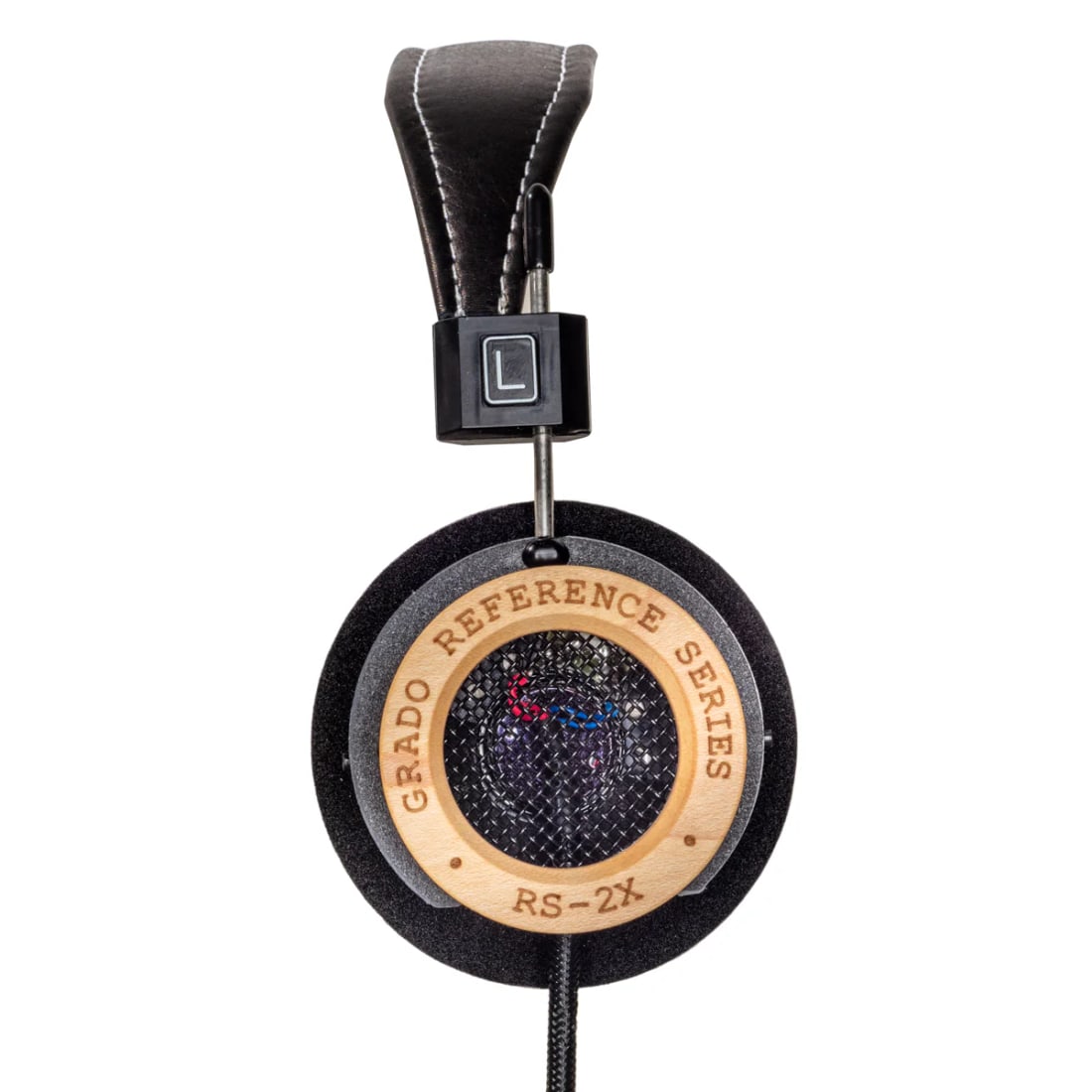 Dongle DAC power limits: when a phone can't drive headphonesDongle DACs are brilliant until they aren't. Here's how to work out whether your phone-and-dongle rig actually has the current to drive your headphones.
 DNS and multiroom: why your streamer drops out at the worst timeMultiroom dropouts are rarely your Wi-Fi. Here's why DNS resolution quietly breaks streaming apps, and how to fix it for good.
- Parallel vs series IEM crossovers: why multi-driver in-ears sound so differentWhy do two IEMs with the same driver count sound nothing alike? The crossover topology is doing more work than the drivers themselves.
- Streaming a subwoofer's EQ filters: why your network player might be the bottleneckYour sub's miniDSP or app-based EQ can only act on a signal your streamer hasn't already mangled. Here's where network audio and bass management actually interact.
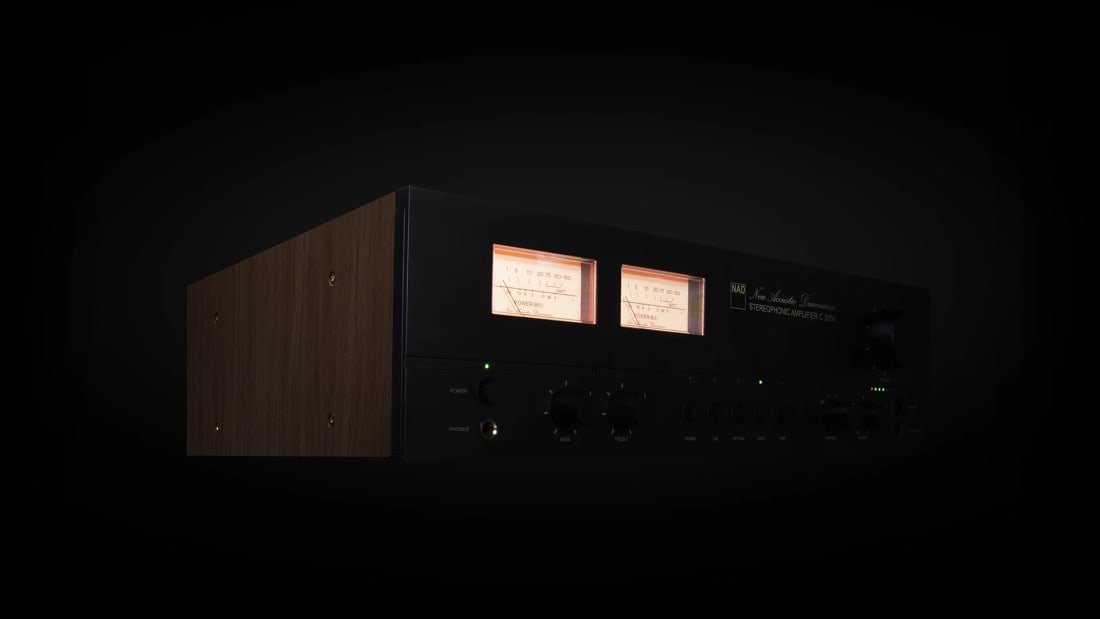 Amplifier gain structure: the setting that decides your noise floorGain mismatches between DAC, preamp and power stage quietly wreck dynamic range. Here's how to actually set gain structure instead of guessing at the volume knob.
 Bass management by the numbers: what your AVR's crossover and slope actually doCrossover frequency gets all the attention, but slope, distance settings and speaker size flags quietly decide whether your bass management works or fights itself.