Qobuz revenue growth of 45.7% outpaces the streaming market
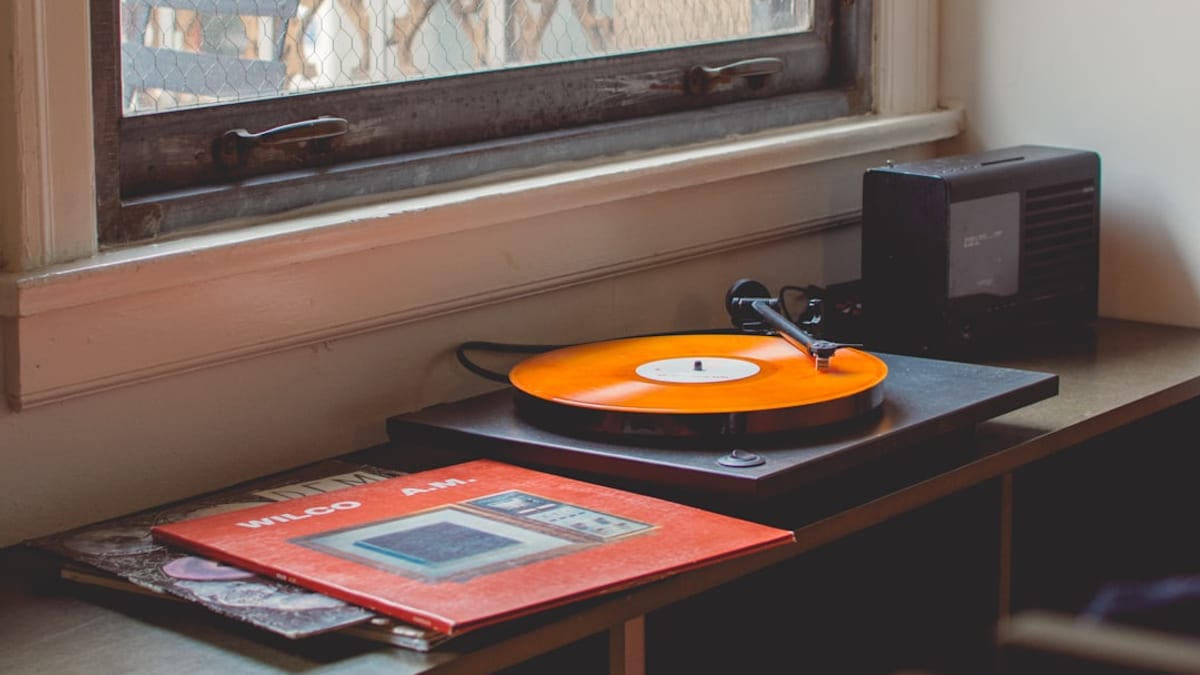
The numbers behind Qobuz revenue growth
On 16 June 2026, Qobuz released its full-year 2025 results, and the headline figure is genuinely striking: Qobuz revenue growth of 45.7% year-on-year. To put that in context, the broader paid music streaming market grew at 8.8% over the same period. Qobuz's rate of expansion is therefore more than five times the industry average. For a niche service built on the proposition that audio quality is worth paying for, that is not a minor statistical quirk. It is a structural shift in how a meaningful segment of music listeners is choosing to spend their money.
The service now counts 1.2 million monthly active users across 26 countries. Its average revenue per user sits at $135.90 per year, which, when you do the arithmetic against monthly active users, translates to a very healthy top-line number for a service that has never competed on price. Approximately 80% of Qobuz's revenue comes from international markets, with the United States confirmed as its largest single market. And the company is now projecting its first positive net result by March 2027, a milestone that would transform Qobuz from a well-regarded niche player running at a loss into a genuinely sustainable business.
For Australian audiophiles and home-theatre enthusiasts, these numbers carry practical weight. The service you rely on for 24-bit FLAC files of your favourite recordings is no longer the precarious boutique operation it once appeared to be. There is a compelling case to be made that Qobuz has reached, or is approaching, an inflection point.
Why the ARPU tells the real story
ARPU is simply average revenue per user: total revenue divided by the number of users over a given period. It is a blunt measure, but a useful one, because revenue growth figures can be misleading if a company is simply buying subscribers with aggressive discounting. The $135.90 annual ARPU figure is what stops that concern in its tracks. Compare that with the major streaming platforms, where the typical ARPU hovers around $60–$80 per year, and you see that Qobuz is attracting users who are not just willing to subscribe but willing to pay materially more for the privilege.
That premium is not arbitrary. Qobuz built its entire value proposition on lossless and high-resolution audio, primarily 16-bit/44.1 kHz (Redbook CD quality) as a baseline, with a substantial and growing catalogue of 24-bit files at sample rates up to 192 kHz. Understanding why that matters technically requires a bit of background. If you want to go deeper on the fundamentals, our Bit Depth & Sample Rate explainer covers the ground thoroughly. The short version: more bits and a higher sample rate preserve more of the original recording's dynamic and frequency information, and on a capable playback chain (a good digital-to-analogue converter, a quality amplifier, and revealing loudspeakers or headphones) that difference is audible.
Qobuz's audience skews strongly toward listeners who have already invested in that kind of playback chain. They are not streaming through a phone speaker. They are streaming through a dedicated DAC and streamer, or an integrated network amplifier, or a quality desktop headphone rig. The ARPU reflects that: these are listeners who have already made a financial commitment to audio quality, and $135.90 a year for the source material to justify that hardware investment is a straightforward decision.
The $18.73 per 1,000 streams figure: what it means for artists and for you
Qobuz's per-stream royalty rate of $18.73 per 1,000 streams is, by the standards of the streaming industry, exceptionally high. For reference, the major platforms pay rates that typically fall somewhere between $3 and $5 per 1,000 streams, depending on the territory, the deal structure, and the tier of subscription. Qobuz is paying out at roughly four to six times that rate.
This matters to the audiophile community for reasons that go beyond abstract ethics. The labels, distributors, and independent artists who receive meaningful royalties from Qobuz have a financial incentive to ensure their best-quality masters end up on the platform. When a major label is weighing whether to invest in a proper high-resolution master, rather than simply upsampling a 16-bit file and calling it hi-res, the royalty economics of where that master will be streamed are part of the calculation. Higher per-stream payouts create a positive feedback loop: better masters attract more discerning listeners, who generate more streams at a higher ARPU, which sustains the royalty rate.
There has been ongoing industry debate about what constitutes a genuine hi-res master versus a marketing-led upsample. Qobuz has, over the years, been reasonably rigorous about its Studio Masters designation, which requires documentation from the rights holder that the file originates from a high-resolution source. That rigour costs money to maintain, which is partly why the service has taken longer to reach profitability than platforms with looser curation standards. The path to a positive net result by March 2027 represents a validation of that model, or at least evidence that the market is willing to fund it. Our look at the hi-res formats worth paying for explains how to separate the real thing from the relabelled.
The MQA comparison is worth revisiting
It is impossible to discuss hi-res streaming in 2026 without acknowledging the collapse of MQA. The company behind Master Quality Authenticated went into administration in mid-2023, and the format has been in managed decline since, with Tidal, its primary champion, having already begun transitioning its catalogue to unencoded FLAC at CD quality and above. That transition removed the primary competitor to Qobuz's hi-res proposition from the market, or at least significantly weakened it.
MQA's failure was partly technical (critics argued persuasively that the encoding process introduced audible artefacts and that its claimed benefits over standard high-resolution FLAC were not reliably measurable) and partly commercial, given the licensing fees it imposed on hardware manufacturers and streaming services alike. Qobuz, which never adopted MQA, was positioned as the straightforward alternative: open FLAC files, verifiable provenance, no proprietary decoding required.
Whether Qobuz has directly absorbed former Tidal subscribers who prioritised audio quality is not confirmed in the released figures, but it would be naive to assume that shift has not contributed to the growth trajectory. The timing aligns. If you are weighing the two services against each other, our comparison of Tidal, Spotify, Apple Music and Qobuz in Australia lays out the differences.
What 26 countries and 80% international revenue means for the AU market
Qobuz has been available in Australia since 2021, and for Australian listeners, the service's financial health is directly relevant to something practical: catalogue availability and local pricing stability. A service generating 80% of its revenue from international markets, with confirmed presence across 26 countries, is not a service that can afford to quietly deprioritise non-US territories. The economics of a platform this size require active management of every significant market.
The $135.90 annual ARPU, expressed in what appears to be USD terms in the press release, translates to a meaningful figure in AUD at current exchange rates. Australian subscribers on the Studio tier, which provides full hi-res access, pay a locally set price that has remained competitive relative to what you would spend on a single mid-tier CD per month. Given the hardware investment most Qobuz subscribers have already made, this is, frankly, not where the budget conversation should be happening.
If you are currently running a capable DAC and streamer setup, something along the lines of the equipment we cover in our best DACs and network streamers guide, and you are still on Spotify Premium or Apple Music, the Qobuz numbers give you a concrete reason to reconsider. Those platforms have expanded their lossless tiers in recent years, and we have covered how Spotify's lossless launch ultimately helped Qobuz. Still, the depth of Qobuz's Studio Masters catalogue, particularly for classical, jazz, and audiophile-label recordings, remains a meaningful differentiator.
The hardware ecosystem that makes this relevant
Qobuz's growth trajectory matters more now that a critical mass of consumer hardware supports native integration. Roon, the premium music management software, treats Qobuz as a first-class source. DLNA and UPnP streamers from manufacturers including Cambridge Audio, Naim, Lumin, and Auralic all support Qobuz natively. Even the entry-level end of the network streaming market, devices in the $500–$1,500 range, now ships with Qobuz support baked into the firmware.
That integration is not accidental. Qobuz has been deliberate about its hardware partnerships, understanding that its listeners arrive via a very different path to the casual user who opens a streaming app on their phone. If you are in the market for a streaming amplifier or an all-in-one system, verifying Qobuz compatibility has become a standard part of the evaluation checklist, and our best streaming amplifiers guide flags native support where it exists. The growth numbers Qobuz posted will only accelerate manufacturer interest in maintaining and expanding those integrations.
Qobuz also leaves a lot out. It does not offer a podcast division, a video product, a social layer, or any of the feature creep that has made some of the major platforms feel like general-purpose entertainment dashboards rather than music services. That focus is a deliberate strategic choice, and I'd argue it is the smartest thing the company does. It is clearly resonating with an audience that wants a music service, not a media conglomerate.
Profitability by March 2027: what changes if they get there
Qobuz has been, for most of its existence, a company burning through investment capital in pursuit of a model that the market has taken time to validate. The projection of a first positive net result by March 2027 is significant because profitability changes the strategic options available to the company. A loss-making Qobuz is dependent on investor patience. A profitable Qobuz can reinvest in catalogue depth, editorial curation, and platform development on its own terms.
There are, of course, risks to the projection. Currency headwinds, particularly if the US dollar weakens against the Euro, given the company's French origins, could erode the international revenue contribution. Competition for the premium subscriber is intensifying, with Apple Music's spatial audio push and Amazon Music Unlimited's HD tier both targeting the same quality-conscious listener. And the global economic environment remains uncertain enough that discretionary subscription spending in 2026 and early 2027 is not guaranteed to hold at current levels.
But the structural argument is sound. A user base with a $135.90 ARPU is not a user base that churns when a competitor offers a $0.99 introductory month. These are committed listeners with committed systems. The technical benefits of high-resolution audio are most apparent on hardware that costs serious money, and people who have spent serious money on their playback chain are not going to abandon the service that feeds it in exchange for a slightly cheaper alternative that delivers inferior source files. That stickiness is the competitive moat, and the financial results are beginning to reflect it.
The practical takeaway for Australian listeners
If you are already a Qobuz subscriber: the service you rely on is in better shape than it has ever been. The path to profitability is visible, the catalogue continues to expand, and the hardware ecosystem around it is maturing rapidly. There is no sign of the kind of existential uncertainty that periodically shadows niche streaming services.
If you are evaluating whether to move to Qobuz from a lossy or CD-quality-only service: the financial stability argument is now considerably stronger than it was a year ago. Combine that with a capable playback chain, a decent DAC and streamer or a network-connected integrated amplifier, and the case for a trial subscription has rarely been more straightforward.
And if you are building or upgrading a system from the ground up with the intention of doing hi-res streaming properly, the equipment decisions matter as much as the service. Our best DACs and network streamers guide and best streaming amplifiers guide are reasonable starting points for understanding what the hardware side of a Qobuz-optimised system looks like at various price points.
The broader takeaway from these numbers is simpler: the segment of the market that takes audio quality seriously is growing, and growing fast. Five times the market rate is not a rounding error. It is a signal.
Common questions
- Is Qobuz available in Australia and what does a subscription cost?
- Yes, Qobuz has been available in Australia since 2021. The service offers a Studio Premier tier that provides access to its full high-resolution catalogue. Local pricing is set in AUD and has been competitive relative to other premium streaming options. The company's 2025 annual results, released in June 2026, confirm it is active across 26 countries with approximately 80% of its revenue derived from international markets, which indicates sustained investment in non-US territories including Australia.
- What hardware do I need to hear the difference with Qobuz's hi-res files?
- To benefit from Qobuz's 24-bit high-resolution masters, your playback chain needs to be capable of handling those files properly. At minimum, you need a DAC (digital-to-analogue converter) or network streamer that supports 24-bit/96 kHz or 24-bit/192 kHz PCM playback, connected to a quality amplifier and loudspeakers or headphones that are resolving enough to reveal the additional detail. A dedicated network streamer or streaming-integrated amplifier with native Qobuz support is the most convenient solution. Entry-level capable setups are available from around $800–$1,500 AUD; dedicated DAC-and-streamer separates can extend well beyond that.
- How does Qobuz's per-stream royalty rate compare to other streaming services?
- According to Qobuz's June 2026 annual results, the service pays $18.73 per 1,000 streams. Major streaming platforms typically pay somewhere between $3 and $5 per 1,000 streams, depending on territory and deal structure. This means Qobuz's royalty rate is approximately four to six times higher than the industry norm, which provides labels and independent artists with a meaningful financial incentive to make their best-quality masters available on the platform.
- When does Qobuz expect to become profitable?
- In its full-year 2025 results, released on 16 June 2026, Qobuz stated it is targeting its first positive net result by March 2027. The company reported 45.7% revenue growth in 2025, compared to 8.8% growth for the broader paid streaming market, and an annual average revenue per user (ARPU) of $135.90 across its 1.2 million monthly active users in 26 countries.

I'm Marcus, and I'll be honest up front: I trust a measurement before I trust my own ears, because my ears lie to me daily. I spent fifteen years designing audio electronics before I started writing about them, so when a brand tells me a number, I want to see the graph. That doesn't make me cold about this hobby — I love a system that disappears as much as anyone — it just means I'll tell you when an expensive box is selling you confidence rather than performance.
Former audio electronics engineer; objectivist; runs the test bench
More from Marcus Vale
 Why your turntable's earth wire isn't optionalTurntable earthing fixes most phono hum problems. Here's how grounding actually works, why it fails, and how to track down a noisy connection.
 Why your AVR runs cool on music but throttles on AtmosAVR thermal throttling explained: why nine-channel Atmos mixes push receivers into protection mode that two-channel music never triggers.
- Subwoofer delay settings: why your AVR's number is a guessAVR auto-calibration estimates subwoofer delay from distance, not timing. Here's how to measure and correct it properly for tighter bass.
- AVR auto-calibration: what Audyssey, YPAO and Dirac actually measureAudyssey, YPAO and Dirac Live all run a mic sweep and spit out numbers, but they're not measuring the same things or fixing the same problems. Here's what's actually happening.
- Cartridge break-in: what actually changes in the first 40 hoursDoes a new cartridge really need 40 hours to "open up"? I measured one to find out what's mechanical fact and what's audiophile folklore.
- DAC output stages: what the chip doesn't tell youThe DAC chip gets all the marketing attention, but the analogue output stage after it does most of the work shaping what you actually hear.