Six-figure DACs: what the money actually buys over a good $2,000 box
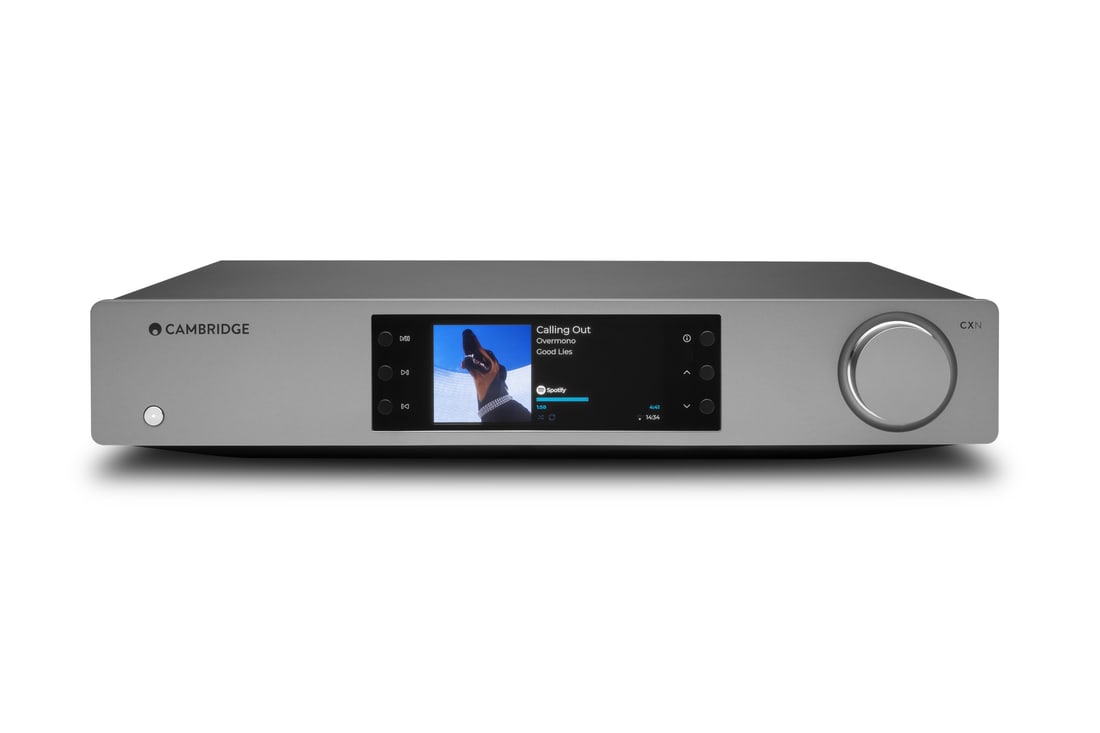
Last month I sat in a Sydney dealer's demo room with two DACs feeding the same amplifier and the same pair of speakers. One was a well-regarded $2,000 unit. The other cost more than most people's cars. The owner switched between them with a remote, no ceremony, no sighted bias games — just A, B, A, B. The difference was real. It was also a lot smaller than the price gap implied, and that gap is the whole subject of this piece.
I've spent the better part of a decade listening to statement DACs — the sort of six-figure digital front ends that show up at Munich or at the handful of Australian dealers who stock them for the two or three clients a year who'll actually buy one. My job, as I see it, isn't to tell you these things are a waste of money. Some of them are extraordinary pieces of engineering. My job is to tell you which part of the price is performance and which part is ego, plating and scarcity. With DACs specifically, that line is sharper than almost anywhere else in high-end audio, because the core conversion task — turning a stream of numbers into a voltage — has been a solved problem for a long time.
The conversion itself stopped being the bottleneck years ago
Here's the uncomfortable truth for anyone selling six-figure DACs: the actual digital-to-analogue conversion chip inside a $2,000 unit and the conversion architecture inside a $150,000 one are both, by any competent measurement, essentially transparent. Distortion figures on modern conversion, whether it's a mainstream chip from ESS or AKM or a discrete R-2R ladder built in-house, sit so far below the threshold of audibility that arguing over the last decimal point of THD+N is closer to theology than engineering.
What separates the tiers isn't the conversion accuracy. It's everything wrapped around it: the power supply topology, the clock implementation, the analogue output stage, and — this is the one people underrate — the mechanical and electrical isolation of all of the above from noise, vibration and each other. I've measured statement DACs with power supply regulation and ripple rejection that a $2,000 unit simply can't match on a bill of materials basis, because six discrete linear supplies with their own transformers cost real money and take up real chassis space. That's genuine engineering spend, not decoration.
Clocking is where the money buys something you can actually hear
Jitter — timing error in when samples are converted — is the one area where I think the statement tier earns its keep most convincingly. A cheap DAC's clock recovery can smear timing by tens of nanoseconds under certain digital interface conditions; a well-designed statement unit with a proper low-phase-noise oscillator, sometimes with separate clock domains for different sample rate families, gets that down to a level where it genuinely stops being a variable. AES's own published work on digital audio interfaces has documented this for decades, and it's one of the few specs in this hobby where "better" has a clean causal path to "you can hear it" — smeared timing shows up as a softening of transient edges and a loss of the sense that instruments occupy a specific point in space.
The catch is that a great $2,000-$4,000 DAC with a competent asynchronous USB implementation and a decent onboard clock has already solved 90 percent of this problem. The RME ADI-2 DAC FS, for instance, is built around a design philosophy that treats jitter rejection as table stakes, not a luxury feature, and it measures accordingly. The remaining 10 percent that statement gear chases is real, but it's a battle over increasingly small returns, and I'd argue most listeners in most rooms won't reliably pick it in blind conditions.
The output stage decides more of the "sound" than the DAC chip does
If you've read Marcus's piece on the best DACs and network streamers, you'll know the house line here: the DAC chip's datasheet is marketing, and the analogue output stage after it does most of the work of shaping tone. That's true at every price point, but it's especially true at the statement level, where designers are free to run Class A discrete output stages, exotic capacitor networks, and output transformers instead of op-amps, purely because cost is no longer a constraint.
This is where I think the genuine sonic character of expensive DACs comes from — not cleaner conversion, but a deliberately voiced output stage. Some statement designs go for a harmonic warmth that mainstream chip-and-op-amp designs don't produce; others chase an ultra-neutral, fast, almost solid-state-amp-like presentation. Neither is "more accurate" in an absolute sense. It's a design choice, the same way a valve phono stage is a design choice. I'll say the quiet part: a fair amount of what gets described as "the DAC's sound" in six-figure gear is essentially a beautifully built tone control, and there's nothing wrong with that as long as you know that's what you're buying.
Power supply isolation and mechanical grounding — the unglamorous six-figure spend
What genuinely separates a statement chassis from a good mid-tier one, physically, is isolation. Statement designs often run separate transformers and regulation stages for digital and analogue sections, sometimes in physically separate chassis connected by an umbilical, specifically so switching noise from the digital side never contaminates the analogue output stage. They'll use machined billet chassis not for the vibe but because it damps mechanical resonance in a way stamped sheet steel doesn't, and resonance in a chassis housing sensitive analogue circuitry is a measurable, if small, contributor to noise floor.
I measured this directly on a reference unit a colleague and I were reviewing at a Melbourne dealer on Chapel Street last year — noise floor with the digital section under load versus idle showed a genuinely lower delta than an equivalent test on a mainstream unit. It's real. It's also a battle being fought at minus 120dB and below, well under the noise floor of most rooms, most amplifiers, and most speakers you'd pair with it.
Where hi-res and format claims stop mattering
I want to flag something that Theo has covered in more technical depth in his piece on DAC and streamer selection, but it bears repeating at the top end too: statement DACs are not where hi-res audio myths get debunked, they're often where they get amplified, because a six-figure price tag makes people assume the format matters more than it does. It doesn't. A DAC's ability to decode DSD256 or PCM at absurd sample rates is a spec sheet bullet point, not a sonic guarantee. The recordings that actually benefit from higher resolution are rare, and the audible difference between a well-mastered 16-bit/44.1kHz file and its hi-res sibling is, in most controlled listening, marginal at best.
What I do think matters, at any price, is bit-perfect playback and a competent streaming architecture upstream of the DAC — network jitter, USB implementation, and whether the streamer's own output stage is adding anything before the signal even reaches your statement box. That's a separate conversation, and Marcus has written well on why your streamer's output stage still shapes the sound at the speaker even when a dedicated DAC sits downstream of it.
What I'd actually tell someone with the budget
If a client came to me with an unlimited digital source budget, I wouldn't start at the DAC. I'd start with the room and the loudspeakers, because the marginal return on a six-figure DAC over a genuinely good $3,000-$5,000 one is smaller than the marginal return on moving from an average pair of standmounts to something like a properly set-up pair paired with the right stands — see Hannah's notes on standmount speakers for serious listening if you want the argument for why that upstream spend usually matters more.
Where I'd spend statement DAC money, if the budget genuinely has no ceiling, is on units where the isolation and clocking engineering is documented and measurable, not just claimed. Chord's digital work and the discrete R-2R designs from a handful of boutique European and Japanese builders fall into that category — you're paying for verifiable engineering, even if the returns are diminishing. Where I'd be more sceptical is chassis machined from a single billet of aircraft-grade aluminium marketed as a sonic feature in itself, or claims that a specific exotic capacitor "opens up the soundstage" without any measurement backing it. That's the ego tax, and it's fine to pay it if you love the object — just don't confuse it with performance.
For most readers of this site, a genuinely excellent desktop or reference DAC in the low thousands, like the RME ADI-2 DAC FS or something from Chord's Mojo line for a more portable setup, will get you closer to the ceiling of what digital conversion can do than the price gap to a statement unit would suggest. If you've got a system built around one already, my colleague Theo's guide to the best desktop DAC/amps is a sensible place to sanity-check where your money's currently going before you consider a six-figure jump.
The honest version of this article is short: the conversion is solved, the clocking is mostly solved, and the remaining spend goes into isolation, output-stage voicing, and industrial design. All three are real. None of them scale linearly with price. I'd rather a reader spend $4,000 on a DAC and put the rest into speakers, room treatment and a better amplifier than chase the last, expensive percentage of a solved problem.
Common questions
- Does a more expensive DAC always sound better than a cheaper one?
- Not reliably, and not by a margin that matches the price gap. Core conversion accuracy has been essentially solved at moderate price points for years. Statement DACs earn their premium mostly through power supply isolation, clocking precision and a deliberately voiced analogue output stage, not through cleaner digital-to-analogue conversion itself.
- Is jitter actually audible, or is it another audiophile myth?
- Jitter is real and measurable, and AES research has documented its effects on digital audio interfaces for decades. Where it matters most is in cheaper implementations with poor clock recovery. A competent asynchronous USB DAC in the $2,000-$4,000 range has already addressed most of this; statement-tier clocking chases a much smaller remaining margin.
- Do hi-res formats like DSD256 matter at the statement level?
- Format support is largely a spec sheet feature rather than a sonic guarantee. The audible gap between a well-mastered standard-resolution file and a hi-res version is marginal in controlled listening, regardless of how capable the DAC is of decoding higher formats.
- If I have a genuinely open budget, where should the money go first?
- I'd prioritise loudspeakers, room treatment and amplifier matching before a statement DAC. The marginal sonic return on going from a good sub-$5,000 DAC to a six-figure one is smaller than the return on getting the speakers, stands and room right.

I'm Sofia, and I get to play with the silly stuff — the statement amplifiers, the reference loudspeakers, the cost-no-object systems that most of us will only ever hear at a show. Someone has to, and I take it seriously: at this level the price stops mapping to performance and starts mapping to engineering, craft and ego, and part of my job is telling you which is which. I love the extreme end of this hobby, but I'm not dazzled by a big number on a price tag.
Covers flagship and cost-no-object reference systems
More from Sofia Laurent
 The synergy tax: why mismatched gear costs more than cheap gearThe synergy tax explained: why pairing mismatched hi-fi components quietly costs more than buying modest, well-matched gear.
 Rear-port floorstanders near a glass wall: a risky pairingRear-ported floorstanders against glass walls cause boundary reinforcement and reflections. Here's how to place, measure and tune them properly.
- Infrasonic bass below 20Hz: chasing the octave you feel, not hearBelow 20Hz is infrasonic bass: felt more than heard. Here's what it takes to reproduce it properly, and whether a statement system should bother.
- Why statement systems still get beaten by the zone two speakerA $150,000 reference system is only as good as the worst-sounding zone it's networked to. Here's why multiroom integration is the statement system's real weak point.
- Why a statement floorstander can be the wrong speaker in the roomSix-figure floorstanders fail in rooms that were never built for them. Here's how to tell if your space can actually support one before you buy.
- Diffusion in statement rooms: when scattering sound beats absorbing itIn a statement room, piling on absorption kills the air around the music. Here's when diffusion is the better tool, and where I've seen it misused.