Antipodes' Oladra brand: $35K Sentia and $58K Presence
A new name for a new ceiling
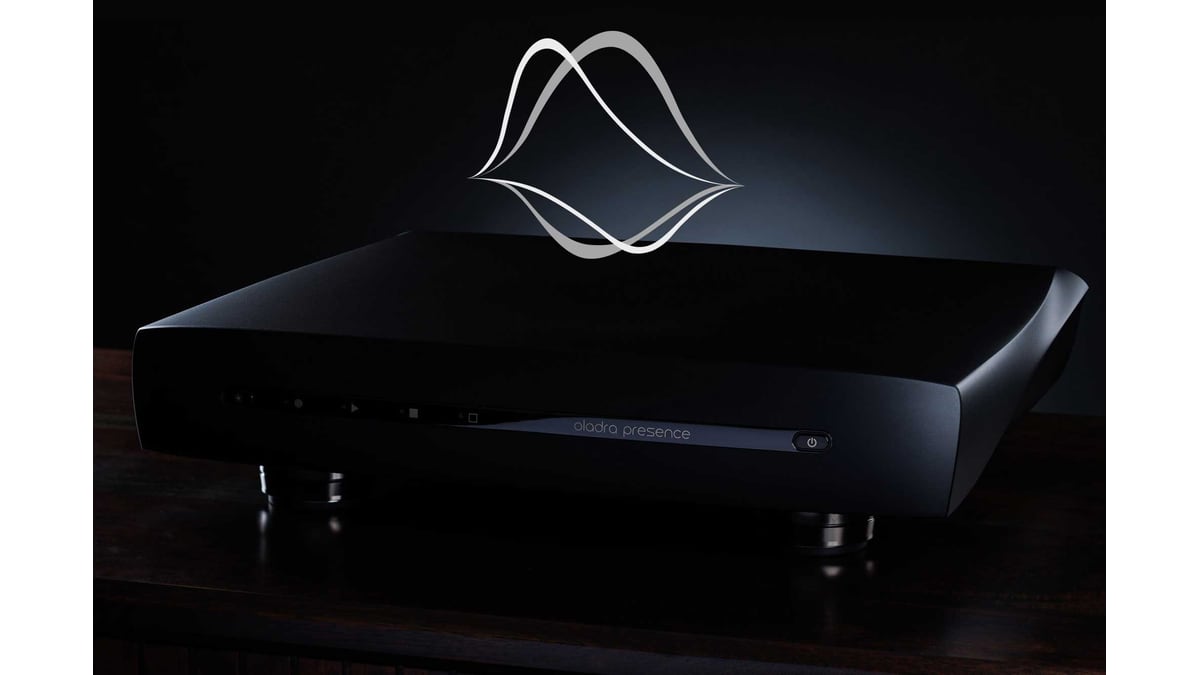
There are moments in the high-end audio industry that signal something more than a product launch. When a company of Antipodes Audio's standing, one of New Zealand's most respected digital audio engineers, with a loyal following among serious listeners right across Australia and beyond, decides that its most ambitious work deserves its own identity, that is worth pausing over. In April 2026, Antipodes Audio established the Oladra brand as a fully independent name, built on a new digital audio platform, and simultaneously unveiled two flagship models: the Sentia, priced from US$35,000 (approximately £33,888), and the Presence, from US$58,000 (approximately £57,888). Both made their world debut at AXPONA 2026 in Chicago, and both are shipping.
For Australian enthusiasts, this development carries particular weight. Antipodes has always been, in the most literal sense, ours: a brand from the bottom of the world that quietly earned global respect through engineering rigour rather than marketing spectacle. The creation of Oladra feels less like a corporate restructuring exercise and more like an acknowledgement that the pursuit at the very top of digital audio reproduction has reached a point where it needs room to breathe, free of the expectations and price anchors that come with an established product family.
What the Oladra brand actually is
Oladra is not simply a rebadging exercise or a cosmetic refresh of existing Antipodes hardware. The brand has been established on a distinct digital audio platform, a clean-sheet approach to the architecture underlying these servers, rather than an evolution of the existing Antipodes lineup. That distinction matters enormously in a category where the accumulated design decisions of previous generations can quietly constrain what is achievable, no matter how talented the engineering team.
The decision to create a separate brand also reflects a commercial reality that the industry's most thoughtful manufacturers have wrestled with for years. When you are selling a network streamer or music server at US$58,000, the conversation you need to have with a prospective buyer is categorically different from the one you have when the entry price is a few thousand dollars. The reference points, the expectations around build quality and finish, the after-sales relationship: all of it shifts. A distinct brand identity gives Oladra the freedom to set its own terms.
Both models carry a five-year warranty, which is significant in a category where the underlying software ecosystem and network dependencies can make long-term reliability a genuine concern. A five-year commitment at this price point says something about confidence in the platform's longevity.
The Sentia and the Presence: what we know
At US$35,000, the Sentia is, by any rational measure, an extraordinarily expensive music server. And yet within the context of truly reference-level digital source components, it sits at what you might call the entry point to the conversation. It is a server designed for listeners who have already resolved every other variable in their system and are ready to take the source seriously as the last remaining constraint on performance.
The Presence, at US$58,000, represents the summit of what Oladra currently offers. Flagship DACs from the likes of dCS, Wadax and MSB can exceed these figures on their own, so the positioning is coherent: these are components for complete, uncompromised digital front ends, where the server and streamer are treated as the foundation on which everything else rests, rather than as an afterthought upstream of a costly DAC. Understanding what a network streamer actually does in a system, and why the quality of that component has an outsized effect on everything downstream, is essential context for seeing why a product at this price level can be justified at all.
The world debut at AXPONA 2026 in Chicago was the appropriate stage. AXPONA has grown into one of the most significant high-end audio shows on the North American calendar, attracting manufacturers and enthusiasts who take the pursuit of reproduced sound with complete seriousness. Launching there signals that Oladra is positioning itself squarely in global reference-tier company, not as a boutique curiosity but as a genuine contender in the conversation about what digital audio reproduction can achieve at its absolute best.
Why the source matters this much
Skeptical audiophiles, people who have invested heavily in speakers, amplification and room treatment, often need convincing that the source component deserves equivalent attention. The argument is not always intuitive. If you are streaming from a well-regarded platform over a stable network connection, surely the bits are the bits? The data arrives intact, the DAC does the conversion, and beyond a certain threshold of technical competence the server should be transparent.
The reality, as anyone who has conducted careful listening comparisons in a well-resolved system will tell you, is considerably more complicated than that. The quality of the clocking, the noise architecture of the computing platform, the way in which RF interference and ground noise are managed: all of these variables affect what ultimately reaches the DAC's input stage, and from there what the digital-to-analogue converter is able to do with it. In systems where the DAC is resolving enough to reveal these differences, and at the price levels we are discussing it almost certainly will be, the server becomes the limiting factor far sooner than the marketing literature of most streaming solutions would suggest.
Timing errors are a good example. Any digital audio chain depends on samples being converted at precisely even intervals, and variation in that timing is known as jitter. How a source device generates and distributes its clocks, and how well it keeps electrical noise away from them, is part of the story we cover in more detail in our piece on network audio clocking and streamer jitter. A digital-to-analogue converter can only work with what it is handed, which is why upstream design matters.
Why a separate platform makes sense
This is why the most serious digital audio manufacturers have invested so heavily in the computing platform itself, rather than simply optimising the user interface or adding support for new streaming services. It is also why a company like Antipodes, which has built its reputation on taking exactly this kind of deep engineering approach, would choose to establish a separate brand for its most ambitious work rather than fold it into an existing lineup where price-point expectations might constrain the engineering decisions.
I'd argue this is the right call, and that spec-sheet chip talk matters far less than this kind of whole-platform thinking; our look at why DAC chip specs are marketing makes the same point from the converter side. For those building or refining a reference-level digital front end, the guidance in our best DACs and network streamers guide provides useful orientation on how to think about the server-streamer-DAC relationship across a range of price points, including the considerations that become relevant when you are operating at the summit of the market.
The Australian context
For Australian buyers, there are a few layers of consideration worth unpacking. The pricing quoted is in US dollars and British pounds; Australian dollar equivalents will depend on exchange rates at the time of purchase and the specifics of local distribution arrangements. At typical exchange rates, we are talking about figures well north of AU$50,000 for the Sentia and approaching or exceeding AU$90,000 for the Presence. Those numbers place these firmly in the territory of statement system components, comparable in investment to the finest analogue front ends or flagship loudspeakers from the premier manufacturers.
That said, the Antipodes name carries genuine cachet in Australia in a way that imported European or American brands sometimes do not. There is a familiarity, a sense of proximity to the engineering team, and a history of strong local support that matters when you are committing to a component at this level. The five-year warranty takes on additional significance in this context. It is a practical assurance that the investment is protected over the medium term, regardless of what happens to global supply chains or software ecosystems.
The high-end audio market in Australia has also matured considerably over the past decade. The pool of listeners operating at genuine reference level, people who have resolved their room acoustics, invested in world-class amplification and transducers, and are now genuinely source-limited, is larger than it was, and more sophisticated. Oladra's timing, in that sense, is not arbitrary. If you are weighing where the money is best spent before reaching that point, our article on where diminishing returns kick in across a high-end system is a useful sanity check.
A platform, not just a product
The detail that Oladra has been built on a new digital audio platform deserves more attention than it might initially receive. In the digital audio space, the platform is everything. It determines not just current performance but the trajectory of future development: what can be updated, what can be improved, what new capabilities can be unlocked over the life of the product. A server purchased at US$58,000 in 2026 should still be performing at or near its potential in 2031, and the platform architecture is what makes that possible or forecloses it.
Antipodes has historically been attentive to this dimension of the ownership experience, and the establishment of Oladra on a purpose-built platform, rather than by adapting an existing one, suggests that this forward-looking orientation has been embedded in the design from the ground up. Whether that platform ultimately delivers on its promise will be a matter for extended listening and living with these components over time. But the intent, at least, appears to be right.
It is worth considering what this means for the broader Antipodes lineup. The establishment of Oladra as a distinct brand does not necessarily imply that the parent company's existing models are being wound down or deprioritised. Rather, it creates a clear delineation: Antipodes Audio for serious high-performance digital audio at more accessible price points, Oladra for the absolute reference tier where compromises of any kind are simply not on the table. That kind of clarity is valuable in a market that can sometimes feel opaque about what distinguishes a genuinely reference-class product from a very expensive one.
Implications for system builders
If you are at the stage of thinking about a component at this level, the Sentia and Presence belong in your consideration set alongside the handful of other truly reference-tier music servers and streamers available globally. The Antipodes engineering pedigree is real, the platform investment appears substantial, and the five-year warranty provides meaningful reassurance about the long-term relationship with the product.
For those earlier in their digital audio journey, or building toward this level, the principles that make these products significant are worth understanding now, even if the investment is some way off. The relationship between bit depth and sample rate and what your server and DAC need to do with that data is foundational knowledge that will serve you well regardless of where you ultimately land on the price spectrum. Similarly, understanding how soundstage and imaging are affected by source quality, and why this is one of the first things to improve when you upgrade a digital source, provides practical context for the investment these components represent.
The broader question of how to build a system around a reference digital source, matching it with appropriate amplification, transducers and room treatment, is one that deserves careful thought. The source does not exist in isolation; its revelatory qualities are only accessible through a chain that is resolved enough to let them through.
A genuinely significant moment
I want to be careful not to overstate what we know at this stage. We have pricing, a shipping date, a warranty period, and the context of a new platform and a new brand identity. What we do not yet have is extended critical listening from a range of qualified reviewers in well-resolved reference systems. That will come, and it will be the test that matters most.
But the establishment of Oladra is, in itself, a meaningful development. It represents a New Zealand engineering team making a deliberate, confident statement about where they believe the ceiling of digital audio performance currently sits, and committing the resources of a new platform and a new brand identity to reaching it. In a category that has seen genuine, measurable progress over the past decade, progress that has made the case for serious investment in digital sources more compelling with each passing year, that kind of commitment deserves to be taken seriously.
For Australian listeners who have been on this journey with Antipodes, the arrival of Oladra feels like watching a long-anticipated next chapter begin. Whether the Sentia and the Presence ultimately deliver on the extraordinary promise implied by their price points and their provenance is a question worth following closely. I know I will be.
Common questions
- What is Oladra and how does it relate to Antipodes Audio?
- Oladra is a new, standalone super-premium digital audio brand established by Antipodes Audio in 2026. It operates on a distinct digital audio platform developed specifically for the brand, and is positioned as the reference tier above the existing Antipodes lineup. The Sentia and Presence are its first two models.
- What are the prices of the Oladra Sentia and Presence, and when do they ship?
- The Sentia is priced from US$35,000 (approximately £33,888) and the Presence from US$58,000 (approximately £57,888). Both models began shipping in April 2026 and carry a five-year warranty. Australian dollar pricing will depend on current exchange rates and local distribution arrangements.
- Where were the Oladra Sentia and Presence first shown publicly?
- Both models made their world debut at AXPONA 2026 in Chicago, one of North America's most prominent high-end audio shows, in April 2026.
- Why would a music server cost this much — what justifies the investment at reference level?
- At reference level, the quality of clocking, noise architecture, RF interference management and computing platform design all have measurable effects on what reaches the DAC and ultimately the listener. In highly resolved systems, the server becomes the limiting factor sooner than most streaming marketing suggests. A purpose-built platform also determines the longevity and upgrade trajectory of the product over its lifetime.

I'm Sofia, and I get to play with the silly stuff — the statement amplifiers, the reference loudspeakers, the cost-no-object systems that most of us will only ever hear at a show. Someone has to, and I take it seriously: at this level the price stops mapping to performance and starts mapping to engineering, craft and ego, and part of my job is telling you which is which. I love the extreme end of this hobby, but I'm not dazzled by a big number on a price tag.
Covers flagship and cost-no-object reference systems
More from Sofia Laurent
 Negative feedback in amplifier design: the argument that never endsNegative feedback cuts amplifier distortion but divides designers. Here's what it does, why some statement amps avoid it, and what it means for you.
 The synergy tax: why mismatched gear costs more than cheap gearThe synergy tax explained: why pairing mismatched hi-fi components quietly costs more than buying modest, well-matched gear.
 Rear-port floorstanders near a glass wall: a risky pairingRear-ported floorstanders against glass walls cause boundary reinforcement and reflections. Here's how to place, measure and tune them properly.
- Infrasonic bass below 20Hz: chasing the octave you feel, not hearBelow 20Hz is infrasonic bass: felt more than heard. Here's what it takes to reproduce it properly, and whether a statement system should bother.
- Why statement systems still get beaten by the zone two speakerA $150,000 reference system is only as good as the worst-sounding zone it's networked to. Here's why multiroom integration is the statement system's real weak point.
- Why a statement floorstander can be the wrong speaker in the roomSix-figure floorstanders fail in rooms that were never built for them. Here's how to tell if your space can actually support one before you buy.