The last ten per cent: where statement systems actually spend their money
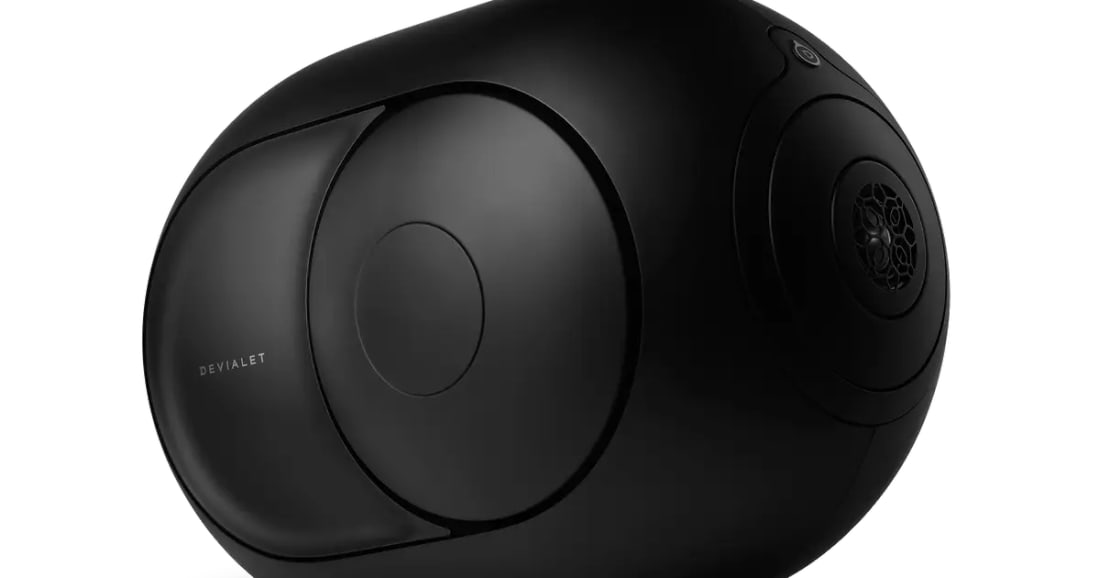
I was at a dealer's private listening room off a laneway near Crown Street in Surry Hills a few weeks back, sitting in front of a system that cost more than most Sydney apartments' deposits. The salesman, to his credit, didn't oversell it. He said something I've been turning over since: "Past this price, you're not buying more music. You're buying the last few per cent, and someone has to pay for the engineering that gets you there." That's the most honest sentence I've heard on a showroom floor in years, and it's the whole subject of this piece.
People ask me constantly where the diminishing returns curve actually bends in a statement system. Not "is expensive gear worth it" — that's a boring question with an obvious answer (sometimes, sometimes not) — but specifically: once you're past the point where more money reliably buys more sound, where does the money keep going, and is any of it worth paying for anyway?
The curve is real, and it bends earlier than the marketing suggests
Let's be precise about the shape of this thing, because vague talk about "diminishing returns" doesn't help anyone spend well. In loudspeakers and amplification, the jump from genuinely budget gear to a well-regarded mid-tier system — something like a Bowers & Wilkins 705 S3 (check price) off a decent integrated — is enormous. Every dollar in that first stretch buys audible, repeatable improvement: lower distortion, better driver control, cleaner extension at both ends. I don't think that's controversial.
The next jump, from that mid-tier system to genuinely excellent gear in the four-to-five-figure range, still buys real things, but they get subtler and more room-dependent. Cabinet resonance control, driver matching precision, power supply headroom under real musical peaks rather than test-tone peaks — these matter, but you need a treated room and trained ears to hear all of it reliably. Then there's the third stretch, the one I actually live in for this column. Past that point, and I mean well past it, the engineering keeps improving on a bench. Distortion figures that were already inaudible get lower still. Chassis machining gets tighter. Power supplies get more isolated stages than any transient in recorded music will ever call on. And the audible return per dollar keeps shrinking, sometimes to a level where a very good listener in a very good room, doing a level-matched comparison, genuinely cannot tell two components apart with statistical confidence.
I'd argue most of the industry doesn't want you to know exactly where that curve goes flat, because a flat curve is bad for selling the next tier up. My honest opinion, and I'll own this as an opinion rather than a measured fact: for the large majority of listeners in ordinary Australian rooms, the curve is essentially flat well before six figures. What you're buying beyond that is something else entirely, and it's worth naming honestly rather than pretending it's more fidelity.
What the extra money is actually buying, once fidelity gap closes
So what is it, if not sound? Three things, mostly, and none of them are shameful — they're just different from what the marketing implies.
The first is engineering headroom you'll never use but that exists as insurance against the worst-case signal. A power amplifier engineered to deliver clean current into a punishing four-ohm dip at full orchestral crescendo, with margin to spare, is doing something real. Most of us will rarely if ever ask that of an amp in a domestic room at sane volumes. But the margin is genuine engineering, and someone has to fund the R&D and the over-built transformer that provides it.
The second is craft and materials that have nothing to do with the signal path. Machined aluminium chassis instead of stamped steel. Hand-finished veneers. Point-to-point wiring in a valve amp instead of a PCB, which some engineers will tell you measures marginally worse but which represents hundreds of hours of skilled labour that has to be paid for somewhere. This is where I think a lot of high-end pricing genuinely lives — not in the circuit, but in the box around the circuit and the hands that built it.
The third, and I say this without much romance, is scarcity and brand equity. Limited production runs, waiting lists, the simple economics of a company that sells four hundred units a year rather than four hundred thousand. None of that is fraud. It's just not sound quality, and conflating it with sound quality is where a lot of buyers get burned emotionally, if not financially.
Reading a spec sheet for engineering versus ego
Here's a practical filter I use when I'm assessing a piece of statement gear, because after enough shows and dealer visits to lose count, you start to develop a sense for which claims are load-bearing and which are decoration.
I look first at power supply topology and regulation, because this is where genuine engineering differences show up even at extreme prices — a well-regulated, over-specified supply genuinely behaves differently under dynamic load than a marginal one, and this is measurable, not folklore. Our own coverage of streaming amplifiers touches on how much of that engineering has trickled down into far more affordable integrated units than people expect, which tells you something about where the real cost curve sits.
I look second at whether a manufacturer publishes real distortion and noise figures under load, not just at one convenient test frequency, and whether those figures track their price positioning honestly. A component costing five times as much with distortion figures indistinguishable from a well-reviewed midrange unit — say something in the territory of a Marantz Model 40n (check price) or a McIntosh MA352 (check price) — should prompt a question, not blind faith. Sometimes the answer is legitimate: better linearity into real-world loads that a single bench measurement doesn't capture. Sometimes the answer is that you're paying for the badge.
Third, and this is the one people skip, I ask what the room and the rest of the chain are actually capable of resolving. A component with genuinely lower noise floor and better channel separation than anything before it is wasted downstream of speakers that can't resolve the difference, or in a room with untreated first reflections doing far more damage to the signal than any component-level improvement could recover. I've said this before and I'll keep saying it: the room is the cheapest and most consistently underfunded component in almost every system I audition, statement-tier or otherwise.
Synergy is real, but it's not what the brochures mean by it
The word "synergy" gets used to justify almost anything in this hobby, usually meaning "trust us, buy the matching cables." I want to reclaim it, because there's a genuine engineering version of the concept that matters enormously at the top end and gets lost in the marketing noise. Real synergy is about impedance and current relationships between components that are specified, not mystical. A speaker with a difficult impedance curve and low sensitivity needs an amplifier with genuine current delivery into that curve, not just a large number on the front panel. This is the actual substance behind our piece on loudspeaker sensitivity and amplifier matching, and it applies at every price point, statement gear included. I've heard extremely expensive amplifiers sound genuinely mediocre paired with the wrong load, and moderately priced amplifiers sound remarkable paired with a speaker that suits their particular strengths. The mystical version of synergy — that this cable "opens up" that amplifier in a way no other cable can — deserves more scepticism than the industry generally allows it. Our position on this, and I think Marcus would back me on it from the electronics side, is laid out plainly in the piece on where cable spending stops making sense. There's a real floor below which cheap or damaged cabling causes audible problems, and above that floor the returns flatten out fast, regardless of what the demo at the show suggested under carefully curated conditions.
A spending order I'd actually defend
If someone handed me a genuinely open budget and asked me to sequence the spend for a statement system, I wouldn't front-load the electronics the way showroom demos tend to encourage.
Room treatment and speaker positioning come first, always, because they're the only stage where a modest spend can fix a problem that no amount of downstream component money will touch. I'd rather see someone spend on acoustic treatment and proper stands — the point made well in our piece on standmount speakers on the wrong stands — before they spend a single extra dollar on an amplifier upgrade.
Loudspeakers come next, because they're the transducer, the thing actually making the air move, and they're where system character gets set. Amplification third, matched properly to what the speakers need rather than what looks impressive on a spec sheet. Source and digital chain fourth, unless you're building around vinyl, in which case that sequencing shifts — and Priya's piece on where a vinyl system's money actually goes is worth reading alongside this one if that's your path. Cabling and tweaks last, and modestly, once everything upstream is already resolving well.
The Australian Communications and Media Authority doesn't regulate hi-fi pricing, obviously, and there's no standards body keeping vendors honest about where fidelity actually plateaus. That's on us as buyers and reviewers. The Australian Competition and Consumer Commission's guidance on unsubstantiated claims is at least a reasonable backstop against the wilder end of cable marketing, for what it's worth, though enforcement in this category is thin on the ground.
What I'd tell someone about to spend six figures
I don't think six-figure systems are foolish. I've sat in front of a handful that did things — coherence, scale, an absence of strain at levels that would make lesser gear fall apart — that genuinely earned their keep, at least for the person who bought them and loved them. But I'd want that buyer to know exactly what they're purchasing: engineering margin they likely won't use, craft they can see and touch, and membership in something scarce. That's a legitimate thing to want. It's just not the same thing as "better sound," and pretending otherwise is how good money ends up chasing a curve that's already gone flat. The honest version of the last ten per cent is that it costs disproportionately more than the first ninety, and it should, because it's disproportionately harder to engineer and building it by hand disproportionately costs more labour. Whether that's worth it to you isn't a question I can answer. It's not really a hi-fi question at all.
— Sofia Laurent, High-End & Statement Systems Editor
Common questions
- Is there a price point where more expensive gear stops sounding better?
- For most listeners in ordinary rooms, the audible improvement per dollar flattens out well before the true high end. It doesn't vanish entirely, but past a certain point you're paying more for engineering margin, materials and craft than for a change most people could reliably identify in a level-matched comparison.
- Does cable and interconnect spending follow the same diminishing-returns pattern?
- Yes, and it flattens earlier than most other categories. There's a real floor below which poor cabling causes audible problems, but above that floor the returns drop off quickly. We cover this in more detail in our piece on cable and interconnect upgrades.
- Should I spend on room treatment before upgrading a statement amplifier?
- In almost every case, yes. Room problems mask or distort what expensive electronics do far more than most buyers expect, and treatment is usually cheaper than the next amplifier tier up.
- How do I tell if a premium component's price reflects genuine engineering rather than branding?
- Look for published distortion and noise figures under real load conditions, not just at a single convenient test point, and check whether the power supply and build quality are proportionate to the price. If a much cheaper, well-reviewed component measures similarly, ask what specifically justifies the gap before assuming it's all sonic.

I'm Sofia, and I get to play with the silly stuff — the statement amplifiers, the reference loudspeakers, the cost-no-object systems that most of us will only ever hear at a show. Someone has to, and I take it seriously: at this level the price stops mapping to performance and starts mapping to engineering, craft and ego, and part of my job is telling you which is which. I love the extreme end of this hobby, but I'm not dazzled by a big number on a price tag.
Covers flagship and cost-no-object reference systems
More from Sofia Laurent
 Six-figure DACs: what the money actually buys over a good $2,000 boxI've compared statement DACs costing more than a car against a good $2,000 unit. Here's where the extra money genuinely goes, and where it doesn't.
- Diffusion vs absorption: the treatment decision statement rooms get wrongSix-figure speakers, dead-flat frequency response, and a room that still sounds wrong. The fix is usually a diffusion problem, not an absorption one.
- Statement turntables: what six figures of vinyl front-end actually buysFrom air-bearing platters to outboard motor pods, what separates a reference turntable from a very good one, and why the gains get smaller as the price climbs.
- Acoustic treatment at the statement level: what six figures of speaker buys you in a bad roomEven reference loudspeakers can't out-engineer a bad room. Here's what serious acoustic treatment actually buys a statement system, and where the money should go first.
 What a statement headphone system actually buys you over a good oneA look at what genuinely changes when you push a headphone system into cost-no-object territory, and what you're really paying for once the sound has stopped improving.
 Four-subwoofer bass: what a statement system actually buys youFour subwoofers aren't about loudness. Here's what a properly configured multi-sub array actually fixes that two subs, EQ or a bigger single box never will.