Australia's biggest hi-fi show locks in Melbourne, Oct 2026
Mark it in the calendar now
If you've been to the StereoNET Australian Hi-Fi & AV Show before, you already know how a hi-fi show weekend goes: clear the weekend, wear comfortable shoes, and accept that you will leave with at least one entry on your wish list that wasn't there when you arrived. If you haven't been, and you consider yourself a serious audio enthusiast, this is the edition to fix that.
The organisers have now officially confirmed the 2026 edition, locking in Friday 16 to Sunday 18 October 2026 at the Pullman Melbourne Albert Park, 65 Queens Road, Albert Park, Victoria. That's a Friday-to-Sunday run, which matters: Friday gives the genuinely obsessed a quieter, less crowded run through rooms that will be packed by Saturday afternoon, while Sunday offers a last chance to sit with something you've been thinking about since day one.
With prize giveaways, including something genuinely flagship-grade, and confirmed show debuts and product previews already in the mix, there's real substance to get excited about well before the doors open. Let me break down what we know, why it matters, and how to approach it smartly.
What's the StereoNET hi-fi show, for the uninitiated?
The StereoNET Australian Hi-Fi & AV Show is billed as the largest event of its kind in Australasia. That's not marketing fluff. The sheer scale of it, in terms of exhibitor count and the physical space it occupies, genuinely dwarfs every other Australian audio event. What makes it distinct from a typical trade show or dealer open day is the format: many of the Pullman's hotel rooms are converted into dedicated listening spaces, which means exhibitors get a real room, with four walls and a door that closes, rather than a noisy convention-floor booth.
That hotel-room format is genuinely valuable for a hobbyist trying to make informed decisions. Yes, the acoustic conditions vary wildly from room to room. Some are carpeted rectangles that suck the life out of low frequencies, others somehow sound surprisingly coherent. But you're still hearing gear in a contained space, at something approaching realistic volumes, rather than across a trade-show floor. If you want to understand why room acoustics matter so much in this hobby, our primer on acoustic treatment is a good place to start before you arrive, because you'll see and hear the impact of untreated spaces across multiple rooms across the weekend. Our piece on headphone listening rooms and the space around your head makes a similar point for cans.
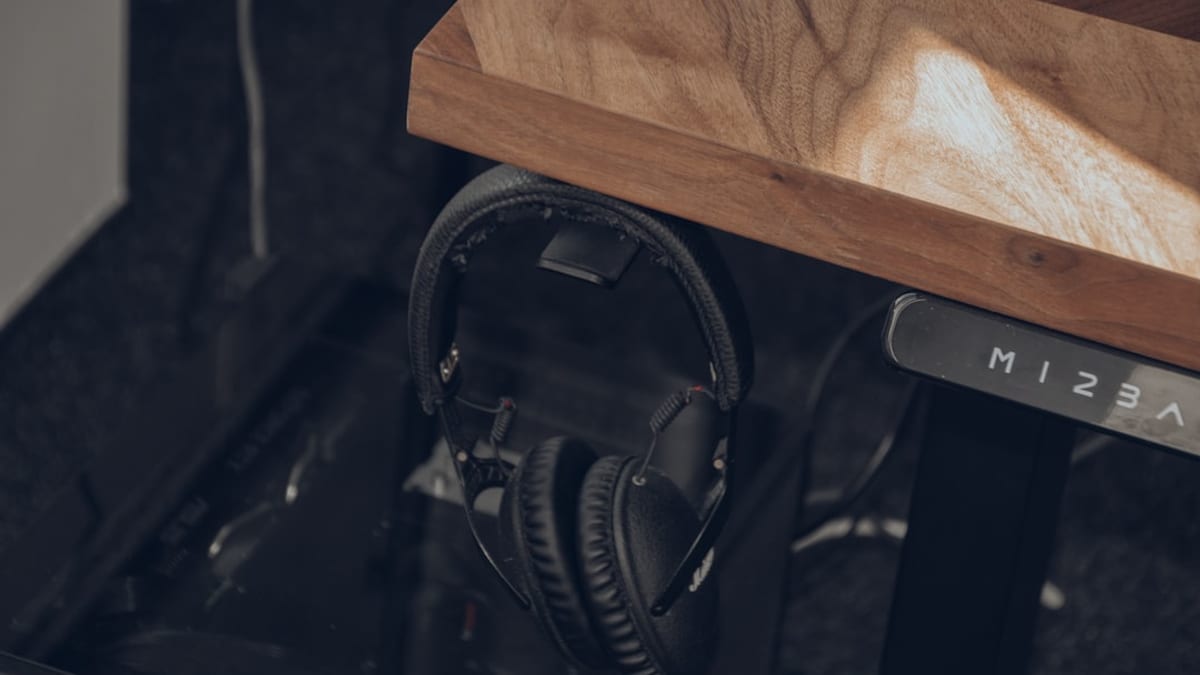
The show also has a particular emphasis on headphones. It's billed as the largest headphones expo in Australia, which is a bold but credible claim given the dedicated headphone listening areas and the sheer number of brands that bring portable and desktop headphone systems. For anyone who does most of their serious listening through cans rather than speakers, and that's a significant and growing slice of Australian enthusiasts, this is the one event per year where you can actually audition a meaningful cross-section of the market in a single weekend.
The headline prize: Yamaha YH-5000SE
Let's talk about the giveaway, because it's legitimately significant. Among the announced prizes is a pair of Yamaha YH-5000SE headphones. If you're not familiar with that model, it sits at the very top of Yamaha's headphone range. These are flagship, open-back planar magnetic headphones built around Yamaha's own orthodynamic driver technology, and they retail at a price point that puts them firmly in the aspirational category for most of us.
The fact that the show is giving away something at this level rather than a pair of entry-level earbuds tells you something about how the organisers are positioning the event and who they expect to be in the room. It also gives every attendee a genuine reason to engage with the registration or competition process, whatever form that takes. Keep an eye on the official announcements for entry mechanics.
If you haven't spent time thinking about what separates truly high-end headphones from the mainstream, concepts like impedance and sensitivity are worth understanding before you sit down for a demo. They'll help you ask better questions and understand why some of these flagships need serious desktop amplification to come alive rather than being driven straight from a phone.
Show debuts and previews: TAGA Harmony and NAD M66
Beyond the prize, two product announcements have already been flagged for the 2026 show, and both are worth paying attention to.
TAGA Harmony Australian debut
The 2026 show is confirmed as the Australian show debut for TAGA Harmony. TAGA Harmony is a Polish audio brand that has built a solid reputation in European markets for offering genuinely well-engineered loudspeakers and electronics at prices that undercut many of the more familiar names. If the brand is new to you, their approach tends to prioritise measured performance and build quality over marketing spend, which, for value-conscious enthusiasts, is usually a good sign.
A show debut means this will be many Australian listeners' first opportunity to actually sit in a room with the brand's products playing music, which is exactly the kind of discovery moment that makes events like this worthwhile. I'll be paying close attention to where they land in the market. If they're targeting the price brackets where you'd otherwise be looking at KEF LS50 Meta (check price)-territory standmounts or entry-level floorstanders, the value proposition could be genuinely interesting for local buyers.
NAD M66 preview
The NAD M66 preview is the confirmed news that will get a lot of Melbourne-area enthusiasts through the door on Friday morning rather than waiting until Saturday. NAD's Masters Series gear occupies a specific and compelling space in the Australian market. It's serious high-end engineering at prices that, while not cheap, are considerably more accessible than comparable European and American flagships.
The M66, as a preamplifier and streaming hub in NAD's Masters line, represents the kind of component that sits at the centre of a serious system. NAD's integration of BluOS streaming, high-quality digital-to-analogue conversion, and analogue preamplification into a single coherent unit is a genuine differentiator. If you want to understand what the DAC section of a component like this actually does and why it matters, our Digital-to-Analogue Converter glossary entry covers the fundamentals, and our roundup of the best DACs and network streamers gives context for where something like this sits in the broader landscape.
A preview at a show like this typically means the product is close to Australian retail availability, so if you've been watching NAD's Masters Series or considering an upgrade to a streaming-capable preamplifier, the October show may be your best opportunity to hear it before committing.
Why Melbourne, and why October?
The Pullman Melbourne Albert Park has become the established home for this show, and it's a genuinely good fit. Albert Park is accessible without being in the thick of the CBD, the Pullman has enough rooms to accommodate a serious number of exhibitors, and the hotel infrastructure of bars, restaurants and lobby spaces supports the kind of between-session socialising that gives shows like this their community feel.
October is an interesting choice of timing in the Australian audio calendar. It falls after the northern hemisphere's major show season, including Munich High End in May and CEDIA Expo in the US in September, which means Australian exhibitors and distributors often have access to freshly announced international products that they can bring to Melbourne as genuine news rather than warmed-over announcements. The NAD M66 preview at this show is a good example of that dynamic in action. If you follow the European calendar, our look at HIGH END's move from Munich to Vienna shows how that season is shifting.
The spring weather in Melbourne is also, in theory, less likely to be catastrophically unpleasant than a winter event, though any Melburnian will tell you that October can still produce four seasons in a single day. Factor that into your travel planning if you're coming from interstate.
Planning your visit: practical advice for getting the most out of it
If you've never been to a large audio show, the experience can be simultaneously thrilling and overwhelming. Here are the things I'd tell a first-timer, plus some reminders for veterans who want to be more strategic than they were last time.
Prioritise, then wander
Go in with a short list of rooms you absolutely must visit, based on brands you're genuinely considering buying or categories you're actively researching. Hit those first, ideally on Friday or Saturday morning before the crowds build. Then give yourself unstructured time to wander and discover. Some of the most interesting demos at any show turn up in rooms you walk into simply because there's no queue outside.
Listen critically, not emotionally
Show conditions are not ideal listening conditions. Rooms are untreated. Music choices are made by exhibitors who want to show their gear in the best possible light, often with spectacularly well-recorded audiophile fare that no one actually listens to at home. Try to bring a piece of familiar music on your phone and politely ask if you can put something on. Most exhibitors will say yes, and hearing something you know well through unfamiliar gear tells you far more than the exhibitor's curated playlist.
Pay attention to soundstage and imaging. The show format, with gear set up in hotel rooms, actually lends itself to evaluating this reasonably well if the room isn't too heavily damped or too lively.
The headphone rooms deserve dedicated time
Given the show's emphasis on being the largest headphones expo in Australia, don't make the mistake of treating headphone demos as an afterthought. If you're in the market for serious headphones, whether open-back or closed-back, set aside a proper block of time. Understanding the differences between open-back and closed-back designs will help you focus your listening on what's actually relevant to how and where you listen at home, and our comparison of open-back vs closed-back headphones goes further.
The range of gear on show will span from portable DAC/amp combos all the way to full desktop systems, and the opportunity to hear something like the Yamaha YH-5000SE on a proper desktop rig in person is not something you'll get at your local dealer on a regular day.
Think about what you're building toward
The best use of a show isn't to make an impulse purchase. It's to calibrate your understanding of where value lies in the market at different price points. If you're working on a full system, whether that's a two-channel setup built around a streaming amplifier (our guide to the best streaming amplifiers is a good reference point) or something more elaborate, use the show to reality-check your assumptions about brands and price tiers.
If loudspeakers are on your list for 2027, the show will give you an opportunity to compare standmounts and floorstanders from multiple brands in a day, which is far more efficient than driving between dealers across multiple weekends. Our guide to the best standmount speakers for serious listening can help frame what you're looking for before you go.
The bigger picture: why shows like this matter
Some people in the industry question whether physical audio shows are still relevant when you can read reviews, watch measurements online, and order gear with a 30-day return policy. I understand the argument. But I don't buy it.
The thing that a show gives you that no amount of online research replicates is the ability to compare across brands and categories in compressed time, with your own ears, on the same day. You hear a pair of standmounts in one room, walk down the hall and hear floorstanders at a similar price, then stumble into a headphone room and reconsider your entire approach to your listening setup. That kind of recalibration is genuinely hard to manufacture any other way.
For Australian enthusiasts in particular, who don't have the luxury of hopping to Munich or London or New York for international shows, the StereoNET show is the closest thing we have to a genuine annual gathering of the tribe. That's worth something beyond the product demos.
Bottom line
The StereoNET Australian Hi-Fi & AV Show 2026 is confirmed for 16–18 October 2026 at the Pullman Melbourne Albert Park. The headline prize is a pair of Yamaha YH-5000SE flagships, TAGA Harmony makes its Australian show debut, and the NAD M66 gets a preview ahead of what should be an imminent local release. The headphone expo angle gives the show a particular appeal for that growing segment of enthusiasts who do their serious listening through cans.
If you're within reach of Melbourne, start planning now. If you're interstate, start looking at flights, because October long weekends fill up faster than you'd think. And if you're a first-timer, go in curious and leave the credit card at home until you've had at least 24 hours to sleep on whatever you've heard. That's the rule. It's a good rule.
Common questions
- When and where is the StereoNET Australian Hi-Fi & AV Show 2026?
- The 2026 show runs from Friday 16 October to Sunday 18 October 2026 at the Pullman Melbourne Albert Park, 65 Queens Road, Albert Park, Victoria.
- What prizes are being given away at the 2026 show?
- Among the announced prizes are flagship Yamaha YH-5000SE headphones. Keep an eye on official show announcements for entry details and any additional prize announcements as the event approaches.
- What new products will be shown at the 2026 event?
- Confirmed announcements include an Australian show debut for TAGA Harmony and a preview of the NAD M66 preamplifier from the Masters Series. More brands and product announcements are expected as October 2026 approaches.
- Is the show worth attending if I'm primarily a headphone listener rather than a speaker enthusiast?
- Absolutely — the show is billed as the largest headphones expo in Australia, with dedicated headphone listening areas and a strong presence from headphone brands across portable, desktop and flagship categories. It's arguably the single best opportunity in Australia to audition a wide range of headphones and associated gear in one place.

I'm Dave, and I'm the cheapskate of the team — and proud of it. My whole thing is finding the gear that punches three times above its price, the so-called "giant-killers," because most people don't have forty grand for a system and shouldn't feel bad about it. I've heard the megabucks stuff, and a lot of it is gloriously good; I've also heard $800 setups that get you 85% of the way there. I'll always tell you where the law of diminishing returns kicks in.
Lifelong bargain-hunter; budget-to-midfi specialist
More from Dave Okafor
 Matching speaker and amp cost: ignore the price-parity mythForget the old rule of matching speaker and amp cost dollar-for-dollar. Here's what actually decides a good pairing, and why it isn't price.
 Turntable mats and platters: what actually changes the soundFelt, rubber, cork or acrylic — turntable mats and platter materials change the sound more than most upgrades. Here's what actually works.
- Buying a demo unit: the giant-killer move retailers hateEx-demo hi-fi gear can save 20-40% with near-zero risk. Here's how to actually negotiate it, what to check, and when to walk away.
- Flutter echo: the room fault that sounds like nothing's wrongFlutter echo blurs detail in parallel-wall rooms without obvious boom. Here's how to find it cheaply and kill it without over-treating.
 Amp power ratings into 8 vs 4 ohms: the spec sheet trapWhy an amp's 4-ohm wattage figure can mislead buyers, and how to actually match power output to real speaker loads on a budget.
 5.1.2 vs 7.1.4: the Atmos layout decision for real roomsChoosing between 5.1.2 and 7.1.4 Atmos layouts comes down to room shape and seating, not speaker count. Here's the giant-killer logic.