Dali Sonik 1 review: standmounts that punch above price
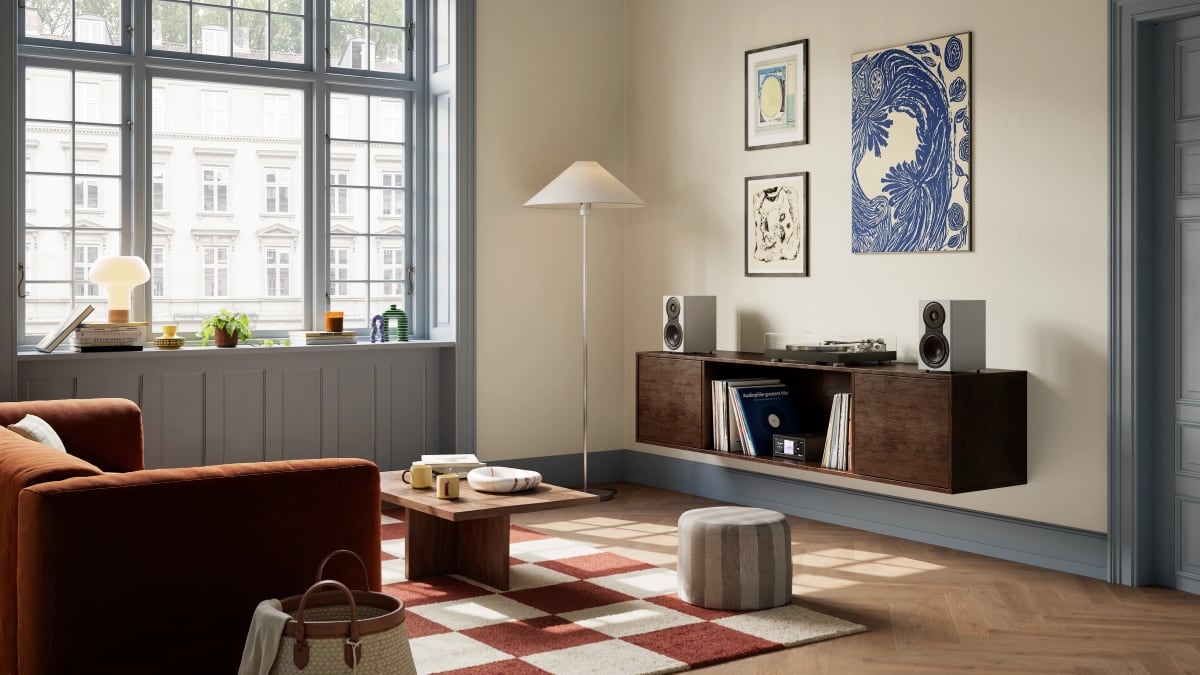
The giant-killer brief
This Dali Sonik 1 review starts with what I chase here at Sound Technology: value. Not cheap, value. There's a meaningful difference between a speaker that costs little and a speaker that costs little relative to what it delivers. The Dali Sonik 1 is emphatically the latter. At AU$849 per pair, it arrives as the entry point to Dali's most comprehensive loudspeaker range to date, and the price tag is the least interesting thing about it.
Dali announced the Sonik range in December 2025, and by April 2026 the speakers had made their way onto US shelves. Australian availability followed, and at AU$849 a pair (that's £449 for our UK cousins or US$900 stateside) the Sonik 1 bookshelf sits in one of the most fiercely contested price brackets in all of hi-fi. Getting it right here is hard. Getting it this right is genuinely impressive.
What Dali is trying to do with the Sonik range
Dali has always had a knack for engineering down without simply stripping out. Their philosophy, stretching back decades, is that the fundamental acoustic principles that make an expensive speaker sound good don't become irrelevant below a certain price point. They just need to be applied more cleverly. The Sonik range represents the most thorough attempt the Danish company has made to bring that thinking to buyers who can't spend thousands on a pair of standmounts.
The Sonik 1 is the bookshelf model in this family, and the driver and cone design has been specifically engineered with low distortion as a primary goal. That's a loaded phrase in marketing speak, but it has a precise technical meaning: a cone that moves accurately, without introducing its own coloration into the signal, reproduces music more faithfully. Distortion in a loudspeaker driver isn't just about harshness at high volumes. It shows up at everyday listening levels too, as a subtle smearing of fine detail and a softening of transient impact. Getting that under control in an affordable speaker is where the real engineering challenge lies, and it's what separates a speaker that sounds politely acceptable from one that genuinely engages you.
If you want the technical background, the Wikipedia entry on total harmonic distortion explains how distortion is measured, though a single figure never tells you how a speaker sounds. For more on the mechanical compromises of a compact enclosure, our Standmount vs Floorstander explainer is a good place to start.
Build quality and finish options
The Sonik 1 is offered in four finishes: Black Ash, Walnut, Natural Oak, and White. That's a broader palette than you typically see at this price, and it matters. A speaker you're going to live with in your lounge room needs to pass the domestic acceptance test as much as the listening test. The Walnut and Natural Oak options in particular look considerably more expensive than AU$849 suggests. The cabinet construction feels tight and resonance-free when you knock on the panels, which is not something you can take for granted at this price point. Some manufacturers at this level are still delivering cabinets that ring like a drum when you tap them, undermining whatever driver engineering went into the box.
The fit and finish is excellent. Binding posts are sensibly positioned and accept banana plugs without fuss. The grille attaches cleanly and the overall impression is of a product that has been designed with care rather than assembled to a cost. None of that is accidental. Dali has enough experience manufacturing at scale to know that build quality at the entry level is a differentiator, not a given.
Setting them up: what you need to know
Standmount speakers at this size need stands, and that's a cost you should factor into your budget. A decent pair of filled stands will add somewhere between AU$150 and AU$400 depending on what you choose. Don't skimp here. The right stand height and mass-loading can transform a bookshelf speaker from merely competent to genuinely revelatory, which is the argument we make in our piece on why proper stands matter for standmounts. Ear-level tweeter positioning in your seated listening position is the target.
Placement matters too. The Sonik 1 rewards some experimentation with toe-in and distance from the rear wall. As a starting point, try them pulled about 60–70cm from the rear wall with moderate toe-in aimed slightly in front of the listening position, then adjust by ear. Moving a speaker closer to a wall boosts the bass and can make it boomy, while pulling it out tends to tighten things and open up the soundstage. Acoustic treatment in your room will have a bigger impact on the result than any component swap, and if you're setting up a dedicated listening space, I'd encourage you to read up on first-reflection points before you spend more money on cables.
On amplification: the Sonik 1's driver design and sensitivity characteristics mean it isn't a particularly demanding load, which is good news for buyers pairing it with a modestly powered integrated amplifier or an all-in-one system. For those building a complete streaming setup around these speakers, take a look at our guide to the best streaming amplifiers and all-in-one systems. There are some excellent options in the AU$500–$1,500 range that would make a compelling package with the Sonik 1.
Dali Sonik 1 review: how do they actually sound?
This is the part that matters, so I'll be as specific as I can.
Tonal balance and midrange character
The first thing to register with the Sonik 1 is how even-handed the tonal balance is. There's no obvious voicing trick at play: no boosted upper-bass warmth to create an impression of body, no hyped treble to manufacture a false sense of detail. What you get instead is something rarer at this price, a genuinely neutral midrange presentation that lets the music speak for itself.
Vocals in particular come through with a naturalness that I don't take for granted in this price bracket. The texture of a voice, including the breath, the consonants and the fine grain of the recording, is preserved rather than homogenised. This is where the low-distortion driver design pays dividends in real-world listening. You're not getting a glossy, pleasant-but-vague reproduction of a vocal. You're getting something that feels present and specific.
Treble and high-frequency extension
The treble is extended and detailed without being aggressive. High hats and cymbal work have convincing metallic texture. Acoustic guitar strings shimmer without becoming splashy. This is a harder balance to strike than it sounds. Many budget speakers either roll off the top end early (making the speaker sound warm but dull) or push it forward (making it seem detailed at first listen but fatiguing over time). The Sonik 1 threads this needle well.
Sibilance on vocal recordings, the hissy emphasis on "s" sounds that the Wikipedia page on sibilance describes, is handled with more composure than I expected. This suggests good dispersion behaviour from the tweeter and a crossover that's doing its job cleanly.
Bass and low-frequency performance
Here's where honesty matters. The Sonik 1 is a compact standmount, and physics is not suspended in its price range. Deep bass extension is limited in the way it's limited for every speaker of this cabinet volume. What the Sonik 1 does well is control. The bass it does produce is taut, quick, and well-defined rather than bloated or indistinct. Bass guitar lines have shape and pitch definition. Kick drum transients land cleanly.
If your music is heavy on electronic bass content or you're planning to use these in a home cinema setup where low-frequency effects matter, a subwoofer is worth considering. Our SVS SB-3000 review (check price) covers a strong option that integrates well with compact standmounts, and understanding bass management in a two-channel or AV context will help you get the crossover point right. Where you put the sub matters as much as what it costs, as we explain in why a cheap sub in the right spot beats a good one in the wrong spot.
Soundstage and imaging
The Sonik 1 images exceptionally well for the money. Instruments are placed with real specificity within the stereo field, and the soundstage extends credibly beyond the physical boundaries of the speaker positions. Centre image stability is good, and vocalists stay locked in place rather than wandering as you shift your listening position.
Depth layering is present and appreciable. Front-to-back perspective in a well-recorded orchestral or jazz recording comes through with more dimensionality than you'd typically expect at AU$849. This is partly a function of the controlled distortion mentioned earlier: when drivers introduce less of their own coloration, the spatial cues in the recording are preserved rather than obscured. For a deeper look at what to listen for, our Soundstage and Imaging explainer is worth a read.
How do they compare to the competition?
The AU$800–$1,200 standmount bracket is genuinely crowded with capable speakers, and I want to be fair about where the Sonik 1 sits within it.
At the upper end of their price and just above it, speakers like the KEF LS50 Meta (check price) represent a different engineering philosophy. The Uni-Q driver approach, which you can read about on the KEF website, creates its own set of strengths and limitations, and the LS50 Meta costs considerably more in the Australian market. The Sonik 1 doesn't match the LS50 Meta's extraordinary point-source imaging precision, but it also doesn't ask you to spend significantly more to find out.
Within its actual price range, the Sonik 1 is among the most tonally balanced and detailed options around. The midrange refinement in particular is a genuine differentiator. Competing speakers at similar money often trade tonal accuracy for a more immediately impressive showroom sound, with punchier bass and more forward treble, that flatters in a brief audition but reveals its compromises over extended listening. If you're weighing a pair of these against something bigger, our look at matching the speaker to the room, not the ego is a useful reality check.
I'd argue the Sonik 1 is a speaker you'll still be enjoying and discovering things in two years after purchase. That's the mark of something engineered with integrity rather than optimised for a sales floor demo.
Who is this speaker for?
The Sonik 1 suits a wide range of listeners, and that versatility is part of the value proposition.
- First serious hi-fi purchase: If you're stepping up from a soundbar or Bluetooth speaker and want to understand what a properly set-up two-channel system actually sounds like, the Sonik 1 is an excellent starting point. It won't embarrass the amplifier you grow into next, and it won't become obsolete when your taste develops.
- Second system: Those of us with a primary listening room sometimes want a quality solution for a study, bedroom, or kitchen space without spending flagship money. The Sonik 1 is ideal here, with real performance in a compact, good-looking package.
- Budget-conscious music lovers: If AU$849 is your ceiling and you're not willing to compromise on sound quality, this is where I'd point you before anywhere else. Our broader guide to the best standmount speakers for serious listening gives context on the competitive landscape, and the Sonik 1 belongs in that conversation.
- Streaming-first listeners: Paired with a capable integrated amplifier or streaming amplifier, the Sonik 1 delivers a complete, satisfying system that punches well above its combined price point. The four available finishes mean it won't look out of place in a modern living space either.
The four finishes: which one?
A practical note for Australian buyers: the four finish options (Black Ash, Walnut, Natural Oak, and White) are all genuinely attractive, and the decision is largely personal and domestic. Black Ash has the most traditional hi-fi look and will recede into a system. White is striking in a modern, minimalist interior. Walnut and Natural Oak are the standout options for most rooms. The wood-effect veneers have a warmth to them that makes the speakers look more expensive than they are, which is a nice bonus when guests notice them before they hear them.
Verdict
The Dali Sonik 1 earns a place near the top of the list for this price range without qualification. At AU$849 per pair, it offers a tonal balance, midrange refinement, and imaging performance that should embarrass speakers costing considerably more. The low-distortion driver design isn't marketing language. You can hear its effects in everyday listening, in the naturalness of vocals, in the precision of stereo placement, and in the absence of the kind of subtle colouration that makes budget speakers sound like budget speakers.
The limitations are real but expected: a compact cabinet means limited deep bass extension, and if you need genuine low-frequency weight you'll want a subwoofer alongside. The finishes are genuinely appealing, the build quality is solid, and the competitive pricing in the Australian market makes the value case straightforward.
If you're building a first serious system, upgrading a secondary setup, or simply want to know what AU$849 buys you in 2026, the Sonik 1 is the answer I'd give you. Dali has done the hard work here: disciplined engineering, honest voicing, genuine refinement. That's rarer than it should be at this price, and it's worth recognising when you see it.
Dali Sonik 1: AU$849 per pair. Available in Black Ash, Walnut, Natural Oak, and White.
Common questions
- How much do the Dali Sonik 1 speakers cost in Australia?
- The Dali Sonik 1 is priced at AU$849 per pair in Australia. That equates to approximately £449 in the UK and US$900 in the United States.
- What finishes are available for the Dali Sonik 1?
- The Sonik 1 is offered in four finishes: Black Ash, Walnut, Natural Oak, and White. All four options are well-executed, with the Walnut and Natural Oak particularly standing out for their premium appearance.
- Do the Dali Sonik 1 speakers need a subwoofer?
- Not necessarily, but bass extension is limited by the compact cabinet size, as it is with any speaker of this type. If your listening involves a lot of electronic music or home cinema use with significant low-frequency content, adding a subwoofer will improve the overall result. For stereo music listening, many listeners will find the bass performance sufficient on its own.
- When did the Dali Sonik 1 become available?
- Dali announced the Sonik range in December 2025, with US availability following in April 2026. Australian availability came shortly after.
- What amplifier should I pair with the Dali Sonik 1?
- The Sonik 1 is not a particularly demanding load, so it will work well with a wide range of integrated amplifiers and streaming amplifiers in the AU$500–$1,500 range. An all-in-one streaming amplifier is a popular choice for a compact, tidy system. See our guide to the best streaming amplifiers for current recommendations.
- How does the Dali Sonik 1 compare to the KEF LS50 Meta?
- The KEF LS50 Meta uses a fundamentally different driver architecture (the Uni-Q point-source design) and costs considerably more in the Australian market. The LS50 Meta has a slight edge in pinpoint stereo imaging precision, but the Sonik 1 offers genuinely competitive tonal balance and midrange refinement at a significantly lower price point, making it a strong alternative for budget-conscious buyers.

I'm Dave, and I'm the cheapskate of the team — and proud of it. My whole thing is finding the gear that punches three times above its price, the so-called "giant-killers," because most people don't have forty grand for a system and shouldn't feel bad about it. I've heard the megabucks stuff, and a lot of it is gloriously good; I've also heard $800 setups that get you 85% of the way there. I'll always tell you where the law of diminishing returns kicks in.
Lifelong bargain-hunter; budget-to-midfi specialist
More from Dave Okafor
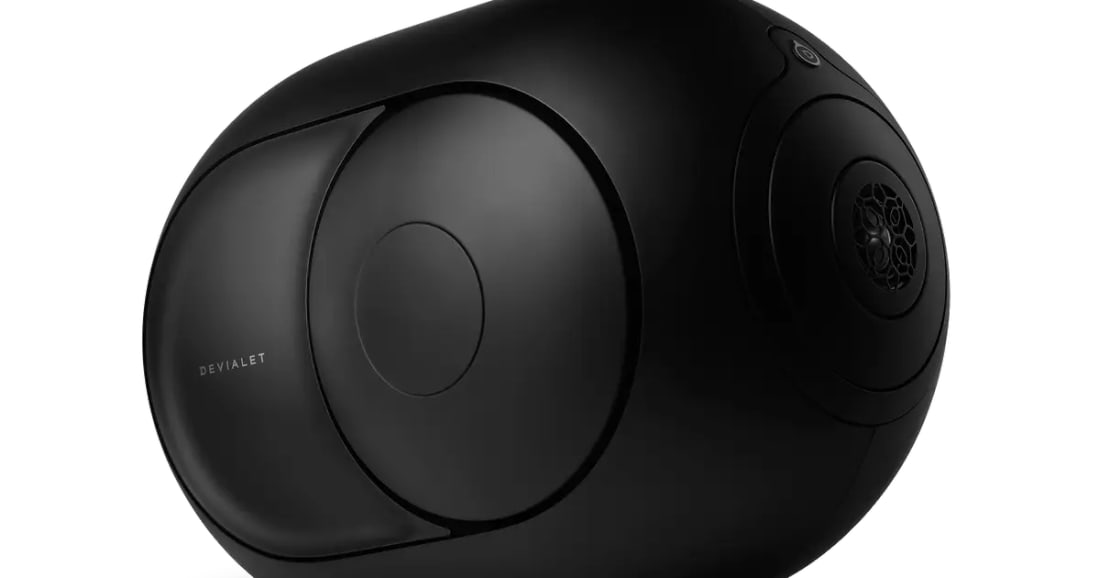 Matching speaker and amp cost: ignore the price-parity mythForget the old rule of matching speaker and amp cost dollar-for-dollar. Here's what actually decides a good pairing, and why it isn't price.
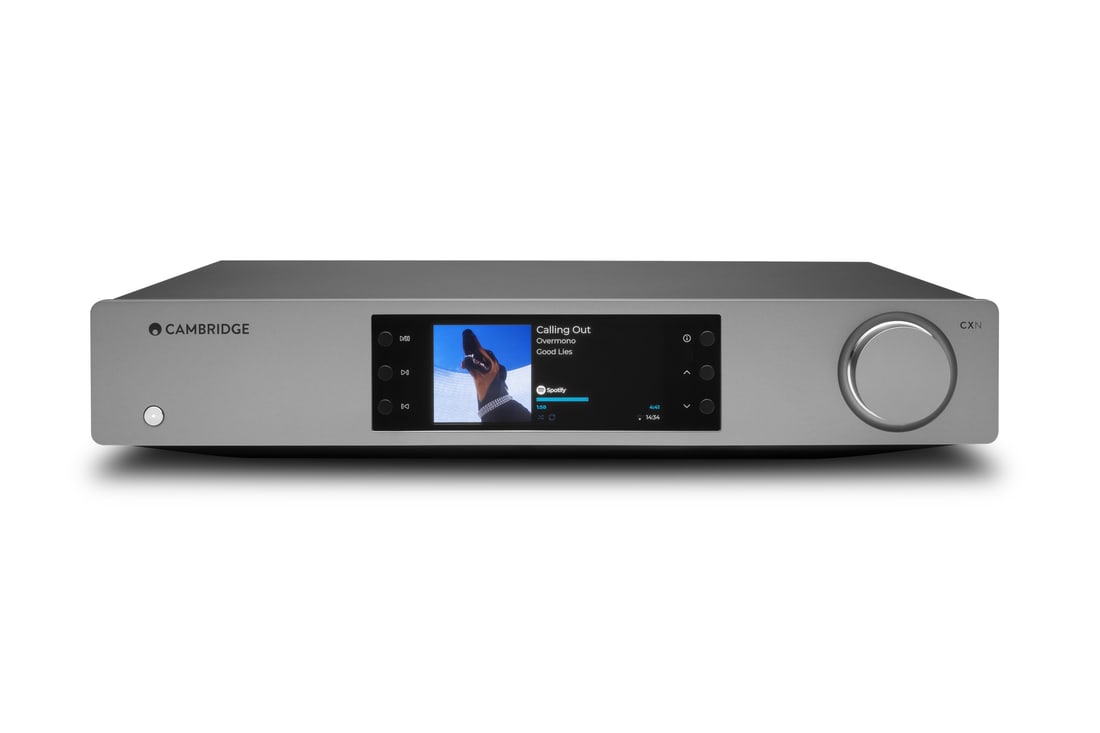 Turntable mats and platters: what actually changes the soundFelt, rubber, cork or acrylic — turntable mats and platter materials change the sound more than most upgrades. Here's what actually works.
- Buying a demo unit: the giant-killer move retailers hateEx-demo hi-fi gear can save 20-40% with near-zero risk. Here's how to actually negotiate it, what to check, and when to walk away.
- Flutter echo: the room fault that sounds like nothing's wrongFlutter echo blurs detail in parallel-wall rooms without obvious boom. Here's how to find it cheaply and kill it without over-treating.
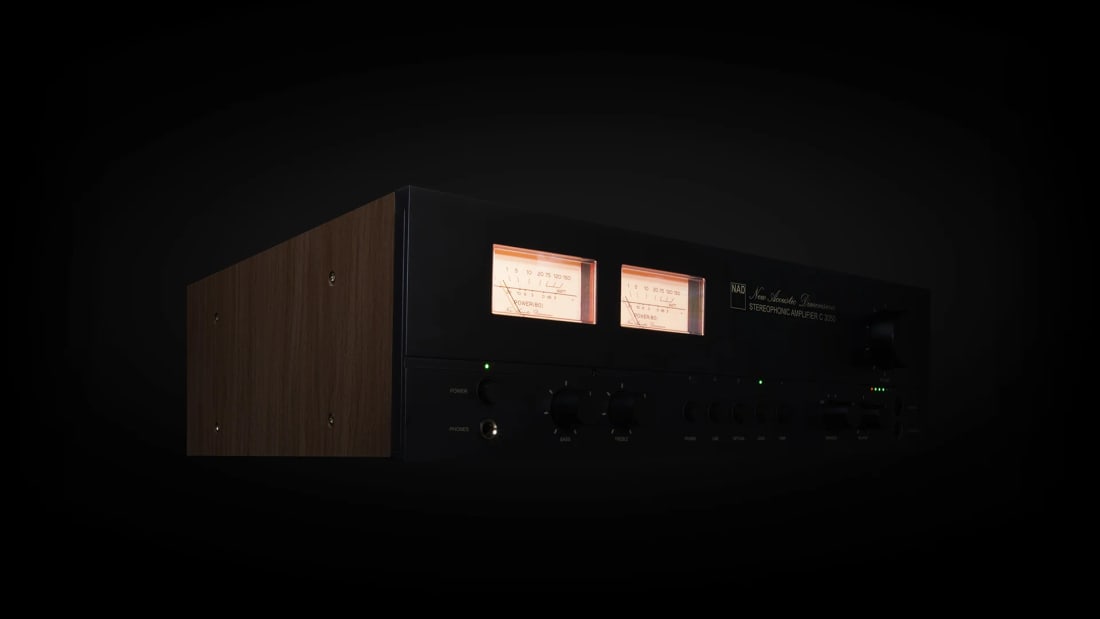 Amp power ratings into 8 vs 4 ohms: the spec sheet trapWhy an amp's 4-ohm wattage figure can mislead buyers, and how to actually match power output to real speaker loads on a budget.
 5.1.2 vs 7.1.4: the Atmos layout decision for real roomsChoosing between 5.1.2 and 7.1.4 Atmos layouts comes down to room shape and seating, not speaker count. Here's the giant-killer logic.