Class D amps have won the value war. Here's why I'm still not 100% sold
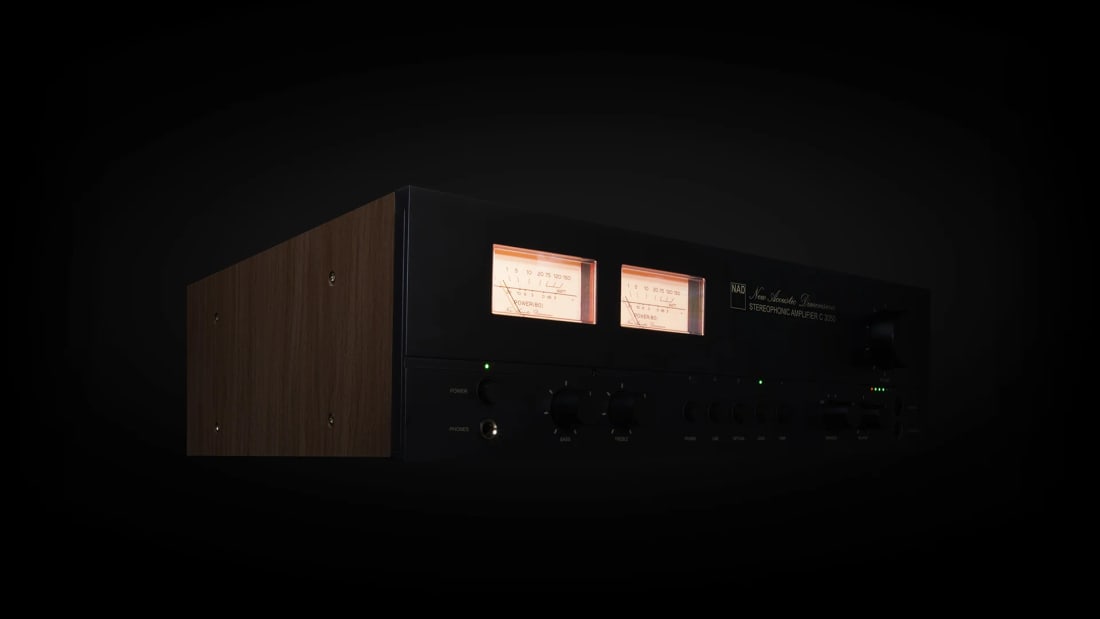
Three hundred watts a channel, runs cool enough to sit under a stack of records without cooking the sleeves, and it cost less than a decent dinner for four at a good Gold Coast restaurant. That's the pitch for a lot of Class D gear right now, and mostly it's true. I've had a couple of these little bricks on my bench this year and the power-per-dollar number still makes me laugh, in a good way. But "mostly true" is doing some work in that sentence, and this is the article where I unpack it.
I'm Dave, and my whole job on this site is finding the gear that punches above its price. Class D amplification is arguably the single biggest giant-killer story in hi-fi over the last fifteen years, so it deserves a proper look rather than just a pat on the back. Let's get into what each topology — valve, solid-state, Class D — actually does differently, where the real-world differences show up, and how to match any of them to speakers that won't embarrass the amp.
What "class" actually means (quickly, I promise)
The class refers to how the output devices handle the audio signal, not how "premium" the amp is — a distinction marketing departments have been happily blurring for decades.
Class A output devices conduct all the time, whether there's a signal or not. That gives lovely linearity but shocking inefficiency — most of the power becomes heat, which is why Class A gear runs hot and tends to be low-powered per dollar of parts cost. Class AB, which covers the vast majority of solid-state amps including most of what's in our best integrated amplifiers list, is a compromise: devices conduct for more than half the cycle, trading a bit of theoretical purity for much better efficiency and more usable power. Class D is different again — the output devices are switched fully on or fully off at very high frequency, and the audio signal is encoded in the switching pattern, then filtered back into an analogue waveform at the output. Done well, this is extremely efficient and lets you build genuinely high-power amps into small, cheap, cool-running boxes.
None of this tells you how something sounds. It tells you how it makes power, which then constrains what it can sound like.
Where Class D genuinely wins
The efficiency story is real and it flows straight through to your wallet. A Class AB amp making 150 watts continuous needs a serious power supply and a heatsink you could hurt yourself on; a Class D amp making the same power can do it from a supply half the size, with a heatsink you'd barely notice. That's why a compact streaming amplifier can now offer more clean power than an old-school integrated three times its weight — have a look at something like the NAD C 3050 (check price), which leans on modern Class D output stages to get serious power and DSP-driven bass management into a compact chassis, or the way brands like Devialet package big power into genuinely small enclosures with the Devialet Phantom I 103 dB (check price).
Modern Class D modules — the well-regarded ones, not the bargain-bin ICs from a decade ago — measure extremely well on distortion and noise floor, often better than budget Class AB designs. Damping factor into real speaker loads has improved a lot too, which matters more than people think; if you want the deeper version of that argument, we've covered it separately in our piece on damping factor and output impedance and what happens at the speaker terminal. Short version: a well-designed Class D amp today controls a woofer's cone motion just fine.
Running cool means no big heatsinks, no fans, and no worrying about ventilation in a cabinet, which matters more than most spec sheets admit if you're building a rack in a Queenslander with limited airflow.
Where I still reach for something else
Here's my mildly contrarian bit: I don't think Class D is unambiguously "solved" yet, even though I use it and recommend it constantly. The best implementations — from the module makers whose names get quietly mentioned by engineers, and from brands that do their own output-filter engineering rather than just bolting on a reference design — sound genuinely excellent. But there's still real variance between a good Class D implementation and a mediocre one, more variance than you tend to get between a good and mediocre Class AB design at the same price. The switching frequency, the output filter design, the power supply regulation — get any of those wrong and you can hear it as a slight hardening in the treble or a loss of texture in complex, layered material. It's not "digital-sounding" in some vague sense; it's specific engineering choices that either got made well or didn't.
Solid-state Class AB, by comparison, is a much more mature, well-understood recipe. A well-regarded integrated like the Rega Brio Mk7 (check price) or the Cambridge Audio CXA81 MkII (check price) is drawing on forty-plus years of refinement of essentially the same basic circuit topology. There's less to get wrong because the industry has mostly already worked out how to get it right. That maturity is worth something, particularly at the sub-$2,000 mark where Class D implementations can be more hit-and-miss.
Valves: not efficient, not measurement-friendly, still worth understanding
I'll declare my bias here — I'm the value guy, and valve amps are rarely the value play. They're low-powered relative to their size and price, they run hot, they need periodic tube replacement, and their distortion figures on paper look worse than a fifty-dollar Class D board from AliExpress. None of that is in dispute.
What valve amps do have going for them is a specific, well-understood distortion signature — predominantly second-harmonic and even-order distortion — that a lot of listeners (my colleague Priya among them) find musically pleasant rather than objectionable. It's not "more accurate" in any measurable sense; it's a euphonic colouration that some systems and some ears get along with very well, particularly on speakers with a slightly forward or lean tonal balance where a bit of harmonic warmth is a welcome correction rather than a smear. The catch, and it's a big one for a value column, is that low-powered valve amps are fussy about speaker load. Most classic valve designs are happiest into speakers rated 8 ohms and above with reasonably benign impedance curves, and they can run out of puff fast into anything below 90dB sensitivity. If you're going valve, the speaker choice matters more than the amp choice, arguably.
Power and impedance matching, properly explained
This is where most people, valve or solid-state or Class D, actually go wrong, and it's got nothing to do with topology. It's arithmetic.
Amplifier power specifications are usually quoted at a nominal impedance, typically 8 ohms, sometimes also 4 ohms. A speaker's impedance isn't a fixed number though — it's a curve that moves around with frequency, often dipping well below the nominal rating at certain points, particularly in the bass and sometimes in the presence region depending on crossover design. A speaker specified as "8 ohms nominal" might dip to 4 or even 3 ohms at some frequencies. An amplifier that can't comfortably deliver current into those dips will compress, sound flat and lifeless at higher volumes, or in the worst cases, protection-trip or clip audibly.
This is exactly why some amplifiers double their power output as impedance halves (going from, say, 100 watts at 8 ohms to close to 200 watts at 4 ohms) while others barely budge, or even fall over. The first behaviour indicates a genuinely high-current power supply and output stage — common in well-engineered solid-state designs like the Marantz Model 40n (check price) or the McIntosh MA352 (check price), which is built around McIntosh's own autoformer output stage specifically to handle awkward loads gracefully. Cheaper switch-mode-supplied amps, including some Class D designs, don't always double cleanly, which is worth checking in a review or spec sheet rather than assuming.
Sensitivity matters just as much as power on paper, and we've gone deep on this elsewhere — see our piece on loudspeaker sensitivity and amplifier matching if you want the full picture. The short version: a speaker rated at 84dB sensitivity needs roughly four times the power of one rated at 90dB to reach the same loudness, all else equal. Pairing a modest Class D amp with a low-sensitivity, low-impedance speaker is a classic way to end up disappointed and blaming the wrong component.
How I'd actually choose, at real prices
If I'm building a genuinely giant-killer system on a tight budget with easy-to-drive standmounts — something like the Wharfedale Diamond 12.1 (check price) or Q Acoustics 5040 (check price), both reasonably benign loads — a well-reviewed Class D streaming amp or integrated is close to a free lunch. You get clean power, low heat, and money left over for speakers or room treatment, which usually matters more than the amp anyway. The Naim Uniti Atom (check price) is a nice middle path here too, all-in-one convenience with a Class D-derived amp section that's had real engineering attention.
If I'm running trickier speakers with real impedance dips — some three-way floorstanders, some ribbon-tweeter designs — I'd want to see a doubling-down power spec or go solid-state Class AB from a brand with a track record of high current delivery, the McIntosh or a similar design philosophy.
And if I've already got the speakers sorted, the room's under control, and I just want a bit of harmonic character on top of a system that's otherwise a bit clinical, that's when I'd have a genuine look at a valve integrated, accepting the power ceiling and the maintenance as the price of admission. Horses for courses, not one true religion — despite what some forum threads would have you believe.
None of these choices are as consequential as getting your speaker-and-room match right first, which is a hill I'll die on in most of my columns. But get the amplifier topology sensibly matched to your speakers' actual impedance and sensitivity, and you'll spend a lot less time chasing phantom problems that were never really about the amp.
— Dave Okafor, Value & Giant-Killers Contributor
Common questions
- Does Class D amplification sound worse than solid-state Class AB?
- Not inherently, and the gap has closed enormously over the last decade. The better Class D implementations measure very well and sound clean and controlled. There's more variance between good and average Class D designs than there is between good and average Class AB designs at the same price, though, so it pays to check independent measurements rather than assume all Class D amps are equal.
- Can a Class D amp drive a 4-ohm speaker safely?
- Many can, but not all. Check whether the manufacturer's power spec roughly doubles from 8 ohms to 4 ohms, which indicates a genuinely high-current design. If the 4-ohm figure barely moves from the 8-ohm figure, the amp may struggle or trigger protection circuitry into demanding loads.
- Why do valve amps need higher-sensitivity speakers?
- Most valve designs, especially lower-powered ones, simply can't produce as many watts as solid-state or Class D alternatives at a comparable price and size. Pairing them with a speaker rated 90dB sensitivity or higher means you need far less power to reach comfortable listening levels, which suits a valve amp's typical output ceiling.
- Is it worth paying more for a solid-state amp over a similarly priced Class D model?
- It depends on your speakers and priorities. If your speakers are an easy, high-sensitivity load, a well-regarded Class D amp will likely give you more clean power for the money. If your speakers have demanding impedance dips or low sensitivity, a mature solid-state design with a strong current-delivery track record can be the safer bet.

I'm Dave, and I'm the cheapskate of the team — and proud of it. My whole thing is finding the gear that punches three times above its price, the so-called "giant-killers," because most people don't have forty grand for a system and shouldn't feel bad about it. I've heard the megabucks stuff, and a lot of it is gloriously good; I've also heard $800 setups that get you 85% of the way there. I'll always tell you where the law of diminishing returns kicks in.
Lifelong bargain-hunter; budget-to-midfi specialist
More from Dave Okafor
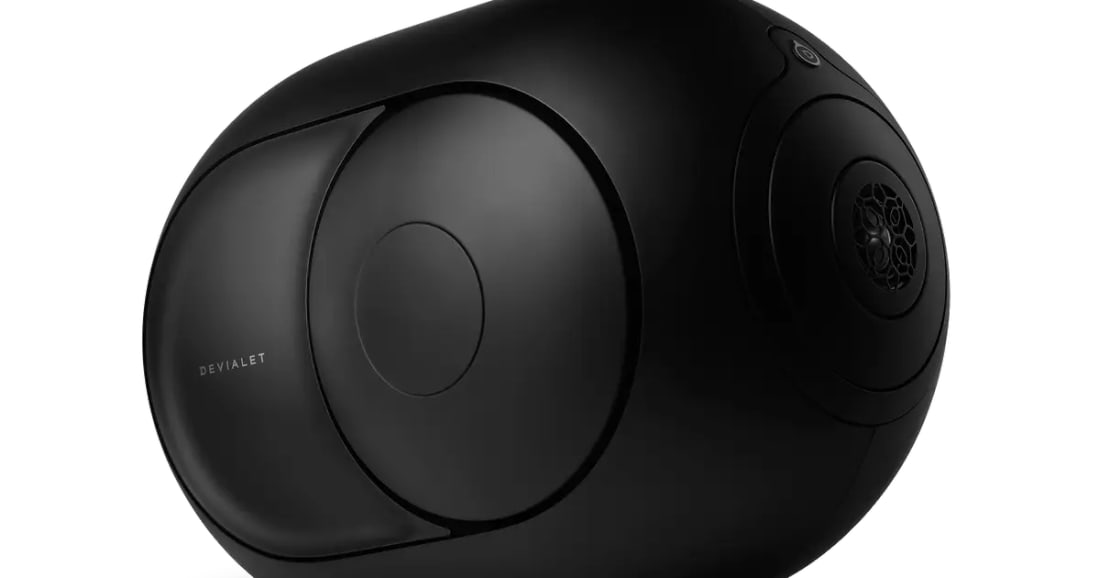 Matching speaker and amp cost: ignore the price-parity mythForget the old rule of matching speaker and amp cost dollar-for-dollar. Here's what actually decides a good pairing, and why it isn't price.
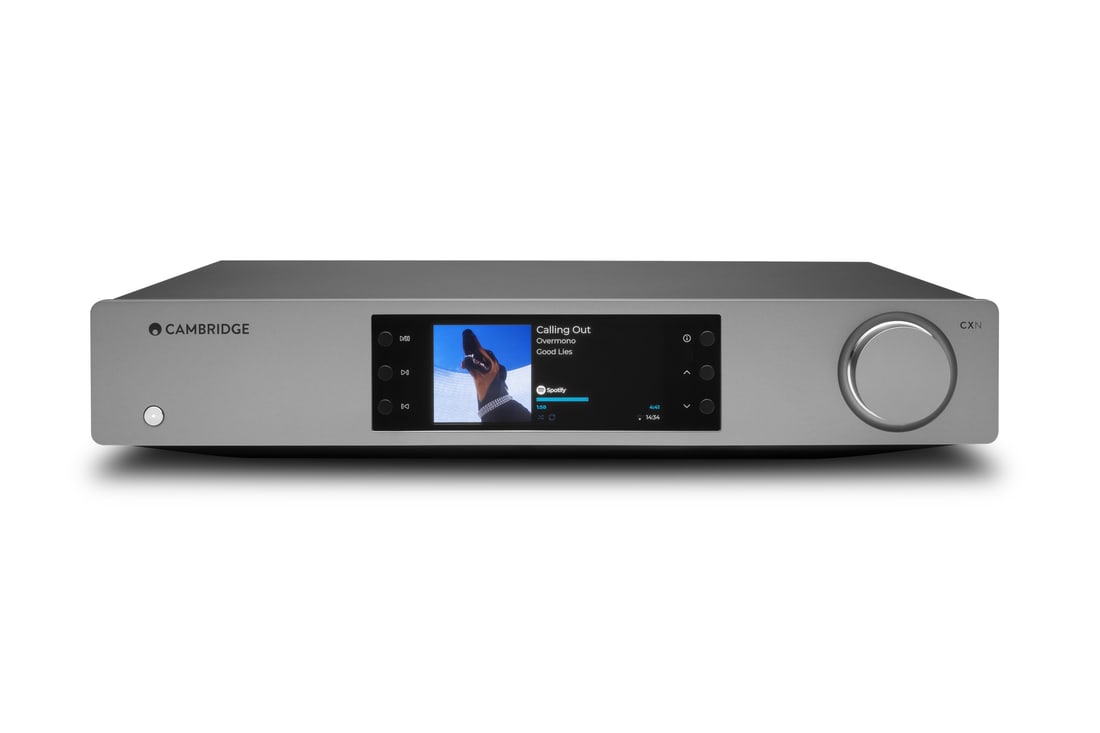 Turntable mats and platters: what actually changes the soundFelt, rubber, cork or acrylic — turntable mats and platter materials change the sound more than most upgrades. Here's what actually works.
- Buying a demo unit: the giant-killer move retailers hateEx-demo hi-fi gear can save 20-40% with near-zero risk. Here's how to actually negotiate it, what to check, and when to walk away.
- Flutter echo: the room fault that sounds like nothing's wrongFlutter echo blurs detail in parallel-wall rooms without obvious boom. Here's how to find it cheaply and kill it without over-treating.
- Amp power ratings into 8 vs 4 ohms: the spec sheet trapWhy an amp's 4-ohm wattage figure can mislead buyers, and how to actually match power output to real speaker loads on a budget.
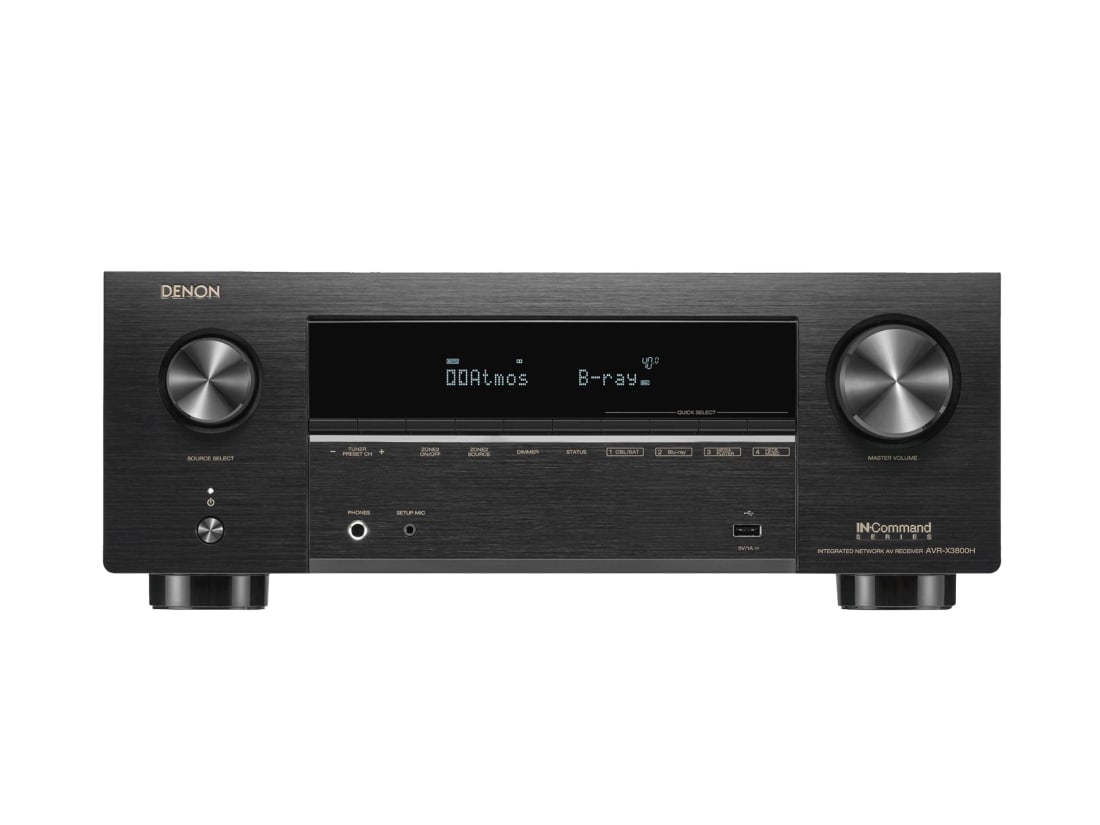 5.1.2 vs 7.1.4: the Atmos layout decision for real roomsChoosing between 5.1.2 and 7.1.4 Atmos layouts comes down to room shape and seating, not speaker count. Here's the giant-killer logic.