Cheap headphones, expensive amp: the value equation nobody talks about
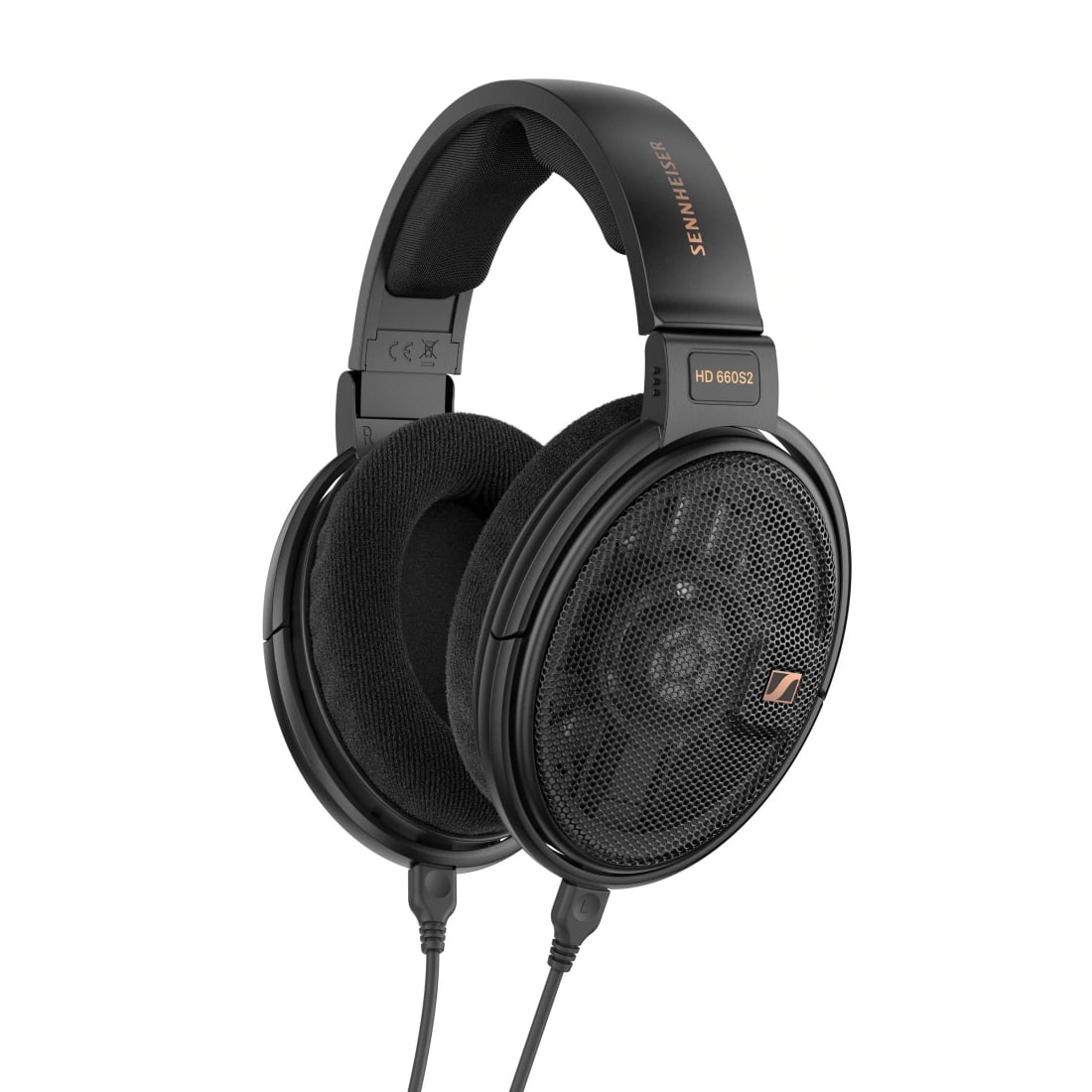
Forty-one hundred dollars. That's what a mate of mine spent on a headphone he'd seen recommended on a forum, paired with the DAC/amp combo already sitting on his desk from a decade-old gaming setup. He was disappointed. Not because the headphone was bad — it wasn't — but because he'd spent his whole budget on the wrong end of the chain and couldn't work out why it didn't sound like the demo he'd heard at a shop on Chapel Street.
I hear versions of this story constantly. Someone's saved up, done the research, read the shootouts, and landed on a headphone that gets rave reviews. Then they plug it into whatever's lying around — a laptop headphone jack, an old iPhone dongle, a games console's onboard chip — and wonder why the magic isn't there. The honest answer is that headphones are only half the story, and for a lot of desktop setups, arguably the less important half.
Why the source and amp matter more than people assume
Here's the thing nobody tells you at the headphone shop: most demo rooms are running gear two or three tiers above what you're about to buy for the rest of your chain. You hear a $600 headphone through a genuinely good desktop DAC/amp, form an impression, then go home and drive that same headphone off a phone's line-out or a motherboard's onboard codec. The headphone hasn't changed. Everything driving it has gotten worse, sometimes dramatically so.
This isn't audiophile mysticism. It's basic electrical reality. A headphone is a transducer with an impedance curve, a sensitivity rating, and — depending on the design — a genuine appetite for current that a lot of source devices simply can't satisfy. Planar magnetic headphones are the obvious example; they're often power-hungry regardless of their impedance number, and a thin, underpowered source will leave them sounding flat, dynamically compressed, and frankly a bit boring. Even efficient dynamic-driver headphones can sound thin and hissy off a noisy, poorly-implemented onboard output.
I'd argue that for anyone building a sub-$1500 desktop rig, the sensible split is something like 40% headphone, 60% source-and-amp — the exact opposite of what most people do. That's a mildly contrarian take among headphone enthusiasts who tend to obsess over driver technology, but I've swapped enough gear on my own desk to trust it.
What a proper desktop DAC/amp actually buys you
It's not about loudness. Almost anything will get a headphone loud enough to hurt your ears. What a competent DAC/amp buys you is control — enough current on tap that bass notes stay taut instead of turning to mush at higher volumes, enough clean gain that you're not riding the volume pot right at the noisy bottom of its range, and enough output impedance headroom that the amp doesn't interact badly with your headphone's impedance curve and skew the tonal balance.
That last point trips people up constantly. A high-output-impedance source paired with a headphone that has a wildly variable impedance curve — a lot of vintage-style dynamic designs do this — can shift the frequency response by several dB in places, audibly changing the tonality without anyone touching an EQ slider. Sennheiser and Beyerdynamic have both published output impedance guidance for exactly this reason, and the rule of thumb worth remembering is the "eighth rule": your source's output impedance should ideally sit at an eighth or less of the headphone's rated impedance to avoid audible interaction.
There's a decent guide on our site for exactly this — pairing headphones with amplifiers — that goes deeper into the power, impedance and topology side than I've got room for here.
The giant-killer desktop stack, budget version
I've had good results with genuinely inexpensive combo units doing more of the heavy lifting than their price suggests. The FiiO K11 (check price) is the one I keep pointing mates towards when they're starting from nothing — it's not going to embarrass anything at ten times its price, but it will absolutely embarrass a laptop headphone jack, and that's the actual comparison that matters for most buyers. Step up a notch and the iFi Audio ZEN DAC 3 (check price) gives you a bit more headroom and a friendlier tonal balance for headphones that lean bright.
If you've got more to spend and want something that'll genuinely outlast a few headphone upgrades, the RME ADI-2 DAC FS (check price) is the one I'd call a proper giant-killer in this category — it measures beautifully, has enough clean power for most planar designs, and the digital EQ built in is actually useful rather than a gimmick (more on that below). Our team's broader roundup at best desktop DAC/amps covers more ground if you want other options at different price points.
Where headphone spend actually pays off
None of this means the headphone doesn't matter — it obviously does, and there's a point past which more amp won't fix a headphone that just isn't good. But I'd rather see someone spend $250 on a headphone and $350 on a proper source than $500 on the headphone and $100 on a dongle. The Sennheiser HD 660S2 (check price) is a good example of a headphone that rewards a decent amp without demanding an unreasonable one — reasonably efficient, well-behaved impedance curve, genuinely revealing of upstream changes without being fussy about them.
Closed-back buyers have a slightly different calculation, and it's worth reading our piece on noise isolation vs sound quality before assuming a sealed design is the safe choice — the tradeoffs there are real and not always obvious from spec sheets.
At the upper end of what I'd call sensible desktop spend, headphones like the Audeze LCD-X (check price) or Focal Clear MG (check price) genuinely do reward a serious amp — planar designs especially will sound noticeably more dynamic and controlled off something with real current delivery, which is one of the few places in this hobby where the improvement isn't subtle.
EQ as the cheapest upgrade in the chain
I'll say something here that'll annoy the purists: a good parametric EQ, applied sensibly, is often a better use of $50 than a cable upgrade or a footer set. Software EQ has gotten genuinely good, and something like the built-in filters on the RME or a phone-based parametric EQ app can correct headphone frequency response issues that no amount of amp-swapping will touch. We've covered the how-to properly in headphone EQ: how to use it properly without wrecking your sound — the short version is that measurement-based correction (not just "bass boost") is where the actual value is, and it costs nothing if you're patient with the settings.
I don't reckon EQ replaces a good source. It complements one. Using EQ to fix tonal issues while still running clean, well-powered amplification gets you further per dollar than either approach alone.
Building the stack in the right order
If I were starting from zero on a desktop rig today, I'd buy in this order: a competent DAC/amp first, because it's the piece that determines whether everything downstream even has a fair chance. Then I'd sit with a mid-tier headphone for a few weeks and actually listen critically before upgrading it — because the source reveals what the headphone is doing, and you want to be judging the headphone honestly, not through a compromised lens.
Our longer piece on building a headphone system in order covers the full sequencing if you want the extended version, including where cables and accessories actually sit in the priority list (spoiler: near the bottom).
The Australian Communications and Media Authority's equipment standards, for what it's worth, don't regulate sound quality at all — just electrical safety and emissions compliance — so "certified" or "compliant" claims on cheap dongles tell you nothing about how they'll actually sound. Don't let a compliance sticker do your listening for you.
The desk isn't a demo room, and that's fine
My desk in the Gold Coast office isn't acoustically treated, isn't symmetrical, and has a monitor arm casting a small reflective surface right where a tweeter would fire if this were speakers instead of headphones. None of that matters for headphone listening, which is one of the reasons I think it's such good value territory for anyone without the budget or the real estate for a proper speaker room. You're bypassing room acoustics entirely. The money you'd have spent on treatment or careful speaker placement can go straight into the chain that's actually doing the work.
That's the pitch, really. Headphones let you spend on electronics and transducers and skip the most expensive, least glamorous part of hi-fi: the room. Just don't skip the electronics to do it.
Common questions
- Do I really need a separate DAC/amp if my headphones aren't that demanding?
- If you're running efficient dynamic-driver headphones off a modern phone or laptop with a genuinely good onboard DAC, you might get away without one. But most onboard laptop and motherboard audio outputs are noisy and underpowered, and even efficient headphones will sound flatter and less dynamic off them than off a dedicated unit costing $150-250.
- Is it worth spending more on the amp than the headphone itself?
- For a first desktop rig, yes, within reason. A well-chosen source and amp will let a modest headphone perform close to its potential, whereas a great headphone driven by a poor source will sound compromised no matter how good the transducer is.
- Does headphone impedance actually matter with a decent amp?
- Less than it used to, but it's not irrelevant. Some headphones have impedance curves that swing considerably across the frequency range, and pairing them with a high-output-impedance source can measurably shift the tonal balance. Checking your amp's output impedance against the headphone's rated impedance is worth five minutes before you buy.
- Can EQ fix a headphone that doesn't suit my ears tonally?
- Often, yes, at least for frequency response issues. EQ can't fix fit problems, distortion at high volume, or fundamentally broken drivers, but for tonal balance it's genuinely one of the best-value tools available and costs nothing beyond a bit of patience.

I'm Dave, and I'm the cheapskate of the team — and proud of it. My whole thing is finding the gear that punches three times above its price, the so-called "giant-killers," because most people don't have forty grand for a system and shouldn't feel bad about it. I've heard the megabucks stuff, and a lot of it is gloriously good; I've also heard $800 setups that get you 85% of the way there. I'll always tell you where the law of diminishing returns kicks in.
Lifelong bargain-hunter; budget-to-midfi specialist
More from Dave Okafor
 Class D amps have won the value war. Here's why I'm still not 100% soldClass D amps now deliver serious power for giant-killer money. Dave Okafor breaks down what you actually gain, and give up, versus solid-state and valve gear.
 Subwoofer output limiting: the setting that quietly ruins cheap subsMost budget subs sound worse the harder you push them because of built-in limiter behaviour, not the driver. Here's how to find the real ceiling.
- Watts on paper vs watts that matter: matching amp power to real speakersWhy the watts-per-channel number on the box tells you almost nothing useful, and how to actually match an amplifier to a speaker without overspending.
- Budget subwoofer, right spot: why placement beats price every timeA cheap subwoofer in the right spot will beat an expensive one shoved in the wrong corner. Here's how to find that spot without buying anything.
 DAC chip specs are marketing. Here's what actually decides sound qualityESS, AKM or a "flagship" chip name tells you almost nothing about how a DAC sounds. Here's what genuinely separates a good one from a dud, on any budget.
 Phono stage budget: how much do you actually need to spend?Phono stages range from $50 to $5,000. Dave Okafor cuts through the hype to show where the money genuinely matters — and where it really doesn't.