DAC chip specs are marketing. Here's what actually decides sound quality
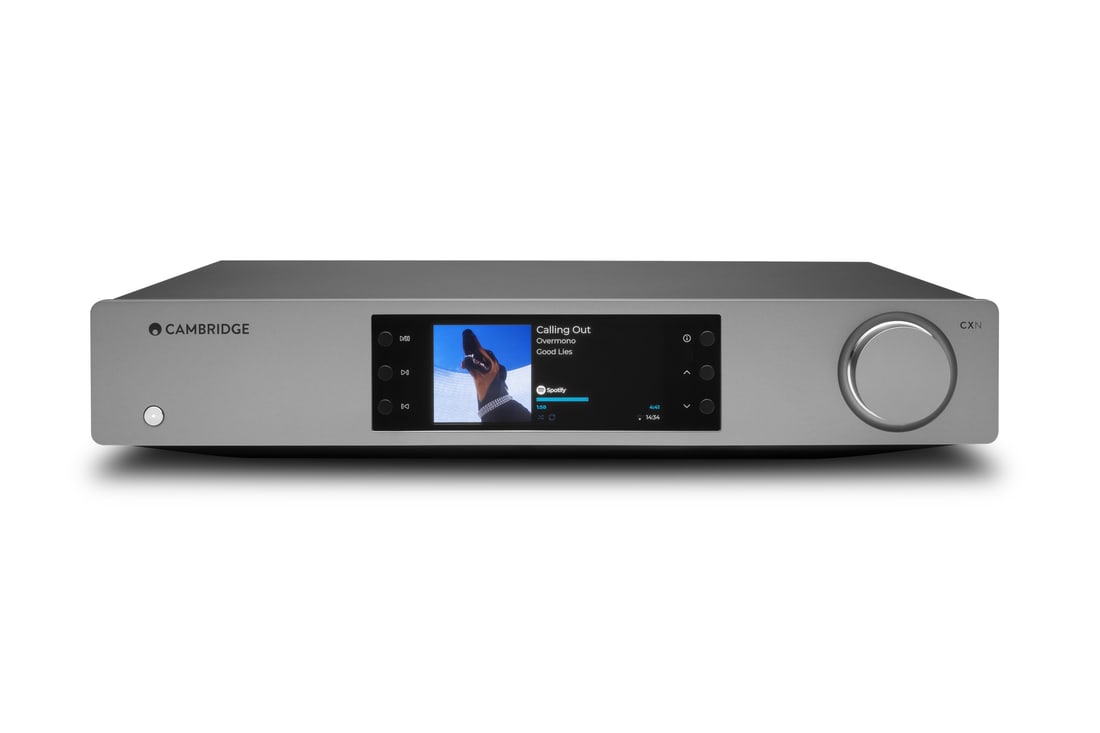
A bloke messaged me last week asking whether he should pay an extra $200 for a DAC because it had the "flagship" ESS Sabre chip instead of the one two models down in the same brand's range. Same chip family, same manufacturer, $200 apart. I asked him what the actual measured difference was between the two units. He didn't know. Neither did the shop assistant who sold it to him. That's the whole problem in one exchange.
I've spent a fair chunk of the last few years buying cheap DACs specifically to find out which ones punch above their price, and I can tell you the chip printed on the datasheet is one of the least useful things you can look at. It matters, sure, in the way that the brand of flour matters to a loaf of bread. It's an ingredient, not the recipe. What actually decides whether a DAC sounds clean, quiet and neutral is the implementation around that chip: the power supply, the analogue output stage, the clocking, and how carefully the whole thing was put together. Get those wrong and a chip capable of measuring to -120dB in a lab can sound worse in a $150 product than a "lesser" chip does in something built properly for $250.
Why the chip name is mostly noise
ESS, AKM, Cirrus Logic, Texas Instruments — these companies make DAC chips that, on paper, are all capable of resolving far more detail than human hearing can use. A mid-tier ESS Sabre chip from five years ago already measured well past the point where further improvement is audible in a blind test. The chip converts digital numbers into an analogue voltage. That part of the job has basically been solved since the mid-2010s. What hasn't been solved by the chip alone is everything that happens after: filtering out switching noise from the power supply, buffering the output so it can drive a real headphone or preamp input without sagging, and keeping the clock stable enough that timing errors (jitter) don't smear the signal.
I'll go further and say the "chip war" marketing that gear reviewers used to obsess over — AKM versus ESS, warmer versus more analytical — was always overstated relative to the actual engineering underneath. Theo and I have argued about this over a beer more than once; he's more precise about the electronics than I am, but we land in the same place. The chip sets a ceiling. The implementation decides how close to that ceiling you actually get, and most of the audible differences between DACs at a given price point come from implementation, not silicon.
The power supply is where the money actually goes
If you want to know why a $150 DAC and a $600 DAC using similar or even identical chips can sound genuinely different, look at the power supply first. A DAC chip needs very clean, very stable voltage to do its job properly. Cheap switch-mode wall warts and noisy USB bus power dump electrical noise straight into that supply rail, and some of it leaks through into the analogue output as a faint background hash or a loss of the last bit of low-level detail. You won't necessarily hear it as obvious distortion. More often it just makes the sound a bit flatter, a bit greyer, less like there's air around instruments. Better DACs spend real money on supply regulation: separate analogue and digital rails, better filtering, sometimes a linear power supply instead of switch-mode. The RME ADI-2 DAC FS is a good example of a unit that measures exceptionally well largely because of how disciplined the whole design is, not because the chip inside it is exotic. At the budget end, something like the iFi Audio ZEN DAC 3 (check price) punches well above its price partly because iFi has spent twenty-odd years specifically obsessing over noise rejection in small, USB-powered boxes. That's their whole reputation, and it shows.
Jitter and clocking: real, but easy to overstate
Jitter is the timing error between when a sample should land and when it actually does. In theory it smears the waveform and adds distortion correlated with the music, which your ear picks up as a subtle hardening or graininess. In practice, on any half-decent modern DAC with asynchronous USB transfer, jitter has been engineered down to levels well below audibility. This is one area where I think the audiophile press oversells the danger. A DAC from a company that's been making them for a decade, using a competent USB receiver chip and proper clock management, is not going to have an audible jitter problem. If a seller is trying to sell you an expensive external clock or reclocking device to "fix" jitter on a modern async USB DAC, ask them for a measurement, not a story.
Where clocking does matter more is with older interfaces — S/PDIF over a long or cheap coaxial cable, for instance, which is a "synchronous" interface without the same buffering async USB gets. If you're still running an ageing CD transport into a DAC over S/PDIF, a decent cable and a DAC with good jitter rejection on that input genuinely helps. For anything modern via USB, I wouldn't lose sleep over it.
Output stage and impedance: the thing nobody puts on the box
This is the one I think gets skipped over most, and it's directly relevant to anyone running a DAC into headphones rather than a preamp. The analogue output stage — the circuitry that takes the chip's raw signal and turns it into something that can actually drive a cable and a load — does a lot of the audible work. A DAC with a weak output stage and high output impedance can measure fine on a spec sheet into a standard test load and still struggle to drive a pair of low-impedance planar headphones or a long interconnect run without losing bass control or picking up noise. We've written about this properly in a related piece on where digital bottlenecks actually live — sorry, wrong link in my head, that one's about network streaming — but the short version for output impedance specifically: check it against your headphone's impedance curve, particularly if you're running something like the Audeze LCD-X (check price) or other planar designs, because a mismatch there changes the tonal balance more than any DAC chip ever will.
Where hi-res audio myths creep in
I get asked constantly whether paying more for a DAC that supports higher sample rates or DSD is worth it. Short answer: almost never, for the file itself. The audible ceiling for well-mastered 16-bit/44.1kHz audio is already below what most systems, rooms and ears can resolve. Higher resolution files and formats like DSD can occasionally sound different because they were mastered differently, not because the extra bits or sample rate themselves are doing the audible work. Format support is worth having for compatibility, streaming service certification, and peace of mind. It's not worth paying a premium for on the promise that it will unlock some hidden layer of detail your current DAC is failing to extract. Bit-perfect playback matters more than format wars, which is a topic we've covered properly, worth a read if you're chasing this stuff down a rabbit hole.
What I'd actually tell you to check before buying
Forget the chip name entirely as a deciding factor. Look instead at independent measurements from a source you trust — RMAA-style tests, published noise floor and distortion figures, and real output impedance numbers rather than marketing copy. Check what the unit actually needs to run cleanly: does it come with a decent power supply or rely on a phone charger you'll need to upgrade separately? Does the output stage have enough headroom for what you're actually connecting, whether that's a preamp input or a set of hard-to-drive headphones? At the budget end, units like the FiiO K11 (check price) and the ZEN DAC 3 do well precisely because their makers have put the money into the boring parts — supply, output stage, USB implementation — rather than a headline chip spec. Step up and the Chord Electronics Mojo 2 (check price) takes a genuinely different design philosophy (Chord's custom FPGA-based approach rather than an off-the-shelf chip at all), which is a good reminder that "the chip" isn't even always a single part you can point to.
The honest verdict
If you're shopping on a budget, and honestly most of us should be, stop reading DAC chip names like they're a scoreboard. I'd argue the entire "chip war" framing that a lot of the hi-fi press still leans on is more useful for selling magazines than for helping you buy the right box. Read a measurement, check the output impedance against your headphones or preamp, make sure the power supply isn't an afterthought, and spend the rest of your budget on the speakers or headphones actually making the sound. Our roundup of the best desktop DAC/amps and our broader DAC and streamer guide both weigh implementation over chip branding for exactly this reason, because that's where the real differences between a $150 unit and a $600 one actually live.
Common questions
- Does a more expensive DAC chip always sound better?
- No. Chips from ESS, AKM, Cirrus Logic and Texas Instruments have all measured well past audible thresholds for years. The output stage, power supply and clocking around the chip decide the real-world sound far more than which chip is printed on the box.
- Is jitter still something I need to worry about?
- Not much, if you're using a modern DAC over USB with asynchronous transfer. Jitter is more relevant on older S/PDIF connections without proper buffering. On any competent modern DAC it's engineered down to inaudible levels.
- Do I need a DAC that supports DSD or very high sample rates?
- Mostly no. The audible ceiling for well-mastered 16-bit/44.1kHz audio already exceeds what most systems and ears resolve. Higher-resolution formats sometimes sound different because of mastering choices, not the extra bits themselves.
- What should I actually check before buying a budget DAC?
- Look for independent measurements of noise floor and distortion, check the output impedance against your headphones or preamp, and see whether the unit needs a better power supply than the one it ships with.

I'm Dave, and I'm the cheapskate of the team — and proud of it. My whole thing is finding the gear that punches three times above its price, the so-called "giant-killers," because most people don't have forty grand for a system and shouldn't feel bad about it. I've heard the megabucks stuff, and a lot of it is gloriously good; I've also heard $800 setups that get you 85% of the way there. I'll always tell you where the law of diminishing returns kicks in.
Lifelong bargain-hunter; budget-to-midfi specialist
More from Dave Okafor
 Class D amps have won the value war. Here's why I'm still not 100% soldClass D amps now deliver serious power for giant-killer money. Dave Okafor breaks down what you actually gain, and give up, versus solid-state and valve gear.
 Subwoofer output limiting: the setting that quietly ruins cheap subsMost budget subs sound worse the harder you push them because of built-in limiter behaviour, not the driver. Here's how to find the real ceiling.
- Watts on paper vs watts that matter: matching amp power to real speakersWhy the watts-per-channel number on the box tells you almost nothing useful, and how to actually match an amplifier to a speaker without overspending.
- Budget subwoofer, right spot: why placement beats price every timeA cheap subwoofer in the right spot will beat an expensive one shoved in the wrong corner. Here's how to find that spot without buying anything.
 Cheap headphones, expensive amp: the value equation nobody talks aboutMost budgets go straight to the headphones. I reckon that's backwards for a lot of desktop rigs — here's the maths on why the source and amp deserve first dibs.
 Phono stage budget: how much do you actually need to spend?Phono stages range from $50 to $5,000. Dave Okafor cuts through the hype to show where the money genuinely matters — and where it really doesn't.