Watts on paper vs watts that matter: matching amp power to real speakers
Sixty watts. That's what's printed on the side of a Rega Brio Mk7. Sixty watts also happens to be what a lot of much more expensive amps claim, and yet the Brio will drive a pair of stand-mounts with more authority than some 150-watt boxes I've had on the bench. If you've ever looked at two spec sheets, seen wildly different prices for near-identical wattage, and wondered what you're actually paying for, this one's for you.
I've spent a fair chunk of the last few years pairing cheap amps with speakers that "shouldn't" work on paper, mostly because I refuse to believe good sound requires four figures minimum. Some of those pairings have been genuinely embarrassing for gear costing five times as much. The short version: the watts number is the least useful spec on the page, and almost nobody buying their first proper system is told that.
Why the watts number lies to you (a bit)
An amplifier's power rating is usually measured into 8 ohms, at a specific distortion threshold, sometimes with only one channel driven rather than two, and almost never at the frequencies and current demands your actual music makes. None of that is illegal or even dishonest exactly — it's an industry-standard shorthand — but it's a shorthand that hides more than it reveals.
What actually matters is how an amplifier behaves when the load gets difficult. Speakers aren't a flat 8-ohm resistor; their impedance swings around with frequency, often dipping to 4 ohms or lower at certain points, and the phase angle shifts too, meaning the amp has to deliver current and voltage that aren't neatly in step. A cheap amp that's rated a healthy 100 watts into 8 ohms might fall in a heap the moment it sees a speaker that dips to 3.2 ohms at 150Hz with an awkward phase angle. A well-engineered 60-watt amp with a strong power supply might sail through the same load without breaking a sweat. This is exactly the territory Marcus covers in more measurement depth over in loudspeaker sensitivity and amplifier matching, and it's worth reading alongside this if you want the graphs.
Damping factor and current: the numbers that actually predict trouble
If I could get one extra spec printed on every amplifier box in Australia, it wouldn't be watts — it'd be output impedance, or its inverse, damping factor. This number tells you how tightly the amplifier controls the speaker's cone motion, particularly on bass notes where the driver wants to keep moving after the signal's told it to stop. Low output impedance (high damping factor) means a firmer grip on the woofer. High output impedance, which you'll find in a lot of valve designs and some minimalist solid-state circuits, means a looser relationship between amp and driver.
This isn't automatically bad — a looser grip can sound warmer and more forgiving on bright speakers, which is precisely why some people chase valve amps on purpose. But it means the amp-speaker pairing genuinely changes the tonal balance, not just the loudness ceiling. Pair a high-output-impedance valve amp with a speaker whose impedance curve swings a lot, and the frequency response effectively gets reshaped by the amp itself. Pair the same amp with a flatter-impedance speaker and it disappears into the background nicely. This is one of the few places in hi-fi where "synergy" (sorry, had to use the word once to make the point) is a measurable, real thing rather than marketing fluff.
Valve, solid-state, Class D — the practical differences that matter for buying
I'm not going to pretend there's a single right answer here, because there isn't, but there are real, practical differences worth knowing before you spend money.
Solid-state amps, the traditional Class AB design used in things like the Rega Brio Mk7 (check price) or the Cambridge Audio CXA81 MkII (check price), typically have low output impedance and high damping factor. They grip the speaker firmly, they're efficient enough not to need huge heatsinks for modest power, and they're generally the safest bet for driving harder or lower-impedance speakers without drama. This is where most of the genuine giant-killers live, because the topology is mature, well understood, and cheap to build well.
Valve amps run the other way. Push-pull designs typically have output impedance in the single-to-low-double-digit ohms range depending on the output transformer, which interacts with a speaker's impedance curve in a way that flatters some speakers and muddies others. This is why the pairing advice for valve gear is so much more specific than for solid-state — a valve amp that sounds gorgeous on a high-sensitivity, relatively flat-impedance speaker can sound soft and underpowered on a low-sensitivity three-way with a nasty impedance dip. Priya's written plenty on this from the ritual side of things; from my side, the practical takeaway is: know your speaker's minimum impedance before you buy a valve amp, not after.
Class D has changed the value equation more than almost anything else in the last decade. Modern Class D modules — the good ones, not the early-2000s versions that gave the format a bad name — deliver huge current into low impedances from a tiny, efficient, cool-running package. The Devialet Phantom I 103 dB (check price) is the extreme expression of this, packing serious output into a form factor that would've been unthinkable for a Class AB design. Where Class D still occasionally trips up is ultra-low-impedance, highly reactive loads at high output, but for the vast majority of domestic speakers and domestic volumes, that's a non-issue at this point. If anyone tells you Class D "sounds digital," ask them which Class D module — the difference between an old Class D and a current-generation one is bigger than the difference between decent Class D and decent Class AB.
Sensitivity changes the whole equation
Watts-per-channel means nothing without knowing how much sound pressure a speaker produces per watt. A speaker rated at 90dB sensitivity needs roughly double the power of one rated at 87dB to hit the same volume, because that 3dB gap is a doubling of power for the same output. A speaker at 84dB sensitivity, which describes a fair few compact stand-mounts, needs four times the power of that 90dB speaker for the same loudness.
This is why a 30-watt valve integrated can sound plenty loud and full-bodied on a pair of high-sensitivity horn-loaded speakers, and completely out of its depth on a low-sensitivity sealed-box design in a large room. It's also why I get twitchy when someone tells me "I only need 30 watts, my room's small." Room size matters less than you'd think; sensitivity and impedance matter more. Standmounts in particular vary enormously here — something worth checking against our standmount speaker guide before you commit to an amp.
The headroom argument, and why I actually agree with it
Here's a contrarian bit for you: I think most people should buy more amplifier power than they think they need, even on a budget, and this runs against my usual instinct to spend less everywhere. The reason is headroom, not average listening volume. Music has transients — a kick drum hit, a snare crack, an orchestral tutti — that demand brief bursts of power many times higher than the average level you're listening at. An amplifier that's already near its limit on average passages will audibly compress, harden or clip on those peaks, and clipped Class AB or Class D sounds genuinely unpleasant, all grain and hash, in a way that's much worse than simply "not loud enough."
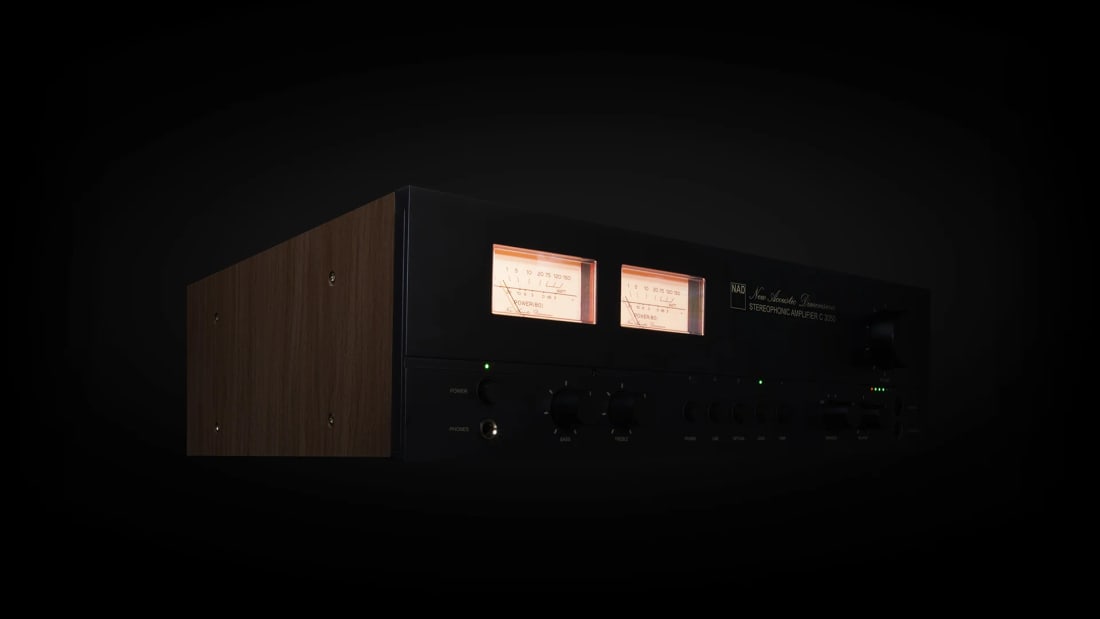
This is why a nominally 60-watt amp with a strong power supply and healthy peak current delivery, like you get in the Marantz Model 40n (check price) or the NAD C 3050 (check price), will often out-perform a nominally higher-watt amp with a weaker supply, because the honest 60 watts has more in reserve when the music actually asks for it. I'd rather have real headroom at a modest continuous rating than an inflated peak number that collapses under real musical demands.
How I actually match amps to speakers on a budget
My approach, after enough mismatched pairings to know better, goes like this. First, find the speaker's nominal impedance and, if published, its minimum impedance — a lot of manufacturers bury this in the fine print rather than the headline spec. Second, check sensitivity, and be honest with yourself about room size and how loud you actually listen (most of us listen quieter than we think). Third, favour an amplifier with a genuinely robust power supply over one with a bigger watts number and a lighter internal build — a quick way to sanity check this is comparing weight between two amps of similar rated power; it's not a perfect proxy but it's rarely wrong.
Fourth, and this is the bit people skip: if you can audition the actual pairing, even briefly, do it. Two amps that measure almost identically on paper can behave differently into a tricky load, and the only way to know for certain is to listen to that speaker with that amp, ideally in a similar room to yours. Streaming amps and all-in-ones like the Naim Uniti Atom (check price) simplify this by having the amp section engineered specifically around a known, moderate range of speaker loads — worth a look if you'd rather remove one variable entirely, and our streaming amplifier guide covers a few options at different price points.
What I'd tell a mate with $1,500 to spend
Buy the amp with the best power supply you can find for the money, not the biggest watts number. Check your speaker's minimum impedance before you fall in love with a valve amp. Don't be scared of Class D in 2024 — the module inside a modern design has nothing to do with the ones that gave the format a bad name fifteen years ago. And leave yourself headroom, because clipping sounds worse than "not quite loud enough" ever will. The best integrated amplifiers at sensible price points almost universally get this balance right, which is exactly why they keep turning up on recommendation lists — including mine.
For technical background on amplifier output stages and standard test methods, the Audio Engineering Society publishes reference material worth a look if you want to go deeper than a blog post can take you, and the Bluetooth SIG's technical documentation is handy if you're chasing a wireless amp and want to understand what's actually happening to the signal before it reaches the power stage.
None of this needs to be complicated, and none of it needs a big budget to get right. It just needs you to read past the watts number on the box.
— Dave Okafor, Value & Giant-Killers Contributor
Common questions
- Does a higher watts-per-channel number always mean a louder or better amplifier?
- Not necessarily. Two amps can share a wattage rating and behave completely differently into a real speaker load, because the number rarely tells you about power supply strength, current delivery into low impedances, or behaviour at clipping. Sensitivity and impedance of the speaker matter as much as the amp's rating.
- Is Class D amplification still inferior to Class AB solid-state?
- Modern Class D modules from the last several years are a different proposition to the early designs that earned the format a poor reputation. For the vast majority of domestic speakers and volumes, well-engineered Class D is a genuine giant-killer rather than a compromise.
- Do valve amps need more careful speaker matching than solid-state amps?
- Generally yes. Valve amps typically have higher output impedance, which interacts more noticeably with a speaker's impedance curve. Check a speaker's minimum impedance and sensitivity before pairing it with a valve amp, rather than assuming any speaker will work.
- How much amplifier headroom do I actually need at home?
- More than most people assume, even at modest average listening volumes. Musical peaks demand brief bursts of power well above average levels, and an amp with too little headroom will clip on those transients, which sounds worse than an amp that simply isn't loud enough overall.

I'm Dave, and I'm the cheapskate of the team — and proud of it. My whole thing is finding the gear that punches three times above its price, the so-called "giant-killers," because most people don't have forty grand for a system and shouldn't feel bad about it. I've heard the megabucks stuff, and a lot of it is gloriously good; I've also heard $800 setups that get you 85% of the way there. I'll always tell you where the law of diminishing returns kicks in.
Lifelong bargain-hunter; budget-to-midfi specialist
More from Dave Okafor
- Class D amps have won the value war. Here's why I'm still not 100% soldClass D amps now deliver serious power for giant-killer money. Dave Okafor breaks down what you actually gain, and give up, versus solid-state and valve gear.
 Subwoofer output limiting: the setting that quietly ruins cheap subsMost budget subs sound worse the harder you push them because of built-in limiter behaviour, not the driver. Here's how to find the real ceiling.
- Budget subwoofer, right spot: why placement beats price every timeA cheap subwoofer in the right spot will beat an expensive one shoved in the wrong corner. Here's how to find that spot without buying anything.
 DAC chip specs are marketing. Here's what actually decides sound qualityESS, AKM or a "flagship" chip name tells you almost nothing about how a DAC sounds. Here's what genuinely separates a good one from a dud, on any budget.
 Cheap headphones, expensive amp: the value equation nobody talks aboutMost budgets go straight to the headphones. I reckon that's backwards for a lot of desktop rigs — here's the maths on why the source and amp deserve first dibs.
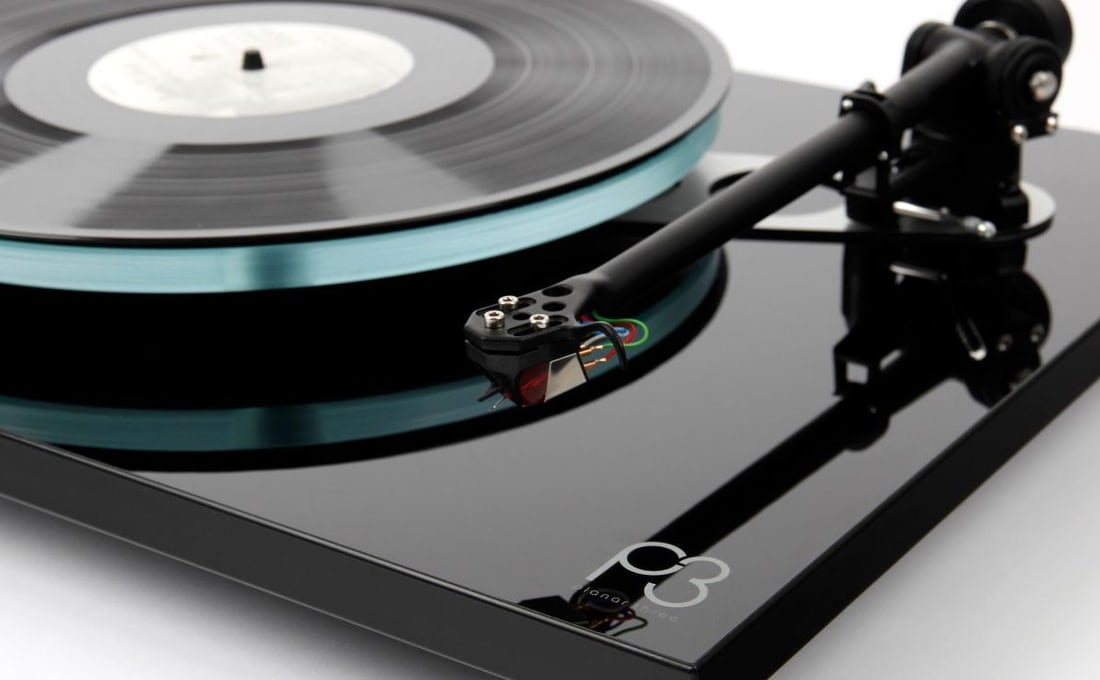 Phono stage budget: how much do you actually need to spend?Phono stages range from $50 to $5,000. Dave Okafor cuts through the hype to show where the money genuinely matters — and where it really doesn't.