Subwoofer output limiting: the setting that quietly ruins cheap subs
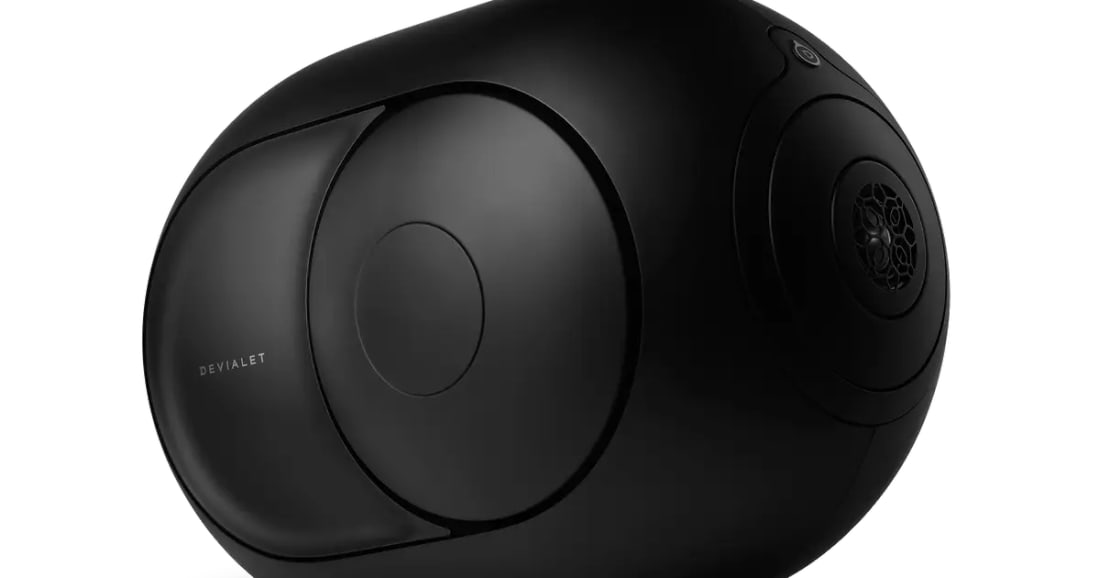
Bought a $400 sub last year for a mate's rental unit off Riversdale Road in Hawthorn, cranked it to see what it'd do, and watched it basically give up at reference level — not with a bang, not with obvious distortion, just... flat. Dynamics gone. Bass notes that should punch just sat there compressed and lifeless. Took me a good twenty minutes of confused fiddling before I twigged what was actually happening. It wasn't the driver bottoming out. It was the internal limiter doing exactly what it was designed to do, and doing it in a way that made the sub sound worse than if it had just distorted honestly.
This is the setting nobody talks about when they're comparing subwoofer specs, because it's not really a spec at all. It's firmware. And it's the single biggest reason budget subs disappoint at the exact moment you need them to perform — big movie moments, the last few dB of a rock track, anything that asks for real excursion.
What output limiting actually does
Every powered subwoofer has a limiter of some kind, sitting between the amplifier and the driver, watching for conditions that would damage the voice coil or slam the cone into its mechanical stops. On paper this is a good thing — it's the only thing standing between your $400 box and a burnt coil. The problem is how manufacturers implement it, and at the budget end that implementation is almost always crude.
A well-designed limiter reduces gain gradually and mostly at the specific frequencies causing the problem, so a bass-heavy passage gets gently reined in while everything else keeps playing normally. A cheap limiter does something blunter: it drops the whole signal's level, sometimes hard, sometimes with an audible pumping effect as it engages and releases. You hear it as the bass just disappearing under pressure, or as an odd "breathing" quality where the level rises and falls with the music instead of following it cleanly. I've had subs where you could hear the limiter kick in like a compressor with the attack and release knobs set wrong — because that's essentially what it is.
The frustrating part is this happens well before actual mechanical failure. The manufacturer has, sensibly, given themselves a big safety margin. But that margin is invisible to you. You just hear a sub that sounds gutless above a certain volume, and you assume the driver or amp simply isn't powerful enough — when often there's another few dB in the box if the limiter threshold were set less conservatively.
Why this hits cheap subs harder than expensive ones
Better subs — I'm thinking of something like the SVS SB-3000 (check price) — tend to have more sophisticated DSP managing this process, with separate thresholds per frequency band and a limiter tuned specifically to that driver and enclosure's known excursion limits. The engineering has actually been done. At the low end of the market, limiter behaviour is often a generic setting applied across a whole product range, sometimes barely tuned to the specific driver at all, because tuning it properly costs engineering hours that don't show up on a spec sheet and don't help sell the box in a showroom demo.
This is the bit that annoys me most about how subs get marketed. Two subs with identical driver size and identical claimed RMS wattage can behave completely differently at 90% of max volume, because one has a limiter tuned to protect the driver with minimal audible penalty and the other just chops the signal off crudely once a crude threshold is crossed. You cannot see this difference on a spec sheet. You can only hear it, and usually only once you've pushed the sub somewhere near its limits — which is exactly the point most people never test a sub at, because who cranks it in the shop?
How to actually find your sub's real ceiling
Forget the volume knob position and forget what the manual claims about maximum output. The only way to know where your sub actually starts limiting is to listen for it deliberately, at a level louder than you'd normally run, with material that has sustained low-frequency content — a movie scene with a low rumble under dialogue, or a track with a driving bassline rather than isolated hits.
Walk the gain up in small steps. What you're listening for isn't distortion in the traditional sense — it's compression. The bass stops tracking the music's dynamics. A kick drum that should punch through starts to feel squashed and samey regardless of how hard it's actually being hit in the mix. Sometimes there's an audible pumping on sustained bass notes, a slow rise and fall that has nothing to do with what's on the recording. Once you hear that, back off two or three dB and that's your actual working ceiling — not the number on the amplifier's gain dial, the point where the limiter stops interfering with the music.
This is a completely different exercise to the classic subwoofer crawl for finding the best position in the room. Placement fixes frequency response and room modes. Limiter behaviour is a separate problem entirely, and no amount of clever positioning fixes a sub that's compressing dynamics at the level you actually want to listen at.
Sealed vs ported changes the limiting story too
Worth knowing that sealed and ported subs hit their limiter thresholds differently. A ported design gets meaningful output reinforcement right around its tuning frequency, which is great for headline output numbers, but below that tuning point the cone has to work much harder for very little acoustic reward, and that's where limiters tend to engage hardest and earliest. A sealed sub rolls off more gently and predictably, and in my experience the limiter behaviour is generally less dramatic because there's no sharp transition below tuning for the DSP to fight against.
None of this means ported is bad — it usually gets you more usable output per dollar, which matters a lot at the value end of the market. It just means if you're running a ported sub hard, particularly for movies with deep sustained effects, you're more likely to run into limiter compression right in the frequency range where you actually want the impact. Something to listen for specifically if you've gone ported to save money over a sealed design.
Bass management settings that make the problem worse
Here's where a lot of people accidentally sabotage themselves. If your AV receiver's crossover is set too high, you're asking the sub to reproduce frequencies that should really be handled by your main speakers, which pushes more overall energy through the sub and brings the limiter into play sooner than it needs to. Setting crossover points correctly, and running proper bass management through your AVR or processor rather than leaving everything on default, genuinely changes how hard the sub has to work for the same output level in the room.
Multiple subs help here too, and I'll say it plainly: two modest subs sharing the load will almost always sound better under pressure than one bigger sub doing all the work alone, because each individual driver is working less hard to hit the same in-room level, and that keeps you further from the point where any single unit's limiter kicks in. This is part of why a two-sub setup so often outperforms a single larger unit even at a similar total price — it's not just about smoothing room modes, it's about each sub having more room to breathe before its own protection circuit steps in.
The honest trade-off at the budget end
I'm not going to pretend you can engineer your way around a genuinely undersized amplifier and driver combination — physics doesn't care how cleverly the DSP is written. But within a given price bracket, a sub with a well-tuned limiter will always feel like it has more headroom than one with a crude, conservative one, even if their claimed specs are identical. It's one of the few areas in budget audio where the difference isn't really about how much you spend, it's about how carefully the engineering team did their job on a part of the product that never appears on the box.
My honest opinion, and I know this cuts against the usual advice: don't chase bigger sub numbers on a spec sheet at all. Chase brands with a track record of sensible DSP implementation, even if the raw driver size looks less impressive next to a competitor. A 10-inch sub with a well-tuned limiter will often out-perform a 12-inch sub with a lazy one, at any volume you'd actually want to live with.
Living with it day to day
Once you know your sub's real working ceiling, the fix is simple — just don't run it past that point as a matter of habit. Set your receiver's reference level or your amp's gain so that normal listening sits comfortably under the threshold where compression starts, with a few dB in reserve for the occasional loud passage. You lose a little outright headroom for the rare moment you want to go louder, but you gain a sub that sounds honest and dynamic at every volume you'll actually use day to day, rather than one that's impressive at moderate levels and falls apart exactly when a film or album needs it most.
It's a bit like buying a car with a top speed you'll never use versus one that's genuinely comfortable at the speed limit — the number on the box matters less than how it behaves where you actually live.
Common questions
- How do I know if my subwoofer's limiter is kicking in rather than just running out of clean output?
- Listen for compression rather than distortion — the bass stops tracking dynamics in the music, sustained notes seem to pump or breathe in level, and impact feels squashed regardless of how hard something is actually hit in the recording. True mechanical distortion tends to sound more like a rattle, chuff, or obvious buzz.
- Does a bigger subwoofer always have a higher limiter threshold?
- Not necessarily. Limiter thresholds are set by the manufacturer based on driver excursion limits and amplifier protection, and cheaper product lines often use conservative, generically-tuned limiter settings regardless of driver size. A smaller sub with carefully tuned DSP can out-perform a larger one with a lazy implementation.
- Will running two subs instead of one avoid limiter problems entirely?
- It won't eliminate limiting altogether but it does push the threshold further away for normal listening, since each sub handles less of the total output for the same in-room level. It also tends to smooth room modes, which is a separate but related benefit.
- Does the crossover setting on my AV receiver actually affect this?
- Yes. Setting the crossover too high asks the subwoofer to reproduce frequencies your main speakers could handle, increasing the overall load on the sub and bringing its limiter into play sooner. Correct bass management settings reduce unnecessary strain.

I'm Dave, and I'm the cheapskate of the team — and proud of it. My whole thing is finding the gear that punches three times above its price, the so-called "giant-killers," because most people don't have forty grand for a system and shouldn't feel bad about it. I've heard the megabucks stuff, and a lot of it is gloriously good; I've also heard $800 setups that get you 85% of the way there. I'll always tell you where the law of diminishing returns kicks in.
Lifelong bargain-hunter; budget-to-midfi specialist
More from Dave Okafor
 Class D amps have won the value war. Here's why I'm still not 100% soldClass D amps now deliver serious power for giant-killer money. Dave Okafor breaks down what you actually gain, and give up, versus solid-state and valve gear.
- Watts on paper vs watts that matter: matching amp power to real speakersWhy the watts-per-channel number on the box tells you almost nothing useful, and how to actually match an amplifier to a speaker without overspending.
- Budget subwoofer, right spot: why placement beats price every timeA cheap subwoofer in the right spot will beat an expensive one shoved in the wrong corner. Here's how to find that spot without buying anything.
 DAC chip specs are marketing. Here's what actually decides sound qualityESS, AKM or a "flagship" chip name tells you almost nothing about how a DAC sounds. Here's what genuinely separates a good one from a dud, on any budget.
 Cheap headphones, expensive amp: the value equation nobody talks aboutMost budgets go straight to the headphones. I reckon that's backwards for a lot of desktop rigs — here's the maths on why the source and amp deserve first dibs.
 Phono stage budget: how much do you actually need to spend?Phono stages range from $50 to $5,000. Dave Okafor cuts through the hype to show where the money genuinely matters — and where it really doesn't.