KEF Coda W review: an all-in-one active standmount
The name is back, and it means something this time
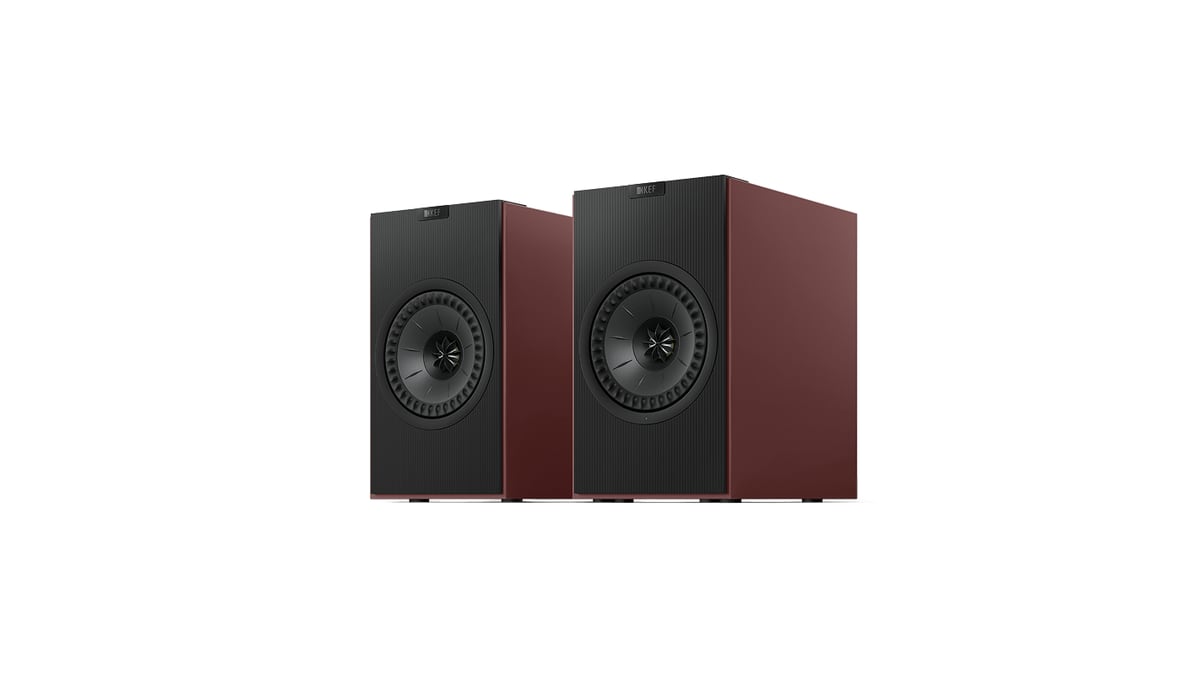
The KEF Coda W revives a name from a company with a long habit of reaching into its own history when it wants to make a point. The original Coda was a budget British standmount that punched well above its station back in the day, and the name quietly earned a certain respect among people who take speakers seriously but don't have a trust fund to shop with. So when KEF announced the Coda W in October 2025 as an active, wireless standmount priced at US$999/pair, the name choice wasn't accidental. It was a statement: we remember what this word used to stand for, and we're putting it on something worthy.
By February 2026, the Coda W had reached reviewers in earnest, and the conversation it's generated in the serious-listening community is exactly the kind KEF was hoping for. At that price point, you're not just competing with passive standmounts that need a separates chain behind them. You're going head-to-head with a whole category of streaming amplifiers, powered monitors and lifestyle systems all vying for the same wallet. The question worth asking is a simple one: does it hold up when you apply proper hi-fi standards to it, or does it only look good compared to Sonos and soundbars? The answer, I'm glad to report, is more interesting than either extreme.
What you get with the KEF Coda W for your money
Let's establish the hardware before we get into the listening, because the specification sheet here is genuinely unusual for this price bracket and deserves proper attention.
The headline is the 12th-generation Uni-Q coaxial driver. If you've spent any time with the KEF LS50 Meta (check price), you'll understand what KEF's Uni-Q philosophy is trying to achieve. By mounting the tweeter concentrically within the woofer cone, the speaker behaves closer to a true point source, which means more coherent time arrival at the listening position and a wider, more consistent sweet spot. The version in the Coda W pairs a 130mm woofer with a 25mm tweeter, and that's a meaningful driver, not a miniaturised compromise. The 25mm dome is the same diameter you'd find in many respected passive standmounts at considerably higher prices.
Behind each driver sits 100 watts of Class D amplification. Per speaker. That's 200 watts total across the stereo pair, and Class D at this point in its development, particularly in a product where KEF controls the entire signal chain, is not the slightly sterile technology it was a decade ago. Modern Class D implementations from manufacturers who actually know what they're doing can be impressively musical, and there are real benefits in terms of heat management and efficiency that make sense in a compact active enclosure.
The frequency response is quoted at 41Hz to 20kHz, plus or minus 3dB. For a standmount of this enclosure volume, 41Hz is a credible figure, not a marketing fantasy. You're not replacing a floorstander or a proper subwoofer-based system, but for a bookshelf speaker to reach that low with reasonable authority is useful in real-world rooms. If you want to understand more about what that extension figure actually means in practice, our Standmount vs Floorstander explainer covers the trade-offs honestly.
KEF is also offering the Coda W in five colourways. I won't pretend this is irrelevant, and I'd argue spec-sheet purists undersell it. Active standmounts that sit in living rooms, on desktops or in bedrooms need to coexist with furniture, and the fact that KEF has given buyers real choices rather than the standard "black or white" binary means the Coda W has a better chance of actually living where people want to listen. Aesthetics aren't audiophile credentials, but they're not nothing either. A speaker you're happy to have in your listening space is a speaker you'll use.
The input suite: where the Coda W genuinely surprises
A lot of active speakers at this price point ask you to live with Bluetooth and maybe a single optical input. KEF has built something considerably more ambitious into the Coda W, and this is where the value proposition gets compelling for Australian buyers who are trying to consolidate a system without sacrificing flexibility.
You get HDMI ARC, not just a token optical, which means the Coda W can sit directly below a television and handle lip-sync-corrected audio from your TV's app ecosystem, your streaming stick, or whatever else is plugged into the set. For a lounge room system, this matters enormously. Add TOSLINK optical for a secondary digital source or an older television, USB-C at 24-bit/192kHz resolution (so you can connect a laptop and get bit-perfect audio without an external DAC), Bluetooth 5.4 with aptX Lossless for genuinely high-quality wireless from a compatible phone or streamer, and a moving-magnet phono input that brings turntable connectivity into the picture without any additional hardware. There is also a subwoofer output for when you decide the 41Hz floor isn't quite enough.
That MM phono stage is worth pausing on. If you're running a Rega Planar 3 (check price) or anything in that class with a moving-magnet cartridge, you can connect it directly to the Coda W and have a complete vinyl-to-speaker system with zero additional boxes. For anyone trying to keep a small apartment system genuinely minimal, that's a significant convenience without the usual compromise of a built-in stage being awful.
The aptX Lossless Bluetooth is also worth highlighting specifically. Bluetooth 5.4 with aptX Lossless, when paired with a compatible source, delivers CD-quality audio wirelessly, not a heavily compressed approximation of it. The codec requires source support to work at full resolution, but the fact that the Coda W is ready for it puts it ahead of many rivals that are still shipping Bluetooth 5.0 with aptX HD as their best option.
How it actually sounds
The Uni-Q driver is the character-defining element here, and it delivers what KEF's coaxial geometry is designed to deliver: a coherent, well-integrated presentation where the tweeter and woofer feel like they're working together rather than handing off awkwardly at the crossover point. Soundstage and imaging are a clear strength. The sweet spot is notably wide, wider than you'd expect from a traditional two-driver arrangement with a separate tweeter mounted above, which is genuinely useful in domestic listening situations where you're not always sitting exactly centred between the speakers.
The 12th-generation Uni-Q represents a mature implementation of the concept. There's a smoothness to the upper midrange and treble that avoids the slightly forward, etched quality that some earlier Uni-Q generations could exhibit at higher volumes. Whether you attribute that to the driver itself, the DSP voicing applied by KEF's engineers, or the 100W Class D amplification being properly matched to a driver it was designed around (probably all three), the result is a speaker that rewards long listening sessions rather than impressing you for twenty minutes and then becoming fatiguing.
Bass is honest. The 41Hz extension figure isn't a lie, but you need to manage your expectations about what a standmount enclosure can do with that extension at real listening levels. In a smallish room with decent boundary reinforcement from nearby walls, the Coda W sounds genuinely full. In a large, well-treated room at higher volumes, you'll notice the limits of the enclosure more readily. The subwoofer output is there for a reason, and pairing the Coda W with something like an SVS SB-3000 (check price) when you want genuine low-frequency authority is a completely sensible path. Wherever the sub ends up, subwoofer position matters more than price. KEF has given you the subwoofer out; use it if your room and your music demand it.
Through the USB-C input at 24/192, the Coda W's internal DAC sounds clean and resolving without being clinical. Via HDMI ARC feeding television audio, it's a substantial upgrade over any soundbar conversation you'd otherwise be having. The Bluetooth connection with aptX Lossless from a compatible source is surprisingly good: not quite what you get from a wired USB-C connection, but not the marked step-down that older Bluetooth implementations used to represent.
Competitive context for Australian buyers
Australia doesn't get US$999 products for AU$999, and I want to be straightforward about that. By the time the Coda W reaches Australian retail through official channels, the landed price will reflect import duties, GST, and distributor margin. Australian buyers should be watching KEF Australia's pricing announcements carefully rather than assuming a one-to-one dollar conversion. That said, the competitive landscape here is worth mapping out honestly.
In the passive standmount category, US$999 buys you genuine hi-fi hardware, but then you still need amplification. The moment you factor in a capable integrated amplifier or a streaming amplifier at this level, you're looking at a total system cost that the Coda W undercuts meaningfully. If you're building a lounge room system from scratch and you look at our best standmount speakers guide alongside our best streaming amplifiers guide, you'll see that assembling comparable performance from separates typically costs considerably more once you account for the full input suite the Coda W provides as standard. Our piece on active versus passive design explains why moving the amplifier inside the cabinet can pay off.
The Naim Uniti Atom (check price) is the benchmark all-in-one that many serious listeners reach for, and it's a different proposition: a streaming amplifier you pair with passive speakers, with a price that reflects its heritage and build. The Coda W is self-contained in a way the Atom is not, and considerably cheaper. The Devialet Phantom family represents the more premium end of active-speaker-as-system thinking, but at pricing the Coda W doesn't approach.
Within the active standmount category itself, the Coda W's combination of proper Uni-Q driver, 100W per channel, HDMI ARC, USB-C at high resolution, aptX Lossless Bluetooth and MM phono is genuinely difficult to match at this price. Most competitors ask you to sacrifice at least one of those things.
A few things to know before you buy
The Coda W is not a network streamer. There's no built-in Roon endpoint, no Wi-Fi streaming via UPnP, no AirPlay 2, no Spotify Connect built into the speaker itself. If streaming from a NAS or service directly to the speaker is important to you, you'll need a source device: a phone via Bluetooth, a streamer connected via USB-C or optical, or a smart TV via HDMI ARC. This isn't a criticism so much as a clarification. KEF has built an exceptionally well-equipped amplified speaker, not an all-in-one network audio system. For many buyers, the distinction won't matter. For others, it's worth understanding before purchase.
Placement matters. The Coda W benefits from proper stands at ear height in a dedicated listening position, some distance from the rear wall to give the bass room to develop, and basic attention to room acoustics. Our standmount speaker placement guide walks through the basics. Acoustic treatment doesn't need to mean foam tiles on every wall; simply keeping the speaker away from corner loading and controlling first reflection points makes a meaningful difference. The Uni-Q's wider dispersion means the Coda W is more forgiving than average of non-ideal placement, but it still rewards getting the basics right.
The verdict: what the Coda name should represent
KEF has earned the right to put the Coda name on this speaker. The Coda W is a serious piece of audio hardware that happens to be priced where real people shop. It isn't a lifestyle product with audiophile marketing bolted on, and it isn't a compromised budget item that audiophiles tolerate. The 12th-gen Uni-Q driver is the real thing, the 100W Class D amplification per channel is properly matched to it, and the input suite is comprehensive enough that for a significant proportion of buyers, the Coda W genuinely is the only box you need.
For an Australian buyer putting together a first real hi-fi system, upgrading from a soundbar, or building a secondary room system without wanting to assemble a full separates chain, the Coda W represents exactly the kind of value proposition I find genuinely exciting: proper technology, properly implemented, at a price that doesn't require a lifestyle sacrifice to access. Watch the Australian retail pricing when it's confirmed, factor in your room and your sources, and put this on your audition list. It's a serious contender.
Common questions
- Does the KEF Coda W need a separate amplifier or receiver?
- No. The Coda W is a fully active speaker system with 100 watts of Class D amplification built into each speaker. You connect your sources — TV via HDMI ARC, turntable via MM phono, laptop via USB-C, phone via Bluetooth — directly to the speakers. No separate amplifier is required.
- Can I connect a turntable directly to the KEF Coda W?
- Yes, provided your turntable uses a moving-magnet (MM) cartridge — which covers the majority of turntables at this price level, including popular options like those from Rega, Audio-Technica and Pro-Ject. The Coda W has a built-in MM phono stage, so no external phono preamp is needed.
- Does the KEF Coda W work with a subwoofer?
- Yes. KEF has included a dedicated subwoofer output on the Coda W. The speaker's own frequency response extends to 41Hz (±3dB), which is useful, but if your room or musical taste demands genuine low-frequency extension, you can pair the Coda W with a subwoofer connected via that output.
- Is aptX Lossless on the KEF Coda W actually lossless quality?
- The Coda W supports Bluetooth 5.4 with aptX Lossless, which is capable of delivering CD-quality (16-bit/44.1kHz) audio wirelessly when the source device also supports the aptX Lossless codec. Both ends of the connection need to support the codec — if your phone or streamer doesn't support aptX Lossless, the connection will fall back to a lower Bluetooth codec instead.

I'm Dave, and I'm the cheapskate of the team — and proud of it. My whole thing is finding the gear that punches three times above its price, the so-called "giant-killers," because most people don't have forty grand for a system and shouldn't feel bad about it. I've heard the megabucks stuff, and a lot of it is gloriously good; I've also heard $800 setups that get you 85% of the way there. I'll always tell you where the law of diminishing returns kicks in.
Lifelong bargain-hunter; budget-to-midfi specialist
More from Dave Okafor
 Bridging stereo amps to mono: a giant-killer's real costBridging a stereo amp to mono can double your power for cheap, but impedance, current limits and heat change the maths. Here's the real cost.
 Matching speaker and amp cost: ignore the price-parity mythForget the old rule of matching speaker and amp cost dollar-for-dollar. Here's what actually decides a good pairing, and why it isn't price.
 Turntable mats and platters: what actually changes the soundFelt, rubber, cork or acrylic — turntable mats and platter materials change the sound more than most upgrades. Here's what actually works.
- Buying a demo unit: the giant-killer move retailers hateEx-demo hi-fi gear can save 20-40% with near-zero risk. Here's how to actually negotiate it, what to check, and when to walk away.
- Flutter echo: the room fault that sounds like nothing's wrongFlutter echo blurs detail in parallel-wall rooms without obvious boom. Here's how to find it cheaply and kill it without over-treating.
- Amp power ratings into 8 vs 4 ohms: the spec sheet trapWhy an amp's 4-ohm wattage figure can mislead buyers, and how to actually match power output to real speaker loads on a budget.