Baffle step: the crossover-adjacent problem most speaker buyers never hear about
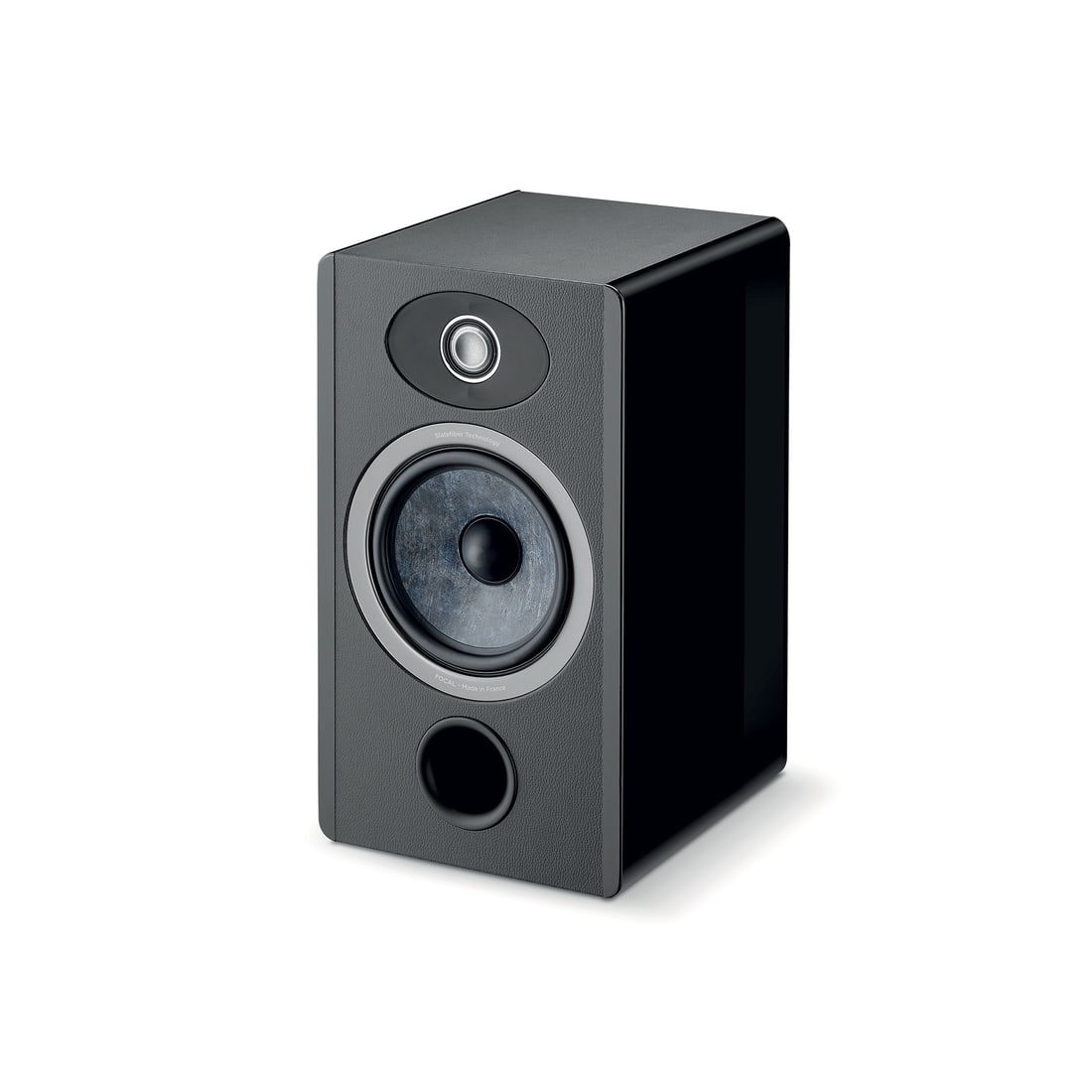
I had a pair of speakers on the bench a few months back, a well-regarded standmount, mid-priced, sensible reviews everywhere. On the near-wall bookshelf they were destined for, they sounded lean through the lower mids, almost polite to a fault. Move them 40cm off the wall and onto stands, and suddenly there was warmth and body that hadn't existed a moment earlier. Nothing changed in the electronics. What changed was baffle step, and almost nobody selling or buying speakers talks about it properly.
Baffle step compensation is one of those terms that gets mentioned in passing on forums and then never explained. It's not exotic. It's basic acoustics, it happens in every dynamic loudspeaker ever built, and understanding it will change how you think about placement, cabinet size and even amp matching. So let's get into what it actually is, because the physics is simple once you see it, and the practical implications are bigger than most buying guides let on.
What baffle step actually is
A loudspeaker driver mounted on a flat panel — the baffle — radiates differently depending on frequency. At high frequencies, the wavelength is short compared to the baffle, so the driver behaves close to what acousticians call a half-space radiator: sound goes forward into a hemisphere, and the baffle itself does very little. At low frequencies, the wavelength is long compared to the baffle, and the whole cabinet stops acting as a boundary. The driver radiates into full space, a full sphere, because the baffle is acoustically "invisible" — the wavelength is too big to be blocked by a panel that size.
The frequency where a driver transitions from full-space to half-space radiation is the baffle step, and it typically produces a rise in output of up to 6dB as you move from low frequencies to high, spread over roughly two octaves. The exact transition frequency depends on the width of the baffle — a narrower cabinet pushes the step higher in frequency, a wider one pushes it lower. This is genuinely just geometry. There's no magic component that avoids it; every box speaker has some version of this transition built into its physics.
Designers have to compensate for it in the crossover, usually with a resistor network or a shaped filter that attenuates the midrange and treble relative to the bass, flattening what would otherwise be a rising response as frequency increases. Get that compensation wrong, or design it for a placement the customer never uses, and you get exactly the imbalance I heard on the bench: thin lower mids near a wall, or boomy, thick bass in open space where the correction was too aggressive.
Why cabinet width matters more than most buyers realise
This is where speaker shopping gets genuinely useful information hidden in a spec sheet nobody reads. A narrow floorstander and a wide standmount can have wildly different baffle step frequencies even with the same drivers, because the transition point is set by baffle width, not overall cabinet volume. A slim tower with a narrow front might see its baffle step sitting up around 300-400Hz. A wide bookshelf speaker, particularly older designs from the 1970s and 80s with generous front panels, might see the step down around 150-200Hz.
Why does this matter practically? Because the crossover compensation is a fixed electrical network designed around an assumed placement. Most modern standmounts are voiced assuming reasonable distance from room boundaries — a metre or so of clearance, ideally on stands rather than a shelf. That assumption is baked into the compensation network at the factory. If you then wall-mount that speaker or jam it into a bookshelf, you're adding real acoustic reinforcement in the bass on top of a crossover that already compensated for open placement, and the result is a thick, congested low end that fights the compensation network rather than complementing it.
This is one of the strongest arguments for buying standmounts with the intention of actually putting them on stands, out in the room, rather than shelf-mounting them out of convenience. We've made this argument before when discussing why stands are not an accessory — baffle step compensation is one of the concrete acoustic reasons that case holds up, not just a tidiness preference.
How boundary reinforcement interacts with baffle step
Here's where it gets properly interesting, and where a lot of well-meaning placement advice goes slightly wrong. Nearby boundaries — a wall behind the speaker, a floor, a corner — reinforce bass frequencies through a different mechanism entirely: they reduce the amount of space the driver radiates into, effectively pushing more low-frequency output forward into the room instead of letting it dissipate into full space behind and around the cabinet. This reinforcement adds energy in roughly the same frequency region where baffle step compensation is already trying to manage the balance. Move a speaker whose crossover was designed for open placement close to a rear wall, and you're stacking wall reinforcement on top of a network calibrated for less bass energy than it's now receiving. The two effects aren't identical mechanisms — one is diffraction geometry at the cabinet edge, the other is boundary loading in the room — but they land in overlapping frequency territory and the ear doesn't care about the distinction. It just hears too much lower-midrange energy. This is precisely why the advice to pull speakers away from walls isn't just about avoiding one big bass hump. It's about not double-dipping on reinforcement that the crossover has already tried to account for. I'd argue most placement guides oversimplify this into "keep speakers away from walls" without explaining that the actual mechanism is two separate physical effects landing in the same frequency range, which is why the fix (more distance) genuinely works rather than being folklore.
Reading a manufacturer's baffle step compensation from the spec sheet
You won't find "baffle step frequency" listed on a spec sheet, unfortunately, but you can infer a lot from cabinet width and the manufacturer's recommended placement notes. A speaker explicitly marketed for close-to-wall or bookshelf use — genuinely designed that way, not just tolerant of it — will usually have compensation built in for boundary reinforcement already, meaning it may sound thin in open space away from walls. A speaker with no such recommendation, sold as a standmount for stand use, has almost certainly been voiced assuming open placement and will sound congested near a wall. Cabinet width is a rough but useful proxy here too. Narrower baffles push the transition higher, into a region where the ear is more sensitive to phase and diffraction artefacts around the edges of the cabinet, which is part of why many designers deliberately narrow the front panel and round the edges — it's not just cosmetic, it changes where and how the step behaves. Speakers like the KEF LS50 Meta (check price) use a fairly compact but not razor-narrow baffle with a curved profile specifically to manage diffraction and step behaviour together, and it's a reasonable case study if you want to see how a modern design handles the trade-off.
Where amp matching quietly comes into it
Baffle step compensation networks dissipate power, particularly in designs using resistive padding across the midrange and treble to flatten the response. This has a small but real effect on sensitivity and, in some designs, on the impedance curve the amplifier sees. It's not usually dramatic, but it's another reason why matching an integrated amplifier to a speaker isn't purely about watts on a spec sheet. Two speakers with identical driver compliments and nominal sensitivity ratings can present genuinely different loads and genuinely different perceived loudness once their baffle step networks are doing different amounts of work. If you've ever wondered why a speaker with a sensitivity rating a decibel or two below another sounds subjectively louder or more forward at the same volume setting, aggressive versus gentle baffle step compensation is one of the quieter explanations, alongside crossover slope choices and voicing decisions that don't show up cleanly in a single number.
Practical placement, not theoretical placement
None of this is an argument for obsessing over acoustics textbooks before buying a speaker. It's an argument for actually reading the placement guidance that comes in the box, and for treating "how far from the wall" as more than a footnote. Most standmount speakers want somewhere between 20cm and a metre of clearance from the wall behind them, and the manual will usually give a range rather than a single number because room size and speaker design both shift the ideal figure. I'd say the single most common placement mistake I see in Australian living rooms — and I've measured a fair few over the years — is pushing standmounts back against a wall to reclaim floor space, then wondering why the midrange sounds boxy and the bass sounds one-note. It's not the room mode doing that on its own, and it's not always a subwoofer crossover issue either. Sometimes it's just baffle step reinforcement stacking on a crossover that never expected the speaker to live there. If you're shopping for standmounts and know you're placement-constrained — close to a wall, on a shelf, in a bookcase — it's worth specifically seeking out designs marketed for that use rather than assuming any standmount will do once you've made peace with a compromise. Have a look through our guide to the best standmount speakers for serious listening, which flags placement flexibility where it's genuinely a design feature rather than a footnote, and cross-reference with the best bookshelf speakers under $2000 if budget is the other constraint you're working within.
Why this doesn't show up as a spec, and why that's fine
I get asked occasionally why manufacturers don't just publish the baffle step frequency and be done with it. The honest answer is that it wouldn't tell you much in isolation. The transition frequency interacts with the crossover design, the room, and your specific placement in ways that a single number can't summarise usefully for a buyer standing in a shop. What actually matters is whether the manufacturer's recommended placement matches the placement you're going to give it, and whether you're willing to give the speaker the room it was designed to work in. This is a case where trusting the graph, which I generally do without apology, only gets you so far. An anechoic frequency response measurement, the kind most reviews rely on, is taken in a space specifically designed to eliminate the boundary reinforcement that baffle step interacts with in your actual living room. That's not a flaw in the measurement, it's just a reminder that the measurement answers one question and your lounge room asks a slightly different one. The Australian Acoustical Society's technical resources cover the underlying diffraction physics if you want the deeper maths, and it's genuinely not that dense once you follow the geometry through.
The speaker on my bench that started this piece went back on proper stands, well clear of the wall, and the thinness disappeared entirely. Nothing about the electronics changed. The room did.
— Marcus Vale, Editor — Electronics & Measurement
Common questions
- Does baffle step compensation matter for floorstanding speakers too?
- Yes, though it happens at a lower frequency because floorstanders generally have narrower baffles relative to their height, and the transition is set by baffle width. Floorstanders still need compensation in the crossover, just tuned to a different frequency range than a typical standmount.
- Can room correction software fix a baffle step mismatch caused by bad placement?
- Partially. Digital room correction, including convolution-based systems, can flatten the measured frequency response at the listening position, but it's working against a physical reinforcement effect rather than a simple electrical error, and heavy correction in that range can introduce its own trade-offs in dynamics and headroom. Better placement is still the cleaner fix where it's achievable.
- How do I know if my speakers are suffering from baffle step placement issues right now?
- Pull them out from the wall by 30-40cm if you can and listen for a change in the lower midrange, particularly on male vocals and acoustic guitar. If the sound opens up and sounds less boxy, that's a strong sign the crossover was designed assuming more clearance than you were giving it.
- Is a wider baffle always worse for baffle step behaviour?
- Not necessarily worse, just different. Wider baffles push the step lower in frequency, which some designers use deliberately for speakers intended to sit close to walls or in bookshelves, since the crossover can be tuned to expect that reinforcement rather than fight it.

I'm Marcus, and I'll be honest up front: I trust a measurement before I trust my own ears, because my ears lie to me daily. I spent fifteen years designing audio electronics before I started writing about them, so when a brand tells me a number, I want to see the graph. That doesn't make me cold about this hobby — I love a system that disappears as much as anyone — it just means I'll tell you when an expensive box is selling you confidence rather than performance.
Former audio electronics engineer; objectivist; runs the test bench
More from Marcus Vale
 Why your turntable's earth wire isn't optionalTurntable earthing fixes most phono hum problems. Here's how grounding actually works, why it fails, and how to track down a noisy connection.
 Why your AVR runs cool on music but throttles on AtmosAVR thermal throttling explained: why nine-channel Atmos mixes push receivers into protection mode that two-channel music never triggers.
- Subwoofer delay settings: why your AVR's number is a guessAVR auto-calibration estimates subwoofer delay from distance, not timing. Here's how to measure and correct it properly for tighter bass.
- AVR auto-calibration: what Audyssey, YPAO and Dirac actually measureAudyssey, YPAO and Dirac Live all run a mic sweep and spit out numbers, but they're not measuring the same things or fixing the same problems. Here's what's actually happening.
- Cartridge break-in: what actually changes in the first 40 hoursDoes a new cartridge really need 40 hours to "open up"? I measured one to find out what's mechanical fact and what's audiophile folklore.
- DAC output stages: what the chip doesn't tell youThe DAC chip gets all the marketing attention, but the analogue output stage after it does most of the work shaping what you actually hear.