Bit-perfect is a myth in multiroom: what streaming resampling actually does
I had a reader email me last month, quite pleased with himself, saying he'd finally got "bit-perfect" audio into all six zones of his house. He hadn't. He'd got bit-perfect into one zone, and the other five were running through a resampling engine he didn't know existed, because the moment you sync playback across multiple rooms with different DACs and different clock domains, something in the chain has to give. That's not a criticism of his setup. It's just how multiroom works, and almost nobody selling this gear tells you that up front.
I spent a chunk of my engineering career on clock recovery and sample-rate conversion circuits, so I'm going to try to explain this without turning it into a dissertation. But the short version, if you want it before the detail: bit-perfect playback and synchronised multiroom playback are, in most consumer systems, mutually exclusive goals. You can have one room bit-perfect. You cannot easily have six rooms bit-perfect and perfectly time-aligned with each other, because time alignment is itself a resampling problem.
Why multiroom needs a shared clock, and why that breaks bit-perfect
Every DAC in your house runs off its own local clock, even if it's a cheap crystal oscillator buried in a streaming module. Those clocks are all running at very slightly different actual rates, even when the label says 44.1kHz. The tolerance on a typical audio-grade crystal is small but non-zero, and over a few minutes those tiny discrepancies add up to audible drift between rooms if you're standing in the hallway between two zones playing the same track.
To fix that, multiroom platforms (Sonos, WiiM's multiroom mode, Google Cast groups, Apple's AirPlay 2 sync, Roon's grouped zones) all do some version of the same thing: one device, or the server itself, becomes the timing reference, and every other zone's playback is continuously nudged to match it. That nudging happens by inserting or dropping samples, or by running an asynchronous sample-rate converter that stretches or compresses the stream by fractions of a percent in real time. It's inaudible as a distortion in isolation, and it has to happen or the rooms drift audibly apart within a song. But it means the bitstream reaching the DAC in a synced zone is not the same stream that left the server. It's been recalculated.
This is genuinely clever engineering, and I don't want to make it sound like a flaw. Networked audio sync is a hard problem and the industry has largely solved it well enough that ordinary listeners never notice. But "solved well enough that you don't notice" and "bit-perfect" are two different claims, and marketing copy conflates them constantly.
Where format conversion adds another layer
Sync isn't the only thing forcing resampling. The moment you're grouping zones with different native capabilities, most platforms downconvert everything in the group to the lowest common denominator, or upsample everything to a common format so the streams can be mixed and time-aligned in software. Group a hi-res-capable streamer with an older Bluetooth-only speaker and, depending on the platform, the whole group might drop to 16-bit/44.1kHz or even get transcoded to a lossy codec for the wireless leg.
Some ecosystems are transparent about this in their spec sheets, some aren't. I'd rather brands just said it plainly: group play typically caps at CD quality or below, full stop, regardless of what any single zone can do standalone. I've tested enough multiroom systems to say this with confidence and it's a genuinely mildly contrarian thing to point out, because most reviews of these products barely mention it. The single-zone hi-res number on the box is real. The grouped-zone number is usually much lower, and that's the number that actually applies to most houses most of the time, because most of the listening in a multiroom system happens in groups, not solo zones.
Does any of this actually matter to what you hear
Here's where I put my engineer hat back on and tell you not to panic. A well-implemented asynchronous sample-rate converter, done at 32-bit float internally with a decent filter, is not going to introduce audible artefacts in a kitchen speaker or a background-music zone. The maths on this is well understood and it's the same territory covered by the AES's published work on sample-rate conversion quality — it's a solved problem at the level multiroom platforms operate, the errors are so far below the noise floor of a WiiM or a Sonos amp that worrying about them is misplaced energy.
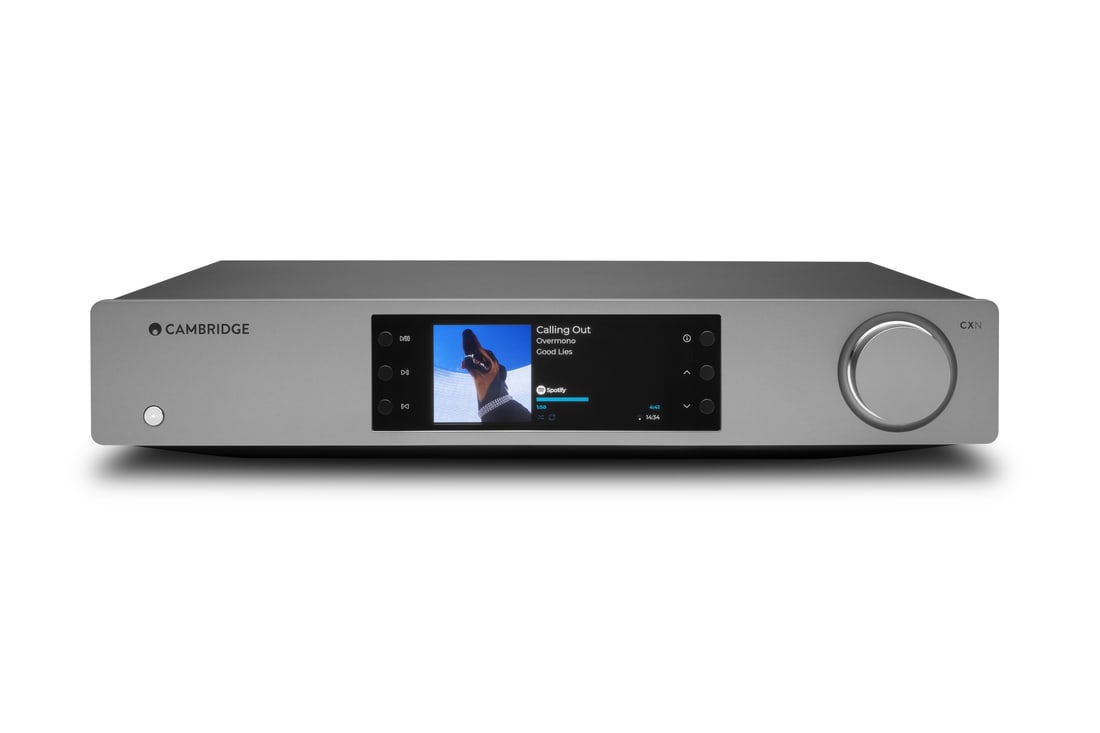
Where it does matter is in your main listening room, the one with the good speakers and the room you've actually treated. If that room is permanently grouped into the multiroom mesh, you're potentially leaving quality on the table that the hardware could otherwise deliver. This is the mistake I see most often: someone builds a serious front room around something like a Naim Uniti Atom (check price) or a proper Cambridge Audio CXN100 (check price) streamer, then leaves it permanently synced to the laundry and the deck speaker "for convenience", and never notices that ungrouping it and playing standalone gets a cleaner, higher-resolution stream with none of the sync-driven resampling overhead.
My advice, which I give more often than almost anything else on this topic: treat your best room as its own zone by default, and only group it in deliberately for parties or whole-house background music. Five minutes of habit change, no hardware spend, and it actually addresses the thing that's costing you something real.
What Roon does differently, and where it still compromises
Roon's approach is worth calling out separately because it's more transparent than most. Its DSP engine shows you exactly what sample rate and bit depth are being delivered to each endpoint, and you can set per-zone processing so your reference room gets untouched bit-perfect output while other zones get whatever conversion they need. That visibility is, frankly, what I wish every platform offered. Most don't, and you're left guessing based on a status LED or a vague app icon.
Even Roon has to resample when you group zones with different native sample rates or when you're running room correction DSP, which by definition requires processing the signal. That's not a Roon failing, it's just physics: you cannot apply a digital filter without touching the samples. The point isn't that resampling is bad. The point is that "bit-perfect" as a marketing term gets thrown around by companies selling hardware that, in its most common real-world use case (grouped, multi-zone, DSP-assisted), isn't delivering it and structurally can't.
Practical setup notes for getting the best of both
If you're building or rationalising a multiroom system, a few things I'd actually check rather than take on faith. First, look at what sample rate and bit depth your platform reports for a grouped playback session versus a solo one, if the app exposes that information at all — Roon does, most others bury it or don't show it. Second, if your main room has genuinely resolving gear, consider giving it its own standalone streaming endpoint rather than running it through the same hardware handling the rest of the house; a device like the WiiM Ultra (check price) as a dedicated front-room source, separate from a cheaper multiroom mesh for the rest of the house, is a sensible split I've recommended a few times now.
Third, don't assume a wired Ethernet connection fixes clock drift between zones. It helps with jitter and dropout resilience, sure, but the fundamental problem of independent local clocks needing continuous reconciliation exists whether the data arrives over Cat6 or Wi-Fi. The clock problem lives in the DAC and the platform's sync layer, not in the cable.
Fourth, and this is the bit people skip: check your volume matching across zones before you worry about bit depth at all, because a badly level-matched multiroom system will bother you far more in daily use than any theoretical resolution loss from resampling. I've written separately about the best streaming amplifiers and all-in-one systems if you're shopping for zone hardware, and about why DACs and network streamers vary in how cleanly they handle this exact grouped-versus-solo distinction — worth a read before you commit to one ecosystem across a whole house, because switching later is expensive and annoying.
The bit-perfect obsession is mostly misplaced
I'll say the quiet part plainly: for the overwhelming majority of multiroom listening, in kitchens and bathrooms and outdoor zones, bit-perfect doesn't matter and chasing it is wasted effort. The resampling happening under the hood in a modern platform is competent engineering solving a genuinely hard synchronisation problem, and it's not where your system's weak link lives. Your weak link is far more likely to be speaker placement, a badly matched amp, or a Wi-Fi network that's dropping packets under load.
Where I'd actually spend attention is protecting the one room that deserves it. Everything else in the house can run through whatever conversion the platform needs to keep it in sync, and you'll never hear the difference standing in a kitchen with a splashback and an extractor fan running. Save the fussing for the room with the good speakers, because that's the one place in the house where the numbers on the box and the numbers actually reaching the DAC are worth checking against each other.
Common questions
- Does grouping zones always reduce audio quality?
- It often reduces the theoretical resolution available (dropping to CD-quality or below in many platforms) and it always introduces some sample-rate reconciliation to keep zones synced. Whether that's audible depends on the room and your ears, but the technical claim of 'bit-perfect' generally doesn't survive grouping.
- Will a wired Ethernet connection give me bit-perfect multiroom audio?
- No. Ethernet reduces jitter and dropout risk but doesn't remove the need for clock synchronisation between independently clocked DACs, which is what forces the resampling in the first place.
- Should I avoid multiroom platforms entirely for my best system?
- Not necessarily — just don't leave your best room permanently grouped with the rest of the house. Run it as a standalone zone by default and group it in only when you actually want whole-house sync.
- Does Roon avoid this problem?
- Roon is more transparent about what's happening (it shows delivered sample rate per zone) and lets you keep a reference zone bit-perfect, but it still has to resample when zones are grouped or when DSP like room correction is applied, because any digital filtering requires touching the samples.

I'm Marcus, and I'll be honest up front: I trust a measurement before I trust my own ears, because my ears lie to me daily. I spent fifteen years designing audio electronics before I started writing about them, so when a brand tells me a number, I want to see the graph. That doesn't make me cold about this hobby — I love a system that disappears as much as anyone — it just means I'll tell you when an expensive box is selling you confidence rather than performance.
Former audio electronics engineer; objectivist; runs the test bench
More from Marcus Vale
- Why your turntable's earth wire isn't optionalTurntable earthing fixes most phono hum problems. Here's how grounding actually works, why it fails, and how to track down a noisy connection.
 Why your AVR runs cool on music but throttles on AtmosAVR thermal throttling explained: why nine-channel Atmos mixes push receivers into protection mode that two-channel music never triggers.
- Subwoofer delay settings: why your AVR's number is a guessAVR auto-calibration estimates subwoofer delay from distance, not timing. Here's how to measure and correct it properly for tighter bass.
- AVR auto-calibration: what Audyssey, YPAO and Dirac actually measureAudyssey, YPAO and Dirac Live all run a mic sweep and spit out numbers, but they're not measuring the same things or fixing the same problems. Here's what's actually happening.
- Cartridge break-in: what actually changes in the first 40 hoursDoes a new cartridge really need 40 hours to "open up"? I measured one to find out what's mechanical fact and what's audiophile folklore.
- DAC output stages: what the chip doesn't tell youThe DAC chip gets all the marketing attention, but the analogue output stage after it does most of the work shaping what you actually hear.