DAC/amp combos vs separates for headphones: when the stack is worth it
Somewhere along the way, the headphone hobby developed a peculiar orthodoxy: more boxes equals more serious. Spend enough time on the forums and you'll encounter people running three-unit desktop stacks for a pair of IEMs they use at a laptop. I want to push back on that a little — not because separates are wrong, but because the case for them is far more conditional than most discussions let on.
I come to this from loudspeakers, where the separates argument is genuinely well-founded (a dedicated power amp and preamp each do a single job, thermally and electrically independent, and the benefit is audible once you're past a certain budget). With headphones, the math is different. Impedances are higher, output voltages are tiny, and the interference problems that plague a speaker chain rarely apply at the same severity. That changes the calculus substantially.
What a DAC/amp combo actually is
A combined DAC/amp unit takes your digital signal — USB from a laptop, optical from a TV, coaxial from a transport — converts it to analogue, amplifies it, and sends it to your headphones. One box, one power supply, one set of inputs. The iFi Audio ZEN DAC 3 and the FiiO K11 are typical examples at the accessible end; the RME ADI-2 DAC FS sits at the serious upper tier and arguably changes the conversation entirely.
Separates split those two functions. Your DAC outputs a line-level analogue signal, which goes to a dedicated headphone amplifier. Each unit has its own power supply, its own circuit topology, its own noise floor. The theory is that each stage is optimised for a single task rather than engineered to compromise with another on the same PCB.
That theory holds. But — and this is where forum advice often goes sideways — the gap between theory and audible reality depends heavily on price tier, headphone type, and how you actually use the system.
The case for an all-in-one: it's stronger than you think
Below roughly $500–600 AUD, a good combo unit almost always outperforms a separates stack at the same total spend. The reason is engineering budget. If you're splitting $400 between a DAC and an amp, you're getting $200 of engineering in each. A $400 combo unit puts all of that into one optimised design. Layout, power distribution, component quality — the designer isn't fighting a budget war across two PCBs.
There's a second argument that rarely gets enough credit: a combo unit is electrically shorter. Signal goes from DAC output stage straight into the amp input stage, on the same board, often with very low impedance. Adding an interconnect between separates introduces capacitance, and if the sending impedance of your DAC is high relative to the input impedance of your amp, you can get HF rolloff. Most modern gear is designed to avoid this, but it's not a theoretical non-issue.
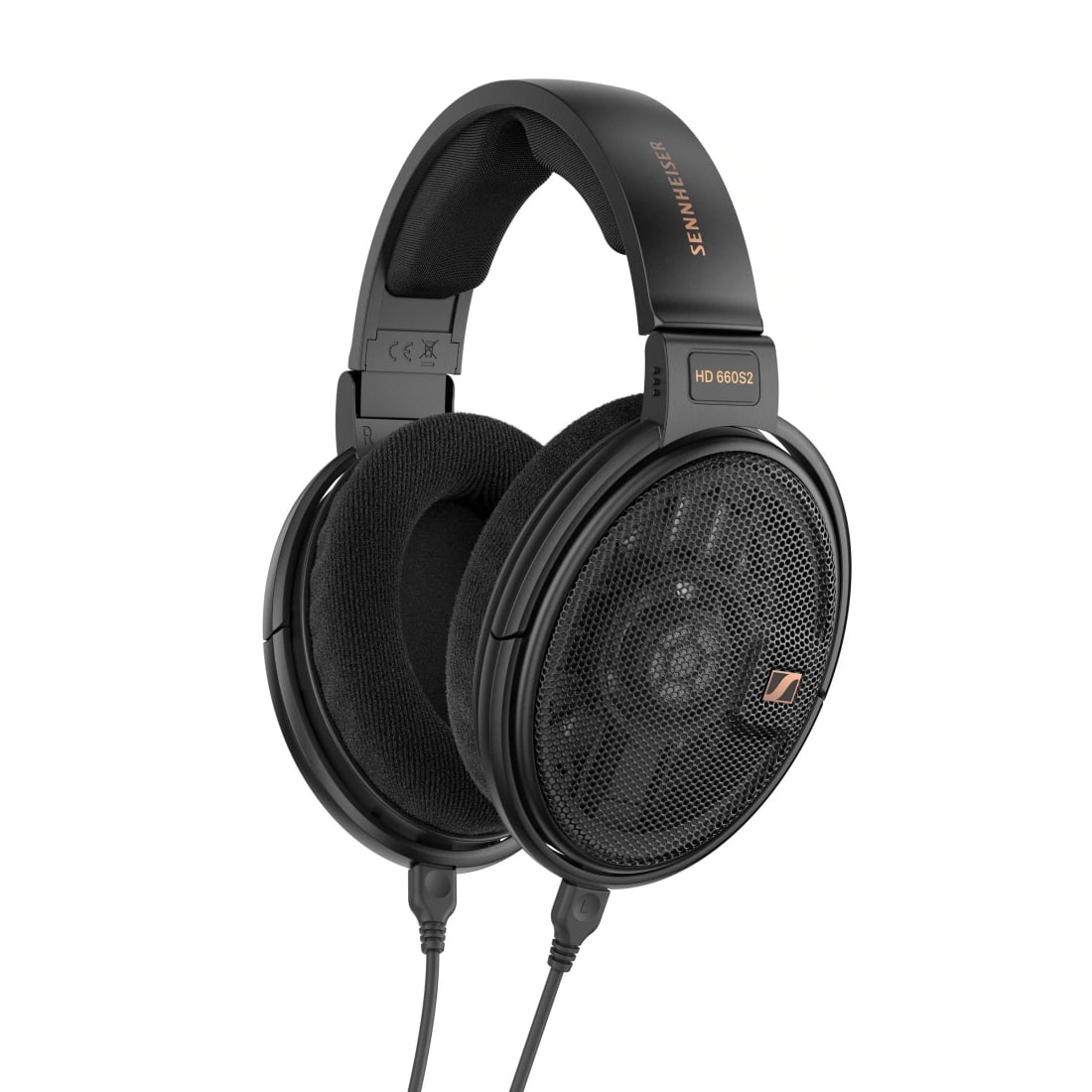
For most open-back dynamic headphones — the Sennheiser HD 660S2, the Beyerdynamic DT 1990 PRO MK II, the Meze Audio 109 Pro — a capable combo unit like the RME ADI-2 DAC FS will give you everything the headphone can offer. I'll be direct: I've heard setups costing twice as much in separates that didn't outperform the RME driving the same headphones. The RME is a genuine outlier at its price, but the principle applies more broadly.
For IEMs, the case for combos is even stronger. IEMs have very high sensitivity and very low impedance. They don't need power — they need low output impedance and low noise floor. Most dedicated headphone amplifiers designed for full-size cans are poorly suited to IEMs; a well-designed combo with an IEM-optimised output (low impedance, low gain mode) will frequently beat a generic separates stack.
When separates actually earn their keep
There are three situations where I think separates make a real, not imaginary, difference.
First: planar magnetic headphones with demanding impedance curves. Something like the Audeze LCD-X presents a load profile that benefits from an amplifier specifically built for it — high current delivery, stable into complex impedances, good damping. A combo unit that's engineered as a general-purpose device may technically meet the spec on paper but not behave as cleanly under dynamic load. A dedicated amp from a maker who builds primarily for planars (Benchmark, Burson, Violectric) can be sonically meaningful here.
Second: when your DAC and amp preferences are genuinely different. Maybe you want a R-2R DAC for its particular character with certain recordings, but you need a clean solid-state amp with high output power. Separates let you mix and match. That flexibility has real value — provided you've actually identified what you want from each stage, rather than just stacking boxes because it looks serious.
Third: when you're already at the ceiling of what the combo offers and you want one specific improvement. If you have an excellent DAC in a combo unit and you find a standalone amplifier that meaningfully improves the headphone stage, you can buy just that amp and feed it from the combo's line output. That's a rational upgrade path. But notice the order of operations: you start with the combo, identify the specific limitation, then add the separate — not the other way around.
The interconnect question people avoid
Separates require an interconnect between DAC and amp. This is one of those topics where the cable obsession can run away from the facts. The honest answer is that for normal home listening distances — typically less than a metre on a desktop — a decent interconnect with sensible impedance matching is functionally neutral. The difference between a $30 and a $300 cable in this context is, in my view, not audible in controlled listening. I know that's a position some people will dispute, but I'm not shifting on it.
Where the cable genuinely matters is shielding in noisy environments. If your desktop has switching supplies, USB hubs, LED lighting, and a GPU, an unshielded interconnect running between a DAC and an amp can pick up interference. A shielded cable with proper earth connections isn't audiophile mysticism — it's practical electrical engineering. Buy shielded. Don't spend more than $80 on a 0.5 metre desktop interconnect.
Power supplies and why they matter more in combos
One area where separates have a structural advantage is power supply isolation. In a combo unit, the DAC's digital circuitry and the amplifier stage share a power supply. Good designers add filtering, regulation stages, and physical separation on the PCB to prevent digital noise contaminating the analogue output. The better the design, the less this matters. But in cheaper combos it absolutely can matter — that faint hash you sometimes hear with IEMs in quiet passages is often the DAC's digital noise getting into the output stage.
Separates sidestep this by definition. Each unit has its own supply and its own noise profile. Whether that's meaningful at your actual listening levels, with your actual headphones, in your actual room — that's a question worth asking honestly rather than assuming yes because the theory is sound.
If you want to go further down the power supply rabbit hole, our article on the best DACs and network streamers covers how linear versus switching supplies affect measured noise floors in real products.
Where the Chord Mojo 2 sits in this argument
The Chord Electronics Mojo 2 is an interesting case. It's a combo — DAC and amp in one compact unit — but it uses Chord's proprietary FPGA-based conversion, which is meaningfully different from a generic delta-sigma chip in most combo units. It also has a genuinely unusual amp stage. Put it up against separates costing considerably more and it holds its ground surprisingly well on many headphones, including the Focal Clear MG, which I spent a few sessions with earlier this year.
The Mojo 2 also makes the portability argument concrete. If you're moving between your desk and, say, a flight to Sydney, one compact unit that performs at this level is worth far more than a stack that requires a power board and a cable tidy to set up. Portability isn't a consolation prize — it's a legitimate design constraint that combo units solve and separates don't.
My actual recommendation
Start with a quality combo. Under $600, the combo almost always wins. Between $600 and $1,200, you need to be honest about whether you're buying separates for sonic reasons or status reasons — the gap is real but narrow, and only matters with specific headphones. Above $1,200 total, separates start making clearer sense, particularly if you're running demanding planars or you've developed a specific opinion about what your DAC stage should do that no combo currently satisfies.
The one thing I'd resist is building a separates stack early and working backwards trying to justify it. I've seen that pattern many times — someone spends $1,500 on separates that sound indistinguishable from a $700 combo on their HD 660S2, and then spends six months convincing themselves they can hear the difference. The headphones and the upstream source material deserve that money more. If you're building a desktop rig from scratch, our guide to the best audiophile headphones is the better place to start the spend.
See also our review of the RME ADI-2 DAC FS (check price) for a concrete example of a combo unit that genuinely challenges the separates argument, and the Chord Electronics Mojo 2 (check price) if portability is part of your use case.
The short version is this: one well-engineered box beats two mediocre ones. Save the separates conversation for when you've identified a real limitation in what you already have.
— Hannah Reid, Loudspeakers & Acoustics Editor
Common questions
- Do separates always sound better than a DAC/amp combo for headphones?
- No. Below about $600 AUD total budget, a well-designed combo unit typically outperforms a separates stack at the same spend, because the engineering budget goes further in a single optimised design. Separates make more sense at higher budgets, with demanding planar magnetic headphones, or when you have a specific, identified reason to mix DAC and amp from different makers.
- Can I use the line output of a combo DAC/amp to add a separate headphone amp later?
- Yes, many combo units include a line-level output for exactly this purpose. This gives you a sensible upgrade path: use the combo's DAC and add a standalone amp when and if you find the amp stage is your actual limiting factor. Check that the combo's line output has a low enough output impedance to drive your chosen amp's input properly.
- Does a more expensive interconnect cable between separates improve sound quality?
- For short desktop runs under a metre, a well-shielded cable with correct impedance matching is all you need — paying beyond roughly $80 for a 0.5 metre interconnect in a desktop setup is unlikely to produce any audible benefit. Shielding matters more than price, particularly in electrically noisy desktop environments with multiple switching power supplies nearby.
- Are combo units suitable for IEMs, or do they lack power?
- IEMs need low output impedance and a low noise floor far more than they need raw power — they're highly sensitive and low impedance. A combo unit with a dedicated low-gain IEM mode (many modern units include this) is often better suited to IEMs than a generic standalone amp designed primarily for full-size headphones. Check the output impedance spec: ideally under 1 ohm for IEM use.

Hi, I'm Hannah. Speakers are my thing — specifically, the conversation between a speaker and the room it's in, which is where most systems are won or lost. I did acoustics at uni and never quite got it out of my system. I'll measure your room's bass response and then gently break the news that the $20,000 speakers aren't the problem, the untreated wall behind your sofa is. Stand-mounts on good stands are criminally underrated and I will die on that hill.
Acoustics background; loudspeaker and room-treatment specialist
More from Hannah Reid
 First reflections: finding them, and what to actually do about themThe mirror trick still finds first reflection points better than any app. Here's how to locate them and what treatment actually earns its keep.
 Headphone soundstage: why some pairs sound "wide" and others don'tSoundstage in headphones isn't magic or marketing. It comes from crossfeed, driver geometry and pad depth — here's what's actually happening and what you can change.
- Turntable wall shelves versus stands: what actually kills footfall bassFootfall bass in vinyl playback usually isn't the turntable's fault. It's the floor. Here's how to work out whether a wall shelf or a proper stand fixes it.
 Why your amplifier struggles below 4 ohms (and when to actually worry)Impedance dips scare buyers more than they should. Here's how to read a speaker's impedance curve and match it to an amp that won't run out of puff.
- Subwoofer placement: the crawl test still beats any appRoom-correction apps are handy, but the old carpet-crawl method still finds the seat-by-seat bass problems software glosses over.
- Plinth-to-wall distance: the turntable spec nobody checksWhere you put the turntable on the rack matters as much as the rack itself. Here's how boundary distance and shared surfaces feed feedback into the cartridge.